
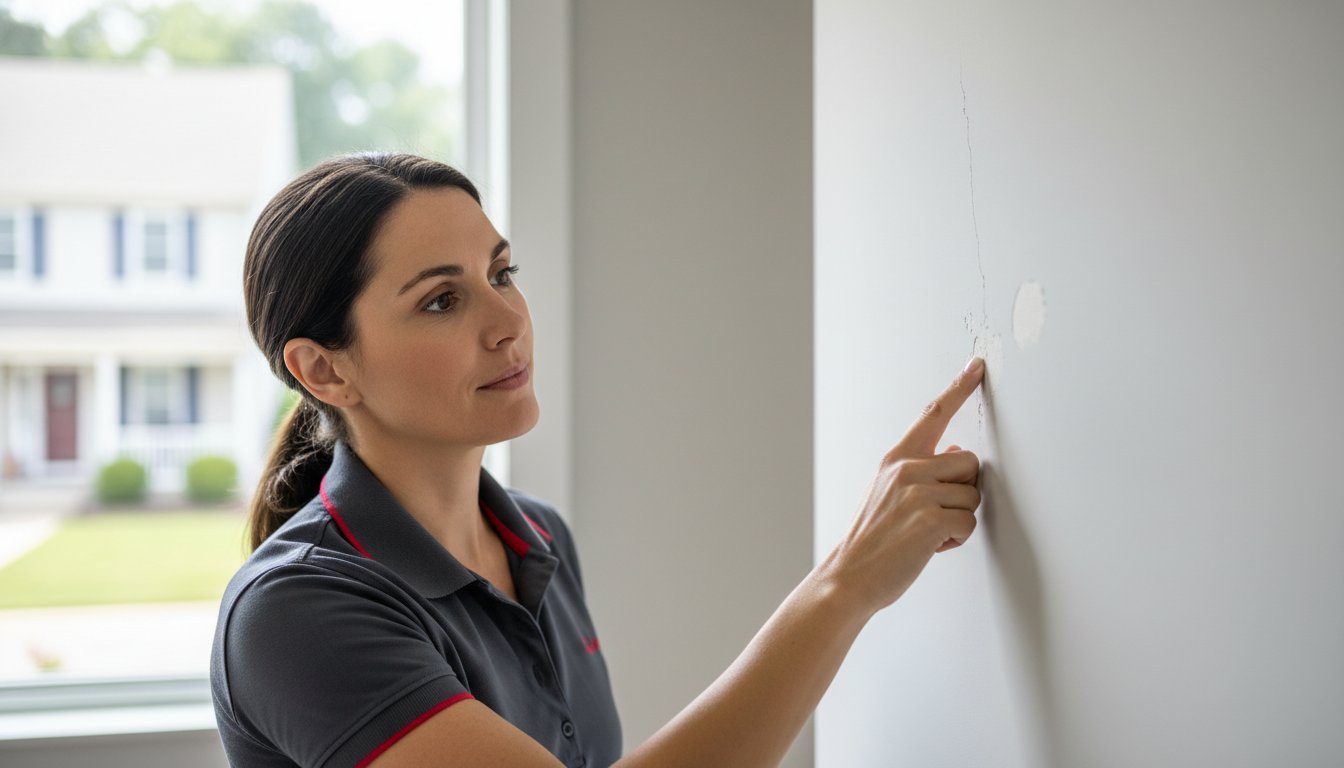
What if that small, persistent crack in your hallway isn't just an eyesore, but a diagnostic map of your home's hidden health? For many New Jersey homeowners, seeing peeling paint or mysterious brown spots can trigger an immediate sense of dread about hidden mold or expensive structural repairs. It's frustrating to invest time in a room only to have the finish fail because of underlying issues you didn't see coming. Understanding the specific signs of drywall damage is the first step toward reclaiming your peace of mind and protecting your property value.
We know you value a home that feels both safe and meticulously maintained. This guide will provide you with the technical clarity needed to identify early warning signs of failure before they escalate into costly problems. We'll help you navigate the distinction between simple surface repairs and issues that require professional intervention under the latest 2026 New Jersey licensing standards. You will learn the seven critical indicators of wall distress, allowing you to decide with confidence whether to reach for a DIY kit or contact a specialist for a guaranteed transformation.
Key Takeaways
- Understand why the gypsum core of your walls is susceptible to New Jersey's humidity and everyday impacts to prevent future deterioration.
- Identify the most common visual signs of drywall damage, from hairline cracks to bubbling tape, before they compromise your home's integrity.
- Learn how to use touch and smell to detect hidden moisture and structural shifts that a simple visual inspection might miss.
- Master a clear decision-making framework to determine when a DIY patch is sufficient and when professional repair is the smarter financial choice.
- Discover how professional surface preparation and technical precision create the essential foundation for a high-quality interior paint finish.
Understanding Drywall Damage: Why Your NJ Home’s Walls Change Over Time
To effectively address the signs of drywall damage, you must first understand the material itself. Often referred to as gypsum board or wallboard, What is Drywall? essentially consists of a mineral core pressed between two layers of thick, recycled paper. This construction provides a smooth, fire-resistant surface that is ideal for interior painting, yet it remains highly susceptible to moisture and physical force. In the high-density neighborhoods of Hudson and Bergen Counties, your walls act as a protective barrier against the elements and daily wear. However, when you see a crack or a soft spot, it's rarely just a surface issue. It is often a signal that an underlying environmental or structural force is acting upon your home. Think of your drywall as a diagnostic tool for your home's overall health.
The Role of Humidity and Northern NJ Climate
Our local climate puts immense pressure on interior finishes. Northern New Jersey experiences drastic seasonal humidity swings that cause the wooden framing behind your walls to swell in the humid summers and shrink during the dry winters. This constant movement forces the drywall to flex beyond its capacity, leading to popped nails or tape failure at the seams. In Hudson County, the proximity to coastal air adds another layer of complexity. Increased salt and moisture can accelerate the degradation of the paper facing, making it more prone to mold growth if even minor leaks occur. If your attic ventilation is insufficient, heat and moisture trapped at the top of your home often manifest as sagging or stained ceiling drywall. These are clear signs of drywall damage that suggest your home's ventilation system needs as much attention as the walls themselves.
Settling and Structural Shifts in Older Homes
Older homes, particularly in established areas like Union County, have histories written in their walls. There is a vital distinction between natural house settling and serious foundation movement. Every home settles over time as the ground beneath it shifts, but when that movement is uneven, it creates significant stress. These forces concentrate at the weakest points of your wall structure. You'll typically notice diagonal cracks radiating from the corners of door frames or windows. While a small hairline crack might be cosmetic, wider gaps or recurring fissures suggest that your home’s structure is under duress. Identifying these patterns early allows you to address the root cause. This ensures that your subsequent drywall and plaster repair provides a lasting, flawless result rather than a temporary fix that will simply crack again in six months.
5 Obvious Visual Signs of Drywall Damage You Shouldn’t Ignore
While your walls might seem solid, visual signs of drywall damage are often the final stage of a long-developing issue. These imperfections are rarely just cosmetic. They act as the "tip of the iceberg," signaling that moisture, movement, or mechanical stress is working against your home's integrity. If you are planning an interior painting project, addressing these flaws is essential. A premium paint finish will only highlight underlying bumps and cracks, making professional preparation the most critical step in achieving a flawless result.
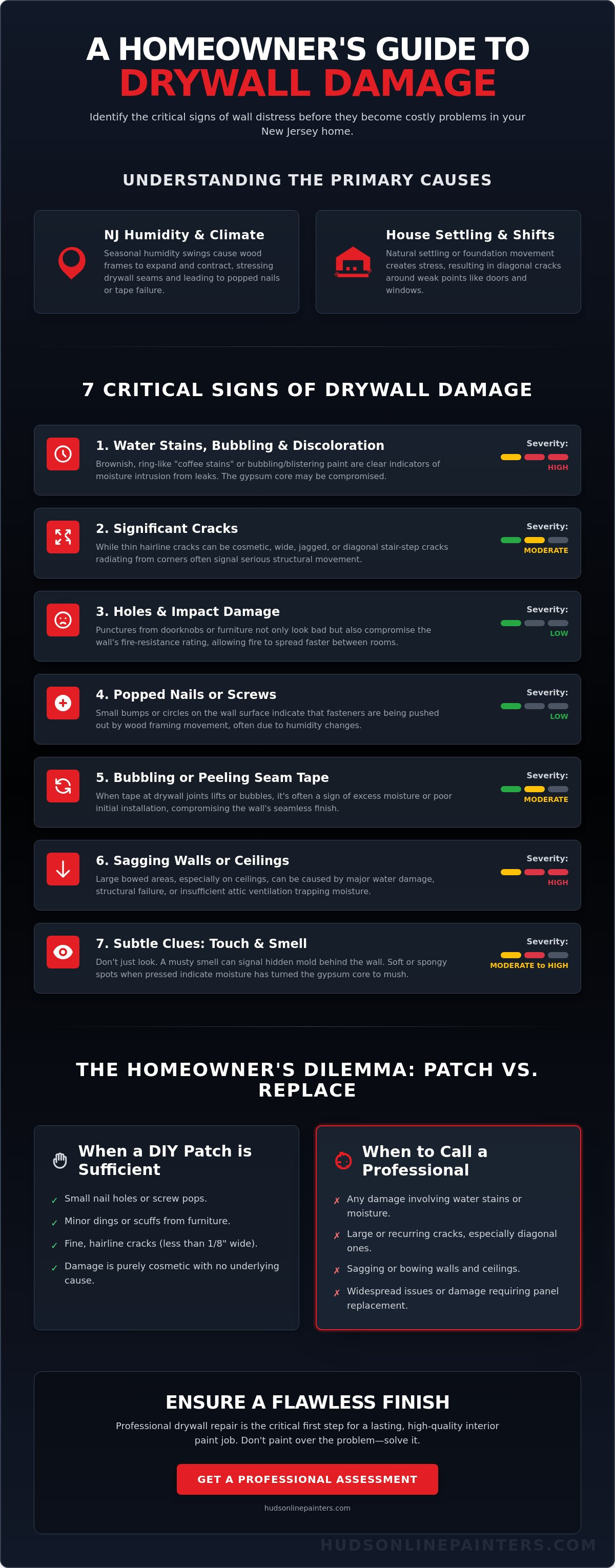
Water Stains, Bubbling, and Discoloration
Water is the primary enemy of gypsum board. Active or past leaks usually manifest as distinct "coffee stains" with brownish, ringed edges. You might also notice the paint beginning to bubble or blister. This happens when moisture gets trapped between the drywall's paper facing and the paint layer, causing the bond to fail. In our region, these issues frequently stem from heavy New Jersey storms affecting roof flashing, or from plumbing leaks in second-story bathrooms. Ignoring these stains can lead to the core of the drywall crumbling, eventually requiring a full replacement rather than a simple patch.
Cracks, Holes, and Impact Damage
Not all cracks are created equal. Hairline cracks often follow the natural settling of a house, but wide, jagged, or stair-step cracks suggest more significant structural shifts. Beyond cracks, physical impact from doorknobs or moving furniture creates immediate vulnerabilities. These holes do more than ruin your room's aesthetic; they compromise the fire-rating of the space. Drywall is designed to slow the spread of fire between rooms. Even a small, unpatched hole provides an easy path for smoke and flames to travel through wall cavities. If you're noticing recurring fissures, starting with professional drywall and plaster repair ensures that the root cause is stabilized before the final finish is applied.
Nail Pops and Joint Tape Failure
Nail pops appear as small, circular bumps or "pimples" on the surface of your wall. This occurs when the wooden studs behind the wall shrink or twist due to the NJ humidity swings we discussed earlier, pushing the fastener through the drywall's surface. Similarly, joint tape failure appears as long, straight cracks or visible seams where two panels meet. These are common signs of drywall damage in homes that have experienced rapid temperature changes. While a DIY spackle job might hide them temporarily, they often recur because the underlying fastener or tape hasn't been properly reset and reinforced by a skilled craftsman.
Subtle and Structural Indicators: Detecting Damage Beneath the Paint
While cracks and stains are easy to spot, many signs of drywall damage remain hidden beneath layers of paint and wallpaper. Detecting these subtle indicators early is the difference between a simple repair and a full scale mold remediation project that could cost thousands. Your walls contribute directly to your indoor air quality. When the gypsum core degrades, it can release fine dust and provide a hidden breeding ground for spores that eventually circulate through your HVAC system. Taking a proactive approach to wall health ensures your home remains a safe, comfortable environment for your family.
Soft Spots and Spongy Texture
Sometimes your eyes can't see the damage, but your hands can. If you suspect moisture has compromised a wall, perform a gentle "push test" with your thumb. Healthy drywall should feel rock solid. If the surface feels spongy, soft, or gives under light pressure, the internal gypsum core has likely turned to mush. This is a common occurrence in older New Jersey homes where slow, pinhole leaks in plumbing lines go unnoticed for months. Sagging ceilings are a particularly dangerous version of this problem. If a ceiling appears to bow downward, gravity is pulling on moisture-heavy board, creating a significant safety hazard. Additionally, if the drywall feels brittle or crumbles when touched, it may indicate long term termite or pest activity that has hollowed out the material from the inside.
Musty Odors and Hidden Mold Growth
Your sense of smell is a powerful diagnostic tool for identifying signs of drywall damage. A persistent, earthy, or musty odor in a room often points to mold growth behind the wall, even if the exterior paint looks pristine. Mold thrives in dark, damp wall cavities where air circulation is non-existent. This is especially prevalent in "trouble zones" like finished basements, laundry rooms, and walls adjacent to bathrooms. Because mold can cause respiratory issues and allergic reactions, ignoring these odors isn't an option. If you detect a musty scent, it's vital to investigate the source before the growth spreads to your framing. Addressing these hidden issues now prevents the need for major structural renovations later and ensures your next interior painting project is applied to a clean, healthy substrate.
The Homeowner’s Dilemma: When to Patch vs. When to Replace Drywall
Deciding whether to patch a small hole or replace an entire panel is a common challenge for New Jersey homeowners. While a quick DIY fix is tempting, choosing the wrong approach often leads to visible seams and recurring cracks that ruin your interior painting results. A systematic framework helps you weigh the immediate cost against the long term durability of your walls. For a deeper look at local options, you can consult our Harrison NJ drywall comparison guide to see how different service levels impact your home's value and aesthetic appeal.
Assessing the Severity of Cracks and Holes
We use the "quarter-inch rule" as a primary diagnostic tool. If you observe signs of drywall damage like cracks wider than 1/4 inch, the issue is likely structural rather than cosmetic. Smaller impact holes, such as those from a doorknob or a stray piece of furniture, can often be handled with a "California patch." This technique uses a piece of drywall with the paper backing intact to create a seamless bond without the need for bulky mesh tape. However, if you see cracks reappearing in the same spot after a repair, it signals ongoing foundation stress that a simple patch cannot resolve. In these cases, simply covering the problem is a poor financial choice compared to a professional assessment.
Dealing with Extensive Water and Mold Damage
Moisture requires a more aggressive strategy because it compromises the core material. Any drywall with a moisture content exceeding 1% must be replaced, as the gypsum core loses its structural integrity and becomes a host for mold growth. We follow the "two-foot rule" when dealing with contamination. This involves cutting away at least 24 inches of material beyond the last visible sign of moisture or mold. This ensures all hidden spores are removed from the wall cavity before they can spread. It's essential to verify the leak is fully repaired before hanging new sheets. Missing this step means even the most meticulous signs of drywall damage repair won't last through the next rainstorm. If you're unsure about the scope of your project, scheduling professional drywall and plaster repair provides the technical precision needed to ensure your walls are ready for a premium, long lasting finish.
Professional Drywall Repair: Preparing Your Walls for a Flawless Finish
Many homeowners view a quick spackle job as a sufficient fix, but professional repair is a different discipline entirely. When you ignore the early signs of drywall damage and try to hide them with a thick coat of paint, you're often highlighting the problem rather than solving it. A wall is a canvas; its beauty depends entirely on the stability and smoothness of the substrate. At Hudson Line Painters, we view drywall repair as the foundational phase of our craft, ensuring every surface is technically sound before we even open a gallon of paint. This commitment to technical precision is what allows us to offer a safe and guaranteed transformation for your living space.
Why Painting Over Damage Never Works
Fresh paint acts like a magnifying glass for imperfections. If you have nail pops or poorly sanded patches, the sheen of a high quality topcoat will catch the light and make those bumps more visible than they were before. Moisture damaged drywall is particularly problematic. Because the paper facing has lost its integrity, any new paint will struggle to bond, leading to immediate peeling or cracking. You might also encounter "flashing," a common aesthetic failure where the repaired area has a different texture or porosity than the rest of the wall. This causes the light to reflect unevenly, making your repair look like a permanent shadow on the surface. True longevity in a paint project starts with a uniform, non-porous surface that only professional preparation can provide.
The Hudson Line Painters Multi-Step Repair Process
Our approach is systematic and disciplined, designed to mirror a professional project lifecycle from the first cut to the final sand. We don't believe in shortcuts that compromise the final result. Our proprietary framework includes:
- Precision Assessment: We identify the root cause of the damage to ensure the repair is permanent.
- Structural Backing: We install wooden blocking behind the patch to provide a rigid support that prevents future shifting.
- Layered Mudding: We apply multiple thin layers of joint compound, feathering the edges wide to ensure a seamless transition into the existing wall.
- Dust Containment: We utilize specialized vacuum assisted sanding systems to protect your home's environment and maintain site etiquette.
- Skim Coating: This final technique involves applying a thin, level layer over the entire area to eliminate any textural differences.
This meticulous care is what separates a standard repair from a premium result. Once your walls are restored to their original integrity, they are perfectly prepared for the transformative power of professional home painting services. By addressing the signs of drywall damage correctly from the start, you ensure a finish that adds genuine value and lasting comfort to your home.
Protect Your Home’s Value with Expert Wall Restoration
Your home's walls are more than just a surface for color; they're the structural foundation of your interior's aesthetic. By recognizing the early signs of drywall damage, you can address minor issues before they escalate into costly repairs or hidden mold concerns. We've seen how New Jersey's unique climate and humidity can impact even the most well-built properties over time. Choosing a professional path means you're investing in the long-term health and value of your space rather than just applying a temporary fix that might fail in a few months.
Since 2018, we've served homeowners throughout Hudson, Union, and Bergen Counties by providing expert drywall and plaster repair that integrates seamlessly with our painting services. Our meticulous process includes advanced dust-containment systems and total site protection, ensuring your living environment stays clean and respected throughout the project. We take pride in delivering a level, non-porous surface that serves as the perfect canvas for a premium paint finish. You don't have to settle for visible patches or recurring cracks when a craftsman's touch is within reach.
Frequently Asked Questions
Is a small crack in my drywall a structural problem?
Most hairline cracks are cosmetic results of natural house settling, but their size and direction provide important clues. If a crack is wider than one quarter of an inch or runs diagonally from the corner of a door or window, it suggests significant structural stress. While small fissures can be handled with standard drywall and plaster repair, larger gaps require a professional assessment to ensure your home's foundation is stable.
How can I tell if there is mold behind my drywall?
You can often detect hidden mold through persistent musty odors or changes in the wall's physical texture. If a specific area feels soft or spongy during a push test, moisture has likely compromised the gypsum core. These are common signs of drywall damage that indicate a dark, damp environment behind the paint where mold spores can thrive even if no discoloration is visible on the surface.
Can I just paint over water-stained drywall?
Painting over a water stain without addressing the underlying damage is a mistake that leads to immediate peeling and bubbling. Fresh paint cannot bond to a substrate that is damp or crumbling. You must first identify and stop the leak, then remove any moisture saturated material. Once the area is dry and structurally sound, a professional repair ensures the new finish remains flawless and durable for years.
Why do nails keep popping out of my walls?
Nail pops occur when the wooden studs behind your walls expand and contract due to New Jersey's seasonal humidity swings. This movement pulls the fastener away from the wood, causing a small, circular bump to appear on the surface. These pops are frequent signs of drywall damage in homes where the drywall wasn't properly glued or where the framing has experienced significant moisture changes.
How much does professional drywall repair typically cost in NJ?
The cost of professional repair depends on the size of the damage, the height of the walls, and the complexity of the texture matching. Small holes from door handles are less intensive than repairing large sections of a sagging ceiling. For an accurate quote that reflects your home's specific needs, it is best to consult with a registered home improvement contractor who understands local labor and material standards.
Can drywall damage affect my home’s resale value?
Visible wall damage significantly impacts a buyer's first impression and can lower your home's overall resale value. Cracks and stains act as red flags that suggest deferred maintenance or hidden structural problems. Investing in professional repairs before listing your property ensures a clean inspection report. It also allows you to present a meticulously maintained environment that justifies a premium asking price.
What is the difference between drywall and plaster repair?
Drywall repair involves patching factory made gypsum panels, while plaster repair requires rebuilding multiple hand applied layers over a wood or metal lath. Many older homes in our area feature original plaster, which is denser and more brittle than modern drywall. Matching the specific thickness and texture of plaster requires specialized craftsmanship to ensure the repair is invisible once the interior painting is complete.
How long does it take for a professional to repair drywall before painting?
A high quality repair generally takes between one and three days depending on the severity of the damage. This timeline is necessary because each layer of joint compound must dry completely before the next application or final sanding. Rushing this process leads to shrinking and visible seams. Taking the time for proper drying and skim coating ensures a perfectly level surface that is ready for a high end paint finish.


