
A bad paint job may need more than another coat: the fix could involve sanding, filling, repainting a panel, or respraying the whole vehicle. On the U.S. market, a professional whole-car repaint typically ranges from $2,900 to $8,800, with a median of about $4,300; the cost of fixing a bad paint job depends on how much repair and preparation the finish needs.
It’s understandable to consider a DIY touch-up as the cheaper route, especially when the damage seems minor. But a quick cover-up won’t fix peeling, poor adhesion, or defects beneath the surface. Preparation has a major effect on how the new finish looks and holds up. This guide explains the repair work that may be needed, compares DIY fixes with professional repainting, and shows how surface condition and preparation affect the result. A small blemish and a failing finish call for very different approaches.
Key Takeaways
- Identify whether the finish needs a small surface repair or more extensive preparation before deciding how much repainting is necessary.
- Compare DIY and professional repairs by considering the tools, skill, and finish consistency each approach requires, not just the initial materials.
- Runs, orange peel, and peeling have different causes, so the right correction depends on the defect and how well the paint is bonded beneath it.
- For interior walls, the amount of surface repair, room details, and preparation work all influence the repainting scope.
- Peeling or uneven house paint needs its underlying cause addressed; painting over a failing surface can leave the same problem visible.
Repair work needed before repainting
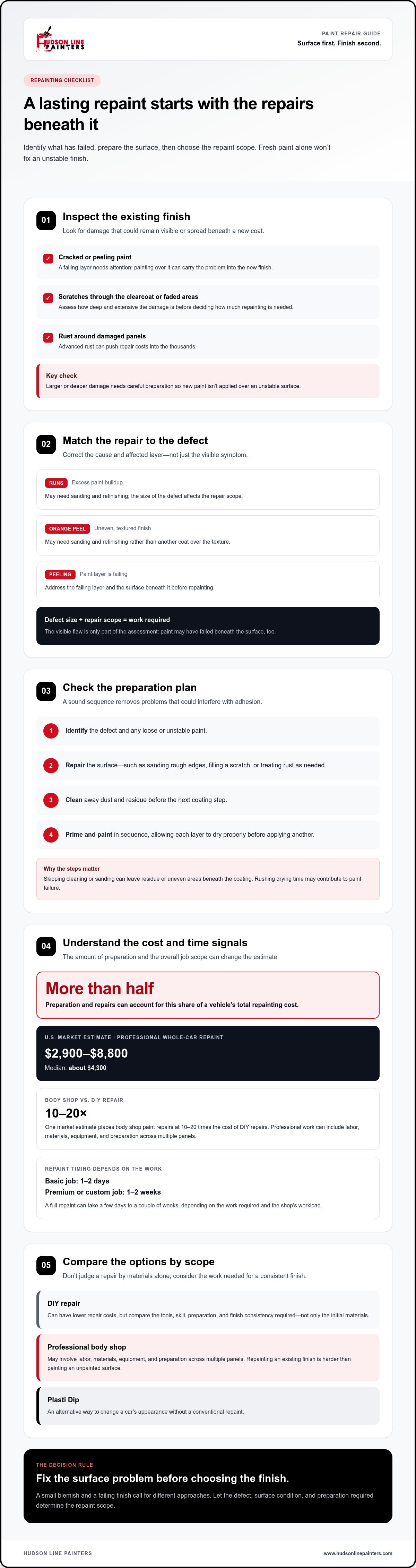
Before repainting a car, repair the surface problems that would remain visible beneath fresh paint. The amount of sanding, filling, and rust treatment can determine the scope and cost of the work.
Preparation and repairs can account for more than half of a vehicle’s total repainting cost. Advanced rust can push repair costs into the thousands.
Look for cracked or peeling paint, faded areas, scratches through the clearcoat, and rust around damaged panels. Larger or deeper damage needs careful preparation so the new coating isn’t applied over an unstable surface.
A body shop charges more than a DIY repair because professional work can involve labor, materials, equipment, and preparation across multiple panels. One market estimate places body shop paint repairs at 10-20 times the cost of DIY repairs. Repainting over an existing finish is harder than painting an unpainted surface, a distinction the United States Environmental Protection Agency notes can affect the correction estimate.
For a car, Plasti Dip offers another way to change its appearance without a conventional repaint. A full repaint can take a few days to a couple of weeks, depending on the work required and the shop’s workload. A basic job may take one to two days, while a premium or custom job typically takes one to two weeks.
Costs of Correcting Paint Defects
Correcting runs, orange peel, or peeling requires repairing the affected finish, not just hiding flaws under another coat. Runs and orange peel may need sanding and refinishing; peeling paint requires attention to the failing layer and the surface beneath it. The defect’s size and the repair scope determine how much work is involved.
Costs of Fixing Bad House Paint
Fixing bad house paint means preparing and repainting affected walls or rooms. Cost depends on the surface condition and project scope. Peeling or uneven paint may need scraping, sanding, patching, and priming before a new finish can cover it evenly. Interior repainting costs also depend on room size, trim, access, furniture protection, and whether drywall or plaster needs repair.
How shop quality and preparation affect paint-job results
Preparation determines whether new paint bonds to the surface or repeats an existing failure. On a car or in a house, the result depends on the work done before the finish coat.
A sound process starts by identifying the defect, then removing anything that could interfere with adhesion. On a car, that may mean sanding rough edges, filling a scratch, and cleaning away dust before priming. On an exterior wall, mildew or chalk left behind can prevent the top coat from adhering properly. Painting over either problem can leave an uneven appearance or cause the new finish to fail.
Drying time matters, too. Applying another coat before the previous one has dried properly may contribute to paint failure. A careful schedule gives each layer time to dry under suitable conditions before the next application. Rushing can trap defects beneath later coats, making correction more involved than addressing the problem before painting continues.
Color matching also depends on preparation and control. The paint formula needs to suit both the existing color and the surface being covered. If a car door is repaired but the adjacent panel is untouched, a mismatch can stand out under different lighting. A test application in an inconspicuous area can show whether the selected color and sheen blend as intended before more surface is coated.
Shop quality shows in the order and consistency of the work, not just the final color. Inspecting the surface, repairing damage, cleaning, sanding, priming, applying paint, and checking the dried finish each address a different risk. Skipping cleaning, for example, can leave residue beneath the coating; uneven sanding can make a repaired area visible after painting. A systematic workflow helps catch these issues early.
Repainting an existing finish can require more work than coating a new, unpainted surface. The United States Environmental Protection Agency notes that repainting over an existing finish is more difficult, which can affect the scope of a correction estimate. Previous layers, peeling edges, and repairs may need attention before a new coat can create an even surface.
When comparing approaches, check whether the preparation plan addresses the specific defect. Don’t assume another coat will solve it. A sound plan matches each step to the surface condition: remove loose paint, smooth uneven areas, clean away residue, then apply compatible coatings in sequence. This helps create consistent color and reduces the chance that an old flaw will show through fresh paint.
If mildew or chalk is not fully removed from an exterior surface, the top coat may not adhere properly. Assessing the wall is part of preparation, not an optional cosmetic step. Residue left behind can prevent the coating from bonding as intended, so check the surface before applying the finish coat.
The same principle applies to repairs: preparation should respond to the actual surface, not follow a rushed, one-size-fits-all sequence. Identifying residue, loose paint, or uneven areas helps determine which steps are needed before painting. Attention to these details can produce a more consistent finish and prevent visible flaws or adhesion problems from carrying into the completed job.
How much does it cost to correct paint defects like runs, orange peel, or peeling?
Correction costs depend on the defect, its size, and whether paint has failed beneath the visible surface. A raised run, textured orange peel, and peeling clearcoat each require a different repair approach.
A run forms when excess paint builds up and dries in a drip or ridge. A small, isolated run may be sanded smooth and polished, while a run across a panel may need refinishing to blend the corrected area. This illustrates how labor and repair scope can outweigh the visible size of a flaw.
Orange peel looks pebbled rather than smooth. Correcting it can involve leveling the texture through sanding, then polishing or repainting, depending on the defect’s depth. If the texture appears on one panel, work may stay localized; if it continues across several panels, matching the finish can require a broader correction. The number of affected areas and time needed to blend them influence the estimate.
Peeling needs more than a cosmetic touch-up because new paint must adhere to a stable surface. A repair may involve removing loose paint, smoothing the edges, preparing the panel, and applying replacement coatings. Painting directly over peeling edges leaves an unstable boundary that can show through or lift again. The deeper the failure extends, the more preparation the repair requires.
DIY work can reduce labor expense, but the result depends on controlled sanding, clean surfaces, and careful color matching. That doesn’t make every defect suitable for a home repair: a large run, widespread peeling, or a visible color transition may require more precise blending and specialized equipment.
For a useful estimate, describe the defect’s location and extent. Note whether it affects one panel or several, whether paint is loose, and whether the surface feels raised or rough. A close-up photo can show texture, but the surrounding finish also affects the repair scope. A localized run on a door, for example, differs from orange peel across the hood and adjacent fenders.
Ask for the estimate to separate surface preparation, repair labor, materials, and repainting. These details show whether the work addresses the cause or merely covers the symptom. A clear scope makes it easier to compare a spot correction with repainting a whole panel, while keeping the focus on a consistent finish rather than the lowest initial figure.
How much does it cost to repaint a house interior after a bad paint job?
The cost of repainting a badly painted interior depends on the rooms, surface condition, and correction required. A precise estimate separates preparation from painting, since covering visible flaws without correcting them can leave the same problems behind.
For example, a wall with roller marks may need sanding before fresh paint can create a more even surface. Peeling areas require removing loose paint and preparing exposed edges. Small dents or cracks may need patching and sanding, while more extensive damage can require drywall and plaster repair. Each preparation step adds labor and materials to the project.
Room size affects how much wall and ceiling surface needs attention, but layout matters too. A room with built-in shelving, detailed trim, or multiple doors requires more careful cutting-in and protection than an open room with uninterrupted walls. High ceilings, stairwells, and narrow corners can also affect access and application time. The number of surfaces included, such as walls, ceilings, and trim, further shapes the scope.
Paint selection is another factor. A dramatic color change may require more coverage than repainting in a similar shade, especially if the existing color shows through. A glossy finish can make surface imperfections more noticeable than a flatter finish, so preparation may need extra attention. Matching the new paint to the room’s intended appearance helps prevent another round of correction.
Before work begins, identify defects room by room. Note peeling, uneven sheen, visible patches, drips, and rough edges. Then distinguish cosmetic flaws from damaged drywall or plaster. A few roller marks may call for surface smoothing, while cracking around a patch may require repair before painting. This inventory helps determine which areas need preparation and which can be painted directly.
The price depends on the project and is provided after a quote request. The main cost factors are room dimensions, surface repairs, access, paint selection, and the number of surfaces. A written scope should clarify whether it includes patching, sanding, priming, wall painting, ceiling work, and trim. These details make the estimate easier to understand and compare with the actual repair needs.
Professional interior painting is useful when defects affect several rooms, surfaces need substantial preparation, or a consistent finish matters across connected spaces. If the problem is one small mark, a localized touch-up may be enough, provided the surface is sound and the paint matches. Choosing the right scope prevents unnecessary repainting and avoids a quick cover-up that leaves defects visible.
How much does it cost to fix peeling or uneven house paint?
The price depends on the affected surfaces and the preparation needed before repainting. Peeling paint often needs to be removed, while uneven paint may call for sanding, patching, or a fresh coat over a larger area. The visible flaw is only one part of the repair scope.
Start by distinguishing isolated damage from a wider adhesion problem. A few peeling edges on one wall may require localized scraping and smoothing. Peeling across several walls can point to a broader preparation issue, making spot repairs less suitable. If new paint only covers loose edges, those edges may remain visible or lift again.
Uneven paint can take several forms: roller marks, visible brush lines, drips, patchy sheen, or ridges around repaired areas. Each calls for different work. A raised drip may need careful smoothing, while patchy sheen may require recoating a continuous wall surface. A wall with dents or cracks may also need drywall or plaster repair before painting.
The price depends on the specific case and is provided after a quote request. Key cost factors include the affected area, surface condition, access, repair work, and paint selection. Repainting one small section differs from preparing several connected walls. Ceilings, trim, and detailed corners add distinct surfaces and application work to the project scope.
Before repainting, identify where the coating is loose and where it remains sound. Note whether the problem follows a patch, appears near a window, or continues across an entire wall. These details help distinguish a localized defect from a broader surface issue. A clear room-by-room description also helps define which areas need scraping, sanding, patching, and repainting.
DIY correction may suit a small, stable area if you can remove loose paint and create a smooth transition. Professional repair is more useful when peeling covers multiple surfaces, the wall needs drywall or plaster repair, or uneven sheen would make a patch stand out. Either way, the finish depends on addressing the affected surface before applying new paint.
A written project scope should identify the rooms, surfaces, and preparation tasks included. Clarify, for example, whether it covers wall repairs, sanding, priming, and repainting adjacent sections for a consistent appearance. Comparing these details shows whether an estimate addresses the source of the visible defect or merely paints over it.
A car's manufacturer paint warranty is not the same as a house-paint repair estimate. A car's manufacturer paint warranty typically covers three years or 36,000 miles when the damage results from defective paint, but generally does not cover chips or scratches from wear and tear. Those terms concern a car, so they should not be treated as a stated warranty for a home repainting job.
One reported paint failure involved paint that began cracking and peeling two weeks after the painter completed the project. That timing is an example of a reported failure, not a cost figure. Keep it separate from the scope and preparation factors that shape an estimate for repairing peeling or uneven house paint.
Hudson Line Painters: Interior Painting
Hudson Line Painters provides Interior Painting for homeowners dealing with peeling, uneven, or poorly finished walls. If defects affect multiple rooms or repeated touch-ups have left visible patches, a coordinated repaint can address the surfaces as a whole. The scope depends on wall condition, the preparation required, and which areas need new paint.
If your interior needs more than a simple color change, describe the problem areas and the result you want. Hudson Line Painters can plan the painting work around those needs, with careful attention to surface condition and finish.
Contact Hudson Line Painters to discuss your interior painting project.
Plan a Finish That Fits Your Home
Before arranging another coat, decide how you want the finished space to feel. A consistent refresh may call for matching the existing look, while a broader update can be an opportunity to rethink colors and finishes. Write down which rooms or surfaces matter most, then use those priorities to shape the project scope.
The cost of fixing a bad paint job makes more sense when weighed against the result you want, not just the work needed to cover visible flaws. Hudson Line Painters offers Interior Painting, Exterior Painting, and Kitchen Cabinet Refinishing to help homeowners address projects throughout the home. A clear starting point makes it easier to discuss the work and choose a finish that suits your space.
With a considered plan and careful preparation, you can move toward a home that feels refreshed and complete.
Frequently Asked Questions
Can a bad paint job be fixed with DIY sanding and repainting, and what does it cost?
Yes, DIY sanding and repainting can work for small, stable defects when you can prepare the surface evenly. The cost of fixing a bad paint job rises when additional materials or equipment are needed. For a house interior, the expense depends on the affected area, repairs, paint, and tools; sanding alone won’t fix peeling paint that hasn’t bonded.
Does the original painter have to fix a bad paint job under a warranty or contract?
Some professional paint shops provide multi-year warranties covering the paint, their work, or both. Whether the original painter must correct a defect depends on the warranty’s coverage.


