

What if the best-looking finish for your deck or fence starts with choosing a different treatment than you expected? For Northern New Jersey homeowners, the wood’s condition matters as much as the color. Hiring deck and fence painters should start with a clear assessment, so cleaning, drying, repairs, and the right staining or sealing scope are considered before application.
It’s understandable to worry that rushed preparation could lead to peeling or an uneven finish, or that outdoor work might disrupt your routine. This guide explains how to assess your deck or fence, what a professional staining project involves, and how weather can affect scheduling. You’ll also learn what to look for in a project proposal, including the scope, finish recommendations, approximate timeline, and flat-rate price.
Hudson Line Painters provides deck and fence staining and sealing in Northern New Jersey. The company is licensed and insured, carries comprehensive liability insurance, and is an EPA Lead-Safe Certified firm. Owner-led, trained employee painters handle the work, with daily site cleanup and a written proposal that spells out the agreed scope. Knowing what the project involves can help you plan with confidence.
Key Takeaways
- Faded color or peeling finish may call for a different response than soft, cracked, or unstable boards. Identify the signs before deciding on the next step.
- Choose a finish by considering the wood’s condition, its existing coating, the look you want, and the upkeep you expect.
- Learn how deck and fence painters assess the surface, plan preparation, apply stain or sealer, and review the finished work.
- A written proposal outlines the project scope, finish recommendations, approximate timeline, and flat-rate price. Weather can affect outdoor scheduling.
- Hudson Line Painters uses owner-led, trained employee crews and does not cut corners. The company is licensed and insured, carries comprehensive liability insurance, and is an EPA Lead-Safe Certified firm.
When Should Northern New Jersey Homeowners Call Deck and Fence Painters?
Faded color, peeling finish, rough boards, or a patchy appearance can signal that a deck or fence needs attention. The right next step depends on what’s happening beneath the surface. A worn coating may call for cleaning and refinishing, while soft, cracked, or unstable wood needs closer assessment before stain or sealer is applied.
That distinction matters whether you’re looking at a backyard deck in Bergen County, a fence in Hudson County, or weathered boards in Union County. Sun, rain, and everyday use affect outdoor wood, but visible wear alone doesn’t show whether the problem is limited to the finish or extends into the boards.
What visible signs suggest a deck or fence needs attention?
Look for uneven fading, coating that flakes or lifts, rough surfaces, and areas that look different from the surrounding wood. These signs may indicate that the finish has worn down or that the surface needs preparation before refinishing. Note where the wear appears, such as on steps, railings, board ends, or one side of a fence.
Soft spots, visible cracks, movement, or boards that feel unstable need a different level of attention. Before requesting an estimate, take clear photos and make a short list of affected areas. This helps you describe what you’ve noticed without guessing at the cause. Wood Stain Types and Applications provides general background on stains and how they differ from other wood finishes. Hudson Line Painters isn’t responsible for third-party content.
When is a finish project different from a repair?
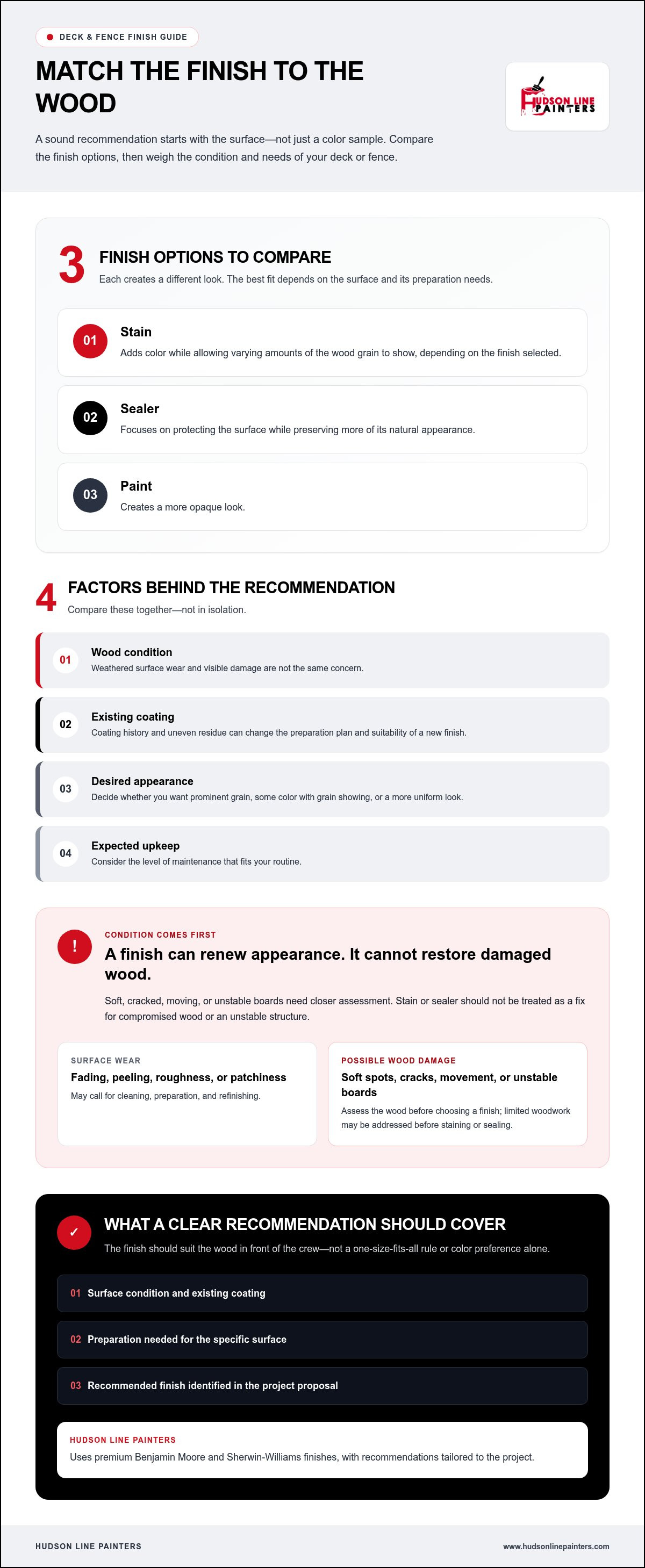
Staining or sealing can refresh a wood surface’s appearance, but a coating can’t restore strength to damaged boards or correct an unstable structure. Applying finish over a problem may hide warning signs without addressing the underlying issue. The wood’s condition should guide the scope, not color preference alone.
Some limited woodwork may be addressed through light carpentry before staining or sealing. Extensive structural concerns fall outside surface renewal. If you’re unsure whether a board is weathered or compromised, describe the concern and have the condition assessed before choosing a finish. Hudson Line Painters provides deck and fence staining and sealing, and does not cut corners by treating repair concerns as cosmetic.
Once the surface condition is understood, consider whether staining or sealing suits the wood and the appearance you want. For surfaces that need cleaning, professional power washing can be included as a separately scoped service. An assessment helps clarify what the finish can address and what needs attention first.
How Deck and Fence Painters Assess Wood and Recommend a Finish
A sound finish recommendation starts with the surface, not a color sample. Deck and fence painters should consider the wood’s condition, existing coating, desired appearance, and the level of upkeep that fits your routine. A finish that suits one project may not suit another, even when both involve outdoor wood.
Hudson Line Painters assesses the surface and project scope before recommending staining or sealing. Stain adds color while allowing varying amounts of wood grain to show, depending on the finish selected. Sealer focuses on protecting the surface while preserving more of its natural appearance. Paint creates a more opaque look. The right option depends on the surface and its preparation needs, not just a general preference for a particular style.
How does the wood’s condition affect the finish recommendation?
Bare, previously coated, and weathered wood each need a close look before work begins. An existing coating can affect preparation and the suitability of a new finish. Peeling, uneven residue, or coating that remains in some areas but has worn away in others can change the preparation plan. Visible damage should also be considered separately from surface wear.
Wood type, past treatments, and exposure can vary across a single deck or fence, so a recommendation shouldn’t rely on a one-size-fits-all rule. If you don’t know the coating history, share what you do know and provide photos or details during the assessment. The goal is to match the finish and preparation to the surface in front of the crew.
What should homeowners consider when comparing finishes?
Start with the look you want. Should the grain remain prominent, show through some color, or be covered by a more uniform finish? Then weigh that preference against the wood’s condition and the maintenance you’re prepared to handle. These priorities help narrow the choices without assuming one finish is best for every deck or fence.
Staining and sealing differ from painting, but the practical choice depends on the existing coating and preparation required. A finish that looks appealing on a sample may appear different across weathered boards or areas with uneven exposure. Ask for the recommended finish for your specific project to be identified in the proposal, rather than left vague.
For a deeper explanation of finish options and their effect on appearance, explore this guide to deck and fence staining as you consider your preferences. Hudson Line Painters uses premium Benjamin Moore and Sherwin-Williams finishes, with recommendations tailored to the project. A deck and fence staining estimate can translate your preferences into a written scope and finish recommendation.
What a Professional Deck and Fence Staining Project Includes
A well-managed staining project follows a clear sequence: assess the surface, define the work in writing, prepare according to the wood’s condition, apply the selected finish, and review the completed work. This makes it easier to understand what’s included and how the project may fit around daily routines. Deck and fence painters should clarify the planned scope before work begins, including preparation and finish details.
How do inspection and preparation shape the project?
An on-site assessment helps identify the surface condition, existing coating, areas needing attention, and preparation appropriate to the job. The plan should reflect the wood and agreed scope. Don’t assume washing, sanding, or a particular number of finish applications; the written proposal should describe the work planned for your project.
Power washing may be useful for exterior cleaning, but it’s a separately scoped service when needed. Hudson Line Painters can include professional power washing as its own part of the project, making the work and price clear. Preparation needs may differ across a deck’s walking surface, railings, stairs, or fence sections.
What does a written project proposal clarify?
The written proposal turns the assessment into an agreed plan. It sets out the project scope, premium finish recommendations, approximate timeline, and flat-rate price. Review which surfaces are included and what preparation or related work is covered. The price quoted in the proposal is the price you pay unless the project scope changes.
Clear details help prevent mismatched expectations. If you expect both the deck floor and railings to be stained, make sure both appear in the scope. The proposal also gives you a reference for the planned finish and approximate timing. Outdoor dates can shift because of weather or unforeseen circumstances, so the timeline is an estimate, not a guaranteed completion date.
Once the scope is agreed, owner-led, trained employee painters complete the project with daily site cleanup, followed by a walkthrough to review the finished work. Hudson Line Painters is an EPA Lead-Safe Certified firm and does not cut corners. A deck and fence staining estimate lets you discuss the surface and receive a project-specific written scope before scheduling.
How to Plan Deck and Fence Work Around Northern New Jersey Weather
Outdoor staining depends on more than choosing a calendar date. Weather and surface condition can affect exterior project scheduling, so leave room for adjustments rather than relying on a guaranteed start or finish date. A practical plan accounts for the wood’s readiness, the forecast, access to the work area, and how your household or property uses the deck or yard.
What should homeowners prepare before the work begins?
Use the estimate to walk through the work area and flag practical details. Planning ahead helps align the written scope with how you use the property and what the crew needs to access.
- Surface readiness: Point out peeling finish, weathering, or damage, and share any known history of previous coatings or treatments.
- Access: Discuss gates, stairs, narrow paths, and shared entrances, as well as how outdoor furniture or nearby items will be handled.
- Household routines: Note when people typically use the deck, yard, or nearby access points, and identify pets or shared spaces that affect planning.
- Scope: Review which deck or fence sections are included and what preparation is described in the written proposal.
Don’t assume every nearby surface is included. A fence gate or a set of deck stairs, for example, may need to be listed as part of the agreed work. Confirming the details before the scheduled start makes it easier to prepare the area and understand what the project covers.
How can scheduling stay realistic when weather changes?
Stain application depends on suitable conditions and a surface ready to receive the finish. Cool or hot temperatures, high humidity, direct intense sun, rain, or damp wood can affect application and curing. General guidance places ideal air and surface temperatures for deck staining between 50°F and 90°F, with moderate humidity. Actual conditions and product requirements still matter. These ranges are planning context, not a promise that work can proceed on a particular day or that the finish will be ready by a set time.
Keep outdoor furniture and planned gatherings flexible until the schedule and surface readiness are clear. The written proposal provides an approximate timeline, but dates can change because of weather or unforeseen circumstances. A realistic plan leaves room to adjust rather than pressing ahead when conditions aren’t suitable. If the schedule shifts, updated timing can help you plan household access and use.
Hudson Line Painters provides a free on-site estimate to discuss project scope and scheduling. Share the areas you want stained or sealed, access considerations, and any known coating history so the proposal can reflect the work and your property’s needs.
Choose Hudson Line Painters for Deck and Fence Staining in Northern New Jersey
Choosing deck and fence painters is easier when the team, scope, and terms are clear from the start. Hudson Line Painters is a family-run contractor based in Union City, serving Northern New Jersey communities. Owner-led, trained employee painters handle deck and fence staining and sealing, and the company does not cut corners. Daily site cleanup and a final walkthrough help keep the work organized from preparation through completion.
Hudson Line Painters is licensed and insured, carries comprehensive liability insurance, and is an EPA Lead-Safe Certified firm. The company has a 5.0 ★ rating from 83 verified Google reviews and received the “Best Painters in Union City, New Jersey 2026” award from Quality Business Awards. These details offer useful context, while the written project terms explain what your staining project includes.
What makes the estimate and project experience clear?
The initial on-site estimate is free and valid for 30 days from issue. It gives the team an opportunity to assess the surfaces and discuss your goals. The written proposal identifies the agreed scope, premium finish recommendations, approximate timeline, and flat-rate price, so you can review the plan before work begins.
The written proposal price is the price paid unless the project scope changes. If you add surfaces or work beyond what was agreed, additional charges may apply because the scope has changed. The original terms remain clear, and you can review any proposed adjustment before proceeding. Project dates are approximate and may change due to weather or unforeseen circumstances.
Free color consultation is provided. It’s an optional resource for considering color, not a required part of deck or fence staining. Hudson Line Painters provides a 1-year workmanship warranty for covered work. Any workmanship issue must be reported within 14 days of project completion, so review the written terms and keep project details handy after the walkthrough.
How can local homeowners take the next step?
Hudson Line Painters serves homeowners in Hudson County NJ, Union County NJ, and Bergen County NJ, including Hoboken NJ, Edgewater NJ, Fort Lee NJ, Teaneck NJ, Hackensack NJ, Englewood NJ, Cliffside Park NJ, Leonia NJ, Palisades Park NJ, and Ridgefield NJ. For local projects, a clearly defined scope and a plan that reflects the property’s wood and access help set expectations from the start.
Before the estimate, note which deck or fence sections you want included, identify access considerations, and share what you know about prior coatings. This gives the on-site discussion a practical starting point. The proposal can then clarify the recommended finish, preparation scope, approximate schedule, and flat-rate price for your project.
Plan Your Next Outdoor Project with Confidence
A deck or fence refresh is more than a cosmetic decision. Use the estimate to set priorities for your outdoor space: which areas matter most, what look suits your home, and how you want the finished surface to complement the way you use it. With those priorities in mind, conversations with deck and fence painters can focus on a practical project scope rather than a vague wish for “a fresh look.”
Consider how staining or sealing fits alongside other exterior plans. Coordinating the order of projects can help you avoid scheduling work around surfaces that may be affected by later improvements. A project-specific estimate gives you a chance to discuss how the work fits your plans, review the proposed scope, and decide on a comfortable next step.
A thoughtful plan makes it easier to move forward with confidence. Your outdoor space can take shape one clear decision at a time.
Frequently Asked Questions
Can you stain a composite deck?
Don’t assume a wood stain is suitable for composite decking. Composite and natural wood are different surfaces, so check the decking manufacturer’s care instructions and use only a finish specifically approved for that material. If the boards are weathered or already coated, share those details when describing the project. That context helps the estimate reflect the surface and avoids choosing a finish based only on appearance.
How often should a wood fence be stained or sealed?
There’s no single maintenance interval that suits every wood fence. Sun exposure, the wood’s condition, the existing finish, and the product’s care instructions all affect when it may need attention. Inspect the fence periodically for fading, peeling, or uneven water response, such as sections that react differently after rain. Follow the finish manufacturer’s guidance rather than relying on a fixed schedule for every property.
Can you stain over an existing deck stain?
Sometimes, but the existing stain’s condition and compatibility with the proposed finish matter. Peeling or uneven areas may need more preparation than a surface with a sound, consistent coating. Deck and fence painters should assess the existing finish before recommending how to proceed. Share any product or application history you know, and include the coating in the on-site assessment so the written scope addresses preparation.
Is pressure washing always necessary before deck staining?
No, pressure washing isn’t automatically right for every deck. The surface material, existing finish, and condition should guide the cleaning and preparation plan. If exterior cleaning is needed, make sure the proposal explains whether it’s included or scoped separately. Don’t assume it’s part of every staining project. An assessment can help define the work, especially if only a particular area appears dirty or marked.
How long does deck or fence staining take?
Project duration varies with the surface, preparation needs, agreed scope, and suitable weather. The timeline in a written proposal is an estimate, not a guaranteed completion date. Weather or unforeseen circumstances can change outdoor scheduling. A small, straightforward fence section and a deck requiring added preparation won’t necessarily follow the same schedule. Use the project-specific timeline after the on-site walkthrough, and keep plans for using the area flexible as work progresses.
Can staining fix rotten or structurally damaged fence boards?
No. Stain or sealer addresses the surface finish, not rot or structural instability. If a fence board feels soft, is cracked through, or moves when touched, have its condition assessed before planning finish work. Light carpentry and structural renovation are different scopes. The estimate should clearly describe the proposed staining or sealing and identify repair needs separately, so a new coating isn’t mistaken for a repair.


