

What if the smooth, refreshed kitchen you want depends less on the spray gun and more on the condition of your cabinets? A kitchen cabinet spraying service NJ homeowners consider can update existing cabinetry without replacing it, but the result starts with sound surfaces and careful preparation. Before choosing a finish, consider whether your cabinets are in suitable condition, whether the current layout works for you, and how you’ll manage kitchen access during the project.
This guide explains what professional cabinet refinishing involves, from assessing cabinet condition and preparing surfaces to applying a new finish. You’ll learn why cleaning, sanding, and priming matter, what can affect the finished appearance, and when damage or a desired layout change may make refinishing less suitable. We’ll also cover practical ways to prepare storage and work areas, so you know what to discuss when planning the project.
For homeowners in Hudson County, Union County, and Bergen County, including Hoboken, Edgewater, Fort Lee, and Hackensack, a cabinet refresh can be an alternative to replacement when the existing cabinets are in good shape. The key is matching the project to the kitchen, then carrying out each step with care.
Key Takeaways
- A kitchen cabinet spraying service NJ can refresh cabinet appearance without changing the kitchen’s layout or construction.
- A well-organized project includes a discussion of the desired finish, an assessment of the surfaces, careful preparation, application, and a final review.
- Use cabinet condition and your renovation goals to weigh refinishing, replacement, or repair before settling on an approach.
- Plan access to storage and nearby work areas to make the project easier to manage in your home.
- Hudson Line Painters provides kitchen cabinet refinishing for homeowners in Hudson, Bergen, and Union Counties, including Hoboken, Edgewater, Fort Lee, and Hackensack.
What a kitchen cabinet spraying service in NJ can change
A kitchen cabinet spraying service NJ homeowners consider is a way to apply a fresh coating to cabinet surfaces prepared for refinishing. It can change the color and overall appearance of the cabinetry, helping an existing kitchen feel refreshed without automatically altering its layout or construction. The spray application is only one part of the work: the condition of the surfaces and the preparation behind the finish matter just as much.
Think of spraying as a finish update, not a kitchen redesign. It won’t change where cabinets sit, add storage, or repair structural damage. The right approach depends on what you want to change, the project scope, and whether the existing cabinet surfaces are suitable for refinishing. For a broader overview of finish options and considerations, read this complete cabinet refinishing guide.
What parts of the kitchen can be refinished?
Visible cabinet doors and drawer fronts are often central to a finish refresh. The scope may also include cabinet frames, exposed sides, or other visible surfaces. Including adjoining areas can help create a more consistent appearance, particularly where doors and frames meet or around an island. Before work begins, define which parts are included and how they relate to your goals. Not every material or surface is automatically suitable, so the cabinet condition needs to be assessed before the scope is settled.
For example, you might want to update the doors and drawer fronts while keeping the existing layout, or include exposed cabinet sides so the refreshed finish looks cohesive. Make a quick list of the areas you want addressed, including any island panels or open shelving, then consider their condition alongside the overall kitchen configuration.
Spraying versus replacing cabinets
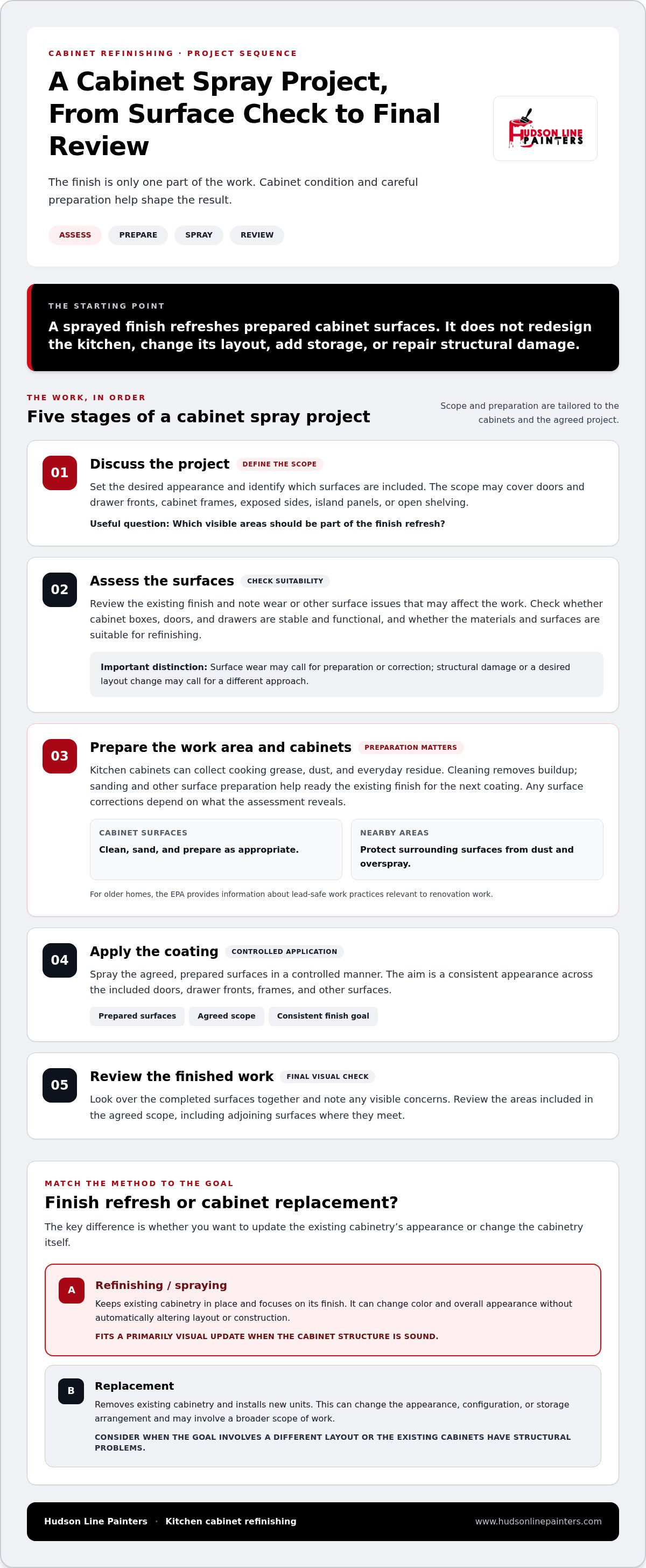
Refinishing keeps the existing cabinetry in place and focuses on its finish. Replacement involves removing cabinetry and installing new units, which can change the appearance, configuration, or storage arrangement and may involve a broader scope of work. A sprayed finish can be a practical option when the cabinet structure is sound and the goal is primarily visual. It won’t correct structural problems or change the kitchen’s configuration.
Surface preparation is fundamental to a finish project, not a minor step before application. Cleaning, sanding, and other preparation help create an appropriate surface for the coating; the wider principles are outlined in the wood finishing process. If cabinets have damage or the desired result calls for a different layout, a finish refresh may not address the underlying need. Start by checking whether the boxes, doors, and drawers are stable and functional, then match the project to the changes you want.
How professional kitchen cabinet spraying works, from preparation to finish
A professional kitchen cabinet spraying service NJ homeowners consider should follow an orderly sequence, with the work tailored to the cabinetry and agreed scope. Spraying isn’t simply applying a new coat over the old finish. The surfaces need to be assessed and prepared so the coating can be applied evenly, while nearby areas are protected from dust and overspray.
- Project discussion: Define the desired appearance and identify which cabinet surfaces are included.
- Surface assessment: Review the existing finish and note wear or surface issues that may affect the work.
- Preparation: Clean and prepare the surfaces, protect surrounding areas, and address surface corrections as appropriate.
- Spraying: Apply the coating in a controlled manner across the included surfaces.
- Final review: Look over the finished work and discuss any visible observations before wrapping up.
Why cabinet preparation matters before spraying
Kitchen cabinets collect cooking grease, dust, and everyday residue. If buildup remains, it can interfere with a clean, consistent application. Cleaning removes residue; sanding and other surface preparation help ready the existing finish for the next coating. The preparation required depends on what the surface assessment reveals, including whether corrections are needed before application.
Masking and protecting nearby surfaces helps keep the work focused on the cabinetry. An organized work area also makes it easier to manage doors, drawer fronts, and exposed frames without losing track of which surfaces are included. For older homes, the EPA provides information about lead-safe work practices relevant to renovation work. Project duration varies with the kitchen, the surfaces included, and the preparation required, so don’t assume a fixed completion time.
What homeowners can expect during application and review
During spraying, the coating is applied to prepared surfaces with the aim of creating a consistent appearance across the doors, drawer fronts, frames, and any other included areas. Application is only one stage: preparation and careful control of the work area support the overall result. A final visual review gives the team and homeowner an opportunity to look over the completed surfaces together and note visible concerns.
Hudson Line Painters provides kitchen cabinet refinishing as part of its residential painting work. The project scope can be shaped around your kitchen, the areas to be refinished, and your finish goals. Defining those details early helps set expectations for the work and for access to the kitchen while the project is underway.
To learn more about Hudson Line Painters and its home-improvement services, visit Hudson Line Painters.
Are your cabinets right for a sprayed finish? A practical comparison
A kitchen cabinet spraying service NJ homeowners consider is best suited to cabinets that can support a finish refresh. Separate cosmetic wear, such as an outdated color or scuffed finish, from problems that affect how the cabinets work. A sprayed coating can change appearance, but it won’t stabilize loose parts, correct significant damage, or resolve a layout that no longer meets your needs.
The Kitchen Cabinet Manufacturers Association (KCMA) provides information about cabinet construction and performance. For your project, look at how the cabinet boxes, doors, and hardware are holding up, and whether the current arrangement still works for your household.
| Option | May fit when | What it addresses |
|---|---|---|
| Refinishing | Cabinet boxes and components are generally sound, and the layout works. | Updates the visible finish without changing cabinet configuration. |
| Replacement | You want a different layout, storage arrangement, or new cabinetry. | Changes the cabinetry itself and may involve a broader project. |
| Further repair or assessment | Parts are loose, damaged, or not functioning properly. | Addresses concerns that a new finish alone won’t fix. |
Signs refinishing may suit your kitchen
Refinishing may be worth considering if the cabinets remain functional, the boxes feel stable, and you’re happy with the current layout. If the storage works but the finish looks dated or worn, changing the surface appearance may refresh the room without replacing the cabinetry. Suitability still depends on the actual surfaces and their condition. Check for peeling, damage, or loose parts and include those observations when defining the scope; a general description or photograph can’t establish how a finish will perform.
When replacement or repair may be the better route
Cosmetic wear is different from damage that affects stability or use. Loose components, significant deterioration, or cabinet parts that no longer function properly call for a closer assessment before focusing on appearance. If you need a different configuration or more useful storage, a finish change won’t meet that goal. Explore this kitchen cabinet refinishing guide to learn more about refreshing existing cabinetry.
Use three questions to frame the decision: Are the cabinets functional? Does the layout still suit your household? Is the main goal a new appearance? If the first two answers are yes and the third is your priority, refinishing may be an appropriate option to assess. If not, the project may need to address condition or configuration before a sprayed finish makes sense.
Planning a cabinet spraying project in Hudson, Bergen, or Union County
A smooth project starts with a clear plan for both the finish and everyday kitchen use. Hudson Line Painters serves homeowners in Hudson County, Bergen County, and Union County, as well as Hoboken, Edgewater, Fort Lee, Teaneck, Hackensack, Englewood, Cliffside Park, Leonia, Palisades Park, and Ridgefield. If you’re considering a kitchen cabinet spraying service NJ homeowners can plan around, think through what you want changed and how you’ll manage access to storage while the work is underway.
Before discussing the project, note which cabinet areas you want included and any concerns about wear, damage, or loose components. It also helps to have a general finish direction in mind, such as a lighter, darker, or more neutral look. You don’t need every detail decided in advance. These preferences provide a useful starting point for discussing the kitchen and its surfaces.
Preparing your home for cabinet work
Clearing items from cabinets and counters can help create an orderly work area and protect everyday belongings. Think about which supplies you’ll need to keep accessible and where you can temporarily store items from the cabinets being worked on. The right preparation varies by kitchen, so discuss household access needs during project planning rather than relying on a one-size-fits-all checklist or assumed timeline.
Consider how you’ll use nearby areas while work is in progress, too. You may want to set aside a place for frequently used dishes or plan an alternate spot for small appliances. Sharing those needs early helps shape practical arrangements for your household and the work area.
What to discuss when requesting a project consultation
Describe the change you want, identify visible damage or wear, and explain which surfaces you’d like included. Mention details that could affect the scope, such as exposed cabinet sides or an island, and raise any questions about access to the kitchen during the work. A focused discussion connects your finish goals with the cabinet condition and the areas involved.
Hudson Line Painters’ Northern New Jersey painting service areas page provides location information for homeowners planning a project in the region. Bring your goals, observations, and access needs together to make the project conversation specific to your kitchen.
Choose Hudson Line Painters for kitchen cabinet spraying in NJ
A cabinet refresh should begin with the cabinets themselves, not just a color choice or spray application. Hudson Line Painters provides kitchen cabinet refinishing as part of its home-improvement work, helping homeowners consider a finish update when the existing cabinetry is suitable. A useful first step is to look at the cabinet condition, the surfaces involved, and the appearance you want to achieve.
Hudson Line Painters is privately owned and has operated since 2018. The company serves residential customers in Hudson County, Bergen County, and Union County, and communities including Hoboken, Edgewater, Fort Lee, Teaneck, Hackensack, Englewood, Cliffside Park, Leonia, Palisades Park, and Ridgefield. For local homeowners planning a cabinet refresh, those details help frame a conversation about project stages and working carefully in the home.
What makes the service relevant to local homeowners
Cabinet refinishing can suit homeowners who are comfortable with their kitchen’s layout but want to update how the cabinetry looks. It’s one part of Hudson Line Painters’ residential painting and home-improvement work, with the scope shaped around the condition of the cabinets and the surfaces included. A refreshed finish can change the room’s appearance, but it won’t correct structural problems or redesign the kitchen.
That’s why a thoughtful project discussion matters. Share what you want to change, point out visible wear or damage, and explain how you use the kitchen. These details help frame the work around your home rather than treating every cabinet project as the same.
The next step for your kitchen project
If you’re considering a kitchen cabinet spraying service NJ homeowners use to refresh existing cabinetry, bring your goals and observations into the conversation. Note whether the cabinet boxes and doors appear sound, which exposed surfaces you want included, and whether the current layout still works for your household. These details help establish a suitable project scope without assuming in advance that every surface is a candidate for refinishing.
Hudson Line Painters provides kitchen cabinet refinishing for homeowners planning a finish update.
Hudson Line Painters contact page
Plan Your Cabinet Refresh with Confidence
A successful cabinet refresh starts with an honest look at the existing surfaces, not just a choice of color or application method. If the cabinets are in suitable condition and the layout still works for your household, refinishing may offer a way to update the kitchen’s appearance without replacing the cabinetry. Careful preparation and a clearly defined project scope help set realistic expectations.
Hudson Line Painters provides kitchen cabinet refinishing for homeowners in Hudson County, Bergen County, and Union County, along with nearby New Jersey communities. As you consider a kitchen cabinet spraying service NJ, gather your finish preferences, note visible wear or damage, and decide which cabinet areas you want included. These details make it easier to discuss an approach suited to your kitchen.
Every refresh begins with understanding the home and the homeowner’s goals. Take the next step toward a considered cabinet update with Hudson Line Painters.
Frequently Asked Questions
What is kitchen cabinet spraying?
Kitchen cabinet spraying is a way to apply a coating to cabinet surfaces prepared for refinishing. The work may include doors, drawer fronts, frames, and other exposed areas within the agreed project scope. Preparation readies surfaces for application, while controlled spraying aims to create a consistent appearance. It refreshes the finish, but doesn’t change the cabinet layout or repair structural damage.
Is spraying kitchen cabinets better than replacing them?
Spraying may be suitable when cabinet boxes and components are in sound condition, the layout works for your household, and your main goal is a new appearance. Replacement may make more sense if you want a different configuration, need different storage, or have damage that affects function or stability. The better choice depends on cabinet condition and project goals, not appearance alone.
How long does professional cabinet spraying take?
There isn’t one completion time that fits every kitchen. Project duration depends on factors such as the number of surfaces included, cabinet condition, preparation needs, and the scope of the work. The sequence typically includes discussion, assessment, preparation, application, and a final review. Project timing can be discussed in relation to your particular kitchen and household needs.
Can all kitchen cabinets be spray painted?
No. Suitability depends on the cabinet material, existing finish, and overall condition. Sound cabinet boxes and functional doors may be candidates for refinishing, while water damage, loose components, peeling surfaces, or other significant deterioration may require further assessment or a different approach. A surface review helps identify what work may be appropriate. A general description or photograph alone can’t establish how a coating will perform.
Will spraying make kitchen cabinets look smooth?
Spraying applies a coating with the aim of creating a consistent finish across prepared cabinet surfaces. The result depends on factors such as surface condition, preparation, and the areas included in the project. Cleaning and appropriate surface preparation help create a suitable base, while careful application supports an even appearance. Spraying won’t conceal every flaw or correct damage, so expectations should reflect the cabinets’ condition.
Do I need to empty my cabinets before the project?
Clearing items from the cabinets and counters can help keep the work area organized and protect household belongings. What needs to be moved may depend on which doors, drawer fronts, frames, or other surfaces are included. Consider which kitchen items you’ll need during the project, then discuss access needs as part of planning. The preparation plan should suit the specific kitchen rather than follow a universal rule.
Does Hudson Line Painters provide cabinet spraying in Bergen County and Hudson County?
Hudson Line Painters provides kitchen cabinet refinishing for residential customers in Bergen County, Hudson County, Union County, and nearby New Jersey communities. Local areas include Hoboken, Edgewater, Fort Lee, Teaneck, Hackensack, Englewood, Cliffside Park, Leonia, Palisades Park, and Ridgefield. A project discussion can cover your kitchen’s condition, desired appearance, and the surfaces you want included, helping establish a suitable scope for a cabinet refresh.


