
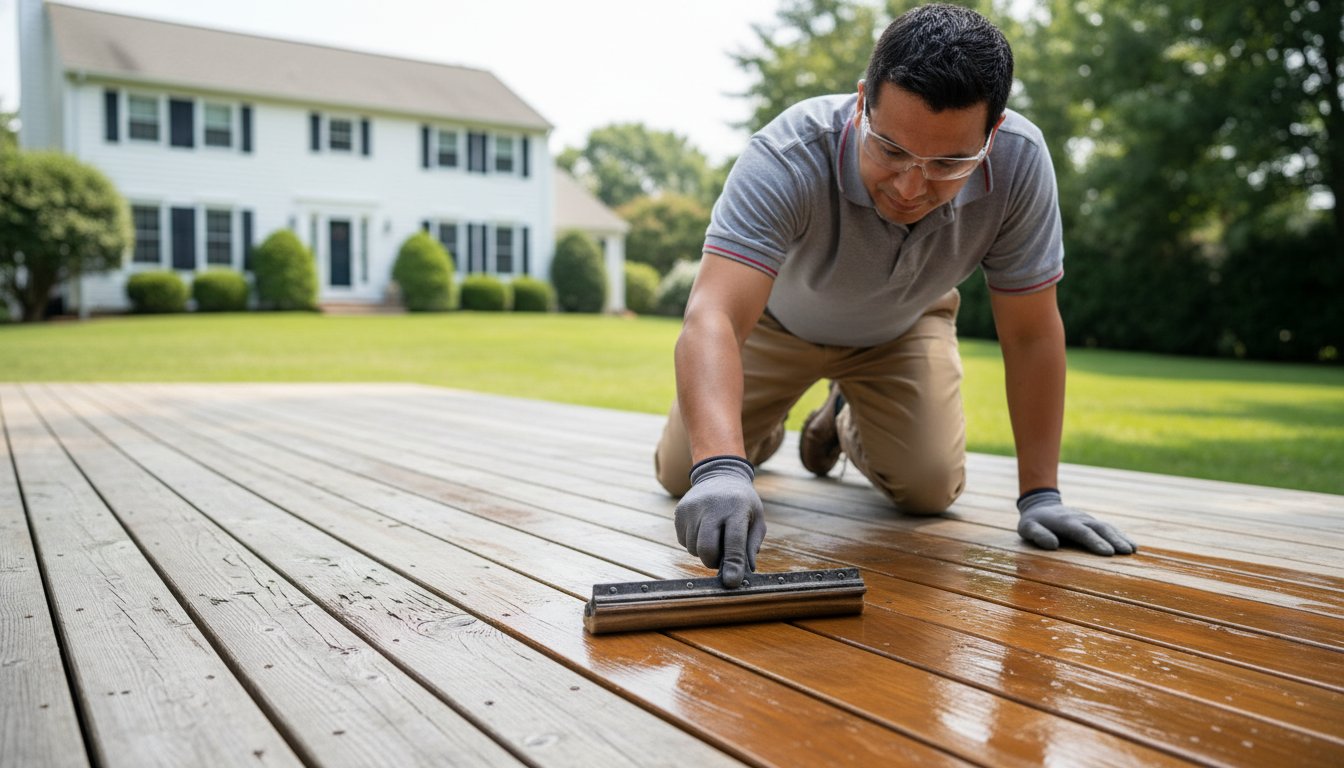
Total wood replacement can cost five times more than a professional restoration, yet many homeowners wait until the rot has already set in before taking action. You have likely noticed your once-vibrant cedar deck turning a dull, splintered gray after just one harsh New Jersey winter. It is frustrating to watch a major investment lose its luster while you face rows of confusing, low-quality products at a big-box store. We understand that maintaining your home's exterior shouldn't feel like a guessing game or a financial burden.
This guide will show you how to halt that decay and protect your property using professional deck & fence staining techniques designed for our unique coastal and suburban climate. You'll learn how to select the right opacity for your wood's age and discover why the new August 18, 2026, coating regulations matter for your next project. We will also preview the most popular 2026 color trends, from rich ambers to sophisticated matte finishes. This ensures your outdoor living space remains a beautiful, rot-free extension of your home for years to come.
Key Takeaways
- Understand how deep-penetrating stains act as a vital moisture barrier to prevent structural rot and wood splintering.
- Learn to identify the ideal stain opacity for your wood's condition, from transparent finishes for new cedar to solid colors for weathered boards.
- Discover the specific advantages of professional deck & fence staining, including the use of commercial-grade sprayers and meticulous site preparation.
- Explore a step-by-step restoration process that integrates light carpentry to ensure every board is sound before any finish is applied.
- Master simple maintenance techniques like the "water bead test" to accurately gauge when your outdoor surfaces require a fresh protective coat.
Why Deck & Fence Staining is Critical for New Jersey Homes
In the Garden State, your outdoor wood surfaces face a relentless cycle of environmental stress. While many homeowners view it as a cosmetic choice, professional deck & fence staining is actually a technical necessity. Unlike paint that sits on the surface, a high-quality stain acts as a deep-penetrating protective barrier that bonds with wood fibers. For a comprehensive overview of wood stain and how its chemical composition protects against the elements, it is clear that these products are engineered to block moisture while allowing the wood to breathe. This process does more than protect; it revitalizes gray, weathered boards, pulling the rich, original luster back to the surface and making your outdoor space feel new again.
Our local climate is particularly unforgiving. We deal with suffocating humidity in July that encourages mold and mildew growth. This is followed by heavy snow and ice in January. This constant moisture cycle, combined with the salty air in coastal areas, can quickly turn a beautiful cedar fence into a brittle liability. Without a protective seal, the wood absorbs this moisture like a sponge, leading to warping and eventual failure. Protecting these surfaces is the only way to ensure they survive the transition between seasons.
The Consequences of Neglecting Your Outdoor Wood
Sunlight is a silent architect of destruction for unprotected wood. UV rays aggressively break down lignin, which is the natural glue holding wood fibers together. When this happens, you'll see your deck turn gray and start to splinter underfoot. Beyond aesthetics, the real danger is structural wood rot. New Jersey’s fluctuating temperatures create a freeze-thaw effect where wood expands and contracts. This movement opens tiny fissures that trap water, leading to deep-seated rot that compromises the safety of your stairs and railings. It's a progressive problem that doesn't stop until the wood is structurally unsound and dangerous for your family.
Restoration: A Smart Financial Choice for NJ Homeowners
Choosing to restore your wood is a calculated financial decision. The cost of a complete deck replacement is massive compared to the price of a professional maintenance cycle. By investing in regular deck & fence staining, you aren't just buying a color; you're preventing the need for major structural renovations later. Well-maintained outdoor features also provide a measurable boost to your property's curb appeal and overall appraisal value. For broader home improvement goals, partnering with a professional renovator like Exterior Specialist LLC can help ensure your entire property remains in peak condition. Wood restoration is a proactive asset management strategy that preserves the integrity of your home's exterior for the long term.
Selecting the Right Stain: Solid, Semi-Transparent, and Transparent
Choosing the correct finish for your deck & fence staining project requires a balance between your home's aesthetic and the current condition of the wood. Opacity is your primary consideration. Transparent stains are nearly clear, allowing the natural grain of premium wood like cedar to take center stage. While beautiful, they offer the least UV protection and typically require more frequent maintenance. Semi-transparent stains provide a middle ground by adding a hint of pigment that highlights the wood's texture while blocking more harmful rays. For older decks or those with significant imperfections, solid stains offer a paint-like finish that completely hides the grain. This provides the highest level of UV protection and is the most durable choice for high-traffic surfaces.
The chemical composition of your stain also impacts its performance in our local climate. Oil-based formulas are praised for their ability to penetrate deep into wood fibers to provide lasting protection from within. However, they often carry higher VOC levels. Water-based stains have improved significantly by 2026, offering faster dry times and superior resistance to the mildew that thrives in New Jersey's humid summers. As of August 18, 2026, new regulations have standardized cleaner, more eco-friendly formulations for sealers and undercoaters. These low-VOC options provide a safer environment for your family without sacrificing the durability needed to withstand freezing winters.
Solid vs. Semi-Transparent: Which Fits Your Style?
Your choice of opacity should complement your home’s architecture. For the historic Victorian homes found in many New Jersey neighborhoods, a solid stain in a deep, classic tone can provide a sophisticated, uniform look that matches the intricate trim. Conversely, the clean lines of a Colonial-style home often benefit from a semi-transparent stain that emphasizes the organic warmth of the wood. If you're unsure which direction to take, looking at a professional portfolio of local projects can help you visualize how different finishes interact with specific architectural styles.
Understanding Wood Types: Cedar vs. Pressure-Treated Pine
Different wood species absorb stains at varying rates. Cedar is naturally rot-resistant but highly porous, meaning it drinks in transparent oils beautifully. Pressure-treated pine, which is common throughout Hudson County, requires a more strategic approach. New pressure-treated lumber often contains high moisture levels that can repel stain if applied too early. Following the official guidelines for pressure-treated wood ensures that the material is sufficiently dry and ready to accept a protective coating. Just as we use specialized techniques for cabinet refinishing to ensure a smooth, lasting bond on interior wood, we apply the same disciplined preparation to exterior surfaces to prevent peeling and ensure long-term adhesion.
Professional Staining vs. DIY: Evaluating the Real Value
Many homeowners look at a weathered deck and assume they can handle the restoration over a single weekend. It seems simple to buy a bucket of stain and a brush, but the technical reality of deck & fence staining is far more complex than it appears. A DIY approach frequently results in "lap marks," which occur when overlapping brush strokes create dark, unsightly streaks that are nearly impossible to fix once dry. Professionals use commercial-grade airless sprayers and industrial sanders to ensure a perfectly uniform finish. These tools allow for deep, even penetration into the wood grain. This is something a standard handheld brush or a low-end consumer sprayer simply cannot achieve.
Hiring a licensed and insured New Jersey contractor provides a level of security that a weekend project lacks. If a DIYer accidentally spills oil-based stain on their siding or damages expensive landscaping with harsh cleaning chemicals, the cost of repair quickly exceeds any initial savings. A professional team brings a disciplined site etiquette. They ensure your home remains clean and protected throughout the entire project. This partnership offers the peace of mind that comes from knowing the job is done right the first time.
The Hidden Complexity of Surface Preparation
Nearly 80% of staining success is determined before the first drop of product touches the wood. Most DIY failures stem from inadequate preparation. Many people believe they can just spray the wood down with a garden hose, but deep-seated dirt and old, failing finishes must be meticulously removed. There's a significant risk involved in this phase. Improperly handled equipment can easily gouge the wood, leaving permanent scars and splintered surfaces. This is why many residents opt for professional power washing services as a critical first step. It ensures the wood is clean and the pores are open without causing structural damage.
Long-Term Durability and Warranty
A professional application typically lasts two to three times longer than a typical DIY job. This longevity comes from technical precision and the use of premium products that aren't always available at local big-box retailers. When professional painters handle your exterior wood, they stand behind their work with established professional standards. This provides a clear advantage over the "do-it-yourself" method, where you might find yourself re-doing the entire project next spring. When you calculate the cost of your time, equipment rentals, and the high price of premium materials, the value of a professional restoration is undeniable.
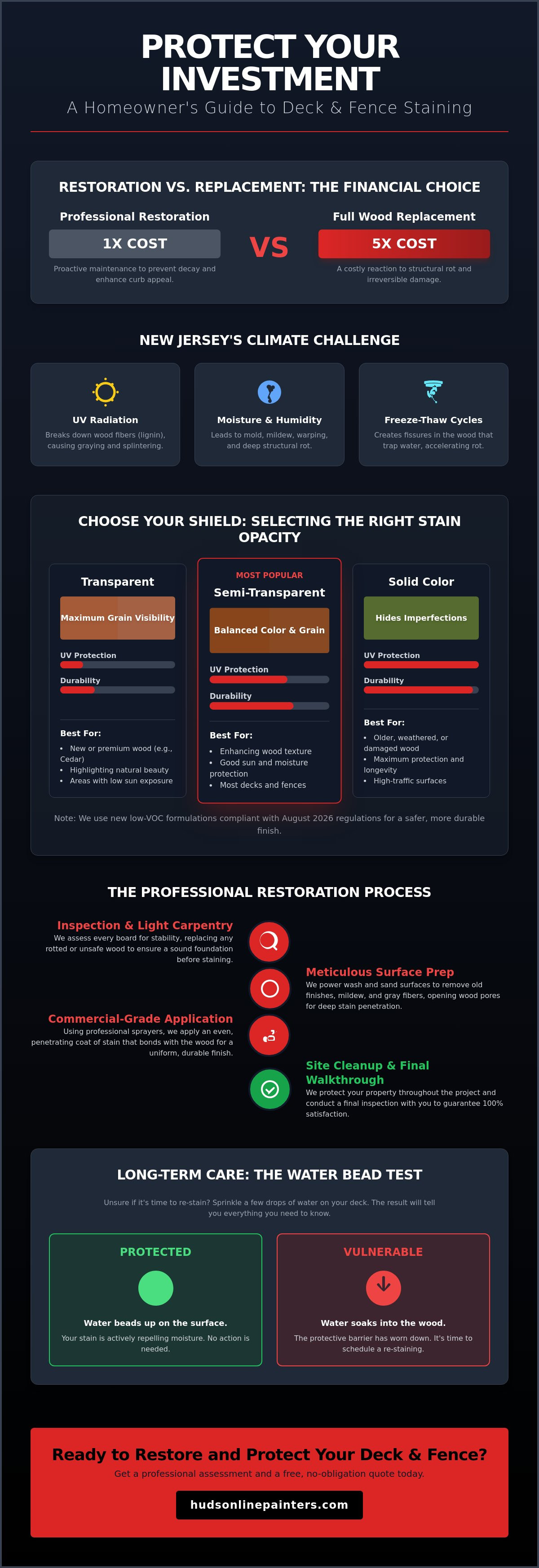
The Hudson Line Painters Restoration Process
Our proprietary procedural framework transforms deck & fence staining from a simple chore into a technical restoration. We don't just apply product; we manage a lifecycle that ensures your outdoor wood remains resilient against the elements. This systematic approach provides a level of transparency that allows you to see exactly how we protect your investment. By following a logical, sequential path, we eliminate the guesswork that often leads to DIY failure and premature peeling.
The process begins with a meticulous inspection of every square foot of your surface. We look for rotted boards, loose fasteners, and structural weaknesses that might compromise the final result. Once the wood is sound, we move to deep cleaning and power washing. This step removes organic growth like mold and mildew, along with old, failing finishes that would prevent a new stain from adhering correctly. Finally, we employ precision application techniques using both commercial-grade sprayers for broad surfaces and hand-brushes for intricate details. This multi-layered approach guarantees a uniform, high-end finish that adds genuine value to your home.
Light Carpentry and Structural Repairs
Staining over rotted wood is a waste of money because the finish cannot bond to compromised fibers. To achieve a "like-new" appearance, our team performs light carpentry as part of the preparation phase. We replace warped boards and reset loose screws to ensure the structure is safe and stable. This level of craftsmanship extends beyond your backyard; if you need the same precision for your interior walls, our team also specializes in drywall and plaster repair to keep your home's interior looking as sharp as the exterior.
The Science of Wood Neutralization
Many contractors skip the critical step of pH neutralization, but we view it as essential for longevity. After power washing, wood often becomes highly alkaline, which can cause the stain to darken or fail prematurely. We apply specialized wood brighteners and neutralizers to open the pores and restore the wood's natural acidity. This scientific step ensures the stain bonds permanently to the wood fibers rather than just sitting on the surface. Clean wood isn't always ready wood. By taking this extra step, we ensure the deck & fence staining results last for years. You can learn more about our commitment to technical precision at hudsonlinepainters.com.
Long-Term Maintenance: Keeping Your Deck and Fence Beautiful
Protecting the results of your deck & fence staining project is a matter of proactive management rather than reactive repair. New Jersey’s volatile climate makes a consistent maintenance routine essential for preserving the structural integrity of your wood. A beautiful finish can be quickly compromised by simple neglect, especially when organic debris is allowed to sit on the surface. Leaves, pine needles, and dirt trap moisture against the wood fibers. This creates a perfect breeding ground for mold and mildew, which can eat through even the highest quality stains over time. Sweeping your deck weekly and clearing gaps between boards ensures that air can circulate and moisture can evaporate.
You don't need specialized tools to monitor the health of your wood. Perform the "water bead test" at least once a year, preferably in the spring. Simply pour a small amount of water onto several areas of your deck or fence. If the water beads up into distinct droplets, your protective barrier is still functioning correctly. If the water soaks into the wood and leaves a dark spot, the fibers are vulnerable to rot and UV damage. This simple diagnostic tool gives you the peace of mind that your investment remains secure against the next season of humidity or snow.
Seasonal Care for NJ Decks and Fences
A strategic maintenance schedule helps you avoid the high cost of total wood replacement. In the spring, focus on inspecting for winter damage. Look for any areas where ice accumulation might have caused the wood to swell or fasteners to loosen. A gentle soft wash during this time removes the salt and grime left behind by winter storms. As autumn approaches, prepare the wood for the upcoming freeze-thaw cycles by clearing all furniture and debris. For a more detailed breakdown of these tasks, you can explore our 2026 guide on deck maintenance.
When to Call a Professional for a Refresh
Knowing when to apply a maintenance coat can save you thousands of dollars in the long run. If your stain is starting to look dull but hasn't yet begun to peel or flake, you likely only need a professional cleaning and a fresh topcoat. This is much more efficient than waiting for the finish to fail, which requires a full strip and restain. Establishing a partnership with a reliable deck stainer near me ensures that your outdoor living space receives the technical care it needs at the right intervals. If you're ready to revitalize your outdoor environment and ensure its longevity, contact us today for a professional consultation and a detailed assessment of your property's needs.
Secure the Future of Your Outdoor Living Space
Maintaining a beautiful home in New Jersey requires a strategic approach to wood preservation. By choosing restoration over the high cost of total replacement, you're making a smart financial decision that adds measurable value to your property. Our meticulous 4-step restoration process ensures every board is cleaned, neutralized, and protected against the harsh humidity and snow cycles unique to our region. This technical precision is what sets professional deck & fence staining apart from a temporary DIY fix.
With deep roots and local expertise across Hudson, Union, and Bergen Counties, we understand the specific environmental challenges your exterior surfaces face. We view our service as a craft that provides you with peace of mind and a stunning environment for your family to enjoy. Don't wait for structural rot to take hold when a professional refresh is just a click away. Get Your Free Deck & Fence Staining Quote from Hudson Line Painters today. We look forward to partnering with you to transform your wood surfaces into a lasting asset.
Frequently Asked Questions
How often should I have my deck and fence stained in New Jersey?
Most homeowners in our region find that every two to three years is the ideal interval for maintenance. Transparent and semi-transparent stains provide about two years of peak protection against our high coastal humidity. Solid color acrylic stains can last up to five years before they require a refresh. It's best to perform a water bead test annually to confirm if your specific structure needs attention sooner.
Is it better to stain a deck in the spring or the fall?
Early spring is generally the most effective time for deck & fence staining in New Jersey. This timing allows you to address any structural damage caused by winter snow and ice before the summer humidity sets in. While fall is also a viable option for preparing wood for the upcoming freeze-thaw cycles, spring ensures your outdoor space is protected and beautiful for the entire peak season.
Can you stain a deck that has been previously painted or stained?
You can absolutely stain a surface that has been previously treated, but the preparation phase becomes significantly more technical. Any old, failing paint or stain must be completely removed through chemical stripping or mechanical sanding to ensure the new product can penetrate the wood fibers. Applying a new coat over a peeling finish will only lead to premature failure and a blotchy appearance.
How long does professional deck staining take to dry?
Most professional-grade stains require 24 to 48 hours of dry time before you can safely return furniture to the surface. While the wood may feel dry to the touch within a few hours, the chemical curing process takes longer. High humidity levels, which are common in our local area, can extend this window, so we recommend waiting at least two full days for the best results.
What is the best type of stain for pressure-treated wood?
High-quality oil-based penetrating stains are often the preferred choice for the pressure-treated lumber commonly used in Hudson and Bergen Counties. These formulas reach deep into the chemically treated fibers to provide a moisture barrier from the inside out. It's essential to ensure the wood has a moisture content below 15% before application, as new pressure-treated wood often requires several months to dry out sufficiently.
Does staining a fence actually prevent wood rot?
Staining is your primary defense against the structural wood rot that often plagues New Jersey fences. By sealing the pores of the wood, the stain prevents water from saturating the fibers and creating the damp conditions that fungi need to thrive. While it won't fix existing rot, a disciplined staining schedule stops the decay process before it compromises the integrity of your fence posts and pickets.
Should I power wash my deck before staining it myself?
Cleaning the surface is mandatory, but you should exercise extreme caution if you choose to power wash it yourself. Using the wrong pressure setting or nozzle can easily gouge the wood and cause permanent structural damage. If you aren't experienced with the equipment, a professional soft wash is a safer alternative that removes mold and dirt without splintering the delicate wood grain.
How much does professional deck and fence staining cost in NJ?
The total investment for professional deck & fence staining depends on the square footage, the current condition of the wood, and the level of preparation required. Factors such as the height of the structure and the type of stain selected also influence the final quote. Because every project has unique requirements, you should check with a local professional for a detailed assessment to receive an accurate quote for your specific property.


