
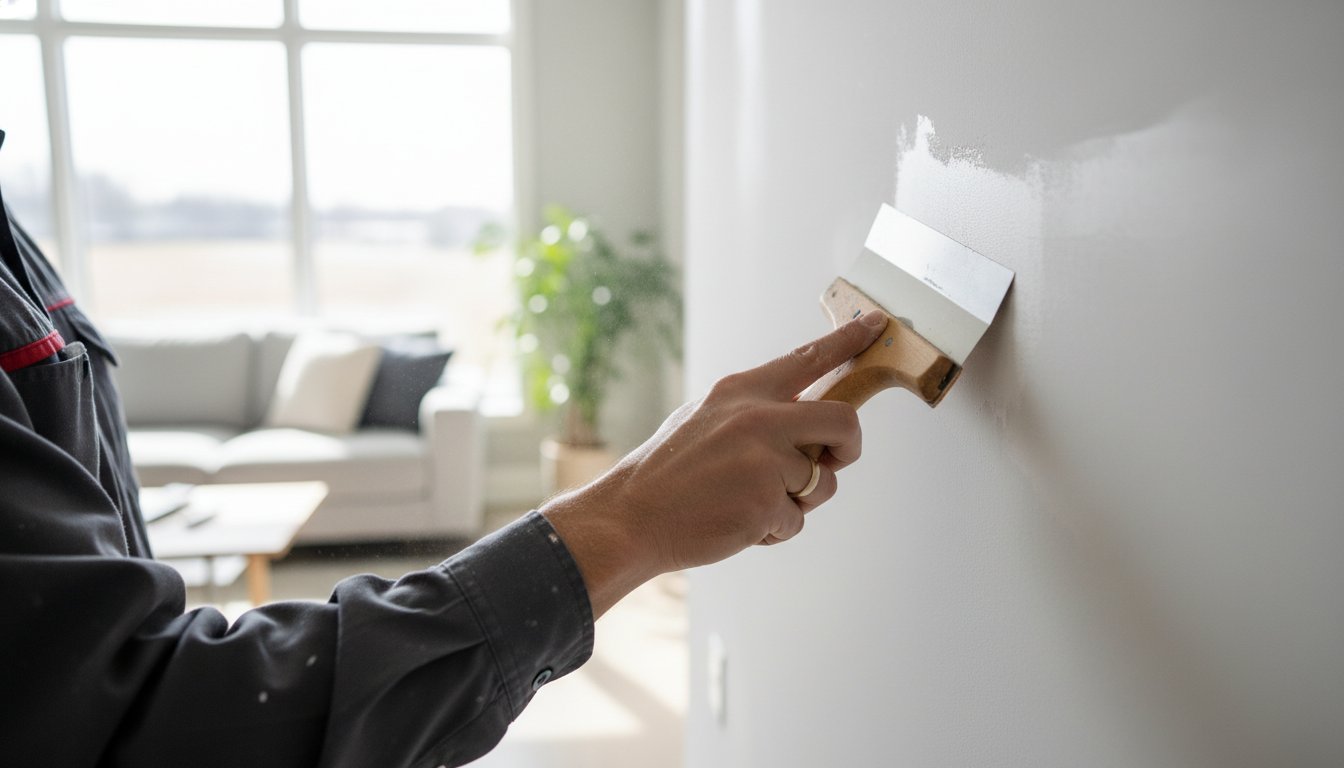
A successful wall repair isn't measured by the hole you filled, but by the fact that no one can tell it was ever there. You likely know the frustration of staring at a finished patch only to see the telltale hump of a visible seam or a texture that doesn't quite match your home's original character. Whether you're dealing with a small puncture or a large section of failing material, achieving a truly invisible drywall and plaster repair requires more than just a putty knife and some compound. It's a technical process of managing the transition between old and new materials to ensure the structural integrity remains as solid as the aesthetic.
We understand that the mess and dust associated with these projects can feel overwhelming, especially in the meticulously maintained homes found across New Jersey. You deserve a solution that prioritizes site etiquette as much as the final result. This guide will teach you how to identify the root causes of wall damage and the professional techniques used to create a flawless, factory-finish surface. We will cover everything from evaluating structural cracks to matching unique textures, providing the technical clarity you need to restore your living space with confidence.
Key Takeaways
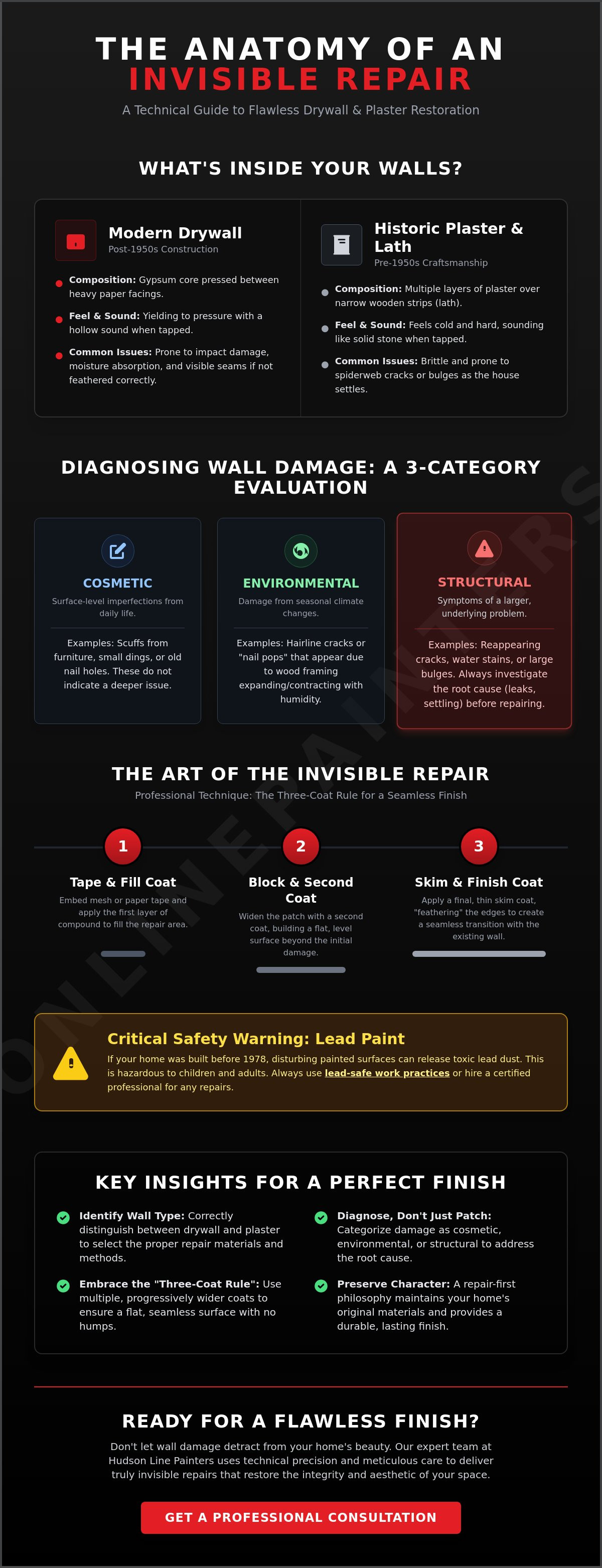
- Identify the technical differences between modern gypsum and historic lath to ensure the correct restoration method is used for your home’s specific architecture.
- Learn to categorize wall damage as cosmetic, environmental, or structural to determine the appropriate level of professional intervention required.
- Discover the "Three-Coat Rule" and feathering techniques that guarantee a seamless drywall and plaster repair with no visible seams or humps.
- Gain clarity on project planning by understanding the variables that influence timelines and investment beyond simple "per-hole" pricing models.
- Understand how a repair-first philosophy preserves your home’s original character while providing a durable, factory-finish surface that lasts.
Understanding Drywall and Plaster Repair in New Jersey Homes
New Jersey homes represent a wide spectrum of architectural history. You might live in a 1920s colonial with deep roots or a sleek, modern condo in a developing neighborhood. This diversity means that drywall and plaster repair isn't a one-size-fits-all task. Before you can achieve a seamless finish, you must understand exactly what your walls are made of. The technical approach for a gypsum-based board is fundamentally different from the methods required for traditional lime or gypsum plaster. Using the wrong materials can lead to poor bonding, visible ridges, and patches that eventually flake away.
Our local climate plays a silent but significant role in the health of your interior surfaces. New Jersey experiences high humidity in the summer and dry, forced-air heat in the winter. These seasonal fluctuations cause the wooden framing and lath inside your walls to expand and contract. Over time, this constant movement stresses the wall surface, leading to the hairline cracks or "nail pops" common in many local residences. Identifying whether your damage is a simple surface blemish or a result of this environmental cycle is the first step toward a permanent fix.
The Anatomy of Modern Drywall
Most homes built after the mid-20th century utilize drywall, a material consisting of a gypsum core sandwiched between heavy paper facings. When Understanding Drywall and its common failure points, it's clear that impact damage, moisture, or house settling are the primary culprits for repairs. In modern Bergen County renovations, drywall is the standard because it's efficient to install. However, it requires precise taping and "feathering" of the joint compound to avoid visible seams under your final coat of paint.
The Complexity of Historic Plaster and Lath
If you own a historic property in Hudson County, your walls likely consist of multiple layers of plaster applied over narrow wooden strips called lath. This traditional method creates a rock-solid surface that provides superior soundproofing and fire resistance. However, plaster is inherently brittle. As a house settles over a century, the plaster can pull away from the lath, resulting in "bulges" or intricate spiderweb cracks. Effective drywall and plaster repair in these historic environments requires specialized knowledge of how these layers bond together to prevent the new patch from cracking as the house continues to breathe.
Identifying your wall type is the first step in any restoration. A simple "tap test" often reveals the truth. Drywall usually sounds hollow and feels somewhat yielding, while plaster feels cold to the touch and sounds like solid stone when tapped. Knowing this distinction ensures you use the correct bonding agents and compounds for a repair that maintains the integrity of your home's original craftsmanship.
Evaluating Wall Damage: From Hairline Cracks to Structural Issues
Most homeowners reach for a container of spackle the moment they spot a crack. This is often a mistake. Before starting any drywall and plaster repair, you must perform a proper diagnosis to ensure you aren't just masking a deeper problem. Wall damage generally falls into three categories: cosmetic, environmental, or structural. A cosmetic scuff from a moving chair is a simple fix. However, a crack that reappears every spring suggests your home is reacting to New Jersey's dramatic seasonal shifts. Understanding the "why" behind the damage prevents you from wasting time on a repair that will fail within months.
Safety is the first priority when evaluating older surfaces. If your home was built before 1978, any disturbance to the walls could involve lead-based paint. It is vital to follow Lead-Safe Work Practices to protect your family from toxic dust. Once safety is addressed, you can look closer at the damage patterns. For instance, water stains are never just an aesthetic issue. A yellow or brown ring on your ceiling indicates an active or past leak. You must find and stop the water source before touching the wall material, or the new patch will simply bubble and peel.
Identifying Cosmetic vs. Structural Cracks
Hairline cracks are common in Union County homes due to fluctuating indoor humidity levels. These are usually environmental and occur where wall panels meet. However, keep an eye out for diagonal cracks extending from the corners of door frames or windows. These "stair-step" patterns often signal a foundation shift or structural settling. If you're unsure about what you're seeing, check out our guide on 7 Critical Signs of Drywall Damage for a deeper look at warning signals.
The Impact of Water Damage and Mold
Water affects materials differently. On plaster, you might see efflorescence, which looks like a white, powdery salt deposit on the surface. On drywall, moisture usually leads to soft spots and mold growth. Because drywall is porous, mold-compromised sections must be cut out and replaced entirely. Plaster is denser and can sometimes be cleaned and sealed, provided the wooden lath behind it hasn't rotted. We recommend professional moisture testing to ensure the interior wall cavity is completely dry before you seal the repair.
For plaster walls, you should also perform a "tap test." Gently tap the area around a crack with your knuckles. A solid, sharp sound means the plaster is still well-bonded to the lath. A hollow, rattling, or dull thud indicates delamination. This means the plaster has pulled away from its support and requires mechanical reattachment rather than just a surface patch. If the damage feels widespread, getting a professional evaluation can save you from the frustration of a collapsing ceiling or failing wall down the road.
The Art of the Invisible Repair: Professional Techniques
An invisible repair is the hallmark of a true craftsman. While many homeowners attempt a quick fix with a retail patch kit, these often result in "ghosting," where the outline of the repair remains visible through the final coat of paint. This happens because standard DIY compounds tend to shrink significantly as they dry. Achieving a professional drywall and plaster repair requires a disciplined, multi-step approach that accounts for material shrinkage and light reflection. We follow a strict "Three-Coat Rule" to ensure structural integrity and a flat surface. The first coat provides the foundation, the second levels the area, and the final "skim" coat creates the ultra-smooth texture needed for a seamless blend.
The secret to tricking the eye lies in feathering. Instead of stopping at the edges of the damage, we extend the compound several inches, or even feet, beyond the original hole. This creates a gradual slope that is impossible to detect once painted. For high-end NJ interiors where high-gloss or satin finishes are used, we aim for a level-5 finish. This involves a thin skim coat over the entire surface to eliminate even the slightest variations in texture. Utilizing professional drywall repair techniques ensures that the repaired area doesn't just look good today, but remains crack-free for years to come.
Texture Matching: Popcorn, Knockdown, and Orange Peel
Replicating 50-year-old wall textures in historic New Jersey properties is perhaps the most difficult aspect of the trade. Whether your home features a heavy knockdown or a subtle orange peel, a flat patch will stand out like a sore thumb. We use a variety of specialized tools, including hopper guns for consistent spray patterns and hand-troweled techniques for custom textures. By adjusting the viscosity of our custom-mixed compounds and using specific sponge dabbing methods, we can blend the repair into the surrounding wall so perfectly that it becomes indistinguishable from the original finish.
Plaster Stabilization and Re-attachment
In many older Hudson or Union County homes, the problem isn't just a crack; it's a sagging ceiling where the plaster has detached from the wooden lath. Instead of costly and messy demolition, we often use plaster stabilization techniques. This involves using specialized plaster washers and high-strength adhesives to mechanically re-attach the plaster to the lath. Once secured, we skim the entire wall or ceiling to hide micro-cracking. This "repair-first" philosophy is a smart financial choice, often costing significantly less than a total drywall replacement while preserving the superior soundproofing and character of your original historic plaster.
Planning Your Repair Project: Timelines, Costs, and Preparation
Planning a successful restoration requires a clear understanding of the logistics involved. Many homeowners assume that a drywall and plaster repair project is a simple afternoon task, but professional results demand a structured timeline. In the New Jersey climate, humidity levels significantly impact how long it takes for joint compound or plaster to cure between coats. Attempting to rush this process by painting over damp compound leads to bubbling and poor adhesion. A standard repair usually requires at least three visits to allow for proper drying, sanding, and final finishing. When you are Choosing the Best Drywall Services in Harrison, NJ, look for a contractor who provides a realistic schedule based on these environmental factors.
Pricing for these services is rarely as simple as a "per hole" rate. Professional contractors evaluate the total scope of the project, including the height of the walls, the complexity of the existing texture, and the type of material being repaired. Repairing a puncture in modern drywall is a different financial investment than stabilizing a sagging historic plaster ceiling. We prioritize transparency in our estimates, ensuring you understand how the specific challenges of your home’s architecture influence the final investment. This approach eliminates surprises and ensures the focus remains on the longevity of the repair rather than a quick, temporary fix.
Professional Repair vs. DIY Pitfalls
The appeal of a DIY patch kit is often overshadowed by the hidden costs of poor results. Without professional-grade tools and dust containment systems, a simple repair can quickly contaminate your home’s air quality with fine gypsum particles. Furthermore, a botched patch is difficult to hide. Visible seams or mismatched textures can actually lower your property’s resale value by signaling to potential buyers that the home hasn't been meticulously maintained. We use HEPA-filtered vacuums and precision sanding techniques to protect your living environment while delivering a factory-finish result that preserves your home's value.
Preparing Your Home for the Crew
A little preparation goes a long way in ensuring a smooth project lifecycle. We ask that you clear the immediate workspace by moving furniture and removing wall decor before our arrival. This allows us to move efficiently and protects your belongings from accidental contact. You can expect our team to implement rigorous site etiquette, including the use of heavy-duty drop cloths and plastic sheeting to isolate the work area. Clear communication during the initial consultation ensures we are aligned on the scope of work and any specific concerns you have regarding your space. If you're ready to restore your walls to their original beauty, schedule a consultation with our expert team today.
Why Hudson Line Painters is the Premier Choice for NJ Wall Restoration
Choosing a contractor for your home is about more than just finding someone with a putty knife. At Hudson Line Painters, we operate with a "Repair-First" philosophy. We don't just paint over existing problems; we identify and fix the foundation of the damage. This disciplined approach ensures that your drywall and plaster repair isn't a temporary patch but a long-term restoration. Our deep local expertise across Hudson, Union, and Bergen Counties means we understand the specific architectural nuances of your neighborhood. Whether you own a historic brownstone in Jersey City or a modern residence in Bergen County, we bring the technical precision required to match your home's unique character.
Our proprietary procedural framework serves as a hallmark of transparency. From the initial consultation to the final walkthrough, you'll know exactly what to expect at every stage of the project lifecycle. This systematic method eliminates the guesswork and stress often associated with property maintenance. We also bridge the gap between structural integrity and aesthetic beauty. By combining our specialized repair techniques with our Professional Home Painting Services, we offer a total solution that most competitors simply cannot match. You won't have to coordinate between multiple crews; our team handles the transition from a rough patch to a vibrant, finished wall with seamless efficiency.
A Full-Service Aesthetic Transformation
There is a significant benefit to having a single, meticulous team manage both the structural repair and the final color application. It ensures that the texture matching and feathering techniques discussed in previous sections are perfectly optimized for the specific paint finish you've chosen. We take immense pride in our site etiquette, treating your home with the same respect we would our own. This includes rigorous dust management and a commitment to a meticulous clean-up every day. Our work is a craft that adds genuine value to your space, and we stand behind every repair with a craftsman’s guarantee of quality and durability.
Ready to Restore Your Walls?
Restoring your home to its original, flawless state starts with a clear and honest evaluation. We provide detailed, no-surprise estimates that outline the full scope of work, ensuring you feel fully informed before any tools touch your walls. We value your time and your investment, focusing on providing a well-managed experience that results in a perfectly smooth or perfectly matched surface. Don't settle for visible seams or recurring cracks that diminish your home's comfort and value. Request your free drywall and plaster repair estimate today and experience the peace of mind that comes with professional local expertise.
Restore the Integrity of Your Home’s Interior
Achieving a flawless wall surface is a technical endeavor that balances structural stability with aesthetic precision. You now understand that a successful drywall and plaster repair depends on identifying the root cause of damage and employing meticulous feathering techniques. Whether you're preserving the historic charm of a lath-and-plaster ceiling or modernizing a contemporary space, the right approach ensures your walls remain smooth and crack-free for years. Since 2018, we've served homeowners across Hudson, Union, and Bergen Counties with a commitment to disciplined site etiquette and professional dust containment. Our specialists possess the rare expertise required to handle both modern gypsum boards and traditional historic plaster with equal care. You don't have to live with visible seams or the stress of a messy renovation. We are ready to transform your living space into the polished environment you deserve. Get a Free Estimate for Your Drywall or Plaster Repair and take the first step toward a seamless home today.
Frequently Asked Questions
Can you repair plaster with drywall mud?
You can use joint compound for small plaster patches, but setting-type compounds are superior for larger areas. Plaster is a rigid material, while standard air-dry drywall mud is softer and prone to shrinking. For a durable drywall and plaster repair, we often use a bonding agent to ensure the new material adheres correctly to the old lime-based substrate. This prevents the patch from pulling away over time.
How long does a typical drywall repair take to dry?
Drying times vary based on the compound used and New Jersey's current humidity levels. Standard joint compound typically requires 12 to 24 hours between coats to cure fully. While setting-type compounds can harden in under an hour, they still contain moisture that must evaporate before you apply primer. We monitor these cycles closely to ensure the patch doesn't bubble or fail during the final painting phase.
Do I need to paint the entire wall after a small repair?
Painting the entire wall from corner to corner is the only way to guarantee an invisible result. Even with a perfect color match, the "flashing" effect caused by different application dates and tool textures will make a spot-repair stand out under direct light. By painting the full surface, we ensure the sheen and texture are uniform across the entire wall, providing the seamless finish your home deserves.
Is it better to repair or replace old plaster walls?
Repairing original plaster is usually the smarter financial and aesthetic choice for New Jersey homeowners. Plaster offers superior soundproofing and fire resistance compared to modern drywall. Unless the material is crumbling or has completely detached from the wooden lath over a massive area, stabilization and skimming are more efficient than a full demolition. This preserves the historic character of your home while ensuring a smooth surface.
What causes cracks to reappear after they have been fixed?
Cracks reappear when the underlying structural movement continues or when the repair lacks proper reinforcement. If a patch is applied without high-quality joint tape or if the house is experiencing significant seasonal expansion, the stress will break the new compound. We address these issues during a drywall and plaster repair by using fiberglass mesh or paper tape to bridge the gap and provide the necessary flexibility.
Can professional painters fix large holes in the ceiling?
Professional painters who specialize in home improvement regularly repair large ceiling holes. These projects require more than just a surface patch; they often need new backing or structural support to remain secure. Our team manages the entire process from reinforcement to the final finish, ensuring the ceiling is safe, level, and ready for paint. We focus on structural integrity to prevent future sagging.
How do you match the texture on a repaired wall?
Texture matching involves a combination of specialized spray equipment and hand-troweled techniques. We analyze the original application, whether it's a subtle orange peel or a heavy knockdown, and replicate it using custom-mixed compounds and tools like sponges or hopper guns. This process requires a steady hand and a deep understanding of how different materials react as they dry to ensure a perfect blend with the surrounding wall.
Is drywall repair messy, and how do you handle the dust?
While sanding generates fine dust, we utilize a rigorous containment process to protect your home's air quality. This includes sealing off the work area with plastic barriers and using HEPA-filtered vacuum systems attached directly to our sanding tools. Our commitment to site etiquette ensures that your living space remains clean and your family stays comfortable throughout the entire repair and restoration project.


