
A well-planned office painting project involves more than fresh color. Commercial office painters in Union County, NJ can prepare interior surfaces, repair minor wall damage, and refresh office spaces while accounting for the people and work happening around them. The written proposal should clearly describe the work, surface preparation, materials, and project plan.
You should be able to understand the cost, plan for disruption, and know who will be working in your building. This guide explains which commercial painting services may suit an office, what goes into an estimate, and how a project moves from walkthrough and preparation to final review. It also covers the credentials and insurance to consider when reviewing a proposal.
Key Takeaways
- Use the walkthrough to identify which surfaces need painting, repairs, and preparation before comparing estimates.
- Review proposals for clear scope, materials, preparation steps, scheduling, and cleanup details.
- Understand how interior and exterior painting needs differ, including the surface conditions that affect the project plan.
- Assess a painter’s credentials and insurance documentation as part of evaluating project fit and risk.
- Learn how to choose a practical next step for refreshing an office with interior or exterior painting.
Commercial interior and exterior painting
Commercial painting can cover office interiors and building exteriors, but each surface needs an appropriate preparation plan. Interior work may include walls, trim, doors, and ceilings in reception areas, conference rooms, and corridors. Exterior painting can address siding, trim, and entryways. A useful scope identifies each area, its condition, and the intended finish rather than treating the property as one uniform surface.
For a busy office, choose a washable, durable paint finish suited to each surface. Eggshell or satin can balance cleanability and appearance on walls. Higher-sheen finishes are often easier to wipe, while flatter finishes can soften the look of uneven walls. A flat ceiling finish can reduce glare. Test a sample on the actual wall to assess color and sheen in the office lighting.
Preparation shapes the final result. Protect desks, electronics, flooring, and other furnishings, then identify peeling paint, holes, cracked plaster, or stains that need attention before painting. A conference-room wall with dents, for example, may need patching and sanding first. Without suitable preparation, fresh paint can emphasize damage instead of giving the room a clean appearance.
Exterior painting starts with assessing the building materials and exposed conditions. Wood siding, metal trim, and masonry require different preparation and may need different finishes. A painted entry door, for example, may need a different finish from a broad masonry wall. The project plan should specify the included surfaces, how they will be prepared, and where paint transitions between materials.
Masonry repairs and exterior restoration need particular clarity in the scope. Paint can refresh a sound surface, but it will not correct loose mortar, crumbling masonry, or water-related damage. Note visible cracks, failed coatings, and deteriorated areas before painting starts. The estimate should distinguish cosmetic preparation from repairs so the finish is not mistaken for a solution to underlying masonry problems.
Compare interior and exterior painting proposals by reviewing their surface-by-surface details. A clear scope names the rooms or elevations, included areas, preparation steps, and finish for each location. It should also explain how ceilings, trim, doors, repairs, and exterior restoration are handled. These details help you compare proposals and understand what the completed work will cover.
Hudson Line Painters reports serving Northern New Jersey for over 25 years as reliable commercial office painters in Union County NJ. When considering a commercial painting scope, keep that stated service history alongside the project’s room-by-room or elevation-by-elevation details, preparation plan, and specified finishes. The history is context for evaluating a proposal, while the written scope clarifies what work is included and how each surface will be treated.
Commercial painting estimates and project process
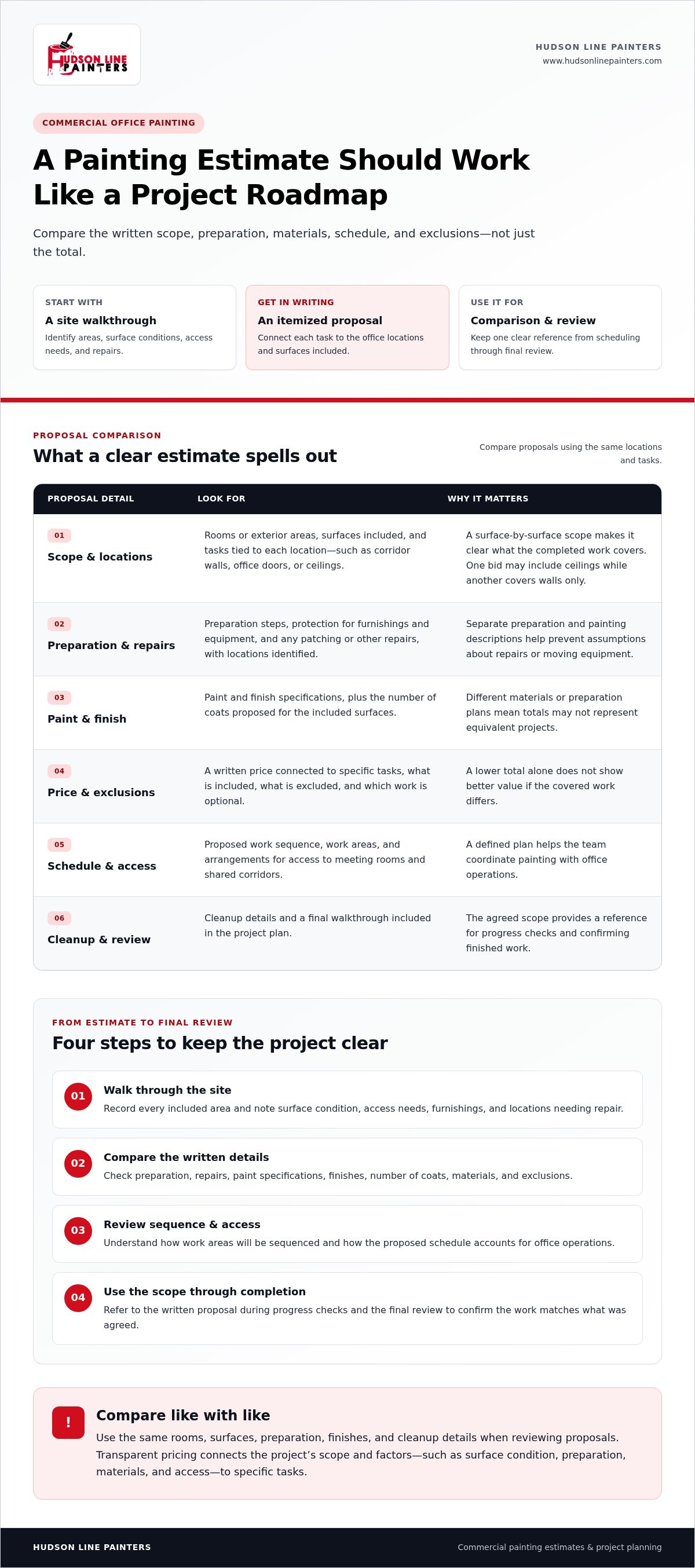
Compare commercial painting proposals by checking the scope, preparation, materials, schedule, and exclusions. A useful estimate ties each task to the office areas and surfaces included.
On-Site Estimates and Itemized Proposals
A free on-site estimate begins with a walkthrough of the rooms or exterior areas involved. The estimator can note surface conditions, access needs, furnishings, and areas requiring repair. A written proposal can then separate tasks by location, such as corridor walls, office doors, or ceilings. Check that it describes preparation, materials, protection, and cleanup rather than grouping them into a vague line item.
For example, a proposal might list wall preparation separately from painting to make the planned work easier to understand. It should identify what is included and what falls outside the scope. That distinction helps prevent assumptions about plaster repairs or moving equipment. A written, itemized proposal also gives the project team a clear reference for scheduling and final review.
Transparent Pricing
A painting project’s price depends on its scope and is provided in a written estimate. Key factors include surface condition, preparation, materials, access, and the areas included. Transparent pricing connects those factors to specific tasks, so you can see what the estimate covers. For instance, a patching line should identify the repairs and locations included.
Look for clear descriptions of paint and finish, the number of coats proposed, and any exclusions. The estimate should also distinguish optional work from the core painting scope. If two proposals use different materials or preparation plans, their totals don’t represent equivalent projects. Compare the written details before deciding which proposal fits the building’s needs and budget.
Comparing Commercial Painting Bids
Compare proposals side by side using the same locations and tasks. Check that each covers the same rooms, surfaces, preparation, finishes, and cleanup. One proposal may include ceiling painting while another covers walls only. That difference changes the scope, so a lower total alone does not show which project offers better value.
Review the proposed schedule and how the work will be sequenced around office operations. A clear project plan identifies work areas, preparation, painting, and the final walkthrough. Check whether the schedule accounts for access to meeting rooms and shared corridors. These details help your team plan around the work and understand what completion involves.
Use the estimate as a project roadmap:
- Walk through the site and record each included area.
- Compare preparation, repairs, paint specifications, and exclusions.
- Review the proposed sequence and access arrangements.
- Use the written scope during progress checks and final review.
Clear documentation gives everyone a shared reference. It helps the project lead track completed tasks, identify scope differences, and confirm whether the finished work matches the agreed proposal.
Commercial painting services in Union County
Union County businesses can assess commercial painters by matching their experience and service coverage to the building’s needs. Office interiors, building exteriors, and industrial spaces each call for a suitable scope and surface plan.
Contractor Experience
Assess experience by project type, not broad claims alone. An office refresh may involve occupied work areas, while an exterior project can involve multiple materials and exposed surfaces. Review examples for preparation, clean edges, and a consistent finish. Specific evidence offers a clearer view of craftsmanship than a general promise of quality.
Distinguish commercial office painting from industrial painting. A warehouse, production space, or facility with specialized surfaces may need a different coating plan from reception walls or conference-room trim. The scope should identify the building’s use and surfaces before specifying the work. Contractors should describe relevant experience accurately rather than implying office painting automatically includes industrial coatings.
Consider licensing alongside relevant documentation and the project’s actual scope. Requirements can depend on the work and jurisdiction, so the label alone does not explain a contractor’s qualifications. Review the proposal, examples, and stated credentials together. In New Jersey, the project location and work type help determine which details are relevant.
Union County Service Coverage
Service coverage matters for buildings in Union and elsewhere across Union County. The county recorded 40,781 local painting projects, while the Better Business Bureau directory shows 1,200 commercial painting contractor results near Union. These figures show a substantial local market, but they don’t establish which contractor covers a specific building or type of work.
Match the project location to its exact scope. A Union County office may need interior painting, while a nearby property may require exterior work. Make sure the proposal names the building address and every included area. This helps prevent a regional service description from being mistaken for coverage of every project type or property.
Review how the contractor plans to coordinate site access, deliveries, and work areas for the building. A clear plan accounts for entrances, shared corridors, and occupied spaces. For a business with multiple sites, list each address separately and compare the proposed scope at each property. Separate site details make scheduling and oversight easier.
For Union County offices, choose painting services that fit the building rather than relying on a broad regional claim. Compare relevant craftsmanship, surface-specific planning, and documented service coverage. If the property includes industrial areas, keep those requirements distinct from ordinary office painting. This gives decision-makers a more precise basis for assessing the proposed finish and contractor fit.
Painter credentials and insurance
For commercial interior painting in Union County, permit requirements depend on the scope: repainting existing surfaces differs from altering walls or building systems. Describe the planned work to the applicable local building office and follow its requirements. Verify claims about licensing, insurance, or bonding against current documentation, as one designation does not prove all three.
Painter Credentials and Licensing
Review credentials in relation to the proposed work, not a general claim of experience. Identify which license or registration applies, then match the contractor’s name and business details to the documentation. A proposal for office wall painting, for example, should clearly identify who will do the work and who is responsible for the agreement.
Commercial painting differs from residential interior painting in its setting and coordination needs. A home project may focus on rooms in a private residence, while an office project can involve shared corridors, workstations, and business operations. Review relevant project examples and the written scope to see whether they demonstrate the ability to complete the work described.
Keep the estimate, agreement, and credential details together. If the proposal lists a business name that differs from the supporting documents, get the relationship clarified in writing before work starts. Consistent names help connect the paperwork to the contractor responsible for the project.
Insurance and Bonding
Review current insurance documentation that identifies the contractor and coverage period. Compare the named business with the proposal and check that the documents cover the planned work dates. For an occupied office, this paperwork supports an informed review of project risk and accountability.
Insurance and bonding are different, so review each separately. A bond is not a substitute for insurance, and an insurance certificate does not establish that a contractor is bonded. If a proposal claims both, review the corresponding documents and confirm that names and dates align. Keep copies with the project file.
Before approving work, use this short review:
- Match business names across the estimate, agreement, and credentials.
- Review the stated license or registration against the project scope.
- Check insurance documents for named parties and coverage dates.
- Request separate bond documentation when bonding is claimed.
A Union County office manager can review these records alongside the work plan before coordinating building access. Clear documents do not replace a detailed scope, but they help establish who is responsible for the proposed painting and what records support the contractor’s claims.
Local painting company profiles
Union County has 1,200 commercial painting contractor results near Union, NJ. A useful profile helps you distinguish office painting experience from broad home improvement claims.
Local Commercial Painting Contractors
Commercial painters serve offices and other business properties across Union County. Compare company profiles by the work described, such as occupied offices, shared corridors, or building exteriors. A clear profile makes project experience and service areas easier to understand. The number of directory results shows the range of listings, not which painter best fits a particular office.
Look for profile details that relate directly to your property. A contractor describing work in an office reception area, for example, gives more relevant context than a general list of home improvement tasks. A cabinet project may demonstrate careful finish work, but it does not establish experience with commercial offices. Look for a clear distinction between residential and business projects.
Service descriptions also help define the work. Interior painting, exterior painting, and cabinet refinishing involve different surfaces and project needs. A profile that explains its focus helps you match the service to your building. A clear description of the work and finish is more useful than a broad claim such as “highest quality.”
Reviews and References
Reviews and references can offer insight into communication, site care, and completed work. Look for comments tied to specific projects and details, such as protecting furnishings or keeping shared areas orderly. A general compliment may be encouraging, but a concrete example tells you more about the work experience.
References are most useful when they relate to a similar property or scope. Feedback from an office manager, for example, may describe coordination around workstations, while a residential reference reflects a different setting. Compare the account with the proposed project plan: do the tasks, communication, and finish align with your building’s needs?
Use a consistent review process for each profile:
- Match described projects to the office’s surfaces and work areas.
- Separate commercial examples from residential and cabinet work.
- Look for specific comments about communication and site care.
- Compare reference details with the proposed scope and finish.
A contractor’s profile and references provide context, but they do not replace a written proposal. Use them to understand the company’s publicly described work and how past customers characterize the process. Clear project examples make a painting company’s focus easier to assess.
Explore commercial painting services
Hudson Line Painters: Interior Painting
Hudson Line Painters provides commercial interior and exterior painting, including work for offices, retail, multifamily, and industrial properties. Turn to the team when office walls, trim, or building exteriors need careful preparation and a renewed finish. The company also offers cabinet painting and deck staining and sealing for properties with those needs.
List the rooms and surfaces you want painted, then use that scope to guide the estimate and planning conversation. A clear outline helps align the work with your office’s needs.
To discuss your painting project, contact Hudson Line Painters.
Make the Next Step a Clear One
A refreshed office can support how your team welcomes clients, collaborates, and works each day. Choose commercial office painters in Union County, NJ who can match the project scope to your building’s priorities and desired finish. A focused discussion about the space is a practical first step toward a project plan.
Hudson Line Painters offers Commercial Painting, Interior Painting, Exterior Painting, and Cabinet Painting. These services can address office surfaces and related property improvements through one project discussion. Share which areas you want refreshed and what matters most to your business, from appearance to day-to-day use.
With a clear goal and thoughtful plan, you can move toward a polished, professional workspace ready for what comes next.
Frequently Asked Questions
What services do commercial office painters in Union County offer?
Commercial painting can cover office interiors, building exteriors, retail spaces, multifamily properties, and industrial settings. Depending on the scope, related work may include drywall repair, wallpaper removal, or power washing. Hudson Line Painters serves Union County, Hudson County, Bergen County, Hoboken, Edgewater, Fort Lee, Teaneck, Hackensack, Englewood, Cliffside Park, Leonia, Palisades Park, and Ridgefield. The proposal should name the specific areas and tasks involved.
How do office painters estimate project costs and labor?
Office painting estimates account for the work area, surface condition, preparation, materials, access, and labor required. A written proposal should connect the planned tasks with the price, so you can see what the scope includes. Hudson Line Painters provides a free estimate valid for 30 days. Once the service contract is signed, its flat-rate price is fixed; requested scope changes may add charges through change orders.
How long does an office painting project take, and can work happen after hours?
Project duration depends on the office size, preparation, repairs, and work sequence. A small suite with sound walls needs a different plan from a multi-room office requiring patching and several finishes. Hudson Line Painters offers night and weekend crews for commercial projects, helping businesses plan work outside normal office hours. Schedule dates are approximate and may change because of unforeseen circumstances or weather; planning should account for access, room use, and work sequence.
How should a business prepare an office for professional painters?
Before work begins, appoint one building contact to coordinate access and notify staff about affected rooms. Secure confidential papers, remove fragile desk items, and identify equipment that must remain connected. Mark restricted areas, such as server rooms, and flag furniture requiring special handling. Share access instructions and planned room use with the project lead so crews can organize the work around business operations.
What warranties and guarantees do commercial painting contractors provide?
Warranty terms differ, so read the written agreement for coverage, duration, and reporting steps. Hudson Line Painters provides a 1-year workmanship warranty; workmanship issues must be reported within 14 days of project completion. Its satisfaction guarantee addresses issues before the final walkthrough when work falls short of standards. Keep the signed proposal and completion records together, and note the reporting deadline in the project file.


