
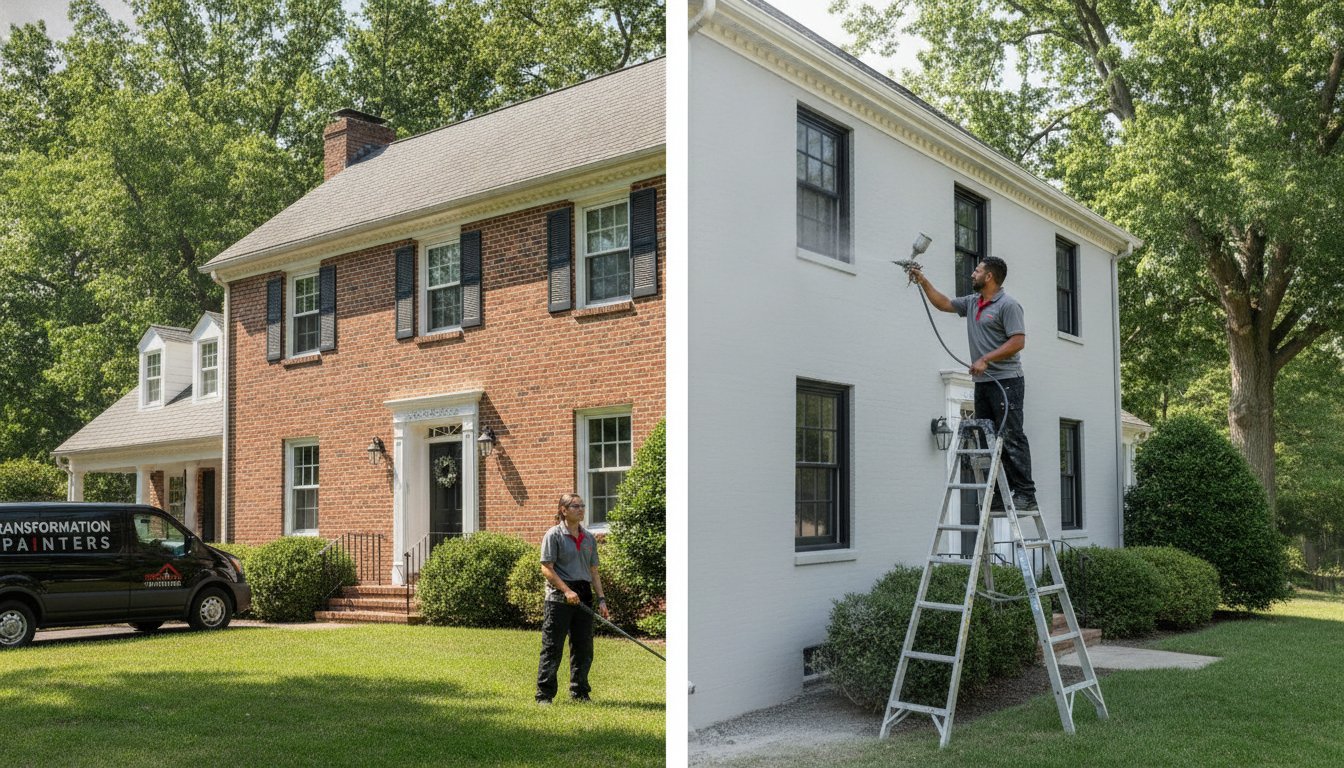
What if the greatest threat to your New Jersey home isn't the local weather, but the very paint you choose to protect it? Many homeowners are eager to modernize their curb appeal, yet they hesitate because they've seen the damage caused by trapped moisture and peeling finishes on historic masonry. It's a common fear in a state where the high cost of living and specialized labor rates make every home improvement feel like a high-stakes investment.
We understand that you need a clear answer on the cost to paint a brick house in NJ before you commit to a transformation. This guide will help you discover exactly what drives these expenses and how to ensure a breathable, long-lasting finish that survives our unique climate. We'll provide a realistic price range for 2026, explain the technical differences between traditional masonry paint and mineral stains, and show you how to find a local professional who treats your brickwork with the care it deserves.
Key Takeaways
- Understand how square footage and specialized labor rates in Bergen and Hudson counties define the total cost to paint a brick house in NJ.
- Learn why choosing premium mineral stains over standard masonry paint is essential for preventing peeling and ensuring long-term durability.
- Discover the critical preparation steps required for New Jersey's coastal environment, including neutralizing salt air and removing efflorescence.
- Gain insight into the "breathability" factor and why vapor-permeable coatings are necessary to protect the structural integrity of your brickwork.
- Identify how to select a specialized contractor who follows a transparent, step-by-step process to ensure a safe and guaranteed home transformation.
Evaluating the Cost to Paint a Brick House in NJ: 2026 Price Ranges
Estimating the cost to paint a brick house in NJ requires moving past national averages. While generic sites might suggest lower figures, New Jersey's construction costs sit significantly higher than the rest of the country. This regional premium is driven by a high demand for skilled trades and rigorous state regulations. For a standard multi-story home, homeowners should anticipate an investment that reflects the specialized labor and high-performance materials required for our local climate.
The "brick premium" exists because masonry is a porous, textured surface that demands more material and labor than flat wood or vinyl siding. A deep understanding brickwork is essential for a successful project; the surface area of a brick wall is actually much larger than it appears due to the recessed mortar joints. Professional estimates are calculated based on the total square footage of the masonry surface. This method accounts for the extra time needed to work coatings into every crevice and ensure complete coverage.
NJ Regional Price Drivers: Hudson vs. Union vs. Bergen
Location significantly dictates your final quote. In Hudson County, parking logistics and the need for sidewalk permits can add administrative fees and labor hours to the schedule. Bergen County residents often face historic district regulations that mandate specific vapor-permeable mineral stains rather than standard acrylics. These local factors, combined with higher average labor rates for NJ trades, make regional expertise a financial necessity. NJ law requires a written contract for any home improvement over a certain threshold, ensuring you have a three-day right of rescission. This transparency helps protect your investment during the planning phase.
One-Story vs. Two-Story Brick Home Estimates
Height adds complexity and equipment costs. A single-story ranch is straightforward, but typical NJ colonials require scaffolding or boom lifts to reach second-story gables safely. Working at height on masonry surfaces involves strict safety protocols and slower production rates compared to ground-level work. Complexity also increases with chimney heights and intricate rooflines. These features require meticulous hand-brushing to maintain the structural integrity of the mortar joints while achieving a uniform aesthetic. We prioritize these details to ensure the coating bonds correctly without trapping moisture in the upper levels of your home.
Seasonal demand also plays a role in North Jersey. Spring and fall are the busiest windows for exterior work, which can impact contractor availability and lead times. Booking your project during these peak months requires early planning to secure a team that understands the nuances of local brickwork. By aligning your project with the right season, you ensure the temperature and humidity levels are optimal for the specific masonry coatings being applied.
Primary Factors Influencing Your NJ Brick Painting Estimate
The physical state of your masonry is the most significant variable in your estimate. Sound brickwork with intact mortar joints provides a stable foundation for any coating. However, if your home shows signs of spalling, which is the flaking of the brick face, or crumbling mortar, these structural issues must be addressed first. Painting over damaged masonry traps moisture and accelerates deterioration. This turns a cosmetic upgrade into a costly repair project later on. A thorough inspection ensures that we aren't just covering up problems, but rather preserving your home's structural integrity.
Property accessibility also plays a silent role in the cost to paint a brick house in NJ. In densely populated areas like Jersey City or Hoboken, tight property lines often mean limited space for ladders or specialized equipment. If your home sits inches from a neighbor's fence or a busy public sidewalk, the labor hours increase to accommodate careful staging and site protection. These logistical challenges are common in Hudson County and require a contractor who values operational discipline and site etiquette to avoid disrupting the neighborhood.
Color selection is another factor that impacts the final budget. Brick is naturally "thirsty" and highly porous, meaning it absorbs liquid far more than wood or vinyl. If you choose a deep, rich tone, it often requires additional coats to achieve a uniform finish across the textured surface. This isn't just about aesthetics; it's about ensuring the coating is thick enough to provide a durable barrier against the elements. A project involving a full exterior transformation will naturally command a different price point than one focused on accent walls or chimneys.
Masonry-Specific Paint and Primer Quality
Choosing the right material is a balance between upfront investment and long-term value. Standard exterior paint often fails within three NJ winters because it lacks the flexibility to handle our rapid freeze-thaw cycles. We recommend high-performance, vapor-permeable coatings that allow the house to breathe while resisting the salt air common near Newark Bay. While elastomeric coatings offer great waterproofing, they must be used carefully on brick to avoid trapping internal moisture. Using the correct masonry primer ensures the finish bonds permanently to the substrate.
Architectural Details and Trim Integration
A professional transformation involves more than just the brick face. Meticulous labor is required to "cut in" around lintels, sills, and cornices, which are the decorative elements that define your home's character. We ensure that power washing is integrated into the initial prep phase to remove years of environmental buildup and salt deposits. This deep clean allows the primer to bond correctly. If you're ready to revitalize your home's appearance, you can request a detailed consultation to discuss your specific architectural needs.
The Hidden Cost of Prep: Surviving the NJ Climate
Preparation work often accounts for a significant portion of the total cost to paint a brick house in NJ. In our local climate, skipping these foundational steps leads to catastrophic failure within just a few seasons. For homes positioned near the Hudson River or Newark Bay, salt air deposits act as a invisible, corrosive layer that prevents modern coatings from bonding. We utilize specialized neutralizing agents to strip away these minerals before the first drop of primer ever touches your masonry.
Another common local challenge is efflorescence, those white, powdery salt blooms that appear on the brick surface. These aren't just an aesthetic nuisance; they indicate that moisture is actively moving through your walls. If the exterior brick is saturated, it often leads to a secondary need for drywall and plaster repair on your interior walls. Addressing the source of this moisture is the only way to protect your home's long-term structural health and ensure your new finish stays intact.
Managing New Jersey's notorious humidity adds another layer of technical complexity to the project. We monitor the dew point and ambient temperature meticulously throughout the workday. Painting brick when the humidity is too high or the temperature is swinging wildly prevents the coating from curing correctly. This level of technical precision is what separates a long-lasting, premium finish from a peeling disaster that requires expensive remediation.
Repairing Mortar and Efflorescence Treatment
Crumbling mortar joints require tuckpointing, a process where we carefully remove damaged mortar and replace it with fresh, compatible material. This is a labor-intensive masonry task that must be completed before painting to ensure a sealed building envelope. We prefer gentle chemical cleaning or light power washing over high-pressure methods; for luxury residential or commercial exteriors, Poseidon Power Washing LLC provides the type of professional cleaning required to preserve surface integrity. High pressure can etch the brick and create even more pores for water to enter. If we identify "spalling" brick, where the face is flaking off, we'll provide a transparent assessment of whether the surface is currently suitable for a coating.
Masking and Property Protection
In dense North Jersey neighborhoods, site etiquette and property protection are paramount. We take extensive measures to protect your landscaping, decorative walkways, and your neighbor's property from any potential overspray. Historic brick homes often feature intricate windows and original hardware that require hours of careful masking. This meticulous preparation ensures that the final result is clean and crisp, reflecting the pride we take in our craft. We maintain a disciplined workspace, ensuring the project doesn't disrupt your daily life or the surrounding community.

Paint vs. Mineral Stain: Choosing for Longevity
Brick is a living material that needs to breathe. When you're evaluating the cost to paint a brick house in NJ, it's vital to understand the technical difference between film-forming paints and mineral stains. Standard acrylic paint creates a surface film that acts like a plastic wrap. While this provides an immediate color change, it traps moisture behind the coating. During a typical New Jersey winter, that trapped water freezes and expands, causing the paint to bubble and peel from the inside out. This isn't just an aesthetic failure; it's a structural risk that can lead to masonry decay over time.
In contrast, mineral silicate stains don't sit on top of the brick. They undergo a chemical process called petrifaction, bonding permanently with the masonry to become part of the substrate itself. This ensures the wall remains completely vapor-permeable. Moisture escapes naturally, which prevents the structural damage and peeling associated with traditional coatings. For homeowners seeking a historic aesthetic, limewash or German Smear techniques offer breathable, high-UV resistant alternatives. These methods provide a weathered, European look that ages gracefully without the maintenance headaches of film-forming products.
The Long-Term Maintenance Cost Comparison
While the initial investment for premium coatings may be higher, the long-term savings are substantial. Standard paint typically requires a full repainting cycle every five to seven years to maintain its appearance and protection. Mineral stains can easily last 15 to 25 years before needing attention. These specialized exterior painting services protect your home value by eliminating the need for frequent, labor-intensive scraping and priming. If you want to ensure your home's protection for the next decade, schedule a masonry assessment with our team today.
Aesthetic Results: Opaque vs. Translucent
Your choice of product also dictates the final visual character of your home. If you're aiming for the "modern farmhouse" look, opaque masonry coatings provide a solid, uniform color that completely hides the original brick shade. However, if you prefer to preserve the natural texture and subtle variations of the brickwork, a translucent mineral stain is the superior choice. We always recommend testing samples on-site. The unique light quality in North Jersey can make a color look different at noon than it does at dusk. We take the time to apply multiple test patches, ensuring the final result matches your vision in every lighting condition.
Professional Brick Transformation with Hudson Line Painters
Choosing to revitalize your exterior is a significant decision that impacts both your home's value and its structural health. At Hudson Line Painters, we treat every project as a specialized masonry undertaking rather than a simple cosmetic update. Our team understands that the cost to paint a brick house in NJ represents a major investment in your property's future. We've developed a specialized assessment process specifically for the unique architectural styles found in Hudson, Union, and Bergen counties. Whether you're preserving a historic brownstone or modernizing a suburban colonial, we prioritize technical precision to ensure your home remains protected for decades.
Our commitment to your home's structural integrity is why we exclusively use vapor-permeable coatings. As we've discussed, trapping moisture inside NJ brickwork is the primary cause of premature paint failure and masonry decay. We don't just sell a painting service; we offer a guaranteed transformation backed by meticulous preparation and premium materials. This disciplined approach ensures that your new finish won't just look beautiful on day one, but will withstand the harsh freeze-thaw cycles and salt air that define our local climate.
Our Meticulous Multi-Step Masonry Process
We follow a proprietary procedural framework to ensure every project meets our high standards for durability and aesthetics. This systematic approach provides transparency and peace of mind from start to finish:
- Step 1: Deep Cleaning and Salt Neutralization. We remove environmental pollutants, organic growth, and salt deposits that interfere with coating adhesion.
- Step 2: Surface Stabilization. Our team performs minor mortar repairs and addresses any localized spalling to create a sound substrate.
- Step 3: Specialized Bonding. We apply high-performance masonry primers or mineral silicate bonds that chemically integrate with the brick surface.
Requesting Your Custom NJ Brick Painting Quote
Transparency is a core virtue of our business. We provide detailed, line-item estimates that clearly outline the scope of work, material choices, and labor requirements. There are no hidden fees or unexpected surcharges. When you're ready to move forward, we'll help you schedule your project during the optimal NJ painting seasons to ensure perfect curing conditions. Our goal is to make the transition from your initial consultation to a finished, revitalized exterior as efficient and stress-free as possible. You can contact us today for a professional home painting consultation to see how we can protect and transform your brick home.
Protecting Your Investment with Professional Masonry Care
Modernizing your home's exterior is an exciting journey, but it requires a technical approach that respects the unique properties of brick. By prioritizing vapor-permeable mineral stains over standard film-forming paints, you ensure your masonry stays healthy while achieving a stunning aesthetic transformation. We've seen how meticulous preparation, from neutralizing salt air to repairing mortar, makes all the difference in our challenging North Jersey climate. Understanding the total cost to paint a brick house in NJ allows you to budget for a result that adds genuine value without the risk of future peeling or structural decay.
With over 8 years of local expertise, Hudson Line Painters specializes in these advanced breathable masonry coatings. As a fully insured and licensed NJ contractor, we provide the peace of mind that comes with disciplined site etiquette and technical precision. We're ready to partner with you to create a safe, long-lasting, and beautiful finish for your home. Get Your Free Custom NJ Brick Painting Quote today and start your exterior revitalization with confidence.
Frequently Asked Questions
Does painting a brick house lower its resale value in New Jersey?
Professional painting can actually increase your home's resale value in competitive markets like Montclair or Jersey City by significantly boosting curb appeal. The key is using high-quality, breathable materials that don't damage the masonry. A poorly executed job with standard latex paint that eventually peels will likely decrease your property value and deter savvy buyers who fear hidden moisture issues.
How long does it take to paint a standard two-story brick home?
A standard two-story brick home usually takes between 5 and 10 working days to complete. This timeframe includes the essential preparation phase, which involves cleaning, masking, and any necessary mortar stabilization. Factors like the complexity of your roofline, the amount of trim work, and current New Jersey weather conditions will ultimately dictate the final schedule.
Is it better to paint or stain brick in the NJ climate?
Mineral stains are generally superior for our local climate because they are vapor-permeable and allow the brick to breathe. This is a critical factor in the total cost to paint a brick house in NJ over the long term. Stains prevent the moisture entrapment that leads to bubbling and flaking during our humid summers and freezing winters, offering a much longer maintenance cycle than traditional film-forming paints.
What happens if I paint over wet or damp brick?
Painting over damp brick leads to immediate and catastrophic coating failure. Moisture trapped beneath the surface will try to escape, causing the paint to blister, peel, and crack within a single season. This trapped water can also freeze during NJ winters, causing the face of the brick to expand and break off, which leads to permanent structural damage.
How much does it cost to remove paint from a brick house if I change my mind?
Removing paint from brick is an incredibly labor-intensive process that often involves specialized chemical strippers or low-pressure media blasting. Because of the delicate nature of masonry, the price to revert to natural brick can be double or triple the initial cost to paint a brick house in NJ. We highly recommend testing large color samples and choosing breathable finishes to ensure you are satisfied with the long-term result.
Can you paint old or historic brick in Bergen County?
Yes, you can paint historic brick, but it requires specialized products like silicate stains or limewash to comply with preservation standards. These materials protect aging masonry by allowing moisture to pass through without causing the decay often seen with modern acrylics. We always assess the mortar's condition first to ensure the historic structure remains stable before any coating is applied.
Does the price include power washing and mortar repair?
Professional estimates typically include deep cleaning and minor surface stabilization as part of the standard preparation. While power washing is a routine inclusion, extensive masonry work like tuckpointing or replacing numerous spalling bricks is usually listed as a separate, transparent line item. We provide a detailed breakdown so you understand exactly which repairs are necessary for a successful and lasting finish.
What is the best time of year to paint my brick exterior in NJ?
The best time for brick painting in New Jersey is from late spring through early fall. We look for a window of stable weather with temperatures between 50 and 85 degrees and low humidity. These conditions allow the specialized masonry coatings to cure correctly and bond permanently to the brick, ensuring the most durable and aesthetically pleasing results.


