

What if the most impactful upgrade to your New Jersey home wasn't a full kitchen remodel, but a meticulous refinishing of the woodwork you touch every single day? Most homeowners realize that dingy baseboards and chipped doors drag down the entire aesthetic of a room, yet the fear of a messy, peeling DIY project often keeps those surfaces looking tired. You want a factory-smooth finish that stands up to daily life, but understanding the actual cost to paint interior doors and trim in 2026 can feel like a moving target when contractor bids vary so wildly.
We recognize that you're looking for more than just a color change; you're looking for peace of mind and a result that lasts for years. This guide provides the clarity you need to navigate these pricing gaps and discover why professional labor is a smart financial investment in your property’s longevity. We'll break down the technical variables of high-end prep work, local labor trends, and the specific reasons why a disciplined approach to refinishing adds more value and durability than a simple coat of paint ever could.
Key Takeaways
- Learn how 2026 labor trends and the shift toward high-durability coatings influence the total cost to paint interior doors and trim in Northern NJ.
- Understand how existing damage or transitions from dark wood stains to modern whites affect the level of technical preparation required for a lasting finish.
- Discover why meticulously refinishing your existing woodwork is a smarter financial choice than the invasive and expensive process of full replacement.
- Identify the essential role of drywall and plaster repairs in achieving a seamless, high-end transformation for your home's interior.
- Explore the proprietary framework that ensures transparency and site etiquette, providing a predictable and stress-free project lifecycle.
Estimating the Investment: What Shapes the Cost to Paint Interior Doors and Trim?
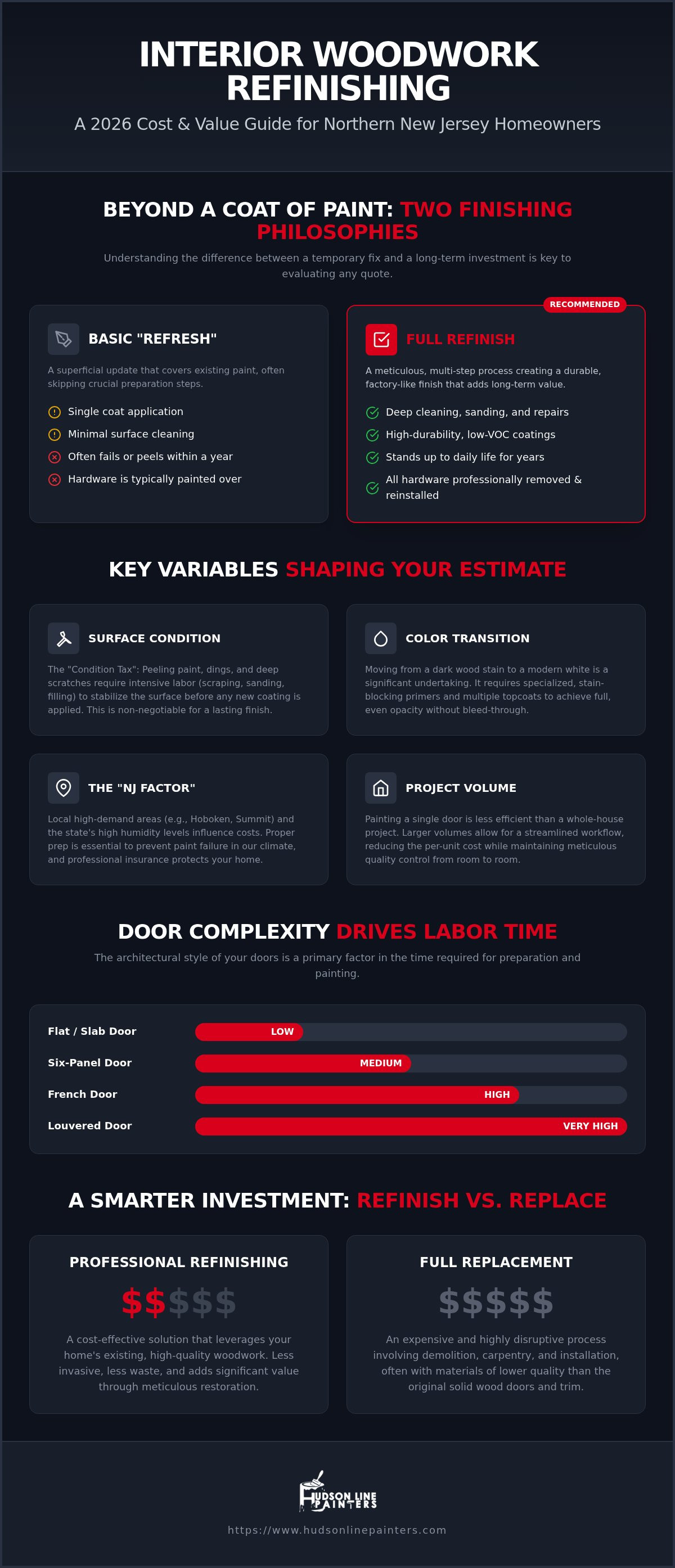
Understanding the cost to paint interior doors and trim in 2026 requires looking past the surface level. We've seen a distinct pivot toward high-durability, low-VOC coatings that offer superior scuff resistance for high-traffic areas. These advanced types of paint finishes are designed to withstand the rigors of daily life without yellowing or brittle failure. While material costs have shifted, the real driver of your investment is the labor required for technical precision. There's a fundamental difference between a basic "refresh," where a single coat covers existing paint, and a "full refinish," which involves deep cleaning, sanding, and potentially light carpentry to address years of wear.
Project volume also plays a significant role in the overall efficiency of the job. Painting a single door is often more expensive on a per-unit basis because of the setup and cleanup time involved. When we handle a whole-house project, we can streamline our proprietary framework, moving systematically from room to room to maximize productivity while maintaining our high standards of site etiquette. This logical flow ensures that your home remains livable while we execute a meticulous transformation.
Linear Feet vs. Per-Piece Pricing Models
Contractors generally use two distinct methods to build an estimate. Trim, which includes baseboards, window casings, and crown molding, is typically calculated by the linear foot. This accounts for the meticulous "cutting in" required where wood meets walls. Doors, however, are quoted as individual units. A flat-panel door requires less labor than a complex six-panel door or a set of French doors with multiple glass panes. Detailed crown molding adds another layer of complexity; working at height requires additional safety measures and slower, more deliberate brushwork to ensure a factory-smooth result.
The 'NJ Factor': Local Economic Drivers for 2026
In high-demand areas like Hoboken, Summit, and Jersey City, contractor availability and local insurance requirements significantly influence pricing structures. Professional credentials aren't just paperwork; they're a guarantee that your home is protected. We also account for the unique NJ climate. High humidity levels in our region demand specific preparation steps to prevent the paint from peeling or failing prematurely. Choosing a "cheap" quote often means skipping these essential prep phases, leading to a finish that looks good for a month but fails within a year. For homeowners seeking a lasting transformation, our interior painting services prioritize the technical discipline needed for our local environment.
Key Variables That Shape Your Painting Estimate
Every interior project begins with a technical assessment of the existing surfaces. If your woodwork shows signs of previous poor applications or physical damage, we account for a "Condition Tax." This isn't a hidden fee; it's a reflection of the intensive labor required to scrape, sand, and stabilize peeling paint before a new coat can be applied. Skipping this stage is why many DIY projects fail within the first year. When you are hiring a professional painter, the estimate should clearly outline these preparation steps to ensure the finish remains durable against the high-touch nature of doors and baseboards.
Color transitions and material types also dictate the project scope. Moving from a deep, dark wood stain to a modern off-white significantly impacts the cost to paint interior doors and trim because it requires specialized stain-blocking primers and additional topcoats for full opacity. Similarly, solid wood surfaces often require more aggressive sanding than factory-primed MDF. We also prioritize the removal of all hardware, including hinges and knobs, rather than painting around them. This disciplined approach prevents "paint-locked" hardware and ensures clean, professional lines around every latch and strike plate.
Door Styles: From Flat to French
The architecture of your doors determines the rhythm of the work. A flat slab door provides a continuous surface that is relatively quick to prep and paint. In contrast, a raised six-panel door features recessed channels and decorative molding that require meticulous brushwork to avoid unsightly drips or heavy buildup in the corners. French doors represent a significant labor jump due to the hours of masking required for individual glass panes. Louvered doors are the most time-intensive style we handle, as each individual slat must be hand-finished to ensure even coverage and a smooth feel.
Trim Complexity and Accessibility
Trim work follows a similar logic of complexity. While standard baseboards are accessible, multi-piece custom crown molding requires our team to work at height with sustained precision. We often find that older NJ homes have trim with minor structural flaws. In these cases, we integrate light carpentry trim repair to address dents, rot, or loose sections before the first drop of paint is ever poured. Narrow stairwells and vaulted ceilings further complicate accessibility, requiring specialized equipment and additional safety protocols to maintain our high standards of site etiquette. You can review our process in detail to see how we handle these architectural challenges.
The Value of Professional Refinishing vs. Replacement
Choosing to refinish rather than replace is often the most pragmatic financial decision a homeowner can make. While a full replacement might seem like a way to get a "fresh start," it often triggers a domino effect of unintended repairs. Removing existing baseboards or door casings frequently damages the underlying drywall or plaster, necessitating extensive patching and structural work that quickly inflates your budget. The cost to paint interior doors and trim is a fraction of the total investment required for a full tear-out, especially when you factor in disposal fees and the price of high-quality new lumber.
Historic architecture in areas like Bergen and Hudson Counties often features old-growth wood trim that is superior in density and character to modern MDF alternatives. Refinishing these surfaces is a sustainable choice that preserves the original soul of the home while reducing landfill waste. Our professional refinishing techniques involve deep cleaning and precision sanding that allow new coatings to bond at a molecular level. This process mimics the smooth, durable look of a brand-new factory installation without the invasive mess of a construction zone.
ROI: Boosting Home Value in the NJ Market
In the competitive Northern NJ real estate market, first impressions are everything. Crisp, clean trim serves as a visual frame for every room, making spaces feel larger and better maintained. Modernizing a dated interior often starts with moving away from yellowed varnish or scuffed surfaces toward sophisticated, neutral palettes. If you're preparing for a sale, investing in interior painting for home staging can provide a significant return on investment by signaling to buyers that the home has been meticulously cared for. It's a high-impact detail that often influences a buyer's perception of the property's overall value.
Durability: Why Professional Labor Pays for Itself
Professional labor is an investment in longevity. The science of adhesion is the primary reason why DIY trim projects often begin to peel or chip within a single year. We use commercial-grade coatings that are specifically engineered for high-touch surfaces, offering chemical and scuff resistance that retail-grade paints cannot match. A high-end finish can last ten years or more with basic care, whereas a "quick fix" application usually requires a complete redo every 24 months. By choosing a disciplined, professional approach, you're saving money over the life of your home by avoiding the cycle of constant touch-ups and premature failures.
Planning Your Project: Preparation and Execution
We begin by establishing a controlled environment. Protecting your floors and furniture is the Hudson Line standard of site etiquette. Once the area is secure, we identify any drywall and plaster repairs necessary to ensure the trim sits flush against the wall. This phase is vital because the total cost to paint interior doors and trim includes this essential preparation; even the best paint cannot hide structural gaps or crumbling plaster.
Achieving a factory-smooth finish requires a "Sand-Prime-Sand" cycle. We sand the existing surface to create a mechanical bond, apply a high-adhesion primer, and sand again with a fine-grit abrasive. This removes any raised grain or imperfections. We then apply precision caulking to every joint and seam. This step is what defines a professional result, creating a seamless transition between the woodwork and the walls.
The final phase involves a meticulous inspection under high-output lighting. We reinstall all hardware once the coatings have reached the appropriate tack-free state. This systematic approach ensures that the cost to paint interior doors and trim reflects a project managed with technical discipline from start to finish. Our team moves room-to-room in a logical sequence to minimize disruption to your daily routine.
What to Ask Your NJ Painting Contractor
Transparency is the hallmark of a reliable professional. You should always verify that your contractor is fully insured for work in Hudson County NJ and surrounding areas. Ask about their specific choice of primer, especially if you're transitioning from an old oil-based finish to a modern waterborne coating. Finally, ensure your written quote explicitly includes the cost of caulking and minor hole filling to avoid unexpected mid-project additions.
Timeline: How Long Does It Actually Take?
A standard 3-bedroom home project involving all doors and baseboards typically requires three to five days of active labor. This timeline allows for proper drying intervals between the "Sand-Prime-Sand" stages. Local NJ humidity can extend these windows, as coatings need more time to cure in damp conditions. We manage the "wet paint" phase by working in logical zones, ensuring you always have access to essential parts of your home while we maintain our disciplined workflow.
Request a detailed estimate for your trim project
The Hudson Line Standard: Meticulous Trim and Door Refinishing
At Hudson Line Painters, we view your home as more than just a project site. Our commitment to "Neighborly Authority" means we treat your property with the same respect we'd show our own neighbors in Northern NJ. We don't just apply paint; we execute a meticulous refinishing process that transforms every door and linear foot of trim into a work of craft. This disciplined approach ensures that when you evaluate the cost to paint interior doors and trim, you're seeing the value of technical precision and long-term durability rather than just a temporary cosmetic fix.
Our proprietary procedural framework serves as a hallmark of transparency. It begins with a comprehensive site assessment and moves through a rigorous preparation phase before the first drop of paint is ever applied. This sequential flow provides you with a predictable, stress-free experience. We believe that professional standing is earned through operational discipline, which is why we guide you through every step, from the initial estimate to the final meticulous walk-through. Whether we're working in a historic brownstone or a modern suburban home, our goal is to provide peace of mind through technical mastery.
Serving the unique needs of residents in Hudson, Union, and Bergen Counties requires a deep understanding of local architecture and environmental factors. We know how the regional humidity affects paint curing and how the specific wood types found in NJ homes respond to different coatings. By focusing on premium results over "budget" speed, we ensure that your investment adds genuine value and comfort to your space for years to come.
Beyond Paint: A Comprehensive Home Improvement Approach
Many homeowners find that updating their woodwork is just the first step in a larger aesthetic shift. To achieve a truly unified interior, many of our clients choose to integrate cabinet refinishing into their project scope. This ensures that your kitchen or built-in storage matches the high-end finish of your new doors and trim. Our "clean site" guarantee means that we prioritize dust containment and daily cleanup, maintaining a liveable environment throughout the project. Our local reputation is our most valuable asset, and we protect it through consistent site etiquette and craftsmanship.
Start Your Transformation Today
We've designed our consultation process to be as efficient and informative as possible. We provide detailed, no-surprise estimates that clearly break down the labor and materials involved, so you understand exactly how the cost to paint interior doors and trim is calculated for your specific home. There are no hidden fees or mid-project adjustments when you work with a team that values transparency. We take pride in our work, and we want you to feel that same pride every time you walk through your front door.
Schedule your interior painting consultation with Hudson Line Painters
Transform Your Interior with Professional Precision
Investing in your home's woodwork is about more than just aesthetics; it's a strategic move to preserve high-quality materials and increase property value. By choosing a specialized refinishing process over a total replacement, you avoid the cascading costs of drywall repair while achieving a factory-smooth finish that lasts for years. Understanding the cost to paint interior doors and trim allows you to budget for the technical discipline required for a truly durable transformation.
Since 2018, Hudson Line Painters has provided this level of meticulous care to homeowners across Hudson, Bergen, and Union Counties. We are a fully insured, locally operated team that prioritizes technical precision and site etiquette. Our goal is to offer you peace of mind through a transparent, well-managed project lifecycle that values your environment as much as the final result.
We look forward to helping you revitalize your home with a finish that reflects your own standard of excellence and provides lasting comfort for your family.
Frequently Asked Questions
How much does it cost to paint a single interior door in NJ?
Pricing typically ranges between $75 and $150 per door in New Jersey, depending on the complexity of the design. A flat-panel door is less labor-intensive than a six-panel or French door. This investment covers thorough cleaning, sanding, and multiple coats of premium paint. While national averages might suggest lower figures, the cost to paint interior doors and trim in areas like Hoboken or Hackensack reflects the local labor market and the technical precision required for a lasting finish.
Is it worth painting old trim or should I just replace it?
Refinishing is almost always the more cost-effective and sustainable choice, especially in historic Bergen County homes. Replacing trim often damages the surrounding drywall, leading to cascading repair costs. Professional refinishing restores the character of old-growth wood while providing a factory-smooth look. Unless the wood is structurally compromised by rot, a disciplined sanding and painting process can make your existing trim look brand new without the invasive mess of a full tear-out.
Do you have to take doors off their hinges to paint them professionally?
Yes, we recommend removing doors from their hinges to achieve a truly professional result. This allows us to paint all six sides of the door, including the top and bottom edges, which prevents moisture absorption and warping. It also ensures that hinges and hardware remain clean and free of paint splatters. By working on the door in a controlled workspace, we can apply coatings more evenly, ensuring the factory-smooth finish our clients expect in Hudson County.
What is the best paint finish for baseboards and door casings?
Semi-gloss or satin finishes are the standard for baseboards and door casings due to their high durability and ease of cleaning. These finishes provide a subtle sheen that highlights the architectural detail of your trim while offering superior resistance to scuffs and moisture. Because trim is a high-touch surface, using a premium, commercial-grade coating ensures the finish won't become brittle or yellow over time, maintaining a crisp aesthetic in your high-traffic living areas.
Can you paint over old stained wood trim without it peeling?
You can certainly paint over stained wood trim without peeling, provided the surface is professionally prepared. The key is a disciplined "Sand-Prime-Sand" cycle that uses high-adhesion, stain-blocking primers. This prevents the tannins in the wood from bleeding through the new color. Without this technical preparation, paint will fail to bond to the old varnish. Our process ensures a molecular bond between the wood and the coating, resulting in a finish that stands up to daily life.
How long should I wait to close my doors after they are painted?
You should generally wait at least four to six hours before closing doors, though this depends on the humidity levels in your NJ home. While the paint may feel dry to the touch sooner, it takes time for the coating to reach a tack-free state. Closing the door too early can cause the paint to "stick" to the frame, leading to peeling or damage. We recommend keeping the workspace well-ventilated to speed up the curing process and ensure the finish sets correctly.
Does the cost include painting the door frames and jams?
Professional estimates for the cost to paint interior doors and trim typically include the door frames and jambs as part of a complete unit. Painting only the door without the surrounding frame creates a disjointed look that detracts from the room's aesthetic. Our comprehensive approach ensures that every component of the entryway is refinished to the same high standard. This creates a seamless, cohesive appearance that enhances the overall value and visual appeal of your home's interior.
What happens if my home has lead paint on the existing trim?
If your home was built before 1978, it is possible that existing trim contains lead-based paint. Hudson Line Painters does not offer lead paint abatement services. If lead is suspected or confirmed, you should consult with a certified lead abatement professional before any sanding or scraping begins. Safety is a primary virtue in our trade, and we prioritize the health of your household by ensuring all surfaces are safe for our standard refinishing processes.


