

What if the number of cabinet doors matters less than the finish you want? Oak’s open grain can remain visible beneath paint unless the project includes additional preparation. That’s one reason the cost to paint oak cabinets depends on more than kitchen size or cabinet count. The grain, cabinet condition, and surfaces included can all shape the work involved.
It’s reasonable to want a refreshed kitchen without replacing the cabinets, while also wondering whether paint will conceal the texture and what a professional estimate covers. This guide explains the factors that affect an estimate, how painting compares with refinishing and replacement, and what to discuss when planning a project.
You’ll learn how cabinet condition, layout, design complexity, preparation, and desired smoothness can affect the scope. We’ll also cover when existing oak cabinets may be good candidates for painting and how Hudson Line Painters’ cabinet refinishing can help homeowners in Hudson County, Union County, Bergen County, and nearby communities plan an update. The goal is to help you compare options with confidence, not assume every oak kitchen needs the same solution.
Key Takeaways
- The cost to paint oak cabinets depends on project scope, cabinet condition, preparation needs, and the finish you want.
- Oak’s natural grain can show through paint, so decide how smooth you want the finished surfaces to look.
- Compare painting, refinishing, and replacement based on cabinet condition, appearance goals, disruption, and project scope.
- Review estimates for clearly defined preparation, included surfaces, finish expectations, and repairs before comparing them.
- Hudson Line Painters provides kitchen cabinet refinishing for Northern New Jersey homeowners, with the project planned around the existing cabinets and desired outcome.
What Determines the Cost to Paint Oak Cabinets?
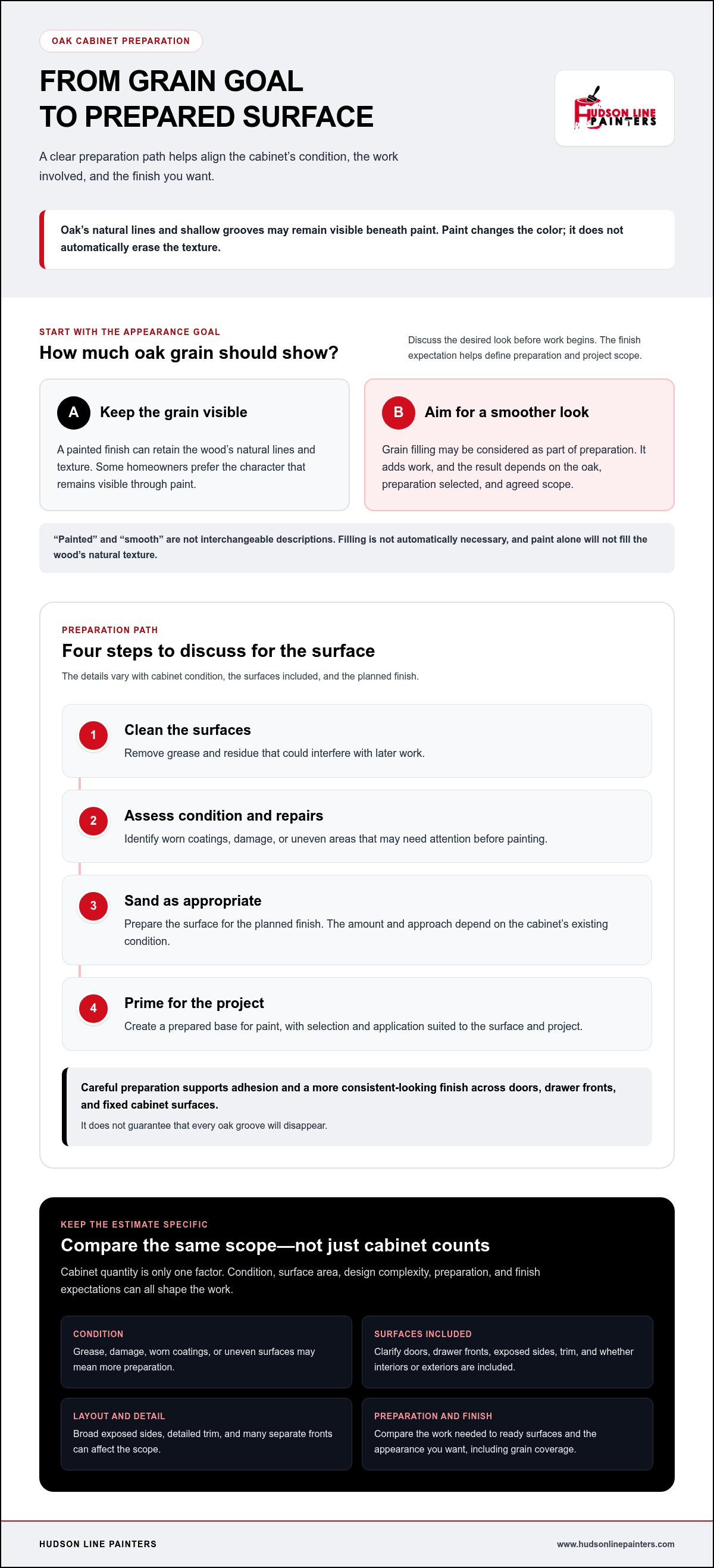
Project estimates depend on the scope of work and the condition of the cabinets. Cabinet quantity matters, but so do the number of doors and drawers, the surfaces included, the preparation required, and the finish you want. A generic per-cabinet assumption may not reflect the work involved in your kitchen.
For oak cabinets, the estimate is shaped by the surfaces that need attention, their current condition, and how much grain coverage you expect. A project review can reveal details that are difficult to judge from cabinet count alone. Each kitchen has its own scope, so compare estimates based on the actual work described rather than a broad price assumption.
Which project details have the biggest effect on an estimate?
Cabinet count is only one part of the picture. A kitchen with fewer cabinets may still involve substantial work if it has broad exposed sides, detailed trim, or many separate fronts. Surface area and design complexity help clarify what the project includes.
- Condition: Grease, damage, worn coatings, or uneven surfaces can mean more preparation before painting.
- Included surfaces: Doors, drawer fronts, exposed cabinet sides, trim, and interiors each change the scope. The estimate should distinguish cabinet interiors from exteriors.
- Preparation and finish: The work needed to ready the surfaces and the appearance you want both influence the project plan.
Comparing estimates is more useful when each describes the same surfaces and level of work. A door count alone won’t show whether cabinet sides, trim, or interiors are included.
Why does oak require a finish conversation?
Oak has a pronounced grain, meaning its natural lines and texture may still show beneath paint. Some homeowners like a painted finish that retains this character; others prefer a smoother appearance. That difference can affect preparation choices, including whether filling the grain is part of the desired approach.
Discuss the finish before work begins so expectations and scope align. The broader wood finishing process includes preparation as well as the finish itself, and both contribute to the result. To explore professional options for existing cabinets, see Hudson Line Painters’ kitchen cabinet painting service.
How Oak Grain, Preparation, and Finish Affect Cabinet Painting
Oak’s grain is the pattern of lines and shallow grooves you can see and feel in the wood. Paint changes the cabinet’s color, but it doesn’t automatically erase that texture. The finished surface may still show the grain, even if the color looks completely different.
Oak’s texture, the preparation it needs, and the finish you want all work together to shape the final appearance. Before planning a project, decide whether you want the natural texture to remain visible or prefer a smoother-looking painted surface. Neither choice is right for every kitchen. Your preferred result helps determine the preparation and scope, so discuss expectations before work begins.
Can you paint oak cabinets without seeing the grain?
You can paint oak cabinets while retaining visible grain, but paint alone won’t fill the wood’s natural texture. If you prefer a smoother appearance, grain filling may be considered as part of preparation. It isn’t automatically necessary: filling adds work, and some homeowners prefer the character that remains visible through paint.
Think about how you want the cabinets to look in everyday light. A painted finish with visible lines can retain some of the wood’s original character. A smoother finish minimizes that texture, though the result depends on the oak, the preparation selected, and the agreed scope. Avoid treating “painted” and “smooth” as interchangeable descriptions.
What preparation steps should homeowners understand?
Preparation addresses the cabinet’s condition before the finish is applied. It’s separate from choosing the finish itself. The details vary with the surfaces and their condition, but these are common preparation steps to discuss:
- Cleaning: Remove grease and residue that could interfere with later work.
- Surface assessment and repairs: Identify worn coatings, damage, or uneven areas that may need attention before painting.
- Sanding: Prepare the surface as appropriate for the planned finish. The amount and approach depend on the cabinet’s existing condition.
- Priming: Create a prepared base for the paint, with the selection and application suited to the surface and project.
Careful preparation supports adhesion and helps the finish look more consistent across doors, drawer fronts, and fixed cabinet surfaces. It doesn’t guarantee that every oak groove will disappear. For homeowners comparing the cost to paint oak cabinets, it’s useful to understand that preparation choices and appearance goals are connected, but they are distinct parts of the project plan.
For a project tailored to your cabinets and preferred look, explore Hudson Line Painters’ cabinet painting service.
Painting Oak Cabinets vs. Refinishing or Replacing Them
Painting, refinishing, and replacement address different goals. Painting changes the visible color while keeping the existing cabinets. Refinishing focuses on renewing their surface, often with the aim of retaining or highlighting the wood’s appearance. Replacement changes the cabinets themselves and can make sense when the layout or cabinet construction needs a larger overhaul.
If the cabinet boxes are sound and the layout works for your household, updating the existing oak may be worth considering. The right option depends on condition, desired appearance, and how much of the kitchen needs to change, not on a universal “best” choice.
| Option | May suit | What changes | Project scope |
|---|---|---|---|
| Painting | Cabinets in suitable condition when you want a color change | The visible surface and color | Works with existing layout and cabinet structure |
| Refinishing | Cabinets whose surface can be renewed to better match the desired look | The surface appearance, with wood character potentially retained | Focuses on existing cabinets rather than replacing their construction |
| Replacement | Cabinets with extensive damage or a kitchen that needs a different layout | The cabinets themselves, and potentially the arrangement | A broader change involving new cabinetry |
When is painting oak cabinets a practical option?
Painting can be a practical update if you like your kitchen’s layout and want a new color rather than a different cabinet arrangement. The condition of the doors, frames, and boxes matters: sound components provide a more suitable starting point than cabinets with widespread damage or failing surfaces. The cost to paint oak cabinets reflects the work required for the existing cabinetry and the finish you’re seeking, so consider condition and scope together.
If you’re considering an update to existing cabinets, explore Hudson Line Painters’ kitchen cabinet refinishing service.
When might refinishing or replacement make more sense?
Refinishing may suit homeowners who want to renew the cabinet surface without an opaque color change, while painting suits those seeking a painted look. The terms can overlap in everyday conversation, so focus on the actual goal: what appearance should change, and what should remain? Replacement may be more appropriate when cabinet boxes are extensively damaged, storage needs have changed, or the kitchen requires a different layout.
Painting won’t solve every cabinet problem, and replacement isn’t necessary for every style update. Match the option to the condition of the doors and frames, the appearance you want, and whether the existing layout still serves you.
How to Evaluate an Oak Cabinet Painting Estimate in New Jersey
A useful estimate should make the planned work easy to understand, not leave you guessing what a headline figure covers. For an oak kitchen, compare the surfaces included, preparation, repairs, and intended finish. Estimates describe different scopes, so they’re only meaningfully comparable when they cover the same work.
What should a detailed estimate describe?
Use this checklist to review an estimate before comparing it with another:
- Surfaces included: Check whether the scope names doors, drawer fronts, frames, exposed sides, trim, and cabinet interiors. Don’t assume every surface is included.
- Preparation: Look for a clear description of the planned surface preparation, based on the cabinets’ current condition.
- Repairs and exclusions: Note which visible damage or uneven areas are addressed, and what work is excluded from the estimate.
- Finish expectations: Confirm that the description reflects your preferred appearance, including whether oak texture may remain visible or a smoother look is desired.
- Project boundaries: Make sure the estimate describes the same areas and scope you’re using for comparison.
A lower or higher headline figure alone doesn’t explain the difference between two proposals. One may cover cabinet fronts only, while another also includes exposed sides or trim. Like-for-like scope makes it easier to understand what each estimate represents.
How can local homeowners prepare for an estimate?
Before discussing your project, gather clear photos of the cabinet doors, frames, and visible sides. Point out damage, worn areas, grease buildup, or previous coatings you know about. Also decide whether the oak’s natural texture is acceptable in the painted result or whether you prefer a smoother appearance. That preference helps define the finish goal and the work to discuss.
Hudson Line Painters serves homeowners in Hudson County, Union County, and Bergen County, including Hoboken, Edgewater, Fort Lee, Teaneck, Hackensack, Englewood, Cliffside Park, Leonia, Palisades Park, and Ridgefield. A project review can focus on your kitchen’s layout, cabinet condition, and desired finish. Hudson Line Painters’ kitchen cabinet painting service is another resource as you consider your project.
For a clearer picture of your oak cabinet painting project, discuss your cabinet painting plans with Hudson Line Painters.
Plan Your Oak Cabinet Painting Project with Hudson Line Painters
A well-planned cabinet project starts with the condition of the wood and the look you want to achieve. Oak texture may remain visible under paint, while worn or damaged areas can affect the work involved. Discussing these details together helps shape a realistic scope before the project begins.
What to expect when planning professional cabinet painting
Share what you’d like to change and what you want to keep. That may mean updating the cabinet color while preserving the existing layout, choosing a finish that allows some oak texture to show, or planning for a smoother appearance. The condition of the doors, frames, and cabinet boxes also helps determine whether painting is a suitable update.
A clearly described scope gives you a better understanding of the planned work. It can identify which surfaces are included, how preparation and visible repairs are addressed, and what finish the project is intended to deliver. These details matter more than assumptions based on cabinet count alone. They also give you a practical basis for considering the cost to paint oak cabinets in relation to your kitchen’s condition and goals.
Hudson Line Painters provides kitchen cabinet refinishing for homeowners in Northern New Jersey, including Hudson County, Union County, Bergen County, and nearby communities. Project planning is specific to the cabinets and the requested outcome, rather than based on a one-size-fits-all description. A focused conversation about the current surfaces, oak grain, and finish preferences helps define the project scope.
Choose a next step for your kitchen update
Explore Hudson Line Painters’ kitchen cabinet painting and refinishing service to learn more about updating existing cabinets. When you’re ready to discuss your project, sharing the desired appearance and any visible cabinet concerns can make the conversation more useful.
A thoughtful plan brings the cabinet condition, preparation needs, and finish expectations together before work begins. That clarity helps you move forward with confidence in the update you’ve chosen.
Discuss your oak cabinet painting project with Hudson Line Painters.
Make a Confident Plan for Your Oak Cabinets
The cost to paint oak cabinets depends on the project’s scope, the cabinets’ condition, and the finish you want. Oak grain may remain visible under paint, so discussing texture and preparation helps set clear expectations. Before comparing estimates, make sure each describes the same surfaces, repairs, and planned finish.
Painting can be a practical update when the existing cabinets are in suitable condition and the layout works for your kitchen. Refinishing or replacement may better fit different surface goals, damage, or layout needs. The right choice starts with the condition of your cabinets and the changes you want to make.
Hudson Line Painters provides kitchen cabinet refinishing for homeowners in Hudson County, Union County, and Bergen County, including Hoboken, Edgewater, Fort Lee, Teaneck, Hackensack, Englewood, Cliffside Park, Leonia, Palisades Park, and Ridgefield. A focused discussion of your cabinets, finish preferences, and project scope can help you take the next step with clarity.
With a well-defined plan, you can move toward a kitchen update that suits your home and your goals.
Frequently Asked Questions
How much does it cost to paint oak cabinets?
The cost to paint oak cabinets depends on the kitchen’s scope and the cabinets’ condition, so a reliable estimate requires a project-specific assessment. Cabinet quantity, doors and drawers, included surfaces, repairs, preparation, and your preferred finish all affect the work involved. Oak grain expectations matter too, since a smoother appearance may call for additional preparation. Compare estimates only after confirming they describe the same scope.
Is it more expensive to paint oak cabinets than other cabinets?
Not necessarily. The wood type alone doesn’t determine the estimate. Oak’s pronounced grain may call for more preparation if you want a smoother appearance, while the cabinet layout, surface condition, number of doors and drawers, and included areas also shape the project. Other cabinet materials may have their own preparation needs. Compare the actual surfaces, condition, and finish expectations rather than assuming oak always costs more to paint.
Can you paint oak cabinets and still see the grain?
Yes. Paint changes the color, but it doesn’t automatically remove oak’s natural lines and texture, so grain can remain visible. If you prefer a smoother-looking finish, grain filling may be considered as part of preparation, depending on the desired result and project scope. Decide whether you like visible wood texture before planning the work, then make that finish expectation clear during the project discussion.
What affects the cost to paint oak kitchen cabinets the most?
The main factors are the number and size of cabinet surfaces, their condition, preparation and repair needs, and the finish you want. Doors, drawer fronts, frames, exposed sides, trim, and interiors can all affect the scope if included. For homeowners in Hudson County, Union County, and Bergen County, including Hoboken, Edgewater, Fort Lee, Teaneck, Hackensack, Englewood, Cliffside Park, Leonia, Palisades Park, and Ridgefield, each kitchen still needs an individual assessment.
Is painting oak cabinets cheaper than replacing them?
Painting can be a less extensive update than replacing cabinets when the existing boxes and layout are in suitable condition and you mainly want a new surface appearance. Replacement changes the cabinetry itself and may make more sense if there’s extensive damage or the kitchen needs a different layout. The better fit depends on the condition of your cabinets, the appearance you want, and how much of the kitchen needs to change.
How long does it take to paint oak cabinets?
There isn’t one timeline that applies to every oak cabinet project. The number of surfaces, their condition, the preparation needed, repairs, and the selected finish all affect the work involved. A project’s schedule should be based on its specific scope rather than a general estimate for another kitchen. Discuss the areas included and the desired result during planning so expectations reflect the project at hand.
Does a cabinet painting estimate include repairs and preparation?
It depends on the estimate’s stated scope, so don’t assume repairs or preparation are included. Review whether it describes the surfaces being painted, preparation work, visible damage or repairs, finish expectations, and any exclusions. For a useful comparison, estimates should cover the same areas and work. Clear descriptions help you understand what’s planned for your cabinets and reduce the chance of comparing different scopes by headline figure alone.


