

What if the hole is the simplest part of the repair? The cost to repair drywall hole and paint depends on more than the size of the opening. The work may also include stabilizing or replacing drywall, smoothing the patch, preparing the surface, and painting enough of the wall for a consistent finish. A small patch can still stand out if the texture or paint does not blend.
A useful estimate describes the finished work, not just the repair material. Hole size and location, wall type, texture, access, surrounding damage, and the painting area all help determine the scope. A small, shallow puncture may be manageable as a DIY project. A larger opening or a highly visible repair can take more time and skill to finish well.
This guide explains what affects a project-specific estimate, how DIY and professional repairs compare, and what to ask before hiring. If you’re requesting an estimate in Hudson County, Union County, or Bergen County, share the hole’s approximate size and location, photos, wall type, texture, and any paint details you know. The same details are useful if you’re in Hoboken, Edgewater, Fort Lee, Teaneck, Hackensack, Englewood, Cliffside Park, Leonia, Palisades Park, or Ridgefield. They give a contractor a clearer starting point and make estimates easier to compare.
Key Takeaways
- The cost to repair drywall hole and paint depends on the full scope. Check whether each estimate includes patching, preparation, priming where needed, and painting.
- Texture, access, repair complexity, and paint availability can affect the work and how closely the finished area blends.
- Choose DIY or professional repair based on the damage, the time you can spend, and the finish you expect, not just the cost of patching materials.
- For comparable written estimates, provide clear photos, measurements, the wall’s location and texture, and any paint details you know.
- Look for a clear scope, responsive communication, relevant repair experience, and specific painting details when comparing contractors.
What Determines the Cost to Repair a Drywall Hole and Paint?
Repair estimates vary because holes differ in size, depth, and the condition of the surrounding wall. A small puncture may need a contained patch, while a larger opening can require backing, replacement drywall, and additional finishing. Damage near a corner or seam may also mean repairing a wider area. That’s why an estimate should describe the work involved instead of focusing only on the visible hole.
A complete drywall repair and paint project addresses the damaged area, prepares and primes the surface as needed, then paints the area required for a consistent finish. These steps depend on each other. A stable patch can still be noticeable if it is uneven, poorly prepared, or left with a mismatched finish.
If you’re unsure what the wall is made of, What is drywall? explains how drywall is made and used in construction. Identifying whether a surface is drywall or plaster can help clarify the repair method described in an estimate.
What counts as a drywall hole repair?
A small puncture with stable edges may be suited to a simple patching method. A wider opening may need backing behind the wall or a piece of replacement drywall, followed by compound and careful sanding. If the edges are crumbling, the damage reaches a corner, or a nearby seam is affected, the repair may need to extend beyond the opening to create a firm, even surface.
Look for signs of moisture or other damage before cosmetic work begins. A stain, soft area, or recurring deterioration may need assessment before the surface is patched and painted. Painting over an unresolved issue will not address its cause. Ask how the estimate accounts for visible concerns and whether anything may need further evaluation before repair work proceeds.
Why the painting portion matters to the estimate
Paint blending depends on more than the color name. The existing paint’s age and finish, the availability of matching paint, and the wall’s texture can all affect how closely a repaired area blends in. A localized touch-up may work in some situations. In others, painting a larger section may help avoid a noticeable transition. Do not assume that a new coat will match the existing finish exactly.
Preparation matters, too. The repaired area needs to be smooth and ready for paint, and primer may be needed to seal the surface and support an even appearance. When comparing estimates, ask what preparation, priming, and paint coverage are included. This makes it clear whether a quote covers patching alone or the finished surface.
Which New Jersey Drywall Repair Factors Can Change Your Quote?
A quote depends on the work needed to prepare the wall for its intended finish. A contractor will need to consider the hole’s dimensions, wall thickness, texture, location and accessibility, condition of the surrounding surface, paint availability, and whether one area or several need repair and painting. These details help define the materials, preparation, and labor involved.
How damage size, location, and wall condition affect the work
A shallow puncture in an otherwise sound surface may call for a contained repair. A larger opening may need added support or replacement material, while damaged edges or nearby seams can expand the area that needs attention. Wall thickness and construction also matter because they help determine which repair method is appropriate.
Location affects the plan as well. A ceiling, damaged corner, textured wall, or difficult-to-reach spot may need different access and finishing steps than an open, smooth section of wall. If several areas need repair, ask how the estimate accounts for preparation and painting across the room.
Photos are useful for an initial conversation, but they cannot show what is behind the surface or reliably identify moisture or structural concerns. If the wall is soft, stained, or deteriorating, mention that when requesting an estimate so the condition can be assessed before cosmetic work is planned.
How paint matching and finish expectations affect scope
Even if you know the original color, paint on an older wall may have changed with age and exposure. Differences in sheen, texture, and application can make a new patch visible against the surrounding finish. A contractor can consider available paint and matching options, but an exact match should not be assumed.
Ask whether the estimate covers painting just the repaired spot, a larger section, or the full wall. A broader paint scope may be worth discussing when a localized touch-up is unlikely to blend with the existing finish. If the project also involves repainting a room or other interior surfaces, review Hudson Line Painters’ interior painting service details to see how that work may fit with the repair.
For homes built before 1978, ask whether the planned work could disturb old paint and what precautions may apply. The EPA provides information about lead-safe work practices. Raise this with a contractor as a precaution. It does not mean every wall contains lead or that every repair requires the same approach.
DIY Patch or Professional Drywall Repair and Painting: How Do They Compare?
A small hole can look like a quick filler-and-paint job, but the visible opening is only part of the task. The repair needs to be stable, smooth, and prepared for paint. Even a careful touch-up may stand out against a textured or aged wall. The cost to repair drywall hole and paint reflects not only patching materials but also the steps and time needed to finish the surface.
| Option | May suit | Trade-off and finish considerations |
|---|---|---|
| DIY | Small, accessible damage on a smooth wall, with no signs of a larger issue | Materials may be manageable, but preparation, drying, sanding, dust control, and paint blending take time. A visible patch is possible. |
| Professional | Larger openings, textured or prominent walls, several damaged spots, or a finish where blending matters | Repair and painting can be planned together, though the scope depends on the wall and finish. Ask what preparation and paint coverage are included. |
When a homeowner might handle a small patch
A shallow, stable puncture in an easy-to-reach spot may be a reasonable DIY project if you’re comfortable with the process. The work involves more than applying filler: the patch needs to dry, then be sanded and prepared before painting. Control dust and protect nearby surfaces as you work. If the opening seems extensive, keeps changing, or has an unexplained stain or soft area, pause and seek an assessment rather than covering it up.
When professional drywall patching and painting may make sense
Professional help may be useful when an opening needs backing or replacement material, the wall has a difficult texture, the repair is highly visible, or several spots need attention. Planning patching, preparation, and painting together helps make the finish scope clear. For an overview of the taping and compound steps involved in how drywall is finished, see HowStuffWorks.
Compare the expected result with the effort you can put in. A small DIY repair may be practical if a slight difference in appearance is acceptable. A larger or more noticeable repair may call for a more controlled finish. Hudson Line Painters offers drywall and plaster repair, so homeowners considering professional work can discuss the repair scope and how painting fits into the project.
How to Compare Drywall Repair and Painting Estimates in New Jersey
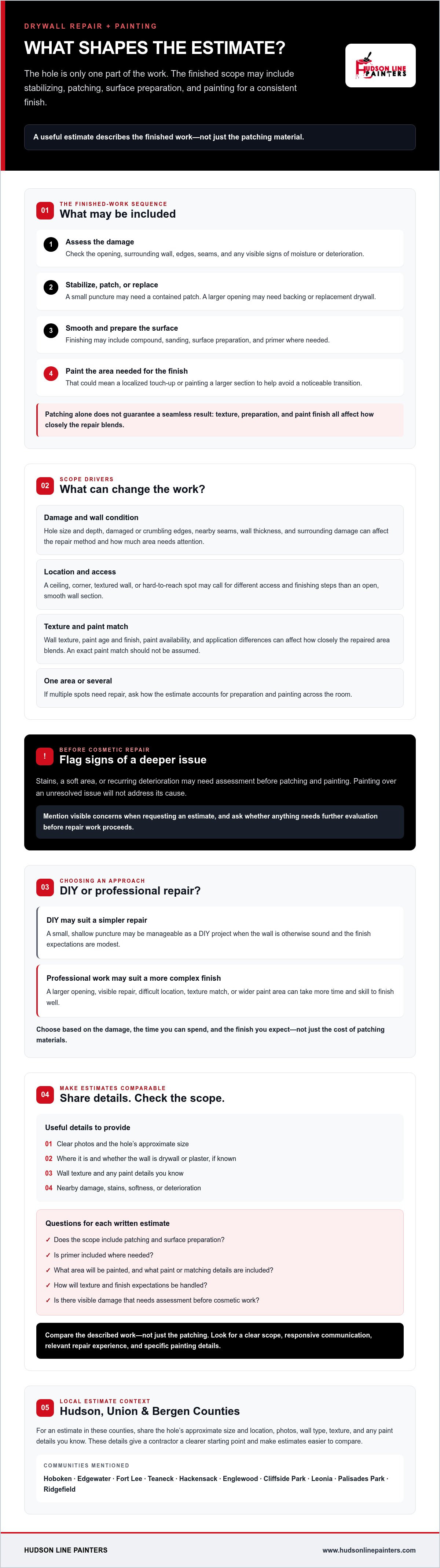
Written estimates are easier to compare when each contractor is assessing the same damage and describing the same finished result. One quote may cover patching alone, while another includes preparation and painting. Use this checklist to make the scope clear before choosing.
- Share clear photos. Include a close view of the damage and a wider shot showing its position on the wall.
- Give approximate measurements. Note the hole’s width and height, and mention whether the edges are loose or crumbling.
- Describe the location and surface. Say whether the damage is on a wall or ceiling, identify the texture if you can, and flag corners, seams, or access challenges.
- Provide known paint details. Share the color or product information if available, the finish, and whether you have leftover paint.
- Disclose relevant history. Mention known leaks, stains, prior repairs, or other damaged areas. Photos can help explain the issue, but cannot confirm hidden conditions.
- Request the same written scope. Ask each contractor to specify the repair method, preparation, painting area, cleanup, and exclusions.
What to ask before accepting a repair quote
Confirm whether the estimate includes patching, sanding, priming where needed, painting, and cleanup. Ask whether paint is supplied by you or included in the proposed scope, and whether the quote covers only the repaired spot or a wider wall area. Ask how the contractor will approach texture differences and paint blending, since an older finish may not match a new patch exactly.
These details help explain why the cost to repair drywall hole and paint can differ between estimates, even when contractors are looking at the same opening. Compare the work each quote includes, not just the total.
How to prepare for an accurate local estimate
Gather photos and measurements before contacting contractors, then describe the wall’s location, texture, and any paint details you know. If you’re in Hudson County, Union County, or Bergen County, ask whether the contractor serves your community and whether the estimate covers the repair and painting you need. This is also useful for residents of Hoboken, Edgewater, Fort Lee, Teaneck, Hackensack, Englewood, Cliffside Park, Leonia, Palisades Park, and Ridgefield. Confirm service availability for your specific location rather than assuming it.
A contractor can use this information to clarify the proposed scope and identify what may need an in-person assessment. When reviewing repair considerations, focus on guidance that distinguishes drywall from plaster and explains how the repair method depends on the damage.
For information about Hudson Line Painters, visit Hudson Line Painters.
Plan a Seamless Drywall Repair and Paint Project with a Local Contractor
A well-planned repair accounts for the finished wall, not just the hole. The cost to repair drywall hole and paint depends on the steps needed to address the damage and bring the surrounding surface to a consistent finish. When comparing contractors, look for a clearly defined scope, responsive communication, relevant drywall or plaster repair experience, and specific details about the painting work.
What a clear repair process should cover
A clear process starts with assessing the damage and agreeing on the repair method and what the completed work includes. Surface preparation and painting follow when the repair is ready. Before accepting a proposal, ask how the contractor plans to handle access to the work area, protect the room, manage dust, and address concerns that could affect the scope. A written estimate should separate included tasks from exclusions so you know what to expect.
Pay attention to the transition between repair and paint. A patch may need preparation and primer before painting, and the proposed paint area should be specific. Discuss finish expectations directly, especially if the wall is textured or the existing paint has aged. Clear answers help you decide whether the plan suits the wall and your priorities without assuming every surface will blend identically.
Request a local assessment for your wall
Hudson Line Painters offers drywall and plaster repair alongside interior painting. If you’re considering a project, be ready to share where the damage is, its approximate size, photos, and any concerns about texture or paint matching. Mention known leaks, previous repairs, or multiple damaged areas as well. This information gives the contractor a useful starting point, though an on-site assessment may be needed to evaluate conditions that photos cannot show.
Hudson Line Painters serves residential and commercial customers in Hudson County, Union County, and Bergen County, as well as nearby New Jersey communities. Its local service area includes Hoboken, Edgewater, Fort Lee, Teaneck, Hackensack, Englewood, Cliffside Park, Leonia, Palisades Park, and Ridgefield. Confirm whether your community is served and discuss the work your wall needs. A clear conversation about the damage, repair plan, and painting details can help you understand the project before moving forward.
Contact Hudson Line Painters about your drywall repair
Plan Your Drywall Repair with Confidence
The right cost to repair drywall hole and paint depends on the full scope, from the damage and surface preparation to the amount of painting needed for a consistent finish. Compare written estimates by checking that they describe the same repair steps, painting area, and exclusions. DIY may suit smaller, simple damage. More complex repairs or visible textures may call for professional attention.
Hudson Line Painters offers drywall and plaster repair alongside interior painting, helping customers address the repair and finish as connected parts of a project. The company serves residential and commercial customers in Hudson County, Union County, and Bergen County, including Hoboken, Edgewater, Fort Lee, Teaneck, Hackensack, Englewood, Cliffside Park, Leonia, Palisades Park, and Ridgefield. Share the damage location, approximate size, photos, and finish concerns to start a clear conversation about your wall.
With a clearly defined scope and a plan suited to the surface, you can take the next step toward a smooth, refreshed room.
Frequently Asked Questions
How much does it cost to repair a drywall hole and paint?
The cost depends on the hole’s size and depth, the wall’s condition, and the finish work included. A small puncture may need a different repair method from a larger opening that requires backing or replacement drywall. Painting scope, texture, preparation, and paint availability can also affect the estimate. Ask for a written breakdown covering repair, sanding, priming where needed, painting, and cleanup so you can compare equivalent scopes.
Does painting a repaired drywall hole mean painting the whole wall?
No, painting the whole wall is not always necessary. A contractor may recommend a localized touch-up when the existing paint and surface allow it, or a wider area if a small patch is likely to stand out. Older paint, sheen differences, and wall texture can make blending difficult, even with a close color match. Ask exactly what area the estimate includes and discuss your expectations for the finished appearance.
Can I repair and paint a drywall hole myself?
Yes, a small, accessible hole in an otherwise sound, smooth wall may be suitable for DIY repair if you’re comfortable with the process. The work involves applying a suitable patching material, allowing it to dry, sanding, preparing the surface, and painting. Textured walls, larger openings, damaged edges, or unexplained stains can be harder to address neatly. Consider a professional assessment if the damage seems more extensive than it first appears.
What information should I provide to get a drywall repair estimate?
Share clear photos from close up and farther away, the hole’s approximate dimensions, and whether it’s on a wall or ceiling. Describe the surface texture and any known paint color, finish, or leftover paint. Mention multiple damaged spots, prior repairs, or known leaks and stains. This helps a contractor understand the visible scope and ask useful follow-up questions, though photos alone cannot reveal every condition behind the wall.
How long does drywall patching and painting take?
The schedule depends on the repair method, the number of damaged areas, preparation, and the time needed for patching materials or primer to dry before the next step. A repair with several finishing stages may take longer than a simple patch, and painting may begin only when the surface is ready. Ask the contractor to explain the expected sequence and what could affect timing for your wall.
Does Hudson Line Painters provide drywall repair and painting in my New Jersey area?
Hudson Line Painters offers drywall and plaster repair and interior painting, serving customers in Hudson County, Union County, and Bergen County, as well as nearby New Jersey communities. Its local service area includes Hoboken, Edgewater, Fort Lee, Teaneck, Hackensack, Englewood, Cliffside Park, Leonia, Palisades Park, and Ridgefield. Service availability can vary by location, so contact the company to confirm whether your community is served and discuss the work your wall needs.


