

Paint and stain create different deck finishes, so the right choice depends on the look you want and the wood’s condition. For homeowners comparing deck staining services in Cranford, NJ, paint provides an opaque finish and more color options, while stain lets more of the wood show through, from transparent to more opaque finishes. Both need proper surface preparation for a clean, durable result.
It’s natural to weigh appearance against upkeep when deciding how to refresh an outdoor deck. This guide explains how painting and staining compare, what a project estimate and warranty may cover, how preparation and weather affect timing, and how the finish can help protect wood from New Jersey’s outdoor conditions. You’ll also learn what to look for in a clear project scope, so you can make a confident choice for your deck.
Key Takeaways
- Choose paint for an opaque look and broad color options, or stain when you want the wood grain to remain visible.
- Good preparation matters: cleaning, removing loose finish, sanding, and addressing damaged boards help create a sound surface.
- A useful estimate should make the project scope clear, including preparation and finish details, while warranty terms explain what is covered.
- Project timing depends on the deck’s condition, preparation needs, and weather, so the schedule should account for the wood drying before finishing.
- Match the finish to the wood, its exposure, and the appearance you want to help your deck withstand New Jersey’s changing weather.
⭐ What is the difference between deck painting and staining?
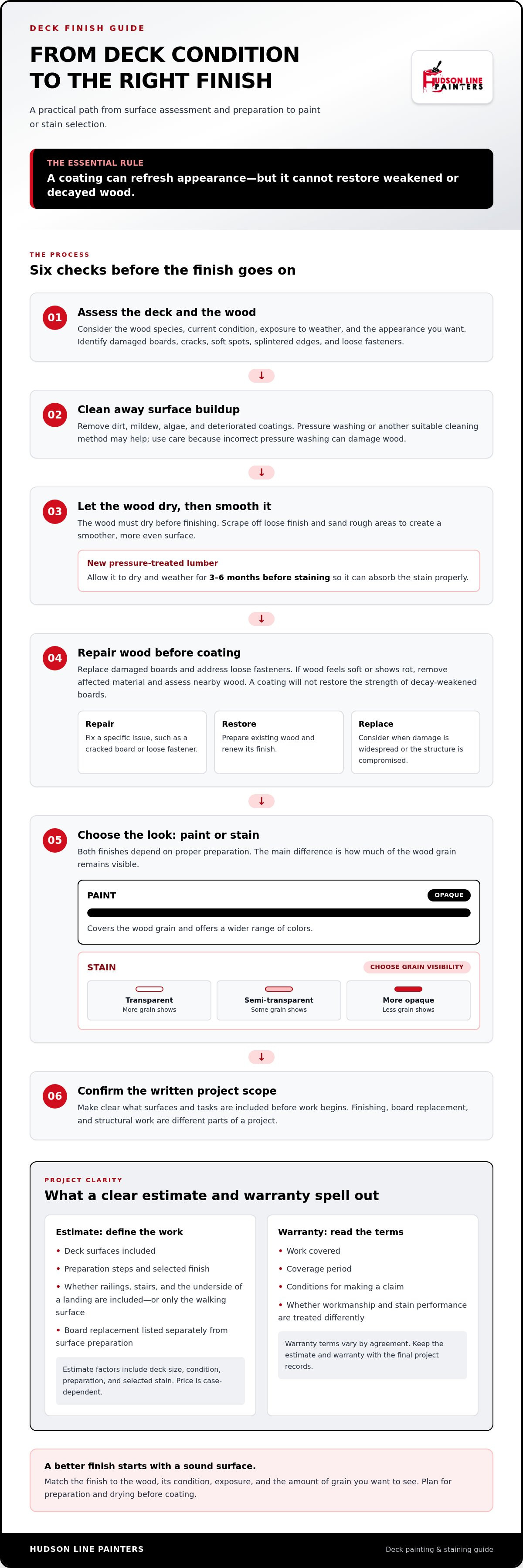
Paint gives a wood deck an opaque finish and offers a wider range of colors. Stain comes in transparent, semi-transparent, and more opaque options, letting you choose how much grain remains visible. Transparent stain shows more of the wood’s natural pattern, while paint covers it. The right choice depends on the appearance you want and the deck’s condition.
Neither finish can compensate for poor preparation. Start by cleaning away dirt, mildew, algae, and deteriorated coatings. Pressure washing or another suitable method may help, but the wood must dry before finishing. Scrape off loose finish, then sand rough areas to create a smoother, more even surface for the new coating.
Inspect the boards before staining or painting. Replace damaged boards rather than covering cracks, soft spots, or splintered edges. Deck repairs may also involve tightening or replacing loose fasteners so boards sit securely. If a board feels soft or shows rot, remove the affected material and assess nearby wood. Coating over decay won’t restore the wood’s strength.
Repair, restoration, and replacement address different conditions. Repair fixes a specific problem, such as a cracked board or loose fastener. Restoration prepares existing wood and renews its finish. Replacement is appropriate when damage is widespread or the deck’s structure is compromised. A fresh coating can improve appearance, but it cannot strengthen weakened boards.
DIY staining can leave lap marks, missed edges, or uneven color if the surface isn’t clean, dry, and evenly prepared. Incorrect pressure washing or sanding can damage wood, too. A professional can follow a consistent process, inspect for visible defects, and apply the finish evenly. Either way, don’t treat a coating as a substitute for deck repairs.
For a Cranford, NJ, project, define the scope clearly: staining covers surface preparation and finish application, while board replacement or structural work adds a different type of work. Permit requirements may depend on whether the project extends beyond finishing into construction. List those tasks separately rather than assuming a stain-only scope includes repairs or rebuilding.
Before choosing a finish, consider the wood species, its condition, and exposure to weather. New decks and fences should be properly prepared and reach an appropriate moisture level before staining. New pressure-treated lumber should dry and weather for 3-6 months before staining so it can absorb the stain properly. These steps help the finish suit the wood rather than conceal a problem.
Contractor estimates, warranties, and service areas
A clear written estimate helps you understand the proposed work before a deck project begins. In Cranford and nearby Union County communities, compare the scope, finish, and warranty terms, not just the bottom line.
Estimates and Warranties
A written estimate should identify the deck surfaces included, preparation steps, and selected finish. Specify whether the scope covers railings, stairs, and the underside of a landing, or only the walking surface. It should also separate surface preparation from board replacement so repairs aren’t obscured by a general finishing description.
The price depends on the case and is provided after a quote request; size, condition, preparation, and selected stain shape the estimate. A definite written scope helps you compare proposals without assuming they cover identical work. Check that the document names the finish and explains how changes to the work affect the final scope.
Warranty terms vary by agreement, so read the written coverage rather than assuming every finish includes the same protection. Look for the work covered, the coverage period, and any stated conditions for making a claim. For instance, a warranty might distinguish workmanship from stain performance. Keep the estimate and warranty together with the final project records.
Service Locations
A company’s service-area information describes where it takes projects, not what each deck needs. Cranford is in Union County; Hudson and Bergen counties are also useful local reference points. Include the property address in the estimate, alongside the deck surfaces and tasks being priced.
Professional locations can help clarify the geographic scope of a service, but a town name alone doesn’t describe a project’s needs. For example, two Cranford decks may differ in access, size, and surface condition. A location-specific estimate should identify the property and work area, then state the agreed scope in plain language.
When comparing deck staining services in Cranford, NJ, keep the location question separate from the finish decision. First define the property and deck surfaces; then compare preparation, materials, and written warranty terms. Union, Hudson, and Bergen counties offer useful local context, but each estimate should identify the property and work involved.
Before agreeing to work, organize the estimate, warranty, and property details in one place. A short written record of the included surfaces and finish makes the scope easier to understand later. For project information and next steps, explore local deck project details.
Deck staining and painting service availability
Deck and fence finishing choices depend on the existing surface, its condition, and the appearance you want. A faded finish may need renewal, while damaged boards need attention before a new coating is applied.
Available Staining and Painting Services
Staining and painting suit different preferences for outdoor wood. A deck or fence can be stained to show some grain or painted for a more opaque appearance. The existing coating matters, too: peeling or deteriorating areas need preparation before refinishing. Power washing or another suitable method can remove dirt and mildew; let the wood dry before finishing.
Deck and fence projects can involve separate surfaces and details, including railings, posts, stairs, and gates. List each area in the project scope. A fence gate, for example, may have a different existing finish than nearby boards. Fading, peeling, or deterioration are practical signs to consider repainting or restaining.
A coating’s availability doesn’t determine whether it suits the surface. The wood’s condition and existing finish shape the work required. If boards are weak or damaged, coating won’t replace repairs. Identify those areas before selecting a finish, so the project addresses the wood’s condition as well as its appearance.
Choosing Paint or Stain
Choose stain when you want the wood grain to remain visible, with options ranging from transparent to more opaque. Paint creates a uniform, opaque finish and offers broader color choices. For example, a homeowner seeking a solid color may prefer paint, while someone who wants visible grain may prefer transparent or semi-transparent stain.
Appearance is only part of the decision. Assess the existing finish, the wood, and the preparation needed. If the old coating is peeling, remove loose material before applying a new finish. Paint applied over a deteriorated surface can look uneven, and stain also requires a properly prepared surface.
Consider the deck and fence together, but assess each separately. A shaded fence panel may retain its finish differently from a sunny deck surface. Choose a suitable finish for each rather than assuming the same product or approach will work for both. In Cranford, a clear plan can distinguish painting from staining and identify areas that need preparation first.
Deck painting suits homeowners seeking an opaque color and a consistent appearance across boards and railings. Staining gives you more choice in how much wood grain shows. Neither finish fixes rot, loose boards, or structural damage. If a surface needs replacement rather than refinishing, address it before finishing the remaining wood.
Project timelines and service-area coverage
In Cranford, plan staining around the wood’s condition and a suitable weather window. Choose a dry stretch that allows the wood to dry before finishing, and avoid rain, humidity, snow, or freezing temperatures.
Restoration Process and Timing
Begin by assessing the deck structure, existing finish, and damaged areas. A worn coating may need renewal, while soft or broken boards need repairs first. The sequence depends on the surface: remove deteriorated coatings, clean the wood, let it dry, then apply the selected finish. Each step affects when the next can begin.
New pressure-treated lumber needs additional time before staining. It should dry and weather for 3-6 months so it can absorb stain properly. New cedar or hardwood decks can often be stained sooner than new pressure-treated lumber, but the wood still needs suitable moisture and preparation. That distinction can change a project schedule even when both decks are newly built.
For a Cranford deck, timing also depends on how much preparation the finish requires. A surface with peeling areas needs more work than one with a sound but faded finish. Repair damaged boards before applying stain; finishing first can obscure problems without resolving them.
Project Timelines
There’s no single timeline for every deck. Surface area, wood condition, existing coating, repairs, and drying conditions all affect the sequence. A deck with loose finish and damaged boards needs more preparation than one with intact boards and a worn finish. Work can proceed only when each stage is ready.
Weather matters throughout the project, not just on application day. Rain and humidity can affect drying, while snow and freezing temperatures can interrupt outdoor finishing. Schedule around a forecasted dry period and the wood’s readiness, not convenience alone. If conditions change, wait until the surface is dry before proceeding.
Schedule staining as the existing finish fades or wears. Exposure, foot traffic, wood condition, and stain type all influence when it’s due. A deck in full sun may show wear differently from a sheltered area, so inspect the surfaces instead of relying on a calendar alone.
For Cranford homeowners, organizing access and work areas can also help the project run smoothly. Clear furniture and plan around the steps, gates, and entrances included in the work. A written sequence can show which areas will be worked on first and when finished surfaces can return to use, depending on drying conditions.
Weather protection for New Jersey outdoor wood
Rain, humidity, snow, freezing temperatures, and seasonal changes all affect outdoor decks in New Jersey. A suitable finish helps protect wood, but it can’t replace sound boards or needed repairs.
Weather and Wear Protection
Rain, sun, snow, and dirt can contribute to fading and wood deterioration. Humidity and moisture affect surfaces, while temperature changes may contribute to cracking. Inspect high-traffic steps, exposed railings, and sunny deck edges for worn finish or splintered boards. These areas may show wear sooner than sheltered parts of the deck.
Choose a stain based on the wood species, condition, exposure, and desired appearance. Transparent finishes reveal more grain, while more opaque options change the look more substantially. A wood deck stain can last two to five years, depending on exposure, climate, stain type, and surface condition. Wood decks should be recoated with stain every 2 to 4 years.
Those timelines describe different ways to think about maintenance: expected finish life varies, while recoating guidance provides a recurring upkeep interval. Inspect the deck as the existing finish fades or wears. For example, a sun-exposed board may need attention before a shaded area. Dirt and peeling coatings should be removed before applying a fresh finish.
Keep outdoor surfaces free of accumulated dirt and watch for water collecting around boards. Clean the deck with a suitable method, then allow the wood to dry before finishing. Regular visual checks can help catch repairs early, especially where boards are cracked or have exposed splintered edges.
Preservatives and Rot Protection
Stain or sealant protects the surface; it doesn’t cure rot. If a board feels weak, cracks, or breaks, address the damaged wood rather than coating over it. Replace unsound boards before refinishing, and inspect nearby areas for ongoing moisture exposure. A coating can’t restore a decayed deck’s strength.
Wood stain can help shield a surface from weathering, but protection depends on the wood, its exposure, and the finish. Reapply wood deck sealant at least once per year. This maintenance interval is separate from stain recoating guidance, so identify whether the surface has stain, sealant, or both before planning upkeep.
For practical maintenance, inspect exposed boards, railings, and steps for fading, cracking, or soft spots, and arrange repairs before refinishing. Keeping the surface clean and maintaining its finish can help limit weather-related deterioration. Persistent moisture or damaged boards call for repair, not just another coat.
Hudson Line Painters: Interior Painting
Hudson Line Painters provides Deck & Fence Staining for homeowners ready to refresh outdoor wood after comparing paint and stain. This service suits a structurally sound deck that needs a renewed finish and where you’ve chosen the look you want. Preparation and finish selection can account for the wood’s condition and exposure. Hudson Line Painters also offers Exterior Painting and Kitchen Cabinet Refinishing for homeowners planning other improvements.
Contact Hudson Line Painters to discuss your deck or fence project.
Plan Your Next Home Update
Refreshing an outdoor space can be the first step in a broader home update. Consider how the deck connects to nearby siding, doors, or interior rooms, then choose improvements that create a cohesive feel without taking on every project at once.
If you’re considering deck staining services in Cranford, NJ, start by defining the result you want and the areas that matter most. Clear priorities help keep decisions focused, whether you’re creating a welcoming outdoor space or coordinating the look of your home.
Hudson Line Painters also offers Interior Painting, Exterior Painting, and Kitchen Cabinet Refinishing. These services can support separate updates as your plans develop, from refreshing a room to renewing kitchen cabinets.
Choose the next improvement that fits your home, and take the next step with a clear plan.
Frequently Asked Questions
⭐ What type of stain is best for a New Jersey deck?
The right stain depends on the wood species, condition, exposure, and appearance you want. Transparent stain reveals more grain; semi-transparent stain balances color with visible texture. More opaque stain provides stronger color coverage. Match the finish to the wood and its conditions, since an exposed deck may call for a different choice than a sheltered one.
Can you put too much sealer on a deck?
Yes. Excess sealer can leave an uneven, glossy, or sticky surface, especially when the wood can’t absorb more product. Follow the product’s application directions and avoid leaving puddles between boards or around railings. If the surface already feels tacky, another coat can make the finish worse. Follow the product instructions for drying and recoating rather than adding sealer to make the deck seem more protected.
How do you keep pressure-treated wood from rotting?
Keep pressure-treated wood clean, allow moisture to drain, and maintain its protective finish. New pressure-treated lumber should dry and weather for 3-6 months before staining so it can absorb stain properly. Inspect board ends, joints, and areas near posts for persistent dampness or soft spots. If rot appears, replace affected boards instead of covering them with stain, which cannot restore damaged wood.
How long does wood stain last?
Wood stain on a deck can last two to five years, depending on exposure, climate, stain type, and surface condition. A sunny, high-traffic section may show wear sooner than sheltered boards. Look for fading or deterioration rather than relying only on elapsed time. Transparent stains may need refreshing more frequently than solid stains, which can last longer. Recoating guidance for wood decks is every 2 to 4 years.
⭐ Can you pressure wash decks before staining?
Yes. Pressure washing or another suitable cleaning method can remove dirt, mildew, algae, and deteriorated coatings before staining. Choose an approach suited to the wood to avoid damaging its surface. Cleaning is only one preparation step: remove loose finish, address rough areas, and let the deck dry before applying stain. Staining damp boards, for example, can interfere with absorption and create an uneven result.
What deck staining companies serve Cranford, NJ?
Hudson Line Painters provides Deck & Fence Staining in Union County, Hudson County, and Bergen County. Cranford is in Union County, making this local service relevant to homeowners seeking deck staining in town. For a useful project scope, identify the deck surfaces, stairs, and railings that need finishing. List fence sections separately if you want them included in the same project.
What do deck staining services cost in Cranford, NJ?
The project price depends on the case and is provided after a quote request. Factors include the deck’s size and condition, the stain selected, and the preparation required. For example, a deck with deteriorated coatings or damaged boards involves a different scope than one needing routine surface preparation. Specify which areas are included, such as stairs or railings, so the estimate reflects the work you want completed.
How much does deck staining cost per square foot in New Jersey?
There isn’t one price per square foot that applies to every New Jersey deck. The price depends on the case and is provided after a quote request. Surface area is only one consideration; wood condition, preparation, and stain type also shape the scope. For a clearer estimate, describe the deck’s approximate dimensions and identify extras, such as railings, steps, or attached landings.


