

The easiest finish to clean can also make wall flaws more noticeable. When choosing a paint finish to hide wall imperfections, flat or matte is usually the most forgiving because it reflects little light. Eggshell offers a practical middle ground when you want added durability and easier cleaning.
If you’re weighing appearance against upkeep, consider both. A low-sheen finish can soften the look of uneven texture, patches, and small dents, while a glossier finish reflects more light and can draw attention to them.
This guide explains how sheen affects color, durability, and cleanability, then compares finishes for common rooms and surfaces. You’ll see when flat or matte makes sense, where eggshell or satin may offer a better balance, and why surface preparation matters for an even-looking result.
Key Takeaways
- Flat and matte finishes soften the look of uneven walls, while eggshell can balance concealment with easier upkeep.
- Sheen changes how light reflects across a surface, which can affect both the perceived color and the visibility of flaws.
- Match durability to the room: higher-sheen finishes are easier to clean, while lower-sheen options are more forgiving of wall texture.
- Use a test patch to compare the finish in the room’s lighting, and address cracks, holes, and rough areas before painting.
- When wall repairs or a careful finish application feel like too much to manage, interior painting can help bring the room together.
What Paint Finish Should I Use for Every Room?
For uneven walls, flat or matte paint usually hides small surface flaws best. Flat paint reflects almost no light, while color and texture can also affect how visible patches, dents, and uneven areas appear.
In busier rooms, eggshell or satin can offer a useful balance between appearance and upkeep. The right choice depends on the wall’s condition, how the room is used, and how much light reaches the surface.
Flat and Matte Coverage of Wall Flaws
Flat and matte finishes diffuse light, reducing the contrast that can reveal small bumps or patch edges. This is especially helpful on visibly textured or uneven walls, where a reflective finish could make flaws stand out. Flat is non-reflective; matte also provides strong hiding power and is slightly more durable than flat.
Neither finish repairs damage or guarantees an even-looking surface. A deep dent, raised patch, or rough joint can remain visible under flat paint, especially in daylight near a window. Flat finishes can also be harder to maintain because scuffs and stains may be difficult to clean, so they’re particularly well suited to ceilings and very low-traffic areas.
- Ceiling: Flat paint minimizes reflection across a broad surface.
- Uneven wall: Flat or matte can soften the appearance of texture.
- Busy hallway: Consider eggshell or satin if cleaning matters more.
Using Color and Texture to Conceal Flaws
Color and texture influence how the eye reads a wall, but neither replaces repair. A consistent color can make small patches less distracting, while a textured finish may disguise minor unevenness by breaking up a smooth plane. Texture can help with subtle waviness, but it can also make a different pattern more noticeable.
Consider a patched living-room wall beside a window: changing light can reveal the patch even after painting. A flat or matte finish reduces reflected light, while a test area lets you judge the color and surface together before painting the whole wall. Don’t rely on a darker shade alone to hide a raised ridge or damaged spot.
Room use helps narrow the choice. Eggshell reflects more light than flat or matte, yet remains nearly shine-free and offers a washable surface for light cleaning. That balance can work well in family rooms and hallways, where walls need more upkeep than a ceiling but still benefit from restrained sheen.
Bedrooms commonly suit eggshell or satin, while living rooms often use either. Satin offers greater durability and stain resistance than eggshell, but shows application flaws more readily. On a large wall, uneven roller marks can become noticeable, so careful application matters as much as sheen selection.
High-gloss and semi-gloss are less forgiving on imperfect walls. Reflected light can highlight dents, texture, and application marks, making these finishes better suited to smooth surfaces or details than damaged walls. When choosing a paint finish to hide wall imperfections, weigh the wall’s condition against cleaning needs before settling on a finish for the whole room.
How sheen affects paint appearance and performance
Sheen measures how much light a painted surface reflects, shaping its gloss and appearance. That reflection can also affect how color looks, how visible flaws are, and how a finish performs in different conditions.
Sheen and Paint Appearance
Sheen changes how a color looks after application. The same shade may appear lighter or darker as light shifts across a room, so a sample in a dim corner may look different near a bright window. Eggshell reflects more light than flat or matte, adding a soft glow without a highly polished look.
Sheen also influences where a finish works well. Semi-gloss can add dimension to trim, millwork, and doors, while high-gloss creates the brightest, most reflective effect. Higher-sheen finishes generally perform better in humid environments, so consider both appearance and practical use.
Sheen and Imperfection Visibility
Reflected light can reveal changes in a wall’s texture, making dents, raised patches, and uneven paint more noticeable. Flat and eggshell diffuse more light than glossier options, so they’re typically more forgiving on imperfect surfaces. Semi-gloss reflects light and can emphasize blemishes, particularly on textured or damaged walls.
Application marks matter, too. Satin can show flaws more readily than flat or eggshell, and touch-ups may be harder to blend. Pearl sheen has a subtle shimmer between eggshell and semi-gloss, but can reveal lap marks and other painting flaws. A test patch helps you judge the finish on the actual wall.
Gloss and Light Reflection
Gloss describes the visible shine created by reflected light. Flat provides a non-reflective surface; eggshell reflects more, while high-gloss is the shiniest and most reflective. On a wall with a rough repair, strong reflection can create bright and dark areas that outline the uneven spot.
Light direction affects what you notice. A window casting light across a wall can make ridges and roller marks stand out more than light falling directly on the same surface. Test a small, less conspicuous area under the room’s usual lighting, then view it from different positions before choosing.
Use contrast intentionally. Semi-gloss can highlight a smooth door or trim detail, while high-gloss suits cabinets and doors where durability and shine are desired. For a room update that also involves trim adjustments, light carpentry work may be a useful part of the planning.
Durability and cleanability of different sheens
Choose a finish by balancing appearance against how often the room needs cleaning. Flat paint can conceal surface irregularities, but repeated rubbing may cause burnishing, leaving shiny spots. That trade-off matters more in a busy hallway than in a quiet guest room. Sheen affects maintenance, but traffic and exposure also guide the choice.
Flat finishes are more prone to scuffs and stains, and cleaning them can be challenging. A mark may resist wiping, while vigorous rubbing can change the surface sheen. Reserve flat paint for ceilings or very low-traffic areas where frequent contact is unlikely. Matte is another option: it can withstand frequent washing, including in hallways and family rooms.
Eggshell offers a practical middle ground for everyday living spaces. Its nearly shine-free appearance suits family rooms and hallways, and its washable surface handles light cleaning. It’s slightly more durable than flat paint, making it useful where occasional fingerprints or dust need attention. Eggshell still reflects less light than satin, keeping wall texture less prominent.
For higher-traffic rooms, satin combines greater durability with easier cleaning. Compared with eggshell and other lower-sheen finishes, it offers better stain resistance and stands up better to regular wiping. It can still hide minor imperfections reasonably well. However, careless brushing or rolling can leave marks, especially across a large wall, so consistent application matters.
- Low-traffic ceiling: Flat paint limits reflection but needs gentle upkeep.
- Family room: Eggshell handles light cleaning with a restrained sheen.
- Busy hallway: Matte or satin may suit frequent washing and contact.
- Bathroom area: Satin or semi-gloss can better withstand moisture.
Moisture changes the priorities. Satin or semi-gloss is recommended for bathroom areas because these finishes can withstand humidity. Higher-sheen finishes generally perform better in humid environments, while satin also suits high-traffic rooms. Consider the wall’s condition, too: semi-gloss reflects more light and can highlight blemishes on textured surfaces.
Trim and doors often need different upkeep from broad walls. Semi-gloss is easy to clean and works well on trim and moldings. High-gloss is also easy to clean and stain-resistant, making it suitable for doors and cabinets. Higher-quality paint can improve washability and durability across sheen levels, while consistent sheen and good coverage help the finish hold up.
Match the finish to the cleaning routine, not just the room name. A frequently touched hallway wall needs a different balance than a ceiling, while a bathroom combines moisture with regular upkeep. When choosing a paint finish to hide wall imperfections, consider cleaning demands and wall texture before settling on one sheen throughout the home.
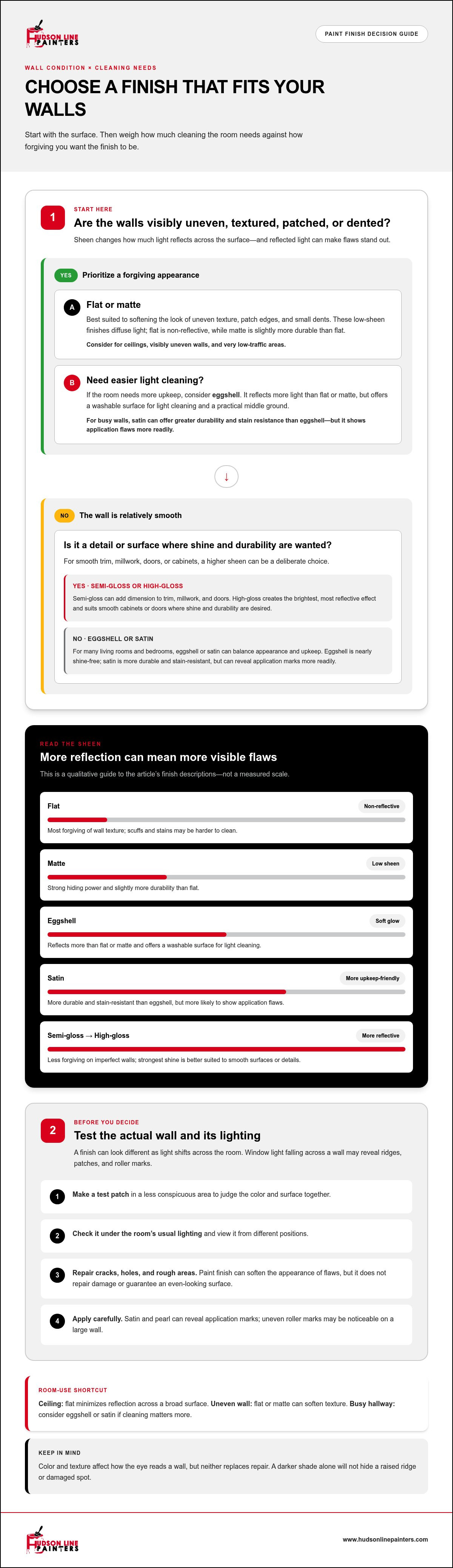
Choosing a finish to conceal wall imperfections
Start with the wall’s condition, then weigh room use and cleaning needs. A finish can soften minor flaws, but reflected light may reveal uneven texture, patched areas, and application marks.
For visibly uneven or textured walls, flat paint is usually the most forgiving choice. Its non-reflective surface reduces highlights across small bumps and shallow dents. Matte also provides excellent hiding power and depth of color, with slightly more durability than flat. Neither finish levels a ridge or fills a hole, so consider the size and location of flaws before choosing paint.
Eggshell is a useful compromise when a wall has minor imperfections but also needs light cleaning. It reflects more light than flat or matte, yet remains nearly shine-free and offers a washable surface. In a family room or hallway, that balance can be more practical than choosing the lowest sheen. Satin is more durable, though it can reveal application flaws more readily.
- Uneven bedroom wall: Flat or matte prioritizes a softer, less reflective appearance.
- Living room with small patches: Eggshell balances concealment with light cleaning.
- High-traffic hallway: Eggshell or satin can better suit regular use.
- Damaged wall: Avoid semi-gloss or high-gloss, which can emphasize surface flaws.
Room recommendations are starting points, not substitutes for evaluating the wall itself. Bedrooms commonly use eggshell or satin, while living rooms often suit either finish. A bedroom with rough plaster may benefit more from matte than satin. Conversely, a smooth hallway wall may tolerate satin if durability and stain resistance matter more.
Lighting helps explain why the same finish looks different from one wall to another. A window casting light across a patched surface can make its edges more noticeable. Before painting the whole room, apply a test patch in a less conspicuous area. View it under the room’s usual lighting and from different angles to judge both color and flaw visibility.
Keep trim and doors separate from the wall decision. Semi-gloss is commonly used on trim, millwork, and doors, where reflected light can highlight architectural details. High-gloss can accentuate blemishes and application marks, so reserve it for clean, smooth surfaces. A typical combination is eggshell on walls, semi-gloss on trim, and flat on ceilings.
Make the final choice by ranking three priorities: surface concealment, cleaning frequency, and room exposure. If concealment matters most, choose a lower sheen; if washing and traffic matter more, consider eggshell or satin. When a wall has pronounced damage, sheen alone won’t hide it. Surface preparation and repair are still essential for an even-looking result.
How should you prepare and repair walls before painting to hide imperfections?
Paint finish can soften minor flaws, but it won’t flatten a ridge or fill a crack. Before painting, inspect the wall in daylight and note each dent, loose edge, hole, or rough patch. High-gloss needs especially even, clean preparation because reflected light can expose surface flaws and application marks.
Work from visible damage to the overall surface. The Bureau of Standards recommends lightly sanding new or unpainted plaster with fine sandpaper and filling cracks and holes with plaster of Paris before painting. Let repairs become firm, then sand their edges so they meet the surrounding wall smoothly. A raised repair can cast a visible shadow beneath fresh paint.
- Inspect: Look across the wall from different angles, especially near windows where light reveals unevenness.
- Mark: Identify holes, cracks, peeling edges, and rough patches so each receives the right attention.
- Repair: Fill cracks and holes; smooth raised edges rather than covering them with another coat.
- Sand: Lightly smooth new or unpainted plaster with fine sandpaper, then remove sanding dust.
Keep repairs level with the surrounding surface. A filled nail hole, for example, should not leave a raised ring, and a plaster patch should not have a sharp edge. These transitions can remain visible under flat paint, even though low-sheen finishes reduce reflected highlights. Check each repair by viewing the wall from the side, not only straight on.
Clean preparation also supports a consistent finish. Dust left after sanding can interfere with an even coat, while dirt or loose paint can create an irregular surface. Remove debris after sanding, then examine the wall again before painting. This care is especially important with high-gloss paint, which shows flaws in both the surface and the application.
Choose repairs based on what the wall needs. Small holes and cracks call for filling and smoothing; broad uneven areas may need more extensive surface correction. If plaster is damaged, professional drywall and plaster repair can address the surface before interior painting. Then choose a finish based on the repaired wall’s texture, room use, and cleaning demands.
Don’t use sheen to disguise damage that needs repair. Flat paint can reduce highlights, but it cannot correct a deep crack, loose material, or uneven patch. Careful preparation gives the chosen paint a more uniform surface and helps prevent repairs from becoming the most noticeable feature.
Hudson Line Painters: Interior Painting
Hudson Line Painters provides interior painting for rooms where wall condition, sheen, and upkeep all shape the result. Turn to professional painting when repairs, uneven surfaces, or careful finish application make a room difficult to manage yourself. The right finish depends on wall texture and how the space is used, so preparation and sheen selection matter as much as color.
Whether you’re refreshing one room or updating several interior walls, a clear plan can align the finish with your priorities: concealing minor flaws, maintaining a consistent appearance, or making routine cleaning easier. Hudson Line Painters brings these details together through interior painting.
Contact Hudson Line Painters to discuss your interior painting project.
Make your next painting decision with confidence
A freshly painted room can be the start of a more considered home update. Think about how each space should feel and function, then decide where a consistent finish matters most. Choosing a paint finish to hide wall imperfections is one part of that plan; coordinating walls with trim, doors, and nearby rooms can help the overall result feel intentional.
If you’re ready to move from planning to painting, Hudson Line Painters offers interior painting, exterior painting, and kitchen cabinet refinishing. Whether your project focuses on one room or connects several areas of the home, a clear scope helps keep finish choices aligned with your priorities.
Let the condition of each surface and the way you use each space guide your next move. Thoughtful preparation and a well-matched finish can make the update feel cohesive, not simply new.
Your home is ready for a fresh, carefully considered look.
Frequently Asked Questions
What is Paint Sheen?
Paint sheen describes how much light a painted surface reflects, from flat’s low reflection to high-gloss’s pronounced shine. It’s separate from paint color: two paints in the same shade can look different if their sheens differ. For example, an eggshell wall may appear brighter than a nearby flat-painted wall as daylight moves across the room.
Which paint finish best hides wall imperfections?
Flat or matte usually hides minor wall flaws best because it reflects less light. That makes it a sensible starting point for walls with small patches, shallow dents, or uneven texture. It won’t correct a pronounced ridge or damaged plaster, though. If the wall also needs routine wiping, consider how often it gets touched before choosing the lowest-sheen option.
How do flat, matte, eggshell, satin, and semi-gloss finishes compare for hiding flaws?
Flat and matte are generally the most forgiving on uneven surfaces. Eggshell adds some reflection, making it a middle option for minor flaws and light cleaning. Satin is more durable but may show application marks. Semi-gloss reflects more light, so it can emphasize rough patches or dents. For example, reserve semi-gloss for smoother surfaces rather than visibly uneven walls.
Why do glossy paint finishes make wall imperfections more visible?
Glossy paint reflects stronger highlights, creating contrast around bumps, dents, and patched areas. A light source shining across a wall can make that contrast especially noticeable. Consider a raised repair near a window: reflection may outline its edge, even if the patch looked subtle before painting. Gloss can also reveal uneven roller or brush application.
Is matte or flat paint better for hiding dents, patches, and uneven walls?
Both finishes can help disguise minor dents, patch edges, and uneven texture. Flat is fully non-reflective, while matte provides strong hiding power and is slightly more durable than flat. For a wall with visible repairs, the difference may matter less than how well the patch is leveled. A raised patch can still catch the eye, so inspect the surface from the side before painting.
What are the drawbacks of using flat paint on walls, including cleaning and durability?
Flat paint can scuff and stain more readily than higher-sheen finishes, and scrubbing may leave burnished, shiny spots. That can be frustrating in a narrow hallway where bags or hands often brush the wall. Flat is often a better fit for ceilings or rooms with little contact. If a wall needs frequent washing, weigh its cleaning demands against flat’s ability to soften visible texture.
What paint sheen is best for high-traffic rooms with imperfect walls?
Eggshell or satin can suit busy rooms where walls need cleaning, while remaining less reflective than semi-gloss. Eggshell is useful when concealing minor flaws matters alongside light washing. Satin offers greater durability and stain resistance, but application marks can be easier to see. In a family room, choose based on whether frequent cleaning or a softer wall appearance matters more.
How much does paint finish affect the appearance of wall imperfections under different lighting?
Lighting can change how strongly a finish reveals flaws. A window or lamp shining across a wall may cast highlights and shadows that outline a patch; light aimed more directly at the wall can make the same area look different. Before committing, compare a small test patch in the room’s usual lighting, then view it near the window and from the main seating area.


