
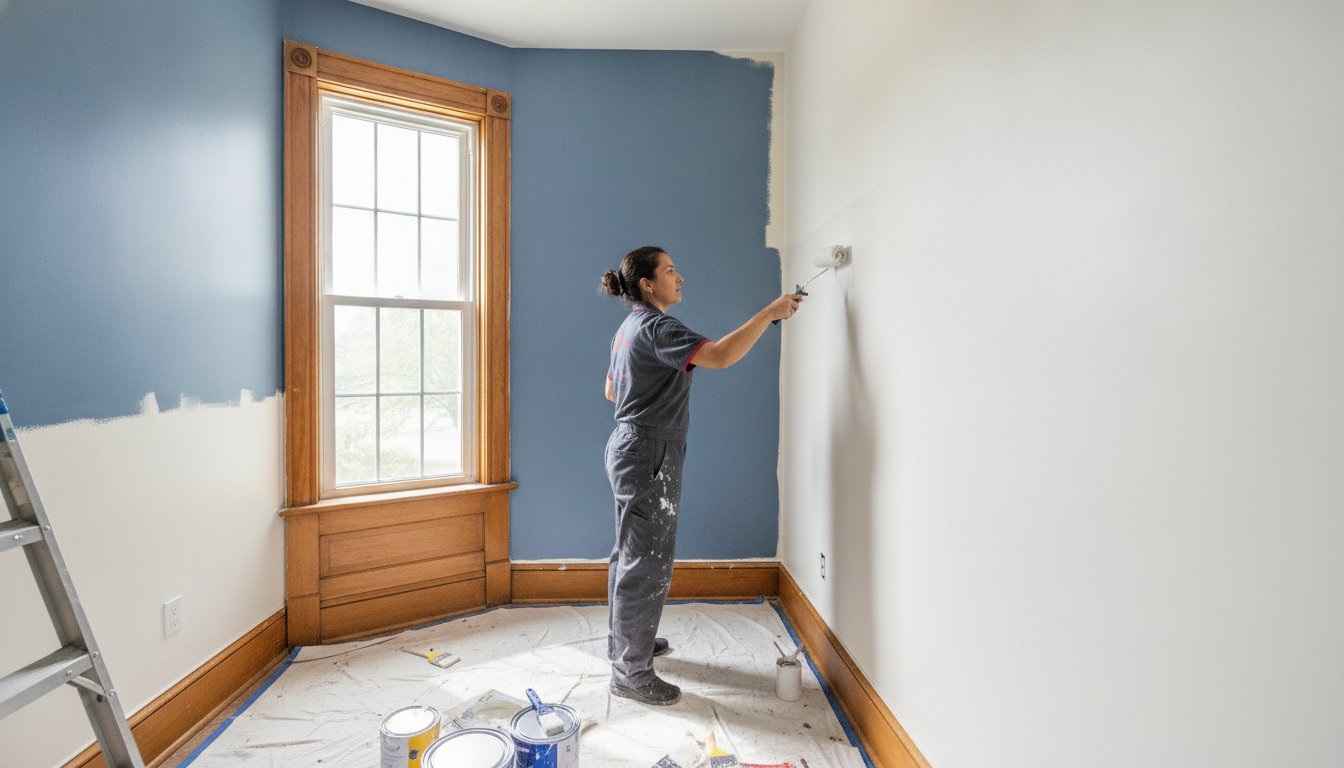
Painting your cramped guest room or narrow hallway a clinical white might actually be the reason it feels so small. It is a common frustration for homeowners, especially those navigating the unique, awkward layouts of historic New Jersey homes, to feel trapped by "safe" color choices. You likely worry that anything other than a stark white will make your walls close in, yet you're tired of living in a space that lacks character and warmth. We understand that a successful transformation requires more than just a brush and a bucket of paint; it requires a strategic approach to light and depth.
In this guide, you will learn how to make a small room look bigger with paint using the latest 2026 design trends and professional-grade techniques. We'll show you how to leverage the science of Light Reflectance Value (LRV) to maximize natural light and explain why "color drenching" is the ultimate tool for erasing visual boundaries in tight corners. We will also explore the shift toward warm, nature-inspired tones that provide a modern aesthetic while maintaining an airy feel. By the end, you'll have a clear, actionable plan to turn your most restrictive rooms into expansive spaces that add genuine value to your home.
Key Takeaways
- Learn how to utilize Light Reflectance Value (LRV) and cool-toned palettes to create a receding effect that visually expands your walls.
- Discover the color drenching method to eliminate visual breaks between walls and ceilings, creating a seamless and airy environment.
- Explore expert strategies on how to make a small room look bigger with paint in unique New Jersey floor plans, including narrow railroad apartments and North-facing rooms.
- Understand the role of paint sheen and strategic dark colors in adding depth and reflecting light in windowless or cramped spaces.
- Recognize why professional surface prep and drywall repair are critical to eliminating the visual noise that makes a small room feel cluttered and confined.
The Visual Mechanics of Small Spaces: Color, Light, and LRV
Understanding the physics of light is the first step in mastering how to make a small room look bigger with paint. Many homeowners select a color based on a small swatch without realizing how it will interact with the specific lighting of their home. A cramped room feels restrictive because the walls absorb light rather than reflecting it back into the space. By selecting colors based on scientific metrics rather than just aesthetic preference, you can create a psychological sense of freedom and openness that improves your daily well-being. A bright, airy room doesn't just look better; it changes how you feel within your own home.
Understanding Light Reflectance Value (LRV)
Every professional paint chip includes a number that serves as the most critical tool for your project. Light Reflectance Value (LRV) is the percentage of light reflected by a paint color. This scale runs from 0 to 100; zero represents absolute black that absorbs all light, while 100 represents a pure white that reflects it all. For small spaces, we typically recommend a target LRV of 60 or higher. This ensures that even on a cloudy day in New Jersey, your room retains a sense of brightness. Colors with lower LRV ratings can make a narrow hallway feel like a tunnel, while higher values bounce light across the room to create an airy atmosphere.
Cool Tones vs. Warm Tones: Which Recede Further?
The temperature of your chosen hue determines how your eyes perceive the distance of the walls. Cool tones like soft blues, muted greens, and gentle lavenders are known as "receding" colors. They trick the brain into thinking the walls are further away than they actually are. In contrast, warm tones like vibrant reds or deep oranges are "advancing" colors that make a space feel more intimate and enclosed. While warm colors have their place, they often make a small room feel smaller. However, if you're dealing with a north-facing room in a historic Union County home, you might need a "warm white." These rooms often receive cold, blue-tinted natural light that can make cool grays look depressing. A warm white with a high LRV provides the necessary glow without making the walls advance.
Avoid "muddy" medium-toned colors at all costs. These are the shades that sit in the middle of the spectrum; they aren't dark enough to provide dramatic depth, yet they aren't light enough to reflect significant brightness. They often result in a "dingy" look that highlights every corner and shadow. Choosing a clear, crisp color with a high LRV is the most effective way to manage how to make a small room look bigger with paint while ensuring the final result looks intentional and polished.
Strategic Painting Techniques to Expand Your Horizons
Choosing the right color is only half the battle. To truly master how to make a small room look bigger with paint, you must consider how that color is applied across different surfaces. Traditional painting methods often emphasize the architectural breaks between walls, trim, and ceilings. While this adds definition in a large colonial home, it can make a compact room feel chopped up and restricted. By using strategic application techniques, you can blur these boundaries and trick the eye into seeing a more expansive area.
The Power of Color Drenching
Color drenching is a sophisticated technique where you paint the walls, baseboards, crown molding, and even the doors in the exact same hue. This method is exceptionally effective because it removes the high-contrast "outline" that usually defines a room's perimeter. When the eye isn't interrupted by a white baseboard against a colored wall, it stops measuring the physical limits of the space. For the best results, we recommend using soft, desaturated colors. To maintain a professional look, vary the sheens: use an eggshell finish for the walls to hide imperfections and a semi-gloss or satin finish for the trim to provide durability and a subtle hint of dimension.
Drawing the Eye Upward
Many historic homes in Union County feature low ceilings that can make a room feel oppressive. You can counteract this by using vertical stripes to "lift" the ceiling. We suggest keeping stripes between 4 and 12 inches wide. Using two similar shades from the same color family creates a sophisticated, subtle texture that guides the gaze toward the ceiling without overwhelming the senses. Achieving the crisp, laser-straight lines required for this effect can be challenging. Many homeowners find that partnering with professional interior painting services ensures the precision needed for such a technical project.
The "Fifth Wall"—your ceiling—is another vital tool. Painting the ceiling a lighter tint of your wall color, rather than a standard flat white, creates an "infinite sky" effect. This reduces the harsh transition where the wall meets the ceiling, making the vertical height feel limitless. Similarly, if your room has built-in bookshelves or radiators, paint them the same color as your walls. This "disappearing" act reduces visual clutter and prevents these features from protruding into the room's footprint. If you are ready to see these techniques in action, a quick consultation with a local expert at hudsonlinepainters.com can help you determine which strategy fits your specific layout.
Beyond White: The Role of Sheen and Contrast
Many homeowners believe that painting a small room anything other than a stark, clinical white will lead to a claustrophobic result. This is a common misconception that limits your design potential. While light colors reflect more light, dark and moody hues can actually provide a sophisticated solution for how to make a small room look bigger with paint by creating a sense of infinite depth. In spaces like windowless powder rooms or narrow hallways, deep charcoal or navy tones cause the corners to blur into the shadows. This "infinity effect" tricks the eye into perceiving the walls as further away than they truly are, provided you manage the contrast and light reflection correctly.
This "infinity effect" is a cornerstone of high-end basement remodeling; for those seeking inspiration for such projects, you can read more about how Elite Contractor Services uses these design-build strategies to transform subterranean spaces into premium living areas.
Why Sheen Matters as Much as Color
The finish of your paint is just as impactful as the pigment itself. Paint sheen refers to the amount of light reflected off the surface once it has dried. Flat finishes are excellent for hiding minor wall imperfections or "visual noise," but they absorb light, which can make a small space feel static. Conversely, satin and semi-gloss finishes act like subtle mirrors. They bounce light across the room, effectively serving as a space expander. We generally recommend a satin or eggshell finish for most small rooms because they strike a perfect balance between light reflection and daily durability.
You must be cautious with high-gloss finishes. While they reflect the most light, they also highlight every bump, crack, and texture flaw on your walls. If your home has the aged plaster typical of many New Jersey properties, high-gloss paint will amplify every imperfection unless the surface has been meticulously prepped. A professional finish ensures that your "mirrored" walls look intentional and high-end rather than highlighting structural flaws.
Creating Depth with Dark Hues
Another expert strategy involves the use of "Shadow Walls." By painting a single wall a deeper shade than the surrounding surfaces, you create the illusion of a receding alcove. This adds a layer of architectural interest that pushes the boundaries of the room outward. If you are applying this concept to a small kitchen with dark, dramatic walls, you can maintain a sense of balance by opting for professional cabinet refinishing in a lighter, creamy tone. This contrast prevents the room from feeling heavy while allowing the dark walls to provide that desirable sense of depth. Using dark colors in pass-through spaces like hallways also creates a dramatic transition that makes the adjacent rooms feel significantly larger and brighter by comparison.
- Flat: Best for ceilings and hiding drywall repairs.
- Eggshell/Satin: The ideal "all-around" choice for light reflection and scrubbability.
- Semi-Gloss: Perfect for trim and "color drenched" spaces to add a hint of dimension.
When you master the relationship between sheen and contrast, you unlock new ways to manage how to make a small room look bigger with paint without being tethered to a white-only palette. By choosing the right finish and strategically placing deeper tones, you can transform a cramped area into a room that feels both cozy and expansive.

Solving Small Space Challenges in New Jersey Homes
New Jersey architecture offers a unique set of challenges, from the century-old colonials in Union County to the compact urban condos of Hudson County. While general design principles apply, local homeowners often face specific structural hurdles like the "railroad" layout or the cold, blue light characteristic of the Northeast. Successfully navigating these layouts requires a localized understanding of how to make a small room look bigger with paint while respecting the home's original character. By addressing these regional architectural quirks, you can turn a cramped floor plan into a functional, expansive living space.
While local expertise is vital for regional architecture, looking at international trends in high-density urban living can provide fresh inspiration for efficiency; you can learn more about maximizing every inch of a small home while keeping renovation costs low through streamlined service models.
Widening Narrow Rooms
The "railroad" apartment or the long, narrow living room is a staple of New Jersey housing. These spaces often feel like tunnels because the long walls draw the eye straight to the back of the room. To counteract this, we recommend painting the shorter end walls a shade or two darker than the long walls. This technique "pulls" the far walls inward, creating a more balanced, square-like appearance. For the long walls, stick to a very high LRV neutral to keep the corridor feeling as wide as possible. Adding horizontal accents, such as a subtle chair rail painted in a slightly different sheen, can also help expand the visual width of the room.
Dealing with Low Natural Light
Rooms with northern exposure in the Northeast often receive a specific type of light that feels "gray" or "cold." If you use a cool white or a blue-toned gray in these spaces, the room can end up feeling depressing rather than airy. To find the right balance for how to make a small room look bigger with paint in these conditions, we suggest using "warm" neutrals like champagne, soft sand, or creamy ivories. These tones mimic the glow of sunlight and counteract the blue shadows. Interestingly, the exterior of your home also impacts interior light. Investing in professional power washing for your windows and siding can significantly increase the amount of clean, bright light that enters your smaller rooms.
In kitchens and bathrooms, visual clutter is often the biggest enemy of space. Busy, outdated patterns can make even a large kitchen feel claustrophobic. Professional wallpaper removal is a critical first step in opening up these areas. Once the walls are clear, you can use paint to bridge the gap between wall tiles and the ceiling. By matching your paint color to the dominant tone of your tile, you eliminate the harsh horizontal line that "cuts" the room in half, allowing the eye to travel smoothly from floor to ceiling. If you're ready to address these specific layout challenges in your own home, the team at hudsonlinepainters.com can provide a technical assessment of your space.
Why Professional Craftsmanship is the Ultimate Space-Saver
While selecting the perfect hue and sheen is a critical step, the physical condition of your walls serves as the foundation for any spatial transformation. Even the most expensive paint cannot compensate for poor surface preparation. Bumps, cracks, and uneven textures create what designers call "visual noise." This noise causes light to scatter in unpredictable directions, creating thousands of micro-shadows that darken the surface and make the walls feel like they are closing in. To truly master how to make a small room look bigger with paint, you must start with a surface that is as smooth and flawless as possible.
Smooth Walls Reflect More Light
Light behaves differently on a professional finish compared to a standard DIY application. When a surface is uneven, light "scatters" instead of reflecting cleanly, which robs the room of its potential brightness. Achieving a "glass-like" finish requires more than just a steady hand; it demands a rigorous process of professional sanding, meticulous priming, and technical precision. Many homeowners attempt to cover imperfections with thick coats of paint, but this often results in a heavy, textured look that actually absorbs more light. We prioritize thin, even layers that build a durable and highly reflective surface. For older NJ homes with aged surfaces, professional drywall and plaster repair is an essential prerequisite to ensuring your chosen color performs its intended job of expanding the space.
The ROI of Professional Interior Painting
The quality of the execution directly impacts the perceived value and scale of your home. Crisp, laser-straight lines at the transition points between walls and ceilings are vital. A shaky or bleeding paint line creates a visual "stutter" that draws the eye to the corners, emphasizing the room's small footprint. When these transitions are seamless, the eye moves fluidly across the space without interruption. This level of detail is a hallmark of the Hudson Line Painters promise. We approach every project with a meticulous procedural framework, ensuring that the preparation phase is as disciplined as the final stroke of the brush.
Investing in professional results is a smart financial choice that increases the long-term value of your property. Beyond the aesthetic result, we maintain a strict "clean site" etiquette, treating your New Jersey home with the respect it deserves. We understand that property maintenance can be stressful, which is why we provide a clear, sequential plan from the initial consultation to the finished result. If you are ready to see how to make a small room look bigger with paint through the lens of expert craftsmanship, we are here to help. Get a free estimate for your interior painting project from Hudson Line Painters today.
Ready to Reclaim Your Living Space?
Mastering how to make a small room look bigger with paint is a balance of scientific light management and technical application. By prioritizing high LRV colors and embracing modern techniques like color drenching, you can erase the visual boundaries that once made your home feel restrictive. Whether you're widening a narrow railroad apartment or brightening a north-facing guest room, the key lies in eliminating the "visual noise" that shadows and poor prep create. A truly expansive result requires a glass-like finish that only professional surface preparation and drywall repair can provide.
Since 2018, Hudson Line Painters has provided expert craftsmanship to homeowners throughout Hudson, Union, and Bergen Counties. We specialize in interior painting and cabinet refinishing, prioritizing meticulous attention to detail and a strict clean-site guarantee. Our team is dedicated to providing the peace of mind that comes with a reliable, high-end transformation. Don't let awkward layouts or dark corners limit your home's potential any longer. Transform your small space with Hudson Line Painters—Request your free quote today! We look forward to helping you create an open, airy environment that adds lasting value and comfort to your daily life.
Frequently Asked Questions
Does painting a small room a dark color always make it look smaller?
No, dark colors do not always shrink a room; they can actually create a sense of infinite depth. In spaces like windowless powder rooms, a deep charcoal or navy causes the corners to disappear into the shadows. This trick of the eye makes the physical boundaries harder to define, which can make the room feel more expansive and sophisticated than a flat white wall would.
What is the best paint sheen for making a room look bigger?
Satin or eggshell finishes are generally the best choices for maximizing the perception of space. These sheens reflect more light than flat paint, acting like subtle mirrors that bounce brightness across the room. While high-gloss reflects even more, it often highlights wall imperfections. Choosing a satin finish provides the necessary light reflection while maintaining a smooth, professional appearance.
Should the ceiling be lighter or darker than the walls in a small room?
The ceiling should typically be lighter than the walls to create a sense of height and openness. Using a tint of your wall color, such as the wall color mixed with 50 percent white, reduces the harsh horizontal line where the wall meets the ceiling. This technique makes the vertical limits of the room feel less defined, effectively lifting the ceiling and making the entire space feel airier.
Can I use two different colors in a small room without it feeling cluttered?
You can use two colors in a small room if you apply them to manage the room's proportions rather than adding visual noise. For example, painting an accent wall in a receding cool tone can push that wall back visually. This is a common strategy for how to make a small room look bigger with paint without sacrificing personal style. Keep the secondary color in the same color family to maintain a cohesive, organized feel.
How does natural light in New Jersey affect my color choice?
New Jersey homes often deal with cool, blue-tinted light from northern exposures or grey winter days. If you choose a cool-toned white or grey in these conditions, the room can feel chilly and dark. Instead, opt for warm neutrals like champagne or soft ivory to counteract the blue shadows and mimic the warmth of natural sunlight, which helps the space feel more inviting and open.
Is it better to paint the trim the same color as the walls?
Painting the trim the same color as the walls is a highly effective way to eliminate visual interruptions. This technique prevents the eye from stopping at the baseboards or crown molding. When the transition between surfaces is seamless, the room feels much larger because the eye perceives one continuous, unbroken plane rather than a series of small, boxed-in sections.
How do I make a long, narrow hallway feel wider with paint?
To make a narrow hallway feel wider, paint the short end walls a slightly darker shade than the long walls. This technique pulls the far walls toward you, which helps square off the space. For the long side walls, use a high Light Reflectance Value paint to reflect as much light as possible. This is a proven method for how to make a small room look bigger with paint in challenging New Jersey layouts.


