

What if the paint you see at the end is only a small part of what makes an exterior paint job last? If you're wondering what is the process for exterior house painting, the answer starts well before a brush or sprayer touches the house. Inspection, cleaning, repairs, and careful site protection all help prepare the surfaces for a quality finish.
It’s reasonable to wonder how much preparation your home needs, which surfaces will be addressed, and whether rain or temperature changes could affect the work. A well-organized project follows a clear sequence, with application planned around suitable conditions and product requirements rather than rushed through unsuitable weather.
In this guide, you’ll learn each stage, from the initial inspection and written scope through surface preparation, priming, paint application, cleanup, and the final walkthrough. Hudson Line Painters’ owner-led, trained employee crews serve homeowners in Hudson County NJ, Union County NJ, Bergen County NJ, Hoboken NJ, Edgewater NJ, Fort Lee NJ, Teaneck NJ, Hackensack NJ, Englewood NJ, Cliffside Park NJ, Leonia NJ, Palisades Park NJ, and Ridgefield NJ. You’ll know what to expect and why each step matters for a polished exterior.
Key Takeaways
- Learn what is the process for exterior house painting, from the initial assessment and written scope to application and final inspection.
- See why cleaning, surface repairs, and priming help prepare exterior materials for a well-adhered finish.
- Understand how siding, trim, doors, and existing coatings can shape paint recommendations for the project.
- Plan for weather-aware scheduling. Exterior work depends on suitable conditions, so dates are approximate and may change due to weather or unforeseen circumstances.
- Know what to expect from Hudson Line Painters, including owner-led, trained employee crews, daily cleanup, and a final walkthrough.
What Is the Process for Exterior House Painting, From Inspection to Finish?
A refreshed exterior should look inviting and have a carefully prepared, well-applied finish. Getting there takes more than choosing a color. The work follows a deliberate sequence so paint goes onto surfaces that have been assessed, cleaned, and prepared. Exterior painting is a preparation-led surface renewal process that improves a home’s appearance while adding a protective finish. That combination of appearance and protection is central to the purpose of house painting.
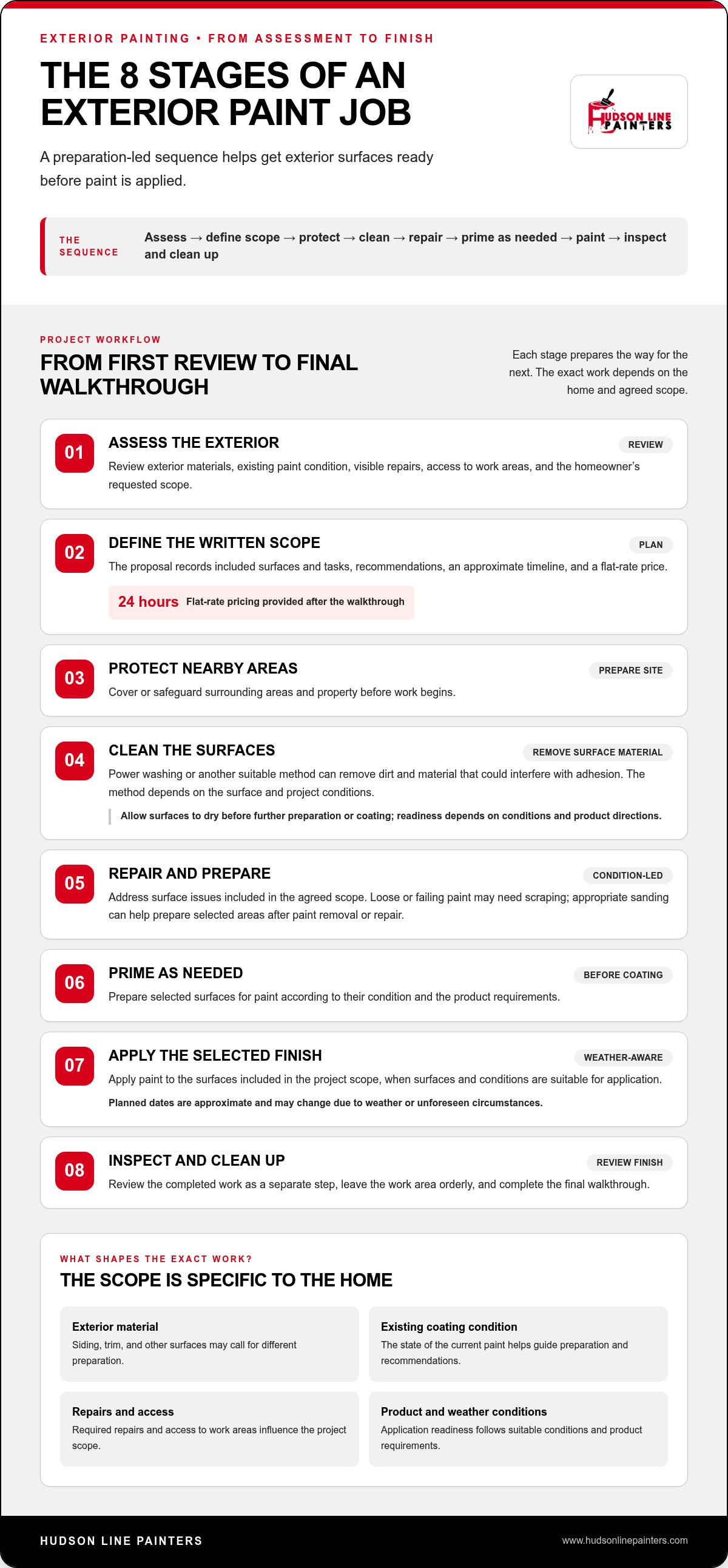
So, what is the process for exterior house painting? In brief, a typical project moves through these stages:
- Assess: Review exterior materials, existing paint, visible repairs, and access to work areas.
- Define the scope: Record which surfaces and tasks are included in the project.
- Protect: Cover or safeguard nearby areas and property before work begins.
- Clean: Remove surface dirt and other material that could interfere with adhesion.
- Repair: Address surface issues included in the agreed scope.
- Prime as needed: Prepare surfaces for paint according to their condition and product requirements.
- Paint: Apply the selected finish to the included surfaces.
- Inspect and clean up: Review the completed work and leave the work area orderly.
The exact work varies from house to house. Siding material, the condition of the existing coating, required repairs, and access to different areas all influence the scope and recommendations. Weather also affects the schedule. Surfaces and conditions need to be suitable for application, so planned dates are approximate and may change due to weather or unforeseen circumstances.
What happens before the first coat of exterior paint?
Before painting begins, the exterior is reviewed to understand its surfaces, existing paint condition, access, and the homeowner’s requested scope. Hudson Line Painters provides free on-site estimates, then prepares a written proposal with the work, recommendations, approximate timeline, and flat-rate price. The proposal gives homeowners a clear reference for what’s included before the project is scheduled. Flat-rate pricing is provided within 24 hours of the walkthrough.
Why does exterior house painting follow a set sequence?
Each stage has a distinct purpose. Cleaning removes material that could affect how primer or paint bonds. Repairs address surface issues before they’re covered, and priming is used as needed to prepare a surface for its finish. Protection helps safeguard surrounding areas, while daily cleanup helps keep the property orderly. Inspection comes after application so the completed work can be reviewed as a separate step.
A defined sequence also makes the project easier to follow. Hudson Line Painters’ owner-led, trained employee crews carry out exterior painting across its Northern New Jersey service area. The company is licensed and insured, holds comprehensive liability insurance, and is an EPA Lead-Safe Certified firm. A written scope, weather-aware scheduling, and final walkthrough help homeowners track the job from assessment to finish. See the exterior painting process for an overview of the service.
Exterior House Painting Preparation: Cleaning, Repairs, and Priming
Applying another coat cannot resolve every issue beneath the surface. Dirt, loose coating, and surface defects can interfere with the selected primer or paint. That’s why the exterior is assessed and prepared first, with each task suited to the material and its condition. Paint application follows only after surfaces are prepared for the selected coating.
For homeowners asking what is the process for exterior house painting, this stage is where the condition of the house guides the work. A painted wood surface with peeling areas may need different attention than sound siding or trim. The agreed scope, access, surface material, and product instructions help determine which cleaning, scraping, sanding, repairs, and priming steps are appropriate. Preparation is specific to the home, not a one-size-fits-all checklist.
How are exterior surfaces cleaned and dried?
Power washing or another suitable cleaning method can remove surface dirt and material that could interfere with adhesion. The method depends on the exterior surface and project conditions. Cleaning should address the surface without treating every material as if it were the same. After cleaning, the surface needs to dry before further preparation or coating. Readiness depends on conditions and product directions, so don’t assume a fixed drying time.
Cleaning also makes the next inspection more useful. Once surface material has been removed, areas of loose or failing paint and other defects can be easier to identify and address. Hudson Line Painters offers power washing as part of its home improvement services, with the method considered in relation to the exterior and planned work.
When do scraping, repairs, sanding, and primer matter?
Loose or failing paint may need to be scraped away before recoating. Appropriate sanding can help prepare selected areas after paint removal or repair. Surface defects within the agreed scope are addressed before primer or paint is applied. The exact preparation depends on the substrate, existing coating, and project conditions, so the sequence and materials should follow the selected product’s instructions.
Priming isn’t identical for every surface. It may be needed to prepare particular areas for the selected coating, depending on their condition and product requirements. Keeping repair, sanding, and priming in the right order helps avoid covering unresolved surface issues with a finish coat. The goal is a sound, prepared surface, not simply a fresh appearance.
For older homes, safe work practices matter when preparation disturbs painted surfaces. Hudson Line Painters is an EPA Lead-Safe Certified firm. This certification relates to lead-safe renovation practices, not lead paint abatement.
Careful preparation gives the application stage a more suitable surface to work with. Homeowners planning exterior work can explore Hudson Line Painters’ exterior painting services and see how preparation fits into the project.
Choosing Exterior Paint and Applying It to Different House Surfaces
Exterior paint selection isn’t just a matter of choosing a color. The surface material, condition of the existing coating, exposure to the elements, and work listed in the written scope all help shape product recommendations. A coating suitable for one surface may not be right for another, so recommendations should reflect the home’s conditions and the selected product’s instructions.
Hudson Line Painters uses premium Benjamin Moore & Sherwin-Williams finishes. The appropriate option depends on the project, not simply on brand or color. Homeowners can consider how color and sheen support the look they want while keeping the surface and product guidance in view. Free color consultation is provided.
How does the process differ for siding, trim, and doors?
Siding, trim, and doors can differ in material, condition, and exposure, so their preparation and coating choices may differ too. The written scope clarifies which surfaces are included and which recommendations apply to each. Rather than assume one finish fits the entire exterior, the crew considers the particular substrate and follows the selected product’s directions.
Trim and doors often include edges, corners, and transitions that call for careful application and protection of adjacent areas. A door’s existing coating and surface condition can also affect preparation and product choice. The same applies to other included exterior details: appearance matters, but so does matching the coating to the surface and project requirements.
What happens during paint application and between coats?
After preparation is complete and the surfaces are ready, the crew applies paint in an orderly way across the areas listed in the written scope. That scope gives the homeowner and painters a shared reference for what is being coated, helping organize the work as it moves from one surface to the next.
Application conditions, coating instructions, and recoat intervals are product-specific. They should be followed for the selected finish and project conditions, rather than replaced with a universal rule about how long to wait or how many coats every house needs. The material, existing coating, and product directions all matter.
Between application stages, the work can be reviewed for coverage and finish quality before the crew proceeds to the final inspection. This check is distinct from the final walkthrough. It helps keep application consistent as the crew works, while the walkthrough provides an opportunity to review the completed project. Understanding what is the process for exterior house painting also means recognizing that careful product selection and disciplined application are connected parts of the same job.
When comparing colors and finishes, keep the intended appearance, exterior material, and project scope in the same conversation. Hudson Line Painters’ exterior painting service brings those choices together with surface-specific preparation and application.
How Weather, Safety, and Quality Checks Shape the Painting Schedule
Exterior painting has to fit the conditions, not just the calendar. Rain, humidity, temperature, and surface moisture can affect when work can proceed, so New Jersey weather may change planned dates. Project timelines are approximate and may shift because of weather or unforeseen circumstances. Assessing conditions and following product instructions helps the crew plan application responsibly instead of treating a scheduled date as a guarantee.
Schedule matters, but so does readiness around the home. A clear plan for access and nearby belongings helps the crew work in an orderly way and reduces last-minute confusion.
How can homeowners prepare for an exterior painting project?
During planning, discuss access to work areas, parking, landscaping, and belongings near the house. The written scope and project communication clarify what work is planned and help everyone understand what needs to be ready. Before work begins, use this checklist:
- Arrange access to the exterior areas included in the scope.
- Discuss parking and any access limitations with the project team.
- Move or identify belongings close to work areas, and discuss landscaping that needs attention.
- Keep communication open if access or site conditions change.
Build flexibility into the schedule. If weather or site conditions aren’t suitable, planned work may need to shift so application can follow product requirements.
What should the final walkthrough and cleanup cover?
Hudson Line Painters’ trained employee crews clean up daily, and the project ends with a final walkthrough. The homeowner and crew can review the completed work against the agreed scope, including the surfaces covered, and discuss visible concerns. If anything falls short of the project standards, it can be addressed before the final walkthrough is complete. This quality checkpoint helps bring the project to a clear close and gives the homeowner an opportunity to see what was completed.
Preparation also affects the schedule. For example, exterior cleaning must be followed by enough drying time before further work, with readiness guided by conditions and product directions. Hudson Line Painters offers professional power washing as part of its home improvement services. The firm is EPA Lead-Safe Certified, and its owner-led crews make site care and communication part of the process.
Knowing what is the process for exterior house painting includes understanding that schedule changes, daily cleanup, and a final review each have a practical role. Clear expectations help homeowners stay prepared as the work moves from scheduled start to walkthrough.
What to Expect From Hudson Line Painters' Exterior Painting Process
A clear process helps you understand what’s planned, who will do the work, and how the project will be reviewed. Hudson Line Painters begins with a free on-site estimate, then provides a written proposal outlining the exterior painting scope, recommendations, approximate timeline, and flat-rate price. Flat-rate pricing is provided within 24 hours of the walkthrough. Once the work is scheduled, owner-led, trained employee crews carry it out, with daily cleanup and a final walkthrough.
The company is licensed and insured, holds comprehensive liability insurance, and is an EPA Lead-Safe Certified firm. Hudson Line Painters uses premium Benjamin Moore & Sherwin-Williams finishes, with recommendations shaped by the home’s surfaces and agreed scope. This organized approach makes it easier to see how inspection, preparation, application, and review fit together.
How does a written proposal set expectations?
The proposal records which surfaces and tasks are included, along with project-specific recommendations and the selected premium paint finishes. It also states the approximate timeline and flat-rate price. The price in the written proposal is the price paid for the agreed scope, with no surprise change orders. Dates aren’t guaranteed: weather or unforeseen circumstances may affect the schedule, and the estimated timeline can shift accordingly.
Reviewing the written scope before work is scheduled gives homeowners a chance to understand what the project covers and how the work is expected to proceed. It also provides a shared reference for the crew and homeowner during the job. If project conditions require a schedule adjustment, clear communication helps everyone stay aligned on next steps.
What reassurances apply after the painting work?
The final walkthrough gives the homeowner and crew a chance to review completed work against the agreed scope. If something appears to fall short of the project’s standards, the walkthrough provides an opportunity to raise the concern and address it before completion.
Hudson Line Painters provides a one-year workmanship warranty. Workmanship issues must be reported within 14 days of project completion. The walkthrough helps surface concerns at the close of the job, while the warranty provides a clear point of reference afterward.
So, what is the process for exterior house painting with Hudson Line Painters? It starts with an on-site estimate and written expectations, then moves through scheduled work, daily cleanup, and a final review. Weather-dependent dates remain approximate, while the defined scope guides the crew through each stage.
For exterior painting in Northern New Jersey, request a free on-site estimate through Hudson Line Painters’ exterior painting service.
Take the Next Step Toward a Fresh Exterior
A well-planned painting project starts with a clear picture of how you want your home to look and a conversation about the work needed to get there. If you’ve been wondering what is the process for exterior house painting, you now have a practical framework for understanding the project and discussing its scope with confidence.
Hudson Line Painters brings owner-led, trained employee crews and meticulous preparation to exterior projects. Its one-year workmanship warranty applies under its terms; workmanship issues must be reported within 14 days of project completion.
Start with an on-site assessment and a written proposal tailored to your home. It outlines the scope, recommendations, approximate timeline, and flat-rate price, so you can make a plan based on the work your exterior needs.
Contact Hudson Line Painters to request your free on-site estimate and plan your exterior painting project.
Frequently Asked Questions
How long does the exterior house painting process take?
The duration depends on the home, agreed scope, repairs, access, and weather. For a New Jersey project, rain or a surface that needs more drying time can change the planned workdays. The written proposal includes an approximate schedule, which is a planning guide rather than a guaranteed completion date. Weather and unforeseen circumstances may affect the timeline.
Can exterior house painting be done after it rains?
Yes, but painting should wait until the affected surfaces are ready for the selected coating. Rain can leave siding, trim, or other surfaces damp, and readiness depends on the material, weather conditions, and product instructions. A sunny break in the clouds doesn’t automatically mean a surface is dry enough. The crew assesses conditions before applying paint, and the schedule may shift if moisture remains.
How many coats of exterior paint does a house need?
There isn’t one coat count that fits every exterior. The selected product’s instructions, the surface, existing color and coating condition, and planned finish all influence the application. For example, a color change or a surface with varied repairs may call for different considerations than a consistent, sound surface. Product-specific directions guide the work, so a universal coat count shouldn’t be treated as a promise of coverage.
Does exterior house painting include power washing?
Power washing can be part of exterior preparation when it suits the surfaces and project conditions, but it isn’t automatically included in every painting scope. The written proposal clarifies the work planned for your home. Cleaning methods need to suit the material, and surfaces must be ready before coating. Hudson Line Painters offers power washing, which can also be planned as a separate home improvement service.
Can exterior paint be applied over old paint?
Yes, if the existing coating is suitable to receive a new finish. Peeling, loose, or failing areas generally need attention before recoating, and the surrounding surface should be evaluated during preparation. The right approach depends on the material and condition, not simply the paint’s age. For older homes, Hudson Line Painters is an EPA Lead-Safe Certified firm and follows lead-safe practices when work disturbs painted surfaces.
What should homeowners move before exterior painters arrive?
Move or secure items that could block access or sit close to active work areas, such as patio furniture, planters, toys, and decorations. Relocate vehicles from areas where crews need access, and discuss grills or other bulky belongings during planning. If an item is difficult to move, mention it in advance so the work plan can account for it. Keep pathways clear for safe, orderly access around the home.


