
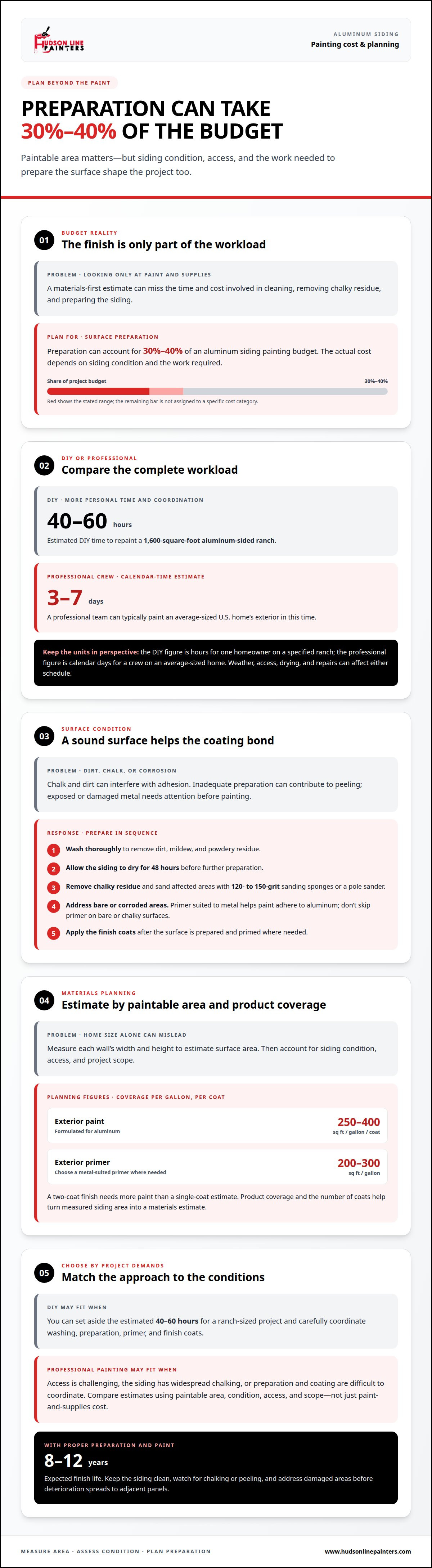
The finish matters, but the preparation beneath it can take 30% to 40% of an aluminum siding painting budget. Your painting aluminum siding cost also depends on the paintable surface area, the siding’s condition, and how difficult the exterior is to reach. That’s why a home’s size alone won’t tell the whole story.
When estimating painting aluminum siding cost, it’s natural to focus first on paint and supplies, especially when comparing DIY work with professional painting. But cleaning, removing chalky residue, and preparing the surface can shape both the workload and the finish.
Estimate the project by measuring the siding, then account for materials, preparation, access, and the siding’s condition. This guide explains how to compare DIY effort with professional painting and what to look for in the process, from cleaning and priming to applying the finish.
Key Takeaways
- Estimate the project from paintable exterior area, then account for siding condition, access, and the preparation it needs.
- Clean off dirt and chalky residue before painting, and address bare or corroded areas so the finish has a sound surface to bond to.
- Compare the DIY materials budget with the time involved: repainting a 1,600-square-foot aluminum-sided ranch can take an estimated 40 to 60 hours.
- Use the surface-area estimate to plan primer and paint quantities, allowing for the number of coats and each product’s coverage.
- Follow the process from cleaning and drying through surface preparation, priming where needed, and applying the finish coats.
How Much Aluminum Siding Can I Paint on My Budget?
Budget depends on paintable area, access, and the siding’s condition. Preparation deserves particular attention because it can account for 30% to 40% of an aluminum siding painting budget.
Surface Preparation and Corrosion Protection
Surface preparation removes contaminants and oxidation, then creates a sound base for primer and paint. It matters because chalk, dirt, and corrosion can interfere with adhesion and contribute to peeling. A thorough washing and power wash remove dirt, mildew, and powdery residue. After washing, allow the siding to dry for 48 hours before further preparation.
What preparation is needed before painting aluminum siding, and what does it cost? Clean the siding, remove chalky residue, and sand affected areas with 120- to 150-grit sanding sponges or a pole sander. Preparation accounts for 30% to 40% of the budget; the actual cost varies with surface condition and required work.
Protecting aluminum from corrosion starts with addressing bare or damaged metal before painting. Primer helps paint adhere to aluminum and can help keep chalky oxidation from forming beneath the coating. An assessment should distinguish ordinary chalking from exposed metal that needs specific preparation.
Paint and Primer Choices and Costs
Paint and primer affect both material costs and how well the coating bonds to aluminum. On bare or chalky surfaces, use a primer suited to metal; choose an exterior acrylic or latex paint formulated for aluminum as the finish. Compatible products help avoid spending on coatings unsuitable for the siding.
What paint and primer are best for aluminum siding, and how much do they cost?
Coverage helps turn product prices into a project materials estimate. Many exterior paints cover about 250 to 400 square feet per gallon per coat, while exterior primer commonly covers 200 to 300 square feet per gallon. A two-coat finish therefore needs more paint than a single-coat estimate suggests, especially on a larger wall area.
What problems can occur when painting aluminum siding, such as chalking or peeling? Chalk left on the siding can undermine adhesion, while inadequate preparation can contribute to peeling. Don’t skip primer on chalky or bare aluminum. Even suitable paint can fail to deliver a lasting finish if the surface isn’t prepared.
How long does paint last on aluminum siding, and what maintenance is required? With proper preparation and paint, the finish is expected to last 8 to 12 years. Keep the surface clean, watch for chalking or peeling, and address damaged areas before deterioration spreads across adjacent panels.
DIY versus professional painting
DIY painting trades labor costs for your time, equipment, and careful execution. Professional painting changes that balance, particularly when height, siding condition, and preparation make the project more complex.
DIY and Professional Project Time
Project time is the labor and calendar time needed to prepare and coat the siding. It matters because a lower out-of-pocket DIY budget can require many days of personal effort. Repainting a 1,600-square-foot aluminum-sided ranch takes an estimated 40 to 60 hours for a DIY homeowner.
By comparison, a professional team can typically paint an average-sized U.S. home's exterior in 3 to 7 days. That calendar estimate reflects a crew working through the project, not one person completing every task. Weather, access, drying, and repairs can affect the schedule for either approach.
Professional Painting Costs
Professional painting estimates reflect the project’s scope: paintable area, access, siding condition, and preparation needs. That’s why a single national average may be a poor guide for an individual home. A two-story exterior with difficult access and peeling areas requires different work from a sound, single-story ranch.
That amount doesn’t account for your time or every equipment need. For a fair comparison, include supplies, equipment, labor, and the possibility of correcting uneven coverage or adhesion problems.
Benefits of Hiring a Professional
A professional painting process covers surface assessment, preparation, priming, and finish coats. Each step matters: leftover chalk or inadequate primer can contribute to peeling. Skilled application also helps achieve consistent coverage across broad panels, trim, corners, and other details.
Hiring a crew can also reduce the time homeowners spend coordinating each phase themselves. For a large or multi-story exterior, trained workers can manage the work across accessible sections and maintain a consistent application. Consider professional exterior painting when the project’s height, preparation, or time demands make DIY difficult.
DIY suits homeowners who can set aside 40 to 60 hours for a ranch-sized project and manage each stage carefully. It also requires practical planning: organize washing, surface preparation, primer, and finish coats so no area is left exposed or unfinished for longer than necessary.
Professional painting is a strong fit when access is challenging, the siding has widespread chalking, or preparation and coating need to be coordinated. The estimate should reflect the project’s area, condition, access, and scope. Compare the complete workload, not just the paint-and-supplies total, before choosing.
Exterior painting costs by paintable surface area
A useful exterior estimate starts with the area to be coated, then accounts for siding condition, access, and project scope. Home size alone can mislead: the estimate should describe the actual surfaces and work involved.
Measure each wall’s width and height to calculate its surface area. For a consistent project-area estimate, include the wall area and account for openings within it. This gives you a sound basis for comparing estimates and planning the work, rather than relying on interior square footage.
Next, note details that affect labor and materials: multiple stories, complex rooflines, hard-to-reach walls, damaged panels, and extensive preparation. A straightforward exterior with sound siding differs from one with corrosion, chalking, or peeling. Those conditions may require more preparation before painting.
Painting versus replacement is a question of scope. If the aluminum panels remain serviceable, painting refreshes their appearance without removing the siding. Replacement involves removing and installing cladding, so it’s a broader project. Painting won’t fix damaged or failing panels, so factor their condition into your decision.
Siding material matters when comparing exterior painting estimates. Aluminum, vinyl, and wood have different surface conditions and preparation needs. On aluminum, oxidation and exposed metal can change the preparation required. Wood may need work on damaged areas, while vinyl requires paint suited to its surface. An estimate for one material isn’t automatically a useful comparison for another.
For aluminum siding, a professional repainting estimate should describe the work included, such as washing, sanding, primer, and finish coats. Estimates are easier to compare when they cover the same paintable area and preparation. A headline total alone may obscure whether essential surface work is included.
- Area: Compare estimates using the same measured exterior surfaces.
- Condition: Record chalking, corrosion, peeling, and damaged panels.
- Access: Identify stories, rooflines, and walls that are difficult to reach.
- Scope: Compare the stated washing, preparation, priming, and coating work.
An average aluminum siding painting cost isn’t a dependable budget for every home because area and scope vary. Start with the measured exterior, then consider how condition and access change the work. This makes repainting estimates more useful and helps distinguish a surface refresh from a project that may need replacement.
Aluminum siding painting cost per square foot
A per-square-foot estimate helps compare project scope, but the rate alone doesn’t show the full cost. Siding condition, access, paint choice, and preparation all affect the work required.
What factors affect the cost of painting aluminum siding? The main factors are paintable area, siding condition, height and access, preparation needs, and the products selected. A single-story wall with sound panels requires different work from a multi-story exterior with chalking or damage.
Per-Square-Foot Cost Estimates
A per-square-foot estimate relates project cost to the area being painted. It gives homeowners a shared unit for comparing estimates, while the scope explains what that unit includes.
Ask whether the estimate includes washing, sanding, primer, and finish coats. A price for paint application alone isn’t equivalent to one that includes preparation. Clarify whether the measured area covers paintable siding only or also trim and other surfaces.
A national average can provide context, but it can’t reflect the condition and access at a specific home. Treat it as a starting point, then compare local estimates with matching scopes. A square-foot rate is most useful when the estimate identifies the work and coating system included.
Factors That Affect Painting Costs
Cost factors are project conditions that change labor, materials, or preparation. Identifying them helps explain why homes with similar square footage can receive different estimates.
For example, an accessible ranch with intact siding requires a different setup from a tall exterior with complex rooflines. Chalk, corrosion, peeling paint, or bare metal may require additional preparation and primer. Acrylic paint formulated for aluminum also shapes the material plan.
Area matters: more siding generally means more coating and application work. But square footage is a measurement, not a complete project specification. Before comparing totals, confirm that estimates cover the same surfaces, number of coats, and preparation tasks.
For a practical home-improvement budget, record the measured siding area and note visible conditions that could change the scope. Mark hard-to-reach walls, damaged panels, and areas needing extra preparation. These details help frame a useful estimate and distinguish a basic application rate from the full project cost.
The price depends on the project and is given after a quote request; paintable area, siding condition, access, preparation, and selected materials shape the estimate. A contractor can use those details to define the work and explain how the per-square-foot calculation applies to the home.
Aluminum siding painting process
A durable finish depends on how each stage prepares the surface for the next. The key takeaway: cleaning, addressing oxidation, using suitable primer, and applying compatible paint are as important as the finish coat.
Start with a close inspection of the siding. Look for chalky residue, mildew, corrosion, bare metal, loose paint, and damaged panels. These conditions affect the preparation plan and cost because they change how much cleaning, sanding, and priming is needed. Paint shouldn’t conceal corrosion or loose material; address those issues before coating.
- Wash the siding. Power washing removes dirt, mildew, and powdery residue that can interfere with adhesion. Where mildew is present, the process may include a 1:3 bleach-to-water solution, left for 10 to 15 minutes before rinsing. Protect nearby plants and surfaces from cleaning runoff.
- Let the surface dry. Washed aluminum siding should dry for 48 hours before further preparation. Moisture beneath primer or paint can disrupt application, so drying time belongs in the schedule, not just the labor estimate.
- Address chalk and bare metal. Sand chalking with 120- to 150-grit sanding sponges or a pole sander, then remove the remaining dust. Bare aluminum needs suitable primer; self-etching primer is designed to bond with bare metals. Primer is not recommended to skip on chalky or bare siding.
- Apply the coating system. Spraying can produce a smoother, more even finish and is generally faster than brushing. Back-brushing helps work paint into panel surfaces. Two finish coats provide the planned coverage, while an eggshell or satin exterior finish can help prolong paint life compared with flat finishes.
Each stage has a purpose. Washing cleans the surface; sanding removes loose oxidation; primer supports adhesion; and consistent application creates an even finish. Skipping a stage can affect durability, especially if chalk or bare metal remains beneath the coating.
Weather affects drying, so each coating needs suitable conditions to dry. Rushing the application can undermine the work, even with premium acrylic paint. Average cost is only one part of the decision: a sound process clarifies what an estimate includes and why preparation matters.
After the finish cures, keep the siding clean and watch for new chalking, peeling, or exposed metal. Addressing localized wear before it spreads can help maintain the coating. Inspection, preparation, primer, and finish coats work best as parts of one coordinated project.
Hudson Line Painters: Interior Painting
Hudson Line Painters provides Exterior Painting for homeowners planning to refresh aluminum siding. When the project involves extensive preparation, difficult access, or coordinating the full painting process, professional exterior work can help bring the stages together, from surface readiness to the finished coating.
Choose a project scope that reflects your home’s condition and goals. If you’re also updating rooms inside, Hudson Line Painters’ Interior Painting service can address those spaces separately. The company also offers Kitchen Cabinet Refinishing and Deck & Fence Staining for other surface-refresh projects.
For a considered next step, contact Hudson Line Painters to discuss your exterior painting project.
Plan Your Next Exterior Project With Confidence
Use your estimate of painting aluminum siding cost as a planning tool, then decide what matters most: refreshing the exterior, coordinating updates, or keeping the project focused. Consider how the finished color will work with the roof, trim, and landscape. A clear visual goal helps make decisions manageable and keeps the project aligned with your priorities.
Hudson Line Painters provides Exterior Painting for homeowners planning an exterior refresh. For updates beyond the siding, the company also offers Interior Painting and Kitchen Cabinet Refinishing. These services can bring related painting improvements into one broader home-improvement plan.
Ready to discuss your exterior painting project? Request a no-obligation on-site estimate from Hudson Line Painters. Every estimate includes a free color consultation with large swatches and sample brush-outs on your actual walls.
Frequently Asked Questions
How Much Does it Cost to Paint a House Exterior?
The total depends on paintable area, preparation, access, and the coating plan. Measure exterior walls rather than using interior square footage, then identify trim or other surfaces that may be priced separately. A home with peeling areas or hard-to-reach upper walls requires more labor than an accessible exterior in sound condition. Compare estimates with matching scopes to assess equivalent projects.
How does my location affect exterior painting costs?
Location can affect labor and project costs because local markets have different operating expenses and demand. Exterior painting in expensive coastal metros can cost 15% to 30% more than in lower-cost regions. Weather also affects scheduling and drying conditions. For a useful comparison, review estimates for homes in your area and check that they include similar preparation, surfaces, and paint application.
How much paint will you need?
Estimate paint from the siding’s paintable area, product coverage, and number of finish coats. Many exterior paints cover about 250 to 400 square feet per gallon per coat. Divide the wall area by the coverage rate, then multiply by the number of coats. For example, 1,600 square feet of wall area may need about 8 to 13 gallons for two finish coats. Calculate primer separately when needed.
How much does it cost to paint aluminum siding per square foot?
A useful estimate of painting aluminum siding cost per square foot starts with the measured siding area and full project scope. Include preparation, primer, finish coats, labor, and access, rather than counting paint alone. A steep roofline or extensive oxidation can change the work involved. Compare estimates using the same measurement method and listed tasks to see what each rate covers.
What is the average total cost to paint a house with aluminum siding?
Painting aluminum siding cost varies with the home’s size, condition, and project scope, so one total won’t fit every house. For a useful estimate, record exterior dimensions, stories, siding condition, and surfaces to be painted. A smaller home with sound panels differs from a larger exterior needing extensive preparation. Compare project descriptions rather than relying on a headline average.
How do house size and siding condition change the painting estimate?
A larger paintable area generally requires more coating and application time, while siding condition affects preparation. Chalky panels may need sanding, and bare metal may require primer. Height and access also influence labor. Note the home’s stories, visible oxidation, peeling sections, and damaged panels when describing the project. Those details help the estimate reflect the actual work, not just square footage.
How much does professional labor cost to paint aluminum siding?
Professional labor reflects crew hours and project demands, including washing, sanding, priming, application, and access. Rates vary by market and conditions. An accessible wall takes different effort from a multi-story exterior with peeling paint or detailed trim. To assess labor in an estimate, compare the preparation and coating tasks included, not just the hourly rate. The full scope explains the labor involved.
Is painting aluminum siding cheaper than replacing it or installing new siding?
Painting can be a less extensive option when existing aluminum panels remain serviceable and the goal is a refreshed finish. Replacement involves removing and installing siding, making it a different scope of work. Painting won’t repair badly damaged, corroded, or failing panels. Compare the siding’s condition and the work each option requires before deciding whether a new coating meets your home’s needs.


