

Choosing the wrong finish for your deck doesn't just look bad; it can actually trap moisture and accelerate wood rot in our local climate. Most New Jersey homeowners want that perfect balance of a high-end look and low-effort maintenance, yet many find themselves trapped in a cycle of peeling layers and grueling sanding because they weren't sure whether to use a solid vs semi-transparent deck stain. It's frustrating to invest your time and money into a project only to watch the wood grain turn gray or the finish flake away after a single winter.
This guide will help you settle the debate once and for all, ensuring your outdoor space survives everything from Hudson County humidity to Bergen County's heavy snow. You'll discover exactly how these products perform on different wood ages, which formulas resist modern weather patterns best, and how to establish a maintenance schedule that protects your home's value. We're moving beyond simple aesthetics to look at the technical side of protection, comparing oil and water-based options to find the perfect fit for your specific deck and your lifestyle.
Key Takeaways
- Learn how pigment levels in a solid vs semi-transparent deck stain directly impact UV resistance and determine how much of the natural wood grain remains visible.
- Understand why "mill glaze" on new lumber prevents proper adhesion and how to properly season your wood before applying any finish.
- Discover why New Jersey's unique humidity and freeze-thaw cycles require specific application techniques to prevent premature peeling and wood rot.
- See why professional preparation, including chemical cleaning and light carpentry, accounts for 70% of a high-quality, long-lasting stain result.
- Find out how to match your deck's opacity to your home's exterior painting style while choosing a finish that offers the best long-term financial value.
Understanding Opacity: Solid vs. Semi-Transparent vs. Semi-Solid
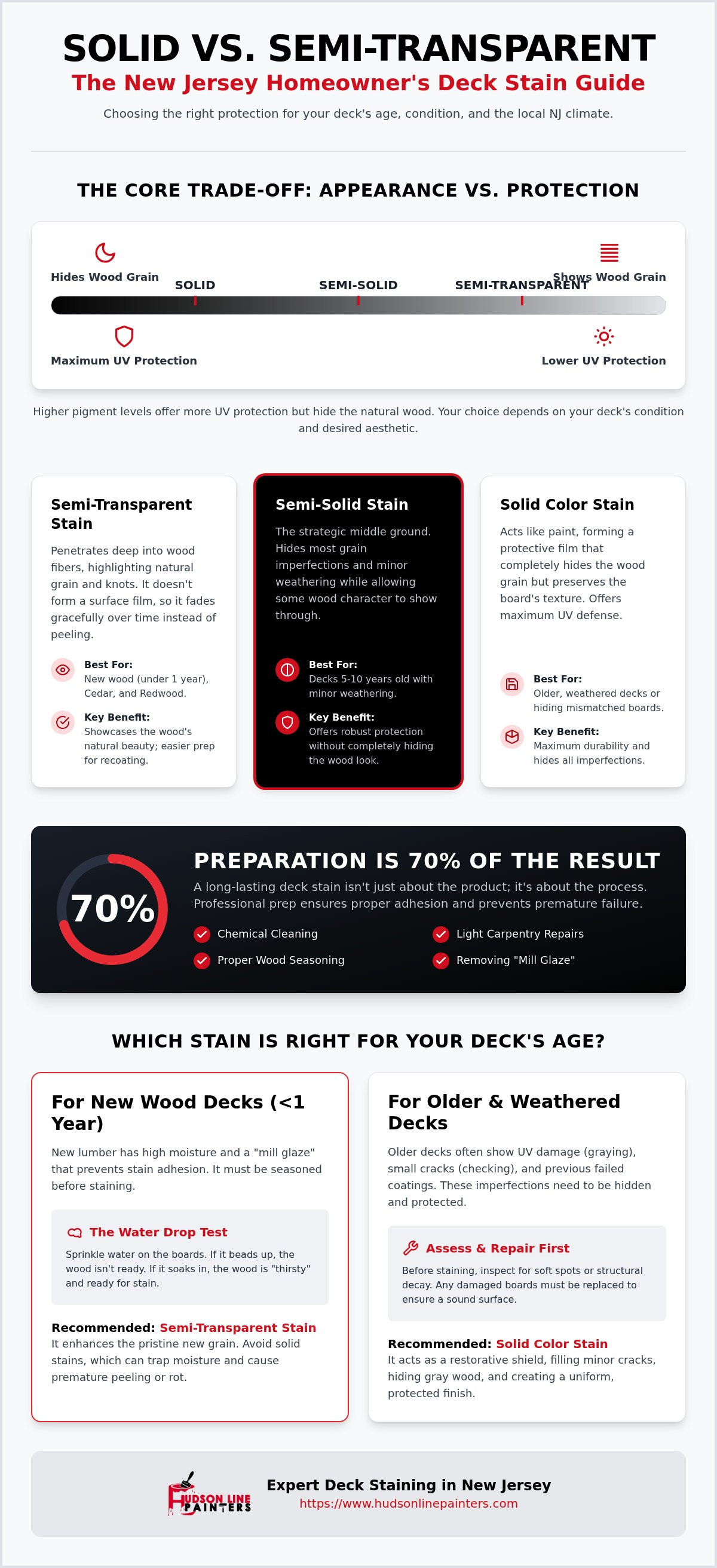
Opacity is the concentration of solids that determines how much wood grain remains visible. When you're deciding between a solid vs semi-transparent deck stain, you're essentially choosing a balance between aesthetics and defense. Every Wood stain relies on pigments to act as a sunscreen for your lumber. Higher pigment levels correlate directly with increased UV protection; however, they also decrease the visibility of the wood's natural characteristics. This creates a fundamental trade-off: you can either emphasize the raw beauty of the grain or prioritize a high-hide finish that shields the wood from the elements.
Semi-Transparent Stain: Showcasing the Natural Wood
This option is the premier choice for high-end materials like Cedar, Redwood, or brand-new pressure-treated pine. A semi-transparent formula is designed to penetrate deep into the wood fibers rather than sitting on top of the surface. By soaking into the grain, it highlights unique patterns and natural knots without masking them, resulting in a rich, organic look. A major maintenance benefit is that this type of stain fades gracefully over time. Because it doesn't form a thick film, it won't peel or crack, which often makes the preparation for future coats much easier for the homeowner.
Solid Color Stain: Maximum Coverage and Protection
Solid color stains act similarly to paint by forming a protective film over the wood surface. While this finish completely hides the wood grain, the physical texture of the boards remains visible. It's the most effective choice for hiding imperfections, mismatched replacement boards, or older, weathered wood that has lost its luster. Due to the heavy pigmentation, solid stains provide the highest level of UV protection available. This makes them a durable solution for decks that receive constant, direct sunlight, as the opaque layer prevents the sun from breaking down the wood's lignin.
Semi-Solid Stain: The High-Pigment Middle Ground
For many NJ homeowners with decks in the five to ten-year age range, semi-solid stain offers a strategic middle ground. It contains a higher concentration of pigment than a semi-transparent product but remains less opaque than a full solid. This formula effectively hides most grain imperfections and minor weathering while still allowing some of the wood's character to peek through. It's a smart financial choice that provides robust protection without completely sacrificing the traditional wood aesthetic that many residents in Bergen and Hudson Counties prefer.
Choosing the Best Stain Based on Wood Condition and Age
The age and health of your wood are the primary variables in the solid vs semi-transparent deck stain decision. Many homeowners feel an urge to stain a brand-new deck immediately, but new lumber (under 1 year) often requires a seasoning period. Fresh wood contains high moisture and "mill glaze," a glossy film created by high-speed saw blades during production. This glaze acts as a physical barrier that prevents stain from soaking into the fibers. If you apply a finish before the wood has properly weathered, the stain will simply sit on the surface and peel within months.
Before selecting your product, perform a thorough health assessment. Check for graying, which indicates UV damage, or "checking," which are small cracks running along the grain. If you discover soft spots or structural decay, you'll need light carpentry trim repair NJ to replace those boards before proceeding. Your previous coatings also matter; you can usually apply a solid stain over an old semi-transparent one, but you can't go backward to a lighter opacity without a total, aggressive strip-down of the existing finish.
Staining New Wood Decks
Semi-transparent stain is the gold standard for new installations because it showcases the pristine grain and color of high-end lumber. To determine if your deck is ready for treatment, use the "water drop test." Sprinkle water onto several boards; if the droplets bead up, the wood is too wet or glazed to accept stain. If the water sinks in quickly, the wood is thirsty and ready. We generally advise against solid stains on new wood. Their film-forming nature can trap residual moisture inside the fresh lumber, which may lead to internal rot or premature flaking as the wood continues to dry.
Revitalizing Older or Weathered Decks
Solid stains are the most practical choice for older decks with visible wear. They function as a protective shield that fills in minor cracks and hides the "graying" that occurs on weathered surfaces. If you've replaced rotted boards with new ones, a solid color is the only way to unify the deck's appearance, as a semi-transparent finish would highlight the visual difference between the old and new wood. For homeowners looking to restore a high-end look to an aged structure, our team at Hudson Line Painters can help you select a palette that complements your home's exterior while providing maximum protection against the elements.
Durability and Maintenance: Which Lasts Longer in NJ?
New Jersey's climate is notoriously harsh on exterior wood. In high-humidity zones like Hoboken or the shaded neighborhoods of Bergen County, the choice between solid vs semi-transparent deck stain isn't just about color; it's about how the product handles water. Penetrating stains allow wood to breathe by soaking into the fibers, while film-forming solid stains provide a robust barrier that can, unfortunately, trap moisture during the freeze-thaw cycles of a Jersey winter. When moisture gets trapped beneath a solid film and then freezes, it expands, which is the primary cause of the catastrophic peeling many homeowners see by spring.
Penetrating stains require a simple maintenance wash and recoat every two years, whereas film-forming stains offer a longer initial protection window but demand aggressive stripping if the surface begins to fail. Generally, you can expect a high-quality semi-transparent finish to last 1 to 3 years before it begins to fade. Solid stains typically offer a longer lifespan of 3 to 5 years, provided the underlying wood was perfectly dry and free of biological growth during the application phase. Choosing the right product depends on whether you prefer frequent, light maintenance or longer gaps followed by more intensive restoration work.
Humidity, Snow, and the Peeling Problem
Moisture is the enemy. It's that simple. In coastal areas or high-humidity pockets of Northern NJ, penetrating oils are often the superior choice because they don't trap water vapor inside the wood. If you choose a solid stain, the preparation must be flawless. Any mold or mildew left on the wood will hold onto moisture and eventually force the stain to pop off the surface. This is why professional power washing is a non-negotiable step in our process. We ensure the wood is chemically cleaned and thoroughly dried to prevent the "peeling problem" that gives solid stains a bad reputation among DIYers.
Reapplication Timelines and Long-Term Costs
The long-term value of your investment is determined by the maintenance cycle. Semi-transparent stains are incredibly user-friendly for the long haul; because they fade rather than peel, you can usually just clean the surface and apply a fresh coat every two years without any heavy sanding. Solid stains offer a "set it and forget it" appeal for up to five years, but the eventual cost of maintenance is higher. If a solid finish begins to crack or flake, you cannot simply paint over it. You must strip the old layers back to the bare wood to ensure the new coat adheres properly. When comparing the annual cost for a standard deck, semi-transparent often proves to be the smarter financial choice for homeowners who want to avoid the high labor costs of future stripping and sanding.
The Professional Staining Process: Prep and Application
At Hudson Line Painters, we treat preparation as 70% of the project. A high-end finish is impossible without a meticulous foundation. Many homeowners believe high-pressure water is the best way to clean a deck, but excessive pressure often gouges the wood or creates a "fuzzy" texture that ruins the final look. We prefer professional chemical cleaning, which safely lifts biological growth, dirt, and old oils without damaging the wood's structural integrity.
After the cleaning phase, we focus on PH balancing the wood. This involves applying a neutralizer or brightener to counteract the cleaning chemicals. This step opens the wood's pores, making it more receptive to the stain. We also carefully monitor the local weather. Final finishes are sensitive to environmental factors; applying stain in direct, hot sunlight can cause the product to dry too quickly, leading to unsightly lap marks and poor adhesion. Whether you are applying a solid vs semi-transparent deck stain, timing is everything.
Power Washing and Sanding: The Prep Foundation
Removing "dead" wood fibers is a critical step that ensures the stain bonds to live wood. If you skip this, your new finish will simply flake off as the dead fibers detach from the board. We also address necessary carpentry repairs for wood rot before any stain is applied. While maintenance coats for semi-transparent stains rarely require sanding, solid stain re-application often demands mechanical sanding to smooth out the edges of any previous peeling areas.
Application Techniques: Brush vs. Spray vs. Roll
Back-brushing is the only way to ensure deep, even penetration into the wood grain. Even when we use a sprayer for efficiency, a craftsman follows behind with a brush to work the product into the fibers. DIY spraying is risky; it often leads to uneven coverage and the high potential for overspray on your home's siding or landscaping. The technical requirements for a solid vs semi-transparent deck stain differ, but the need for a clean surface and professional application is universal.
Schedule a professional deck staining consultation
Making the Right Choice for Your NJ Home
Deciding on a solid vs semi-transparent deck stain involves looking beyond the wood itself to the architectural context of your property. Your deck is a visual extension of your home's exterior, so the finish should complement your siding and trim. A solid stain provides a clean, uniform appearance that mimics the look of paint, making it a favorite for modern designs. Conversely, a semi-transparent finish preserves the raw, rustic charm of the timber; this often suits more traditional or wooded settings where the natural character of the wood is the primary focus.
Before you make a final commitment, run through this quick decision checklist:
- Age: Is the wood brand new (ideal for semi-transparent) or over a decade old (better for solid)?
- Condition: Are there mismatched boards or deep cracks to hide? If so, choose solid.
- Desired Look: Do you want a modern, "painted" aesthetic or a classic, natural wood beauty?
- Maintenance Willingness: Are you comfortable with a light recoat every two years, or do you prefer a longer gap followed by more intensive restoration?
Architectural Harmony in NJ Neighborhoods
In contemporary neighborhoods like Edgewater or Fort Lee, solid stains in slate grays or deep charcoals are popular for their sleek, high-contrast look against modern building materials. For the historic homes and leafy properties in Summit or Englewood, semi-transparent finishes are often preferred to maintain the integrity of classic cedar or mahogany. We often recommend coordinating your deck color with your interior painting palette. This creates a seamless flow between your living room and your outdoor entertainment space, making the deck feel like a true outdoor room.
Why Professional Staining Beats DIY
Professional application offers advantages that go beyond just saving your weekend. We utilize commercial-grade stains that provide superior UV protection and moisture resistance compared to standard products found in big-box stores. These high-performance formulas are designed specifically for the punishing freeze-thaw cycles we experience in Northern Jersey. Our crews work with a disciplined efficiency that ensures every board is back-brushed and every edge is sealed correctly. Most importantly, a professional job provides the peace of mind that comes from meticulous preparation and a high-end finish that won't peel prematurely. This approach turns deck maintenance into a smart financial choice that protects your home's value for years to come.
Ready to transform your deck? Contact Hudson Line Painters for a free estimate.
Protect Your Investment with Professional NJ Deck Restoration
Choosing the right finish is the difference between a deck that enhances your property value and one that becomes a costly maintenance burden. Whether you prefer the organic grain of a semi-transparent oil or the high-hide protection of a solid color, long-term success always starts with the foundation. Meticulous preparation, including professional power washing and light carpentry repairs for wood rot, ensures your stain bonds correctly and survives the harsh New Jersey freeze-thaw cycles. Skipping these critical steps is exactly why many DIY projects fail after just one winter.
Ultimately, the choice between solid vs semi-transparent deck stain is a balance of aesthetics and the specific protective needs of your lumber. By using high-quality commercial-grade stains and leveraging local expertise gained since 2018, we help you avoid the frustration of premature peeling and graying. Our team provides a safe and guaranteed transformation for your outdoor living space, allowing you to spend your weekends enjoying your deck rather than sanding it. We're ready to help you choose the perfect protection for your Hudson, Bergen, or Union County home.
Get a Professional Deck Staining Quote Today
Take the first step toward a beautiful, durable deck that stands up to the elements and adds genuine comfort to your home.
Frequently Asked Questions
How long does semi-transparent deck stain take to dry in NJ humidity?
Semi-transparent deck stain typically takes 24 to 48 hours to dry completely in New Jersey's humidity. High moisture levels in areas like Hudson County often slow the evaporation process, so it's best to wait a full two days before moving furniture back onto the surface. If the wood feels tacky or sticky to the touch, the product hasn't fully cured. Professional application ensures thin, even coats that dry more predictably.
Can I put a semi-transparent stain over an old solid stain?
You cannot apply a semi-transparent stain directly over an old solid stain without completely stripping the wood first. Since solid stains form a film on the surface, they block the penetrating oils of a semi-transparent formula from reaching the wood fibers. To switch from a solid vs semi-transparent deck stain, you must sand or chemically strip the deck back to bare wood to ensure the new product can bond properly.
Is oil-based or water-based stain better for New Jersey decks?
Oil-based stains are often preferred for their deep penetration into the wood grain, but modern water-based formulas offer superior resistance to mold and UV damage in New Jersey. Water-based options also tend to hold their color longer and are easier to clean up. We evaluate each deck individually, considering the wood's age and previous treatments, to recommend the specific chemistry that will provide the best long-term protection against local weather.
What happens if it rains shortly after I stain my deck?
If it rains within 12 to 24 hours of application, the water can displace the stain, leading to splotchy results or premature peeling. In the worst cases, heavy rain can wash away the finish entirely before it has a chance to bond with the wood fibers. We monitor local forecasts meticulously to ensure a clear window for drying, protecting your investment from the unpredictable coastal storms that frequently roll through Northern NJ neighborhoods.
How do I know if my deck needs to be stripped before restaining?
Your deck needs to be stripped if the existing finish is peeling, cracking, or failing to absorb water. You can perform a simple "splash test" by pouring a small amount of water on several areas of the deck. If the water beads up rather than soaking in, there is still a barrier present that will prevent a new coat from adhering. Stripping ensures the new stain reaches the live wood fibers for maximum longevity.
Will a solid stain hide the wood rot on my deck boards?
A solid stain will visually mask the appearance of wood rot, but it won't stop the decay from spreading. In fact, film-forming stains can sometimes trap moisture inside the wood, potentially accelerating the rotting process. We always perform light carpentry repairs to replace compromised boards before staining. It's much more cost-effective to replace a few planks now than to deal with a structural failure later in the season.
How much does professional deck staining cost in Bergen County?
Professional deck staining costs in Bergen County are influenced by the square footage of the deck, the complexity of the railings, and the amount of preparation required. Factors like old stain removal or wood rot repair will impact the final investment. While local labor rates reflect the high-end market, investing in professional craftsmanship is a smart financial choice that extends the life of your deck and prevents expensive structural replacements.
What is the best temperature range for applying deck stain?
The ideal temperature range for applying deck stain is between 50 and 90 degrees Fahrenheit. It's equally important to avoid direct, mid-day sunlight, which can cause the stain to flash-dry and leave behind unsightly lap marks. We typically schedule our projects for early morning or late afternoon to ensure the product cures at an even rate, resulting in a smooth, professional-grade finish that looks exceptional and lasts for years.


