

Could a faded, peeling deck be refreshed without replacing it? Often, the answer depends on the condition of the existing boards and how well the surface is prepared. For homeowners searching for deck restoration contractors Union County NJ, the key is to find an approach that addresses more than the worn finish.
A weathered deck can make an otherwise inviting outdoor space feel neglected, and a new coat of stain won’t last if the surface isn’t properly cleaned and prepared. Hudson Line Painters provides deck and fence staining, power washing, and light carpentry to help refresh existing decks in Union County.
This guide explains what staining-focused restoration can address, which signs to look for when assessing a deck, and when visible concerns may point beyond a surface refresh. It also outlines the project sequence, from cleaning and preparation through staining, so you can understand what to expect and decide what your deck needs.
Key Takeaways
- Spot finish wear, peeling, and exposed wood while distinguishing visible clues from conclusions about structural condition.
- Understand how cleaning, surface preparation, and staining work together to refresh an existing deck’s appearance.
- See how deck restoration differs from deck building, particularly when concerns involve framing rather than the surface finish.
- Follow the project sequence to understand what to expect from deck restoration contractors Union County NJ, from assessment through final review.
- Learn how Hudson Line Painters’ deck and fence staining, power washing, and light carpentry fit into a surface-focused restoration project.
Deck Restoration in Union County, NJ: When Can an Existing Deck Be Refreshed?
A deck can look worn without being ready for replacement. If the main concerns are faded stain, surface dirt, or a weathered appearance, restoration may refresh the existing wood. Here, deck restoration means cleaning the surface, preparing it for a new finish, and staining it. The right scope depends on the deck’s condition, not just its color.
Decks vary in construction and materials, so the same finish approach won’t suit every surface. For a general overview of types of deck construction and materials, consider how the material and design affect care. For Union County homeowners comparing deck restoration contractors Union County NJ, the first distinction is whether the concern is cosmetic or structural.
What deck restoration can address
Sun and rain can fade stain over time, while dirt and regular outdoor use can leave boards dull or uneven. A surface-focused project addresses these finish concerns through cleaning, appropriate preparation, and staining. Cleaning removes surface grime; preparation creates a more suitable base for the new finish. The specific steps depend on the existing coating and the wood’s condition.
Exposure can make wear look different from one part of the deck to another. Areas in direct sun may fade more, while shaded spots can stay damp longer after wet weather and show dirt or discoloration. These are visual clues, not a diagnosis. A careful process considers what is visible and prepares the surface accordingly, rather than treating every board the same way. Hudson Line Painters’ power washing service can be part of coordinated cleaning, with the method suited to the project.
When surface refinishing may not be enough
Staining can refresh a deck’s appearance, but it cannot restore compromised structural strength. Loose boards, railings that move, or visible rot need attention beyond a new finish. These signs don’t automatically mean the entire deck needs replacement, but they do mean staining alone won’t resolve the concern. Have the condition assessed before proceeding with surface work.
- Likely finish concerns: faded color, surface dirt, or a generally weathered appearance.
- Reasons to pause: loose boards, unstable railings, or visible rot.
Walk the deck and check the surface and railings, noting where wear is concentrated and whether any components feel loose. Don’t rely on stain to conceal a safety concern. Separating finish work from structural evaluation helps set realistic expectations: restoration can improve the appearance of a sound deck, while structural problems need appropriate assessment and attention before refinishing.
How a Union County Deck Assessment Separates Finish Wear from Damage
A useful assessment starts with observable details: where the color has faded, whether dirt has collected on the surface, and whether the finish is peeling or bare wood is exposed. These clues describe the deck’s visible condition, but they can’t reveal everything about the wood beneath the coating. Homeowners in Westfield, Cranford, and Scotch Plains can use the same checklist before planning a staining project.
Cosmetic deterioration changes how a deck looks; structural damage can affect how safely it supports people. Keep these concerns distinct so a fresh finish isn’t mistaken for a repair.
Signs that point to cleaning or refinishing
Look for dulled or uneven color, grime in corners and between boards, and places where the coating is lifting or worn away. Exposed wood may mean the finish has worn through, but appearance alone can’t establish the condition of the wood underneath. Note where each issue appears and whether it affects a few boards or much of the deck.
A small test area can show how the existing finish responds to preparation and whether it appears compatible with the planned refinishing approach. Treat this as an observation, not a guarantee of the final result. Previous coatings, surface condition, and the amount of peeling all affect which preparation is appropriate. A visual review and test area are more informative than assuming the same method suits every deck.
- Fading or uneven color: Note which areas look most weathered.
- Surface grime: Check corners, board gaps, and spots beneath furniture.
- Peeling or bare patches: Record their location and how much surface they affect.
These notes help deck restoration contractors Union County NJ understand the finish-related work a deck may need. They’re a starting point, not a diagnosis of hidden damage.
Signs that deserve closer attention before staining
Pause before treating the whole deck if you notice soft or visibly decayed wood, boards that move underfoot, or railings that feel unstable. These warning signs call for closer assessment. A visual check can flag a concern, but it can’t determine its cause or extent. Don’t use new stain to cover questionable areas. A finish changes the surface appearance, not the strength of compromised wood or connections.
Note which board or railing moves, where softness or decay is visible, and whether the concern appears isolated or widespread. Those details help clarify whether surface refinishing should wait until the condition is assessed. If the deck appears sound and the concerns are limited to grime, fading, or worn finish, preparation and staining may be a suitable appearance-focused approach. If there are structural concerns, address the assessment separately rather than treating staining as a substitute.
For homeowners considering a finish-focused project, Hudson Line Painters’ deck staining services are a practical option for refreshing an existing deck’s surface in Union County.
Comparing Deck Restoration Contractors in Union County, NJ
Comparing restoration proposals is easier when each one describes the same parts of the job. A clear written scope connects the deck’s visible condition with the cleaning, preparation, and staining planned for it. For homeowners comparing deck restoration contractors Union County NJ, this detail helps distinguish a finish-focused project from work intended to address the deck’s structure.
Use these categories to understand what a complete restoration scope communicates:
| Scope area | What the description should clarify |
|---|---|
| Overall scope | Which existing deck surfaces are included and what condition the work is intended to address. |
| Cleaning | Whether cleaning is planned and how it fits the surface and existing finish. |
| Preparation | What surface preparation is expected based on peeling, exposed wood, or prior coatings. |
| Finish work | Which areas will be stained and what the finish portion of the project covers. |
| Communication | How the work sequence, scope changes, and completion review will be explained. |
What a clear restoration scope should explain
A useful scope doesn’t assume every deck needs identical preparation. It explains how washing, surface preparation, and staining relate to the deck’s visible condition, and makes clear which tasks are included. Power washing may be appropriate for some surfaces, but the method should suit the material and existing finish. Hudson Line Painters coordinates cleaning, preparation, and deck staining around the project scope. For more detail on the process, explore this deck and fence staining guide.
A written description also helps keep expectations grounded. If some areas have intact finish and others are peeling, the scope should explain how that affects preparation and finish work. It shouldn’t imply that applying stain alone resolves every issue. Clear details make it easier to understand what the project is designed to accomplish.
How restoration differs from deck construction
A staining contractor focuses on the existing surface: cleaning as appropriate, preparing it, and applying stain as part of a finish-focused project. A deck builder’s structural scope is different. Building or replacing a deck, changing framing, or undertaking major structural renovations goes beyond refreshing its appearance. Stain can renew the look of an existing deck, but it doesn’t rebuild components or address structural concerns.
This distinction matters when a deck needs finish work as well as a separate structural assessment. Keep the scopes distinct so surface work isn’t mistaken for construction or repair. Hudson Line Painters provides deck and fence staining, power washing, and light carpentry for home improvement projects in Union County. A clearly defined finish scope helps homeowners understand what staining can address and what falls outside its purpose.
What Happens During Professional Deck Restoration and Staining?
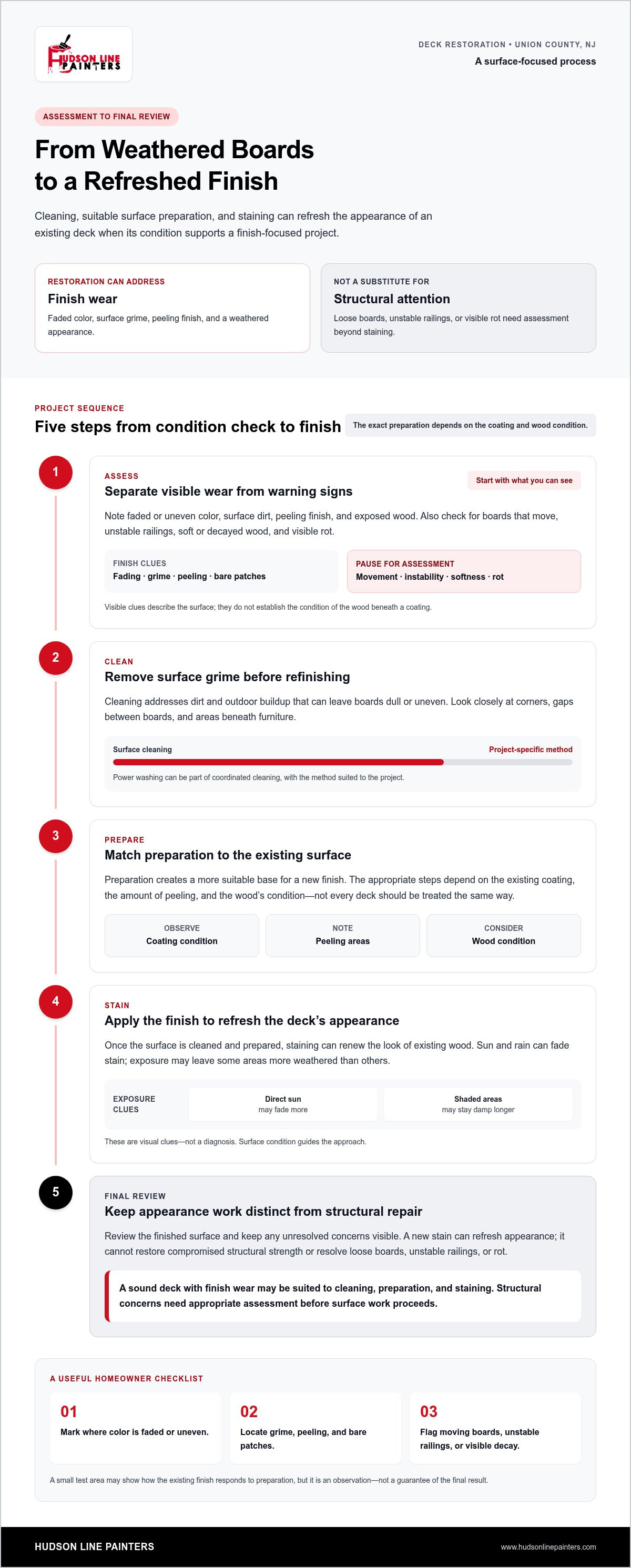
A well-managed deck restoration follows a deliberate sequence. First, the surface is assessed and the work area prepared. Cleaning is completed where appropriate, followed by staining and a review of the finished work. Each step informs the next. For homeowners comparing deck restoration contractors Union County NJ, understanding this sequence helps clarify the project scope and why staining is only one part of the job.
Preparation helps create a clean, properly prepared surface for the stain. Rushing or skipping preparation can leave grime, loose finish, or uneven areas beneath a new coating. The approach depends on the existing finish, the wood’s condition, and the agreed project scope.
- Assess: Review the surface, existing coating, and visible areas of wear.
- Prepare: Protect the work area and determine the appropriate surface preparation.
- Clean as appropriate: Remove dirt and residue using a method suited to the deck.
- Stain: Apply the finish with attention to consistent coverage across the included surfaces.
- Review: Check the completed work and tidy the work area.
Preparation before applying deck stain
Before surface work begins, nearby areas should be protected and the work zone organized. This helps limit disruption and keeps the project orderly. The deck’s existing coating matters: intact finish, peeling areas, and exposed wood may call for different preparation. Washing should suit the deck material and condition, rather than relying on one method for every surface.
Power washing may be appropriate for some projects, but it’s a preparation step, not a cure-all. The technique should be compatible with the surface. Hudson Line Painters provides professional power washing as part of its home improvement services, coordinated with deck and fence staining when suited to the project. After cleaning, the surface needs to be ready for the next step. The work plan should account for the deck’s condition and the finish instructions rather than assume a fixed waiting period.
Staining, cleanup, and project closeout
Once the surface is appropriately prepared, careful, consistent application helps the finish look more even across the areas included in the project. Differences in wood condition or previous coatings can still affect how stain appears, so expectations should reflect the deck itself rather than promise an identical result board to board.
New Jersey weather is variable, so work should proceed according to actual site conditions and the requirements for the chosen finish, not a universal calendar rule. At closeout, review the completed surfaces against the agreed scope, identify any areas that need attention, and confirm the work area has been cleaned up. This final step makes it clear what was completed and how the project matches its plan.
Plan Your Union County Deck Restoration with Hudson Line Painters
A successful staining-focused project begins with a clear understanding of the deck’s current condition and the finish you want. The scope should connect those details to the preparation and staining planned for the existing surface. Hudson Line Painters provides deck and fence staining in Union County, helping homeowners address faded or weathered appearances through an orderly, surface-focused process.
Before planning the project, note what you see and what you hope will change. Is stain faded across the whole deck, or are certain areas peeling or uneven? Are you aiming to refresh the current look or change the overall appearance? These observations help frame a practical conversation about the work the surface may need.
Set expectations for a staining-focused project
The proposed work should reflect the deck’s visible condition and intended finish. A written scope makes the sequence easier to understand by describing the included cleaning, surface preparation, and staining. If the existing coating is worn unevenly, preparation needs may differ across the deck. A clear plan connects those observations to the work without implying every surface can be treated identically.
Staining refreshes an existing surface; it doesn’t replace boards, rebuild framing, or resolve major structural concerns. If you’ve noticed movement, unstable railings, or visible decay, keep that separate from the finish discussion so the deck’s condition can be properly understood. This boundary keeps the project’s purpose clear: improving the appearance of an existing deck through appropriate preparation and staining.
Hudson Line Painters’ deck and fence staining is suited to homeowners seeking surface restoration rather than deck construction. Hudson Line Painters serves Union County, Hudson County, and Bergen County, including Hoboken, Edgewater, Fort Lee, Teaneck, Hackensack, Englewood, Cliffside Park, Leonia, Palisades Park, and Ridgefield. You can view Hudson Line Painters’ service areas for local coverage information.
Request a deck restoration conversation
To make the project discussion useful, describe the areas that look worn, mention any peeling or exposed wood, and share the finish you have in mind. Include any movement or other concerns you’ve noticed. Clear details connect your goals with the deck’s visible condition and help define appropriate preparation and staining steps.
For homeowners searching for deck restoration contractors Union County NJ, a clearly defined scope is a practical starting point: understand the surface, plan the preparation, and set expectations for the finish. Hudson Line Painters brings these steps together for a considered deck staining project, with attention to the existing deck and the agreed work.
Take the Next Step Toward a More Inviting Deck
Your deck can be the starting point for more comfortable time outdoors. Before planning surface work, consider how you want the space to feel and which parts of its appearance matter most. A clear goal helps shape a restoration plan around your home, the deck’s condition, and the finish you have in mind.
If you’re comparing deck restoration contractors Union County NJ, look for a process that clearly defines the project scope and sets expectations based on what staining can address. Sharing your priorities and observations is a practical first step toward deciding whether a finish-focused project suits your deck.
A thoughtful plan can make outdoor upkeep feel more manageable. Start with the deck’s condition and the changes you want to see, then plan the preparation and finish work accordingly.
Take the next step toward a refreshed outdoor space with a clear plan for the surface and finish.
Frequently Asked Questions
How much does deck restoration cost in Union County, NJ?
Deck restoration pricing in Union County depends on the deck’s size, access, existing coating, wood condition, and the preparation and finish tasks involved. A project with widespread peeling may need a different scope from one with mostly intact stain and surface dirt. To understand a project quote, review the written scope and note what it includes for cleaning, preparation, staining, and cleanup.
Is deck restoration the same as deck replacement?
No. Restoration focuses on refreshing an existing deck’s surface, while replacement means removing and installing deck components or a new structure. A stained finish can improve the appearance of worn boards, but it can’t correct structural concerns. Movement, unstable railings, or visibly decayed areas need appropriate assessment rather than being treated as finish problems. The right approach depends on the deck’s condition.
How often should a wood deck be restored or stained?
There isn’t one schedule that suits every wood deck. Exposure, foot traffic, surface condition, and the existing finish all affect when restaining may be worth considering. Rather than relying only on elapsed time, look for noticeable fading, uneven color, or areas where the finish has worn away. Keep a record of when the deck was last stained and review the surface periodically, especially after seasons of regular outdoor use.
What is the best time of year to restore a deck in New Jersey?
The best time depends on suitable conditions for preparation and the chosen finish, not just the month. New Jersey weather can shift, so a stretch of appropriate conditions matters more than choosing a fixed season. Rain, damp surfaces, and changing temperatures may affect when work can proceed, depending on the finish requirements. Plan around the actual forecast and the condition of the deck surface.
Can a deck be stained if the old stain is peeling?
Yes, a peeling deck may still be a candidate for restaining, but loose or failing finish needs appropriate preparation first. Applying new stain over peeling material can produce an uneven appearance because the old coating remains an inconsistent base. The extent and location of peeling, along with the type and condition of the existing finish, help determine the preparation needed before applying a new finish.
Does power washing damage a wood deck?
It can if the pressure or technique is too aggressive for the wood or its condition. Power washing isn’t automatically the right cleaning method for every deck, particularly where boards or existing finishes are vulnerable. The approach should suit the surface and the project’s preparation needs. If you’re unsure about the wood’s condition, don’t test a forceful setting across the deck; an unsuitable wash can leave visible surface damage.
Can deck staining fix rotten or loose boards?
No. Stain changes the appearance of the surface; it doesn’t restore strength to decayed wood or secure a loose board. Softness, visible rot, movement underfoot, or an unstable railing calls for closer assessment before surface refinishing is planned. A staining project is best suited to improving the finish of an existing deck, not resolving structural problems.
How long does professional deck restoration take?
Project duration varies with the deck’s size, access, existing finish, preparation needs, and site conditions. A surface that needs more extensive preparation may require a different work plan from one in relatively consistent condition. Cleaning and preparation also need to be completed before staining. The project sequence and finish requirements determine the schedule, so timing will differ from one deck to another.


