

What if your exterior paint’s lifespan depends less on the calendar and more on what your home has faced? If you’re wondering how long does exterior paint last in New Jersey, a useful planning range is about five to eight years before repainting. That isn’t a deadline for every house. Siding material, surface preparation, sun and moisture exposure, and the condition of the existing finish all affect how long paint holds up.
It’s understandable to wonder whether fading, cracking, or peeling is normal after New Jersey’s humid summers and freezing winters. Coastal exposure can also affect homes near the water. Some changes call for a closer look rather than an immediate full repaint. This guide explains what affects paint durability, which signs deserve attention, and how to distinguish routine touch-ups from more extensive work. You’ll also learn how cleaning, timely repairs, and sound preparation can help preserve a finish that’s still in good condition.
Key Takeaways
- The answer to “how long does exterior paint last in New Jersey” depends on the home’s siding, preparation, exposure, and upkeep.
- Seasonal weather and a home’s surroundings affect paint differently. Consider sun, moisture, shade, and coastal exposure when assessing wear.
- Peeling, cracking, blistering, or persistent discoloration can point to an underlying surface issue, not just aging paint.
- Walk around your home, photograph changes, and monitor trouble spots to distinguish isolated touch-ups from broader concerns.
- Assess the existing finish and surface condition before repainting so preparation needs can guide the next steps.
How long does exterior paint last in New Jersey? Start with a realistic range
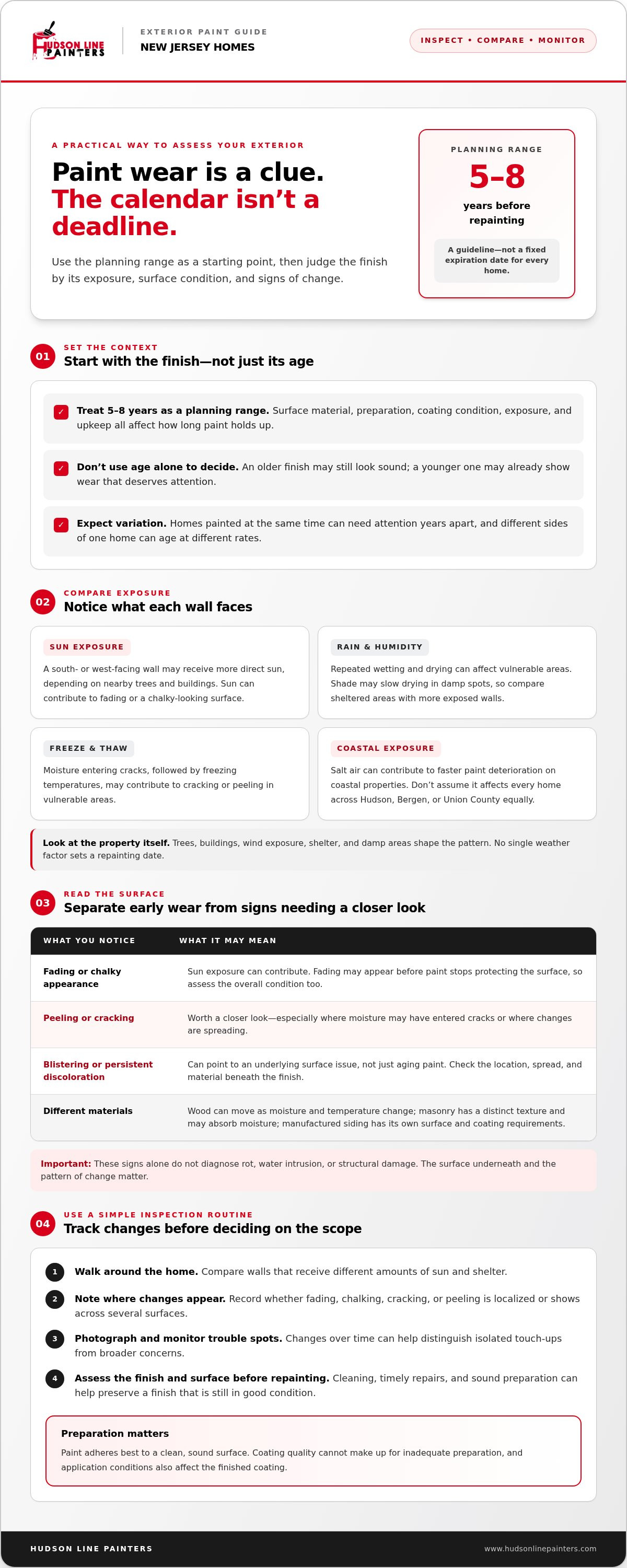
There’s no fixed expiration date for an exterior paint job. As a planning guideline, homeowners in New Jersey can expect to repaint about 5 to 8 years after painting, but that range isn’t a promise for any individual home. The answer to how long does exterior paint last in New Jersey depends on the surface, preparation, coating condition, sun and moisture exposure, and upkeep.
Exterior paint lasts as long as the surface, preparation, application, and exposure allow, so two homes painted at the same time can need attention years apart. A coating’s expected service life is also different from the first moment a homeowner notices wear. Color fading may appear before the paint stops protecting the surface, while peeling or cracking can signal a problem that deserves a closer look.
Why there is no single repainting schedule for New Jersey homes
Different materials hold paint differently. Wood can move as moisture and temperature change, while masonry has a distinct texture and may absorb moisture. Manufactured siding has its own surface and coating requirements. Within one home, sun-exposed walls, shaded areas, and trim can also age at different rates.
Coating quality matters, but it can’t make up for inadequate preparation. Paint needs a clean, sound surface to adhere well, and application conditions also affect the finished coating. For general background on types of exterior paint and their durability, consider how paint composition and the surface beneath it work together. A broad lifespan estimate can help with planning, but it isn’t a guarantee for a specific property.
What lifespan estimates can, and cannot, tell you
The 5 to 8 year range is a starting point, not a countdown. Local exposure, the material beneath the coating, prior preparation, and maintenance can put a home outside that typical window. Even two sides of the same house may show different wear.
Age alone doesn’t tell you whether repainting is due. A relatively old finish may still look sound, while a younger one may show peeling, cracking, blistering, or exposed areas. Pay attention to the surface and whether changes are spreading. That assessment is more useful than relying on a calendar when deciding whether to monitor the finish or arrange a closer inspection.
Once you’ve assessed the exterior, professional exterior painting can address the finish with attention to surface condition and preparation needs.
How New Jersey weather and exposure affect exterior paint durability
New Jersey’s changing seasons put exterior coatings through different kinds of stress. Summer sun can fade or wear a finish, while rain and humidity can keep surfaces damp. In winter, temperatures that move above and below freezing can stress vulnerable areas, especially where moisture has entered cracks or worn paint. No single weather factor sets a home’s repainting date, but repeated exposure can make existing surface problems more noticeable.
Paint durability depends on how exposure interacts with the surface’s condition and the maintenance it receives. That’s why two walls on the same house, or homes on the same block, may show different signs of wear.
Sun, moisture, and seasonal temperature changes
A south- or west-facing wall may receive more direct sun than a sheltered side, depending on nearby trees and buildings. Sun exposure can contribute to fading or a chalky-looking surface. Rain and repeated wetting and drying can affect vulnerable areas, while moisture entering cracks and freezing may contribute to cracking or peeling. These are possible connections, not proof of a single cause. The coating’s condition and the underlying surface matter too.
Exposure differences across Hudson, Bergen, and Union County homes
County names alone don’t determine how quickly paint will wear. A home in Hudson, Bergen, or Union County may have a shaded wall beneath tree cover, a side exposed to wind, or a sheltered section protected by neighboring buildings. Shade can also slow drying in damp spots. The exact pattern depends on the property.
Coastal salt air is relevant to properties with coastal exposure, where it can contribute to faster paint deterioration. It shouldn’t be assumed to affect every home across these counties equally. Look at the home’s actual surroundings and the condition of each side instead of assigning it a lifespan based on its county.
During an exterior walk-around, compare walls that receive different amounts of sun and shelter. Note whether fading, chalking, cracking, or peeling appears in one localized area or across several surfaces. A single sign doesn’t identify the cause, but its location and spread can help you decide what deserves closer inspection. Persistent dampness or failing paint may call for attention to the surface beneath it, not just the visible finish.
For a closer look at weathered surfaces and the preparation they may need, explore exterior painting services.
Which exterior surfaces show paint wear first, and what the signs mean
Paint problems can look different across materials, so inspect the surface as well as the finish. Fading alone may be cosmetic, but peeling, cracking, blistering, or persistent discoloration deserves a closer look. These signs don’t diagnose rot, water intrusion, or structural damage by themselves. Their location, spread, and the condition of the material underneath help determine what needs attention.
How paint condition differs on wood, masonry, and siding
Wood, masonry, and manufactured siding each have distinct surface characteristics. Preparation and a coating suited to the material matter for adhesion and a durable finish. Use the patterns below as inspection clues, not as a diagnosis or a fixed measure of how long paint should last.
| Surface | Common wear signs | What to inspect |
|---|---|---|
| Wood | Peeling at edges, cracking, or bare patches | Look closely at trim, joints, exposed edges, and the condition of the wood beneath loose paint. |
| Masonry | Flaking, blistering, or persistent discoloration | Note where the finish is separating or changing, and whether the pattern appears localized or widespread. |
| Painted siding | Fading, chalky-looking areas, cracking, or peeling | Compare different sides of the home. Check seams, joints, and areas where the coating appears unstable. |
When fading or peeling deserves a closer look
Gradual color fading doesn’t necessarily mean a coating has failed. Flaking or widespread peeling is a more direct sign that the finish is separating from the surface. Check trim, joints, and exposed edges, where wear may be easier to spot. If a surface looks damaged or unstable, assess it before repainting. Paint appearance alone can’t confirm what lies beneath.
Scope matters. A small, isolated area may call for targeted attention, while similar peeling or cracking across multiple sections may point to a broader coating or preparation concern. Record where the signs occur and whether they’re spreading. That context can help distinguish a localized issue from a finish that needs a more comprehensive assessment.
Understanding how long does exterior paint last in New Jersey means looking beyond the paint’s age. Material, visible condition, and the pattern of wear all matter. For broader project context, read the New Jersey exterior painting guide.
How to inspect and maintain exterior paint before damage spreads
A walk around your home can help you notice changes before they become harder to assess. Check after harsh seasonal conditions, such as a stretch of heavy rain or freezing weather, and compare what you see with earlier observations. Rather than relying on a set inspection schedule, focus on changes in the finish and areas where water may collect or drain.
A homeowner’s exterior paint inspection checklist
Walk the property and look closely at high-exposure walls, trim, lower edges, and areas near gutters or downspouts. From a safe position, check for peeling, cracking, chalking, mildew-like growth, or discoloration that keeps returning. Note the location and take photos so you can compare the same spots later.
- Record whether a problem is isolated or appearing across several surfaces.
- Pay attention to joints, exposed edges, and places that stay damp or collect runoff.
- Monitor changes over time rather than relying on memory alone.
If an older coating may be hazardous, don’t scrape, sand, or otherwise disturb it. Paint appearance can’t establish what a coating contains, and disturbing it may create avoidable risk.
Maintenance that supports a longer-lasting finish
Gentle cleaning can remove surface dirt, but the method should suit the siding material and existing finish. Aggressive washing may damage paint or siding, especially where the coating is already loose. Hudson Line Painters provides professional power washing. For more homeowner guidance, read the New Jersey power washing guide.
Look for recurring moisture or drainage concerns near gutters, downspouts, and lower sections of the exterior. Addressing the source before repainting helps avoid covering a condition that may continue to affect the surface. Cleaning and timely attention can help preserve paint that remains sound, but they can’t reverse widespread peeling or coating failure.
Knowing how long does exterior paint last in New Jersey involves more than tracking the years since the last paint job. Keep a simple record of where wear appears, whether it spreads, and how the surface responds to routine care. These details help you decide whether a closer assessment makes sense.
When to repaint, and how Hudson Line Painters can help assess your exterior
Paint age is useful context, but it shouldn’t make the decision on its own. A finish that still looks sound may be worth monitoring, while peeling across several areas, recurring cracking, or exposed material calls for a closer assessment. Understand the condition beneath the paint before deciding whether a touch-up or a broader repaint makes sense.
Repaint, touch up, or keep monitoring?
Use the extent and location of deterioration as a guide. A small defect and widespread coating failure may need very different responses.
| What you see | Possible next step |
|---|---|
| Finish looks sound, with no clear deterioration | Keep monitoring and compare its condition over time. |
| A small, isolated chip or worn spot | Have the area assessed to determine whether targeted attention is appropriate. |
| Peeling, cracking, or exposed material across multiple areas | Arrange a broader assessment of the coating and the underlying surface. |
This is a starting framework, not a diagnosis. A localized flaw doesn’t automatically mean the whole home needs repainting, and widespread failure shouldn’t be treated as a routine touch-up. The pattern, surface material, and condition of the finish all matter. Don’t set a repaint date based only on the home’s age or a general estimate of how long does exterior paint last in New Jersey.
What a professional exterior assessment should clarify
A useful assessment considers where the paint is failing, the condition of the surface, and the preparation needed before applying a new finish. Exposure matters too: one wall may show different wear from another, even on the same home. Identifying these factors helps set realistic expectations for a painting project and can reveal when cleaning or related maintenance should come before painting.
Hudson Line Painters provides residential exterior painting, with attention to surface condition and the preparation the project needs. A clear look at the existing finish helps distinguish a contained repair from a broader repaint without relying on the calendar alone.
If you’re weighing the next step, discuss your exterior painting project with Hudson Line Painters.
Make a confident plan for your home’s exterior
There’s no single answer to how long does exterior paint last in New Jersey. The finish’s lifespan depends on the home’s material, preparation, weather exposure, and upkeep, so age alone won’t tell you whether repainting is due. Look for changes such as spreading peeling, cracking, or exposed areas, and note whether wear is isolated or appearing across multiple surfaces.
Routine observation and gentle, surface-appropriate cleaning can help you keep track of paint that’s still sound. If deterioration is widespread, an assessment can clarify the surface condition and preparation needs before planning a new finish.
Hudson Line Painters provides residential and commercial exterior painting in Hudson County, Union County, and Bergen County, including Hoboken, Edgewater, Fort Lee, Teaneck, Hackensack, Englewood, Cliffside Park, Leonia, Palisades Park, and Ridgefield. A clear understanding of your home’s condition can make the next step feel manageable.
With careful attention to the finish and the surface beneath it, you can make a practical plan to care for your home’s exterior.
Frequently Asked Questions
How long does exterior paint usually last on a house in New Jersey?
Exterior paint in New Jersey commonly lasts about 5 to 8 years, but that range is a planning guide, not a guarantee. The material, preparation, coating condition, sun and moisture exposure, and maintenance all affect when a home needs attention. A wood-sided house in Hoboken may show wear differently from a masonry home in Teaneck. Inspect the finish itself rather than relying on age alone.
Does New Jersey weather make exterior paint wear out faster?
New Jersey’s changing seasons can stress exterior coatings. Summer sun, rain, humidity, and winter temperature swings may contribute to fading, chalking, cracking, or peeling, especially where the surface or finish is already vulnerable. Exposure varies from one wall to another, even on the same property. Coastal conditions may matter for homes near the water, but the effect depends on the home’s actual setting and shouldn’t be assumed across every town.
What are the first signs that exterior paint needs attention?
Early signs can include fading, chalky-looking areas, small cracks, blisters, or paint lifting at the edges. Discoloration that keeps returning also deserves a closer look. Note where the change appears, such as trim, joints, lower edges, or near gutters and downspouts, and whether it’s isolated or spreading. These signs don’t identify the underlying cause by themselves, but tracking them can help you decide whether a closer assessment is sensible.
Can I repaint over peeling exterior paint?
Repainting directly over peeling paint usually won’t address the unstable coating underneath. Loose or failing areas need proper assessment and surface preparation before a new finish is applied. The cause and extent of the peeling matter, so don’t assume a fresh coat will solve recurring deterioration. If the home has an older coating that may be hazardous, avoid scraping, sanding, or disturbing it yourself.
How often should I inspect my home’s exterior paint in New Jersey?
There’s no single inspection schedule that fits every home. Walk around the exterior after harsh seasonal conditions, such as heavy rain or freezing weather, and compare what you see with photos or notes from earlier checks. Pay extra attention to exposed walls, trim, lower edges, and spots near drainage paths. If a change is spreading or keeps returning, arrange a closer assessment instead of waiting for a calendar date.
Does power washing help exterior paint last longer?
Careful cleaning can remove dirt and buildup from a sound finish, helping you see its condition more clearly. Power washing doesn’t restore failing paint, and excessive pressure can damage the coating or siding. The cleaning method should suit the surface and finish. Hudson Line Painters provides power washing in Hudson County, Union County, and Bergen County, including Hoboken, Edgewater, Fort Lee, Teaneck, Hackensack, Englewood, Cliffside Park, Leonia, Palisades Park, and Ridgefield.
Should I repaint my house based on the paint’s age or its condition?
Use the paint’s condition as the main guide, with age as useful background. A finish that remains sound may be monitored, while widespread peeling, cracking, or exposed material warrants closer assessment. A small, isolated defect may call for a different response than deterioration across several walls. Before planning a repaint, consider the surface material, exposure, and preparation needed so the next steps reflect the home rather than a generic timeline.


