

That peeling paint on your eaves isn't just an eyesore; it's often the first warning sign that moisture is silently compromising your home's structural integrity. When you're looking for fascia and soffit repair NJ homeowners often find themselves caught between roofers who want to replace the entire system and painters who might just cover up the decay. It's frustrating to see your curb appeal slip away while worrying that every rainstorm is pushing rot deeper into your rafters.
You deserve a clear path to a restored home that doesn't involve guesswork or structural risks. This guide will show you how to identify specific damage markers and discover how a disciplined approach to restoration can protect your property for years. We'll preview the essential steps for professional-grade wood repair, discuss the benefits of modern materials like PVC, and explain how the latest 2026 New Jersey contractor regulations help you find a reliable partner for your exterior transformation.
Key Takeaways
- Learn how fascia and soffits act as your home's primary defense against moisture and how to identify early signs of NJ-specific weather wear.
- Master simple diagnostic techniques like the "Screwdriver Test" to evaluate if your wood trim can be restored or needs professional replacement.
- Discover why a strategic approach to fascia and soffit repair NJ requires specialized light carpentry to fully remove rot before it spreads to your rafters.
- Understand the importance of technical finishing steps, such as back-priming and using breathable acrylic paints, to maximize the longevity of your exterior.
- Find out how partnering with a contractor who handles both carpentry and fine painting ensures a superior aesthetic result and long-term structural protection.
Understanding Fascia and Soffit: Your Home’s First Line of Defense in NJ
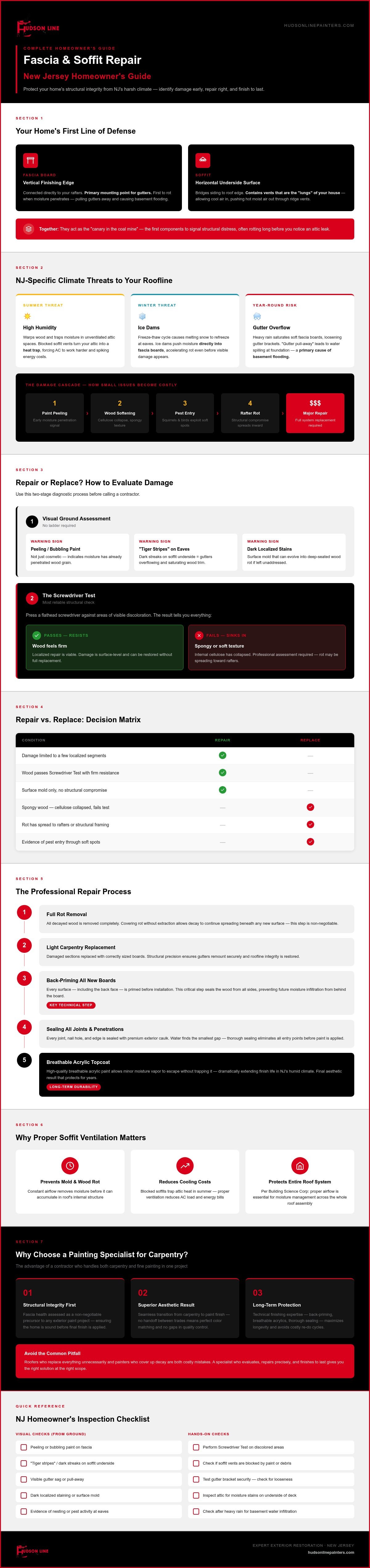
Your home's roofline is more than a decorative border; it's a complex system designed to shed water and circulate air. The Fascia (architecture) refers to the vertical finishing edge connected directly to your rafters. It serves as the primary mounting point for your gutters. Tucked underneath is the soffit, the horizontal surface that bridges the gap between your siding and the roof's edge. Together, these components act as the "canary in the coal mine" for your home’s health. Because they sit at the intersection of the roof and the exterior walls, they're the first to signal structural distress, often rotting long before you notice a leak in your attic.
New Jersey homeowners face a unique set of environmental challenges that accelerate this wear. Our region experiences high summer humidity that can warp wood and trap moisture in unventilated spaces. In the winter, the freeze-thaw cycle leads to ice dams, where melting snow refreezes at the eaves and pushes moisture directly into the fascia board. If you ignore these signs, a simple cosmetic issue can quickly turn into a need for extensive fascia and soffit repair NJ services to protect your rafters and interior ceilings.
The Role of Proper Attic Ventilation
Soffit vents are essentially the lungs of your house. They allow cool, fresh air to enter the attic space, pushing hot, moist air out through the ridge vents. This constant airflow is critical for preventing mold growth and wood rot in your roof's internal structure. When soffits become blocked by debris or layers of old paint, your attic becomes a heat trap. During a humid North Jersey July, this trapped heat forces your air conditioning to work much harder, noticeably impacting your energy efficiency. Modernizing your soffits during a fascia and soffit repair NJ project doesn't just protect the wood; it can significantly reduce your seasonal cooling costs by improving your home's natural breathability.
Fascia Boards and Gutter Integrity
The fascia board carries a heavy physical burden as the structural anchor for your entire gutter system. During a heavy downpour, a single foot of gutter can hold several pounds of water; during a winter storm, that weight increases exponentially with ice and slush. When the fascia wood begins to soften from rot, the nails or brackets holding your gutters will inevitably lose their grip. This results in "gutter pull-away," where the troughs sag and water spills directly over the side. This overflow is a primary cause of basement flooding and foundation erosion. Our team views fascia health as a non-negotiable precursor to a successful exterior painting project, ensuring your home is structurally sound before the final finish is applied.
Repair or Replace? Evaluating Damage in NJ’s Variable Climate
Determining the health of your roofline doesn't always require a ladder. When considering fascia and soffit repair NJ, the first step is a thorough visual assessment from the ground. Look for telltale signs like peeling paint, bubbling finishes, or dark, localized stains. These aren't merely aesthetic flaws; they often indicate that moisture has penetrated the wood grain. If you notice "tiger stripes" or dark streaks on the underside of your eaves, it's a clear signal that your gutters are overflowing and saturating the wood trim. This moisture creates an ideal environment for surface mold, which can eventually evolve into deep-seated wood rot if left unaddressed.
A hands-on "Screwdriver Test" is the most reliable way to check for structural compromise. Take a flathead screwdriver and gently press it against areas with visible discoloration. If the metal tip sinks easily into the wood or the material feels spongy, the internal cellulose has collapsed. This level of decay often attracts local pests. Squirrels and birds frequently exploit these soft spots to gain entry into your attic, leading to expensive interior damage and health concerns. Malfunctioning soffits also disrupt the thermal balance of your home. As highlighted in Building Science Corporation research, proper airflow is essential for moisture management; without it, your entire roof system is at risk.
When to Opt for Professional Repair
Repair is often the most sensible and cost-effective choice when the damage is localized. If the decay is limited to a few specific segments near a historically clogged gutter, we can perform targeted light carpentry to restore the section. This approach is ideal for cosmetic issues, such as minor cracks or surface-level peeling, that haven't yet reached the rafter tails. By replacing only the compromised wood, you can maintain the structural integrity of your home while preparing for a fresh exterior painting project that will seal the new work against the elements.
When Full Replacement is Necessary
A full replacement becomes necessary when the rot covers more than 25% of the total roofline. At this stage, trying to patch multiple sections becomes less efficient than a complete overhaul. If you notice structural sagging along the eaves, it suggests that the rot has spread from the fascia board to the rafters themselves, requiring more significant intervention. For many New Jersey homeowners, this is also the perfect time to switch from traditional wood to modern, low-maintenance materials like PVC or composite. These premium options offer a permanent solution to fascia and soffit repair NJ needs, as they are naturally resistant to the high humidity and heavy snow loads typical of our region.
Expert Light Carpentry: The Process of Fascia and Soffit Repair NJ
Restoring your home's roofline requires a disciplined, sequential approach that goes far beyond a quick patch job. Our technical process begins with the careful removal of your existing gutters. This is a critical diagnostic step because it reveals the hidden face of the fascia board, where moisture often settles. Once the boards are exposed, we can identify the full extent of the rot that may be hiding behind the metal. We then cut back the compromised wood until we reach healthy, solid fibers. It isn't enough to simply remove the visible decay; we treat the surrounding original wood with high-grade preservatives to halt any dormant fungal spores that could cause future issues.
After the preparation is complete, we focus on the structural restoration. We measure and install new, high-quality trim boards that align perfectly with your existing roofline. The final step of the carpentry phase involves sealing every joint, seam, and nail hole with premium, flexible sealants. This creates a watertight barrier that prevents the high NJ humidity from infiltrating the new wood. By following this meticulous framework, we ensure that your fascia and soffit repair NJ project provides a stable, durable foundation for the final aesthetic finish.
The "Light Carpentry" Advantage
Choosing a contractor who understands both the "fix" and the "finish" is essential for a seamless result. Many pure painters will simply paint over soft wood, while many roofers view trim as an afterthought. Our team specializes in the intersection of these trades. We take pride in matching existing trim profiles, ensuring that repairs are invisible even on historic homes in older North Jersey communities. For a deeper look at our technical approach to wood preservation, you can explore our NJ Wood Rot Repair: Homeowner’s Guide to Restoration.
Material Selection: Wood vs. PVC
Selecting the right material is a balance of aesthetics and longevity. Traditional cedar or pine is often the preferred choice for historic NJ homes where architectural accuracy is paramount. These natural woods offer a classic look but require consistent maintenance to prevent future rot. Alternatively, cellular PVC has become the modern standard for maintenance-free fascia and soffit repair NJ. PVC is entirely impervious to moisture, insects, and decay, making it an ideal choice for the wet, variable climate of the Northeast. We ensure that whichever material you choose is fully compatible with your existing gutter hardware and roof drip edges for a secure, long-lasting installation.
Beyond the Wood: Sealing and Painting for Long-Term Durability
The transition from structural repair to the final finish is where many projects fail. For a lasting fascia and soffit repair NJ, we prioritize back-priming every piece of new wood. This involves sealing the hidden side of the board before installation to prevent moisture from being absorbed from the roof side. Without this step, wood can warp and rot from the inside out, regardless of how good the front looks. It's a technical detail that separates a temporary fix from a professional restoration.
Choosing the correct finish is equally vital. New Jersey's high summer humidity requires "breathable" high-quality acrylic paints. These coatings allow microscopic amounts of moisture vapor to escape the wood without causing the paint film to bubble or peel. When combined with high-performance caulking at every joint, you create a shield that prevents water from ever reaching the underlying structure. Beyond protection, a fresh coat of white or light-colored paint on your soffits acts as a reflector. This brightens the shadowed areas under your eaves and significantly boosts your home’s overall curb appeal.
The Professional Painting Sequence
Meticulous preparation ensures a "no-repair" look. We sand the transitions between old and new wood until the surface is perfectly flush. We then apply premium primers specifically formulated to bond to both natural wood and modern materials like PVC. This unified base ensures the final topcoat looks consistent across the entire roofline. These steps are a foundational part of our comprehensive exterior painting services, providing whole-home protection that lasts for years in the variable NJ climate.
Maintenance Tips to Prevent Future Rot
Longevity depends on proactive care. Regular power washing is your first line of defense; it removes mold spores and environmental debris before they can penetrate the paint. However, annual gutter cleaning remains the most important task. Clogged gutters force water to sit against the fascia, which eventually bypasses even the best paint job. We recommend inspecting your eaves twice a year for early signs of paint failure, such as fine cracks or chalking. These signals indicate it’s time for a maintenance touch-up before the wood begins to soften and decay.
Contact us today to schedule your exterior inspection and restoration quote.
Professional Exterior Restoration: Why Choose a Painting Specialist for Carpentry?
Hiring separate contractors for carpentry and painting often leads to communication gaps and finger-pointing if a finish fails. By choosing a specialist who integrates light carpentry into their workflow, you ensure a cohesive result. We understand that the longevity of our paint job depends entirely on the health of the wood beneath it. This perspective drives us to be more meticulous than a typical roofer might be. We aren't just replacing a board; we're preparing a canvas. This integrated approach to fascia and soffit repair NJ ensures that every seam is perfectly flush and every fastener is properly countersunk before the first drop of primer is applied.
Our team at Hudson Line Painters prides itself on professional project management and site etiquette. We understand that your home is a sanctuary, not a construction zone. We maintain a clean, organized workspace and follow a disciplined schedule to minimize disruption to your daily routine. This commitment to transparency and technical precision has made us a trusted partner for homeowners who value high-end results and clear communication throughout the restoration lifecycle. We bridge the gap between rough structural fixes and the fine finishing that defines your home's character.
Service Areas and Local Expertise
We provide expert residential painting and repair services across Hudson, Union, and Bergen Counties. Our local expertise allows us to navigate the specific architectural nuances of our region. Whether we're restoring the intricate cornices of a Jersey City brownstone or updating the expansive eaves of a suburban home in Summit, we bring the same level of technical care to every project. We understand how the salt air near the Hudson River and the heavy snow loads in North Jersey impact different building materials. If you're ready to restore your roofline and protect your home, you can contact us for a free estimate to discuss your specific needs.
A Smart Investment in Home Value
Investing in professional fascia and soffit repair NJ is a strategic financial decision that pays dividends in both protection and property value. If you're planning to sell, crisp and clean eaves are essential for successful home staging; buyers often equate the condition of the roofline with the overall maintenance of the house. Beyond aesthetics, the long-term savings are substantial. Addressing localized rot now prevents moisture from migrating into your roof trusses, which would eventually require a full roof system replacement. You gain the peace of mind that comes with a weather-sealed, professionally finished exterior that stands up to the New Jersey climate year after year.
Protecting Your Investment with Professional Restoration
Your home's exterior is only as strong as its weakest point. Neglecting the roofline leads to rot that spreads quickly into your rafters. We've explored how identifying early warning signs and utilizing a specialized light carpentry and painting hybrid service can save you from expensive renovations. By focusing on meticulous craftsmanship and high-performance materials, you ensure your eaves remain crisp and functional for years.
Investing in expert fascia and soffit repair NJ is the most effective way to prevent moisture from reaching your home's internal structure. Since 2018, Hudson Line Painters has brought a local NJ perspective to every project across Hudson, Bergen, and Union counties. We take pride in bridging the gap between structural repair and fine finishing, providing you with peace of mind and lasting curb appeal.
Take the first step toward a weather-sealed home today. Our team is ready to provide the technical care and aesthetic excellence your property deserves.
Frequently Asked Questions
How much does it cost to repair fascia and soffit in New Jersey?
The cost of fascia and soffit repair NJ depends on the linear footage, the height of the roofline, and the materials chosen. While wood is often more affordable upfront, premium options like PVC or composite offer better value over time by eliminating the need for frequent repainting. Labor rates in New Jersey are also influenced by the accessibility of the work area and whether the project requires specialized equipment for multi-story homes.
Can I repair a small section of rotting fascia myself?
You can repair small sections if you have carpentry experience, but it is technically demanding. The process involves removing heavy gutters and ensuring every trace of rot is removed from the rafter tails. If you leave even a small amount of fungus behind, it will continue to spread under your new paint. Most homeowners find that professional fascia and soffit repair NJ services provide more reliable, long-term protection.
How do I know if my soffit vents are working properly?
You can test your vents by holding a tissue near the openings to see if air is moving. Other signs of failure include peeling paint on the eaves or ice dams in winter. The New Jersey Uniform Construction Code mandates specific attic ventilation requirements, typically one square foot of net free ventilation area for every 150 square feet of attic space. Professional repairs ensure your home remains compliant with these essential safety standards.
Should I replace wood fascia with PVC?
Replacing wood with cellular PVC is a smart choice for the variable New Jersey climate. While the upfront material cost is higher, PVC is naturally resistant to moisture, insects, and decay. It doesn't warp or require frequent repainting like traditional pine or cedar. This makes it an ideal maintenance-free solution for homeowners looking to protect their property from high humidity, salt air, and heavy winter snow.
Do I need to remove my gutters to repair the fascia board?
Yes, removing the gutters is a mandatory step for a thorough repair. Because gutters are anchored directly to the fascia board, you can't reach the underlying wood or treat the rafter tails without taking them down. This also provides an opportunity to clean the gutters and inspect the drip edge for damage. Once the carpentry is finished, the gutters are reinstalled with secure, new fasteners to prevent sagging.
How long does a typical fascia and soffit repair project take?
Most standard projects are completed within one to three days. The timeline depends on the linear footage and the height of the home. Multi-story houses or those with complex architectural details require more time for safe ladder setup and precision cutting. We prioritize an efficient workflow that moves from diagnostic removal to the final weather-sealed paint finish, ensuring your home is protected as quickly as possible.
Does fascia repair require a permit in NJ?
A building permit is usually not required in New Jersey for like-for-like replacements. However, a permit is necessary if you modify the roof overhang or change ventilation openings. It's also important to ensure your contractor is registered with the New Jersey Division of Consumer Affairs. As of February 2026, new state laws require home improvement contractors to meet stricter education and training standards to better protect homeowners.
Can rotting fascia cause a roof leak?
Rotting fascia doesn't cause a traditional roof leak from the shingles down, but it allows water to migrate into your rafter tails and roof deck. This moisture eventually compromises the structural integrity of your roofline. Additionally, soft wood attracts squirrels and birds. These pests can chew through the weakened material to enter your attic, creating secondary entry points for rain and snow that can damage your interior ceilings.


