

You're clearing your gutters on a humid Saturday morning when you notice a small, discolored patch on your window casing. You press your thumb against it, and the wood gives way with a sickening, spongy crunch. It's a moment of pure frustration that many homeowners in Hudson and Bergen Counties know all too well. You've likely seen past "fixes" fail after just one season, leading to deep-seated anxiety about hidden structural damage and the rising costs of neglect. When it comes to protecting your property, settling for a quick patch isn't enough; you need professional carpentry repairs for wood rot that address the root cause of the decay.
We understand that your home is your most significant investment, and seeing its architecture decline is stressful. This guide provides a clear path to peace of mind by detailing how to restore your home's strength and beauty. You'll learn to spot the difference between surface damage and structural issues, understand the technical precision required for a lasting repair, and discover why a specialized paint finish is your best defense against New Jersey's coastal moisture. By the end, you'll have a roadmap for a structurally sound home that maintains its curb appeal for years to come.
Key Takeaways
- Discover how Northern New Jersey’s unique humidity levels accelerate fungal growth and learn the simple signs of spongy decay in your home's exterior trim.
- Master the "Rule of Threes" to determine if your boards can be saved with light carpentry or if a full replacement is the more cost-effective long-term choice.
- Understand why professional carpentry repairs for wood rot must extend two inches past visible damage to prevent the recurrence of fungal spores.
- Learn why meticulous back-priming and sealing are non-negotiable steps to stop the cycle of water infiltration and peeling paint.
- See how an integrated approach of carpentry and painting provides a structurally sound foundation and premium curb appeal for homes in Hudson and Bergen Counties.
Identifying Wood Rot in Northern New Jersey Homes
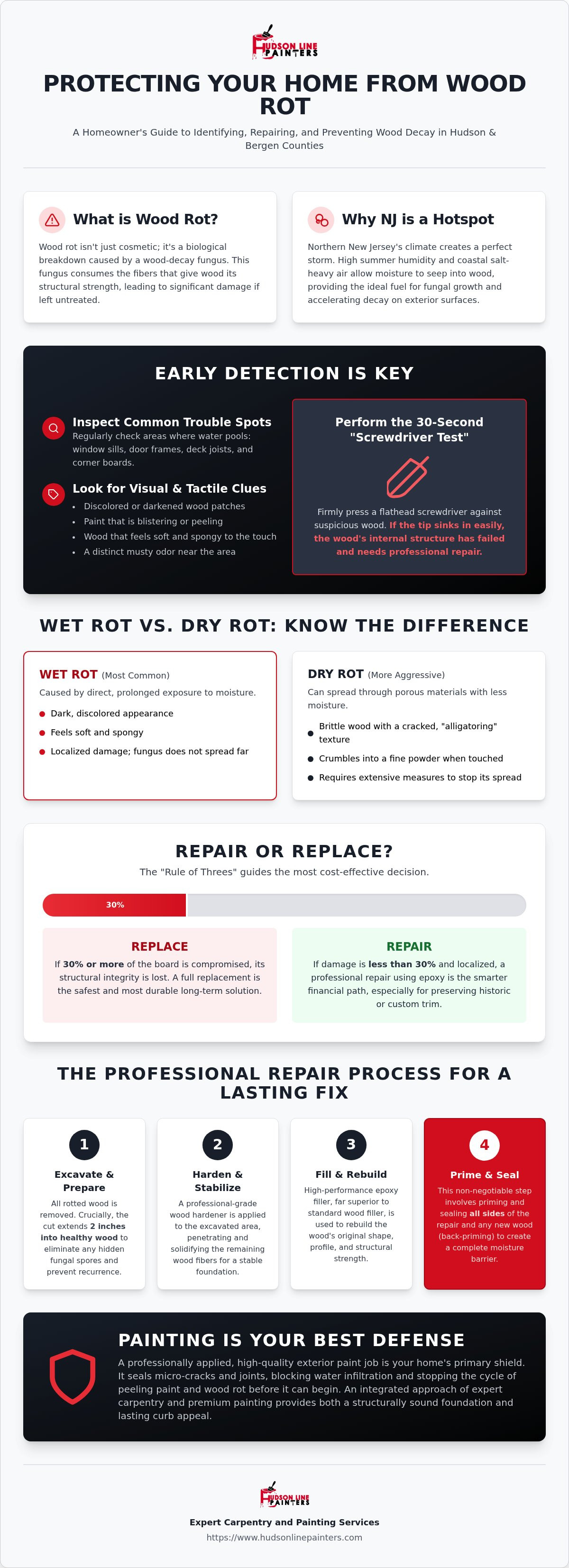
Wood rot isn't just a cosmetic flaw; it's a biological breakdown. A Wood-decay fungus colonizes the timber, consuming the very fibers that provide structural strength. While many homeowners assume rot is simply a product of age, it is actually an active infestation that requires moisture to survive. Without intervention, these microscopic organisms will continue to eat through your home's exterior until the wood loses all integrity.
Northern New Jersey homes are particularly vulnerable due to our distinct climate. The heavy humidity of Bergen County summers and the salt-heavy air in coastal towns like Hoboken or Edgewater create a relentless environment for exterior wood. Moisture often seeps into micro-cracks in your paint or settles into joints where it cannot easily evaporate. This trapped dampness provides the perfect fuel for fungal growth, eventually making specialized carpentry repairs for wood rot an essential part of home maintenance.
You can often find these trouble spots by inspecting your home's "front lines." Check window sills, door frames, and deck joists where water tends to pool or linger. Perform a 30-second DIY check known as the "Screwdriver Test." Take a flathead screwdriver and press it firmly against any discolored or suspicious wood. If the tip sinks in easily or the wood feels spongy, the internal structure has failed and requires professional attention.
Wet Rot vs. Dry Rot: What's the Difference?
Wet rot is the most frequent culprit in our area. It typically presents as dark, spongy wood with a distinct musty odor. Dry rot is rarer but more aggressive. It leaves wood looking brittle with a cracked, "alligatoring" texture that crumbles into powder when touched. Identifying the specific fungus is vital because it dictates the scope of the repair. While wet rot can often be resolved with localized removal, dry rot may require more extensive measures to prevent it from traveling through your home's framing.
The Hidden Dangers of Neglected Decay
Ignoring soft spots leads to more than just a sagging porch. Rotted wood acts as a secondary invitation for pests like carpenter ants and termites, which find the softened fibers much easier to tunnel through. In the high-stakes real estate markets of Hudson and Bergen Counties, visible rot can also derail a home sale. It signals a lack of maintenance to potential buyers and can lead to failed inspections. Addressing these issues early with light carpentry ensures your home remains a safe, valuable asset rather than a liability requiring a total overhaul. Proper exterior painting serves as your primary shield, but it cannot hide the structural risks of untreated decay.
Carpentry Repair vs. Full Replacement: Making the Right Choice
Deciding between a minor fix and a major overhaul requires a disciplined assessment of the timber's health. Not every soft spot demands a complete teardown. Performing strategic carpentry repairs for wood rot is often the most pragmatic choice for NJ homeowners who want to balance cost with durability. We use a specific framework called the "Rule of Threes" to guide this decision. If 30% or more of a board's total volume is compromised by decay, the structural integrity is likely lost. In those cases, we recommend a full replacement. However, if the damage is localized to a small corner or surface layer, restoration is the smarter financial path.
This balance is particularly crucial in historic districts like Hoboken or Hackensack. Many of these homes feature custom, hand-crafted trim that is nearly impossible to replicate with modern off-the-shelf lumber. Preserving the original architectural character through precision repair adds significant value to your property. It avoids the high costs and logistical headaches of custom milling while maintaining the aesthetic soul of the neighborhood. Choosing repair over replacement also reduces waste, making it a more sustainable choice for your home improvement project.
When to Repair with Epoxy or Wood Filler
Small, non-structural soft spots are ideal candidates for high-performance epoxy resins. This process begins by removing the loose fibers and applying a wood hardener to stabilize the remaining material. We rely on professional wood treatment techniques to ensure the filler bonds perfectly with the sound timber. Unlike standard big-box store products, professional-grade epoxies expand and contract at the same rate as the wood. This prevents the filler from popping out during New Jersey's extreme temperature swings between summer and winter. It's a meticulous process, but it creates a seamless, paintable surface that looks as good as new.
When to Opt for Partial Wood Replacement
Sometimes, the decay is too deep for filler but hasn't ruined the entire architectural element. This is where we employ a "Dutchman" repair. This technique involves cutting out the rotted section and splicing in a new piece of matching cedar or pine. It's a common solution for rotted window sills or the bottom of door frames where only the lower portion has suffered from water pooling. By replacing only the damaged portion, you save the cost of a full window unit while restoring the structure to a sound condition. If you aren't sure which path is right for your home, our team can provide a professional assessment of your exterior surfaces to ensure a long-lasting result.
Professional Wood Rot Repair Techniques for NJ Exteriors
Effective restoration begins long before the first saw blade touches the timber. At Hudson Line Painters, we treat every repair as a disciplined procedure designed to save the surrounding structure. Understanding the underlying causes of wood decay is essential to this process. We don't just patch over the problem; we perform technical carpentry repairs for wood rot that focus on the total eradication of the fungal colony. This systematic approach ensures that the decay doesn't simply migrate to the next board once the job is finished.
One of our non-negotiable standards is the "two-inch rule." Fungal spores are microscopic. They often extend deep into the wood fibers long before they become visible to the naked eye as soft spots. To ensure the decay doesn't return, we cut at least two inches past the last sign of compromised wood. This rigorous standard guarantees we are reaching healthy, sound lumber. Once the area is cleared, we treat the "wound" with a professional-grade fungicidal spray to neutralize any remaining spores before installing the new material.
Material choice is equally critical for the climate in Hudson and Bergen Counties. We always match the new wood species to the original structure to ensure identical thermal expansion rates. If you splice a piece of pressure-treated lumber into an original cedar window casing, the two materials will move differently during our humid summers and freezing winters. This mismatch eventually creates gaps in the sealant, inviting water back in. By using matching species and back-priming every surface, we create a repair that stands up to the elements for years.
Light Carpentry for Trim and Siding
Your fascia boards and soffits are the primary guardians of your roofing system. When rot takes hold here, it can quickly lead to attic leaks and interior drywall damage. Our team specializes in profile matching for historic and modern siding alike. Whether you have traditional cedar shakes or modern clapboard, we ensure the new pieces align perfectly with the existing architecture. After our specialized exterior painting process, these structural repairs become completely invisible, restoring your home's original curb appeal.
Deck and Fence Staining Preparation
A rotted deck board is more than an eyesore; it's a genuine safety hazard for your family. During our preparation phase, we inspect every picket, post, and joist for signs of instability. Replacing compromised elements before applying a fresh finish ensures your outdoor space remains both beautiful and secure. For a deeper look at how we protect these surfaces, explore our Ultimate Guide to Deck & Fence Staining.
Preventing Future Rot: Why Painting is Your Best Defense
A professional finish is more than just a color choice; it's a critical barrier against the elements. While precision carpentry repairs for wood rot restore your home's structure, the paint and sealant you choose will determine how long those repairs last. Peeling or bubbling paint is often the first sign that the "skin" of your home has failed, allowing moisture to reach the vulnerable wood fibers beneath. Once water infiltrates these cracks, the cycle of decay begins anew, quickly undoing even the most meticulous craftsmanship.
To break this cycle, our process includes non-negotiable steps like back-priming. This involves sealing all six sides of a new piece of lumber before it's even installed. Most DIY projects or low-bid contractors only paint the visible face, leaving the back and edges exposed to moisture that can seep behind the trim. We also prioritize high-quality, flexible caulking. By sealing joints where different architectural elements meet, we prevent water traps that are notorious for breeding rot in Northern NJ's humid environment.
Regular maintenance is your best financial strategy. An annual inspection and a professional power washing can save thousands in future repair costs. By removing dirt, mold, and salt residue before they can degrade your paint's protective film, you extend the life of your home's exterior significantly. This disciplined approach ensures that your carpentry repairs for wood rot remain a one-time investment rather than a recurring headache.
Choosing the Right Exterior Paint for NJ Weather
NJ homes face a unique challenge: extreme humidity followed by harsh winters. We recommend premium paints with high elasticity. These coatings expand and contract with the wood, preventing the micro-fractures that lead to water infiltration. Breathability is equally important; the paint must allow internal moisture to escape without trapping it against the wood. You can find more detail in our Ultimate Guide to Exterior Painting Services.
The Power of Professional Sealing
Proper preparation is everything. A professional power washing removes the contaminants that prevent sealants from bonding correctly. For decks and fences, waterproofing is the only way to stop rot before it starts. We use technical topcoats that provide UV protection, preventing the sun from breaking down the lignin in wood fibers. This meticulous approach ensures your home improvement investment remains secure and visually stunning.
Protect your home with a professional exterior finish.
Expert Carpentry and Painting Services in Hudson and Bergen Counties
Choosing a contractor for your home restoration involves more than just finding someone with a hammer and a brush. You need a partner who understands the architectural nuances of Northern New Jersey, from the historic brownstones of Hoboken to the modern estates in Englewood. At Hudson Line Painters, we provide a seamless, integrated experience that bridges the gap between structural repair and aesthetic perfection. By handling both the necessary carpentry repairs for wood rot and the final protective coatings, we eliminate the stress of managing multiple vendors and ensure a cohesive, long-lasting result.
Our team takes pride in a meticulous, disciplined approach that treats every home improvement task as a craft. We don't just offer manual labor; we provide technical precision and professional site etiquette. We respect your environment and follow a systematic lifecycle for every project, moving from the initial consultation through to the finished transformation. This operational discipline is why homeowners across Hudson, Union, and Bergen Counties trust us to protect their most significant investment. We take the anxiety out of property maintenance by offering a safe, guaranteed transformation that restores both your home's strength and its curb appeal.
Serving communities like Jersey City and Edgewater requires a deep understanding of local moisture challenges. We've built our reputation on being a reliable, neighborly expert who provides peace of mind through professional risk mitigation. When you partner with us, you're choosing a team that values technical excellence as much as the final aesthetic result. Our integrated process ensures that every repair is structurally sound and perfectly prepared for the final brushstroke, providing a foundation that stands up to the unique Jersey climate.
Our Light Carpentry Process
We follow a proprietary framework designed for transparency and technical excellence. This three-step process ensures you're fully informed and confident in the durability of the work.
- Step 1: Detailed Inspection and Transparent Repair Estimate: We begin with a thorough assessment of your home's exterior to identify the full extent of the decay. You'll receive a clear, itemized estimate that explains the rationale behind every recommended repair.
- Step 2: Expert Removal of All Compromised Wood Fibers: Following our strict two-inch rule, we meticulously remove all rotted material. This step is critical to ensure that no microscopic fungal spores remain to cause future issues.
- Step 3: Precision Carpentry and Seamless Integration: We install matching wood species, ensuring perfect alignment with your existing trim. Every new piece is back-primed and sealed, creating the ideal foundation for a flawless paint job.
Ready to Restore Your Home's Beauty?
A small soft spot on your window sill can quickly escalate into a major structural renovation if left untreated. Don't wait for the next heavy Jersey rain to discover the extent of the damage. Our team is ready to provide a professional assessment and a clear path toward restoration. Explore our Residential Painting Services to see how we can completely transform and protect your home's exterior.
Contact our team today to schedule your professional wood rot assessment.
Secure Your Home’s Future with Professional Restoration
Protecting your Northern New Jersey home from the relentless cycle of moisture and decay requires more than a cosmetic patch. You now understand that early identification and a disciplined approach to the "Rule of Threes" can save your architectural trim from unnecessary replacement. By prioritizing technical precision and high-performance sealants, you ensure your property remains both structurally sound and visually striking despite our humid coastal climate.
Since 2018, Hudson Line Painters has served Hudson, Bergen, and Union Counties with a specific focus on light carpentry and historic home preservation. We believe that meticulous preparation is the only way to achieve long-lasting exterior results. Our team specializes in precision carpentry repairs for wood rot to provide a foundation that supports a flawless, durable paint finish. We take pride in treating every project as a craft that adds genuine value and comfort to your living space.
Your home is a significant investment that deserves the care of a disciplined, reliable professional. We look forward to partnering with you to restore its original beauty and provide the lasting protection your family deserves.
Frequently Asked Questions
How can I tell if my wood is rotted or just needs a new coat of paint?
You can distinguish between the two by performing the "Screwdriver Test." Press a flathead screwdriver into the suspicious area with moderate pressure. If the wood is firm and the tool bounces off, you likely only need surface preparation and a fresh coat of paint. If the tool sinks in or the fibers crumble, you're dealing with active decay that requires structural attention.
Is it possible to paint over wood rot to stop it from spreading?
No, painting over wood rot will not stop the fungal growth. In fact, it often accelerates the decay by trapping moisture inside the wood fibers. This creates a dark, damp environment where the fungus can consume the board from the inside out. You must physically remove the compromised material and treat the surrounding area before any painting begins to ensure a permanent fix.
What is the average lifespan of a wood rot repair using epoxy?
A high-quality epoxy repair can last 10 to 20 years when applied correctly by a professional. The key to longevity is ensuring the remaining wood is stabilized with a liquid hardener and the repair is perfectly sealed against moisture. Because professional-grade epoxies expand and contract at rates similar to natural timber, they are much more durable than standard fillers found at big-box retailers.
Does wood rot attract termites to my New Jersey home?
Yes, rotted wood is a primary attractant for termites and carpenter ants in Northern New Jersey. These pests prefer softened, damp wood because it's easier to tunnel through and provides the moisture they need to survive. Addressing decay early with precision carpentry repairs for wood rot protects your home from these secondary infestations, which can cause even more significant structural damage over time.
Which wood species is most resistant to rot for NJ exterior repairs?
Cedar and redwood are the most naturally rot-resistant species commonly used for exterior repairs in our region. Their natural oils act as a built-in preservative against fungal spores. For structural elements like deck joists, pressure-treated lumber remains the industry standard. We always aim to match the original wood species during a repair to ensure the new material reacts consistently to our local humidity levels.
How much does it typically cost to repair rotted window sills in NJ?
Industry data for Northern New Jersey suggests that minor repairs for window sills or trim typically range between $500 and $1,500. This cost generally includes removing the decay, treating the area with fungicides, and applying professional-grade fillers. More extensive structural issues or custom historic trim work can increase these figures. A detailed inspection is the only way to get a precise estimate for your specific project.
Can I DIY carpentry repairs for wood rot or should I hire a professional?
While homeowners can handle minor cosmetic filling, you should hire a professional for any structural or architectural carpentry repairs for wood rot. Matching historic trim profiles in towns like Hoboken requires specialized tools and technical expertise. A professional also ensures that the root cause of the moisture is addressed, which prevents the rot from returning and protects your home’s long-term resale value.
How often should I inspect my deck and siding for signs of decay?
You should inspect your deck, siding, and window casings at least once a year. The best times are during the spring or fall when the weather is mild enough for a thorough walk-through. Pay close attention to horizontal surfaces where water pools and joints where different materials meet. Early detection during these annual checks can prevent a small soft spot from turning into an expensive structural renovation.


