

The most expensive exterior paint job is always the one you have to redo after just two New Jersey winters. If you're frustrated by peeling trim, anxious about hidden wood rot, or wary of uninsured crews who rush surface preparation, your hesitation is completely justified. Choosing reliable exterior house painters NJ homeowners can depend on shouldn't feel like an unpredictable gamble with your property's curb appeal.
You deserve the peace of mind that comes from meticulous craftsmanship and long-term durability. In this 2026 homeowner guide, you'll discover how to thoroughly vet local contractors, verify essential state registration credentials, and insist on the exact preparation protocols required for our freeze-thaw climate. We'll walk through an actionable screening checklist, highlight necessary light carpentry repairs, and review enduring color palettes that protect your home's structural integrity and investment value for years to come.
Key Takeaways
- Understand how Northern New Jersey's freeze-thaw cycles and coastal humidity cause premature paint failure, and why climate-specific preparation is essential.
- Use our screening checklist to vet exterior house painters NJ homeowners trust, confirming active liability insurance and New Jersey Home Improvement Contractor registration.
- Discover the critical five-phase preparation framework, including thorough low-pressure washing, feather-edge sanding, and integrated light carpentry repairs.
- Learn how to harmonize exterior color palettes with regional architectural heritage, masonry undertones, and neighborhood character.
- Know what to expect on project day, from rigorous property protection of your landscaping to daily communication and site cleanup protocols.
Why Northern New Jersey Climates Demand Specialized Exterior House Painters
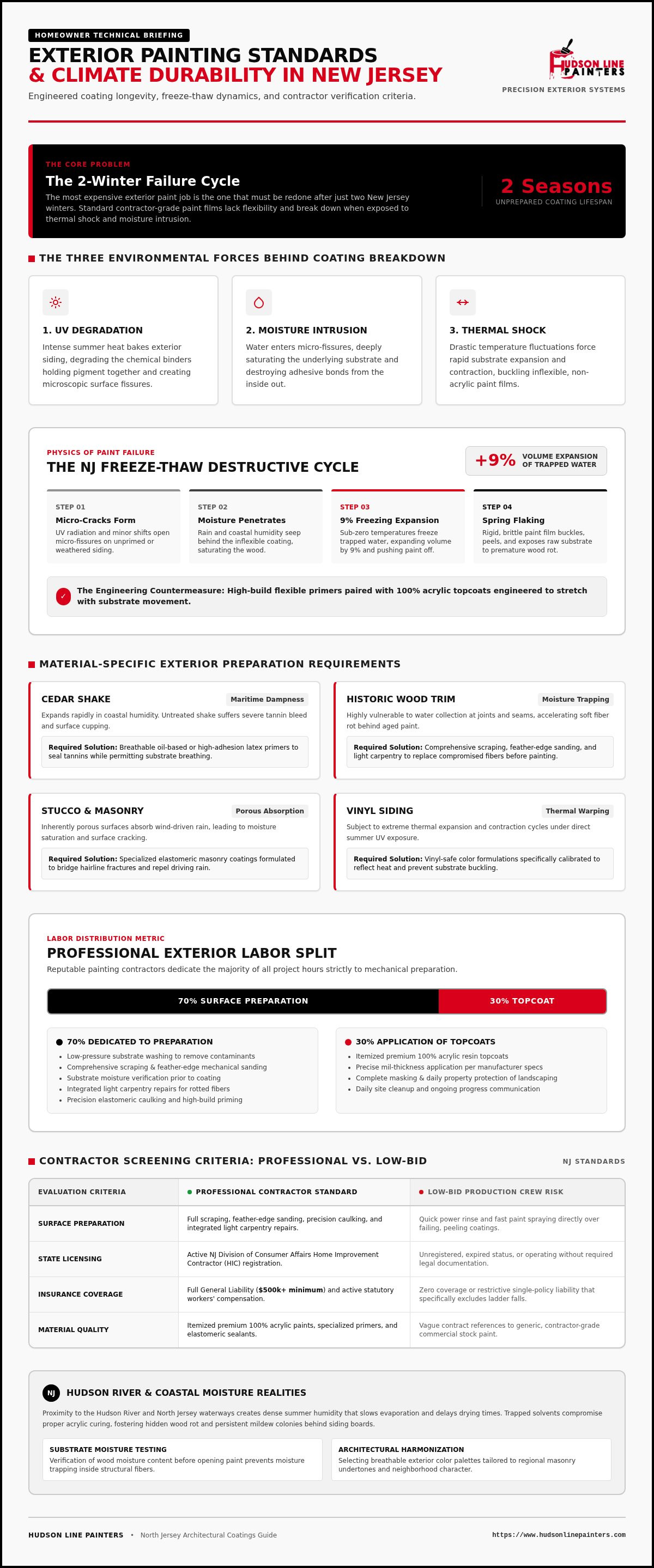
Exterior paint failure rarely happens by accident. In Northern New Jersey, it is the direct result of three relentless forces: moisture intrusion, thermal shock, and ultraviolet degradation. When summer sun bakes siding, UV rays break down the binder holding paint pigments together. Once that protective barrier weakens, microscopic fissures open. Water enters these voids, saturating the substrate and breaking the adhesive bond from the inside out. Understanding the science of paint formulation reveals why basic production crews fail so quickly here; without premium acrylic binders engineered for regional weather extremes, standard topcoats crack, blister, and peel within two short seasons.
Every home exterior reacts differently to our harsh local environment, demanding tailored preparation for each specific material:
- Cedar Shake: Expands rapidly with maritime dampness, requiring breathable oil-based or high-adhesion latex primers to prevent tannin bleed and surface cupping.
- Historic Wood Trim: Highly susceptible to moisture traps, needing comprehensive scraping, sanding, and light carpentry to replace soft fibers before application.
- Stucco and Masonry: Inherently porous surfaces that absorb wind-driven rain, calling for specialized elastomeric masonry coatings that bridge hairline fractures.
- Vinyl Siding: Prone to severe thermal expansion and contraction, necessitating vinyl-safe paint colors formulated to reflect heat rather than absorb it.
The Impact of NJ Freeze-Thaw Cycles on Siding Adhesion
Thermal shock in residential architectural coatings occurs when rapid, drastic temperature shifts force exterior siding to expand and contract faster than an inflexible paint film can tolerate. During North Jersey winters, trapped moisture behind siding micro-cracks repeatedly freezes, expands by nine percent, and pushes the coating away from the wood. By spring, rigid films buckle and flake. Experienced exterior house painters NJ homeowners rely on counteract this destructive cycle by applying high-build, flexible primers and 100% acrylic topcoats engineered to stretch with shifting substrates.
Hudson and Bergen County Humidity and Moisture Challenges
Proximity to the Hudson River and coastal waterways brings dense, prolonged summer humidity. Excess air moisture slows evaporation, which can delay drying times, trap solvents, and compromise proper acrylic curing. Over time, humid air trapped behind unventilated boards fuels hidden wood rot and stubborn mildew colonies. Vetted exterior house painters NJ residents trust address these microclimates by testing substrate moisture levels before opening a can of paint. Explore complete weatherproofing strategies across our full suite of professional exterior painting services.
How to Vet and Choose Exterior House Painters in NJ: A Homeowner Checklist
Hiring the right contractor protects both your real estate investment and your daily peace of mind. While low bids can tempt any homeowner, rock-bottom estimates usually hide omitted preparation, uninsured laborers, and generic paints that fail within seasons. Reputable painters invest approximately 70% of total project labor strictly into surface preparation, dedicating only 30% to applying topcoats. When scouting exterior house painters NJ homeowners should weigh operational standards carefully before signing any agreement.
| Evaluation Criteria | Professional Painting Contractor | Low-Bid Production Crew |
|---|---|---|
| Surface Preparation | Scraping, feather-sanding, caulking, and integrated light carpentry | Quick power rinse and fast paint spray over failing coatings |
| State Licensing | Active NJ Division of Consumer Affairs HIC registration | Unregistered, expired status, or operating without documentation |
| Insurance Coverage | Full general liability ($500k+ minimum) and active workers' comp | Zero coverage or single-policy liability that excludes ladder falls |
| Material Specifications | Itemized premium 100% acrylic paints and specialty primers | Vague references to contractor-grade commercial stock |
Legal Credentials: NJ HIC Registration and Comprehensive Insurance
New Jersey law mandates that residential painting contractors register as Home Improvement Contractors (HICs) through the Division of Consumer Affairs. Never rely on verbal assurances. Ask for the contractor's six-digit HIC registration number and verify that their status is current. For historic homes constructed before 1978, confirm your painter follows federal lead-safe work practices to contain toxic dust during preparation. Demand a current Certificate of Insurance sent straight from their broker showing both commercial general liability and workers' compensation, shielding you from third-party injury claims on your property.
Evaluating Contractor Scopes: Preparation Depth vs. Surface Coating
A legitimate proposal details every step of site preparation. It should outline mildew removal, feather-edge sanding, bare wood priming, and joint sealing rather than offering a one-line summary. Clarify crew consistency early. Ask whether the business employs dedicated, background-checked craftsmen or passes the job to unvetted sub-crews. Meticulous job site etiquette, including quiet operations, clean staging areas, and protective drop cloths, reflects true professional discipline.
Contract Terms, Warranties, and Transparent Milestones
Red flags include demands for large upfront cash deposits before materials arrive or crews step on site. Professional contracts establish clear milestone payments linked to completed phases: initial deposit, post-preparation inspection, and final walk-through approval. Ensure your contractor provides an explicit written workmanship warranty alongside the manufacturer's paint warranty. If you are ready to plan your upcoming renovation with trusted exterior house painters NJ residents recommend, schedule an on-site consultation through our contact page.
The 5-Phase Exterior Painting Process for Long-Lasting Protection
Durable curb appeal requires an unyielding, methodical workflow. High-volume crews often rush straight to spraying topcoats, but lasting protection demands a disciplined procedural framework. Reputable exterior house painters NJ homeowners hire follow a strict multi-phase protocol that addresses biological growth, failing paint films, and substrate damage before fresh coatings touch your siding.
Here is how a systematic five-phase restoration unfolds on site:
- Low-Pressure Chemical Cleansing: Eliminating surface oxidation, embedded grime, and organic spores without etching the substrate.
- Mechanical Scraping and Sanding: Removing loose, flaking layers back to sound wood or masonry and smoothing transition borders.
- Integrated Carpentry and Sealing: Replacing localized rot and securing dynamic joints with flexible exterior sealants.
- Substrate-Specific Priming: Applying specialized bonding, masonry, or stain-blocking primers to establish an enduring chemical anchor.
- Precision Topcoat Application: Applying two uniform finish coats to achieve optimal wet-film thickness for maximum weather resilience.
Surface Preparation: Washing, Scraping, and Feather Sanding
Long before picking up a brush, technicians wash the structure using biodegradable cleansing agents to eliminate road salt, airborne soot, and mildew colonies. High-pressure blasting can easily gouge soft cedar, which is why our crews prioritize gentle, controlled washing. Review our detailed approach to professional power washing to see how low-pressure cleaning protects delicate building materials. After drying, painters mechanically scrape all failing paint and feather-sand sharp edges to create a smooth, clean mechanical profile ready to lock onto new primer.
Integrated Light Carpentry and Moisture Sealing
Painting over decaying timber guarantees premature coating failure within months. Experienced exterior house painters NJ residents trust inspect vulnerable corner boards, soffits, fascia, and window sills for soft wood rot before proceeding. Resolving localized damage through precise light carpentry replacements restores structural integrity without forcing homeowners into expensive total replacements. Craftsmen then bridge siding gaps and window trim seams with commercial-grade elastomeric caulking, creating a flexible barrier that blocks wind-driven rain while absorbing seasonal structural movement.
Priming and Premium Topcoat Application Techniques
Different materials demand custom chemical foundations. Bare exterior wood requires slow-drying, oil-based or premium stain-blocking primers to seal tannins, while porous masonry and stucco call for alkali-resistant acrylic bonding primers. For lasting protection against Northeastern weather, professional painters apply coatings to achieve a minimum dry-film thickness of 4 to 5 mils across two finish coats. Technicians combine airless sprayers with immediate hand back-brushing, forcing the paint deep into the wood grain for uniform coverage, deep color retention, and maximum longevity.
Exterior Color Consultation: Selecting Palettes for New Jersey Architecture
Selecting exterior paint colors involves far more than picking pleasant shades from a swatch strip. In Northern New Jersey, curb appeal relies on aligning your color vision with the fixed architectural masonry and the broader neighborhood context. Unchanging structural elements like red brick chimneys, fieldstone foundations, and charcoal asphalt shingles possess warm or cool undertones that dictate your siding palette. Seasoned exterior house painters NJ homeowners depend on evaluate these existing textures first, ensuring your new finish complements rather than clashes with your home's permanent features.
Matching Palettes to Regional Architectural Styles
Our region boasts exceptional architectural diversity, each style calling for a tailored color strategy:
- Victorian and Queen Anne: Complex trim layers benefit from multi-hue historic schemes, using deep olives, rich terracottas, and aubergine accents on architectural millwork.
- Suburban Split-Levels and Colonials: Modern earthy neutrals like Universal Khaki, soft sage, or warm greiges paired with crisp off-white trim elevate curb appeal without feeling stark.
- Historic Hudson County Brownstones: Preserving exposed brownstone masonry requires restrained accents, using classic jet black, rich navy, or deep bronze across front doors and decorative wrought-iron railings.
Testing Swatches Under Variable Natural Lighting
Never choose an exterior color based solely on indoor showroom lighting. Natural daylight shifts dramatically throughout the day, transforming how pigments appear on your siding. A creamy neutral that looks balanced under midday sun can read starkly cold on a north-facing facade at dawn. Professional crews brush large sample swatches directly onto multiple elevations, letting you evaluate undertones across early morning, direct noon light, and dusk. Creating a cohesive visual story between your outdoor facade and your interior entryway finishes is equally valuable; you can discover cohesive indoor color strategies through our dedicated interior painting design guides.
Balancing HOA Covenants and Historic Commission Standards
Municipal historic preservation commissions in historic enclaves like Hoboken, Englewood, and Teaneck enforce strict guidelines on exterior alterations. Repainting a historic property often requires formal color board submissions, historically accurate palettes, and commission approval before any brush touches the trim. Similarly, suburban Homeowners Associations maintain pre-approved color registries to maintain community harmony. Experienced exterior house painters NJ residents trust understand these local governance steps, assisting homeowners in preparing paint submissions that prevent costly fines or mandatory repaints.
Explore exterior painting design alignment with Hudson Line Painters
Maximizing Your Investment: Maintenance and What to Expect on Project Day
A successful exterior project relies as much on operational discipline as it does on brush technique. From the morning your crew arrives to the final walk-around, clear site protocols protect your property and ensure a stress-free experience. Reliable exterior house painters NJ homeowners trust treat your grounds with the same meticulous care they apply to your siding, maintaining clean staging zones and consistent daily communication from start to finish.
Job Site Etiquette, Landscaping Protection, and Safety
Professional property protection starts before any equipment is unloaded. Quality crews avoid lightweight plastic sheeting over shrubbery, using breathable canvas drop cloths instead so delicate foundation plantings and perennial beds don't overheat under the sun. Technicians carefully mask exterior lighting fixtures, protect outdoor air conditioning units from overspray, and move patio furniture safely out of the work zone. Contractors should also designate clear parking and material staging areas, keeping your driveway functional and minimizing daily household disruption.
The Final Walk-Through Inspection and Punch List Protocol
Once topcoats dry, your project manager should guide you through a structured inspection before requesting the final milestone payment. Here is what to evaluate during the walk-through:
- Lighting Conditions: Inspect siding elevations under indirect, diffused natural light rather than blinding midday glare to catch any subtle sheen irregularities or flashing.
- Transition Lines: Verify razor-sharp paint edges between fascia boards, window trim, soffits, and primary siding surfaces.
- Cleanliness and Cleanup: Confirm that masking tape, scraping debris, and paint chips have been vacuumed from garden beds and walkways.
Document every small touch-up on a formal punch list so technicians can resolve details promptly while equipment is still on site.
Routine Exterior Maintenance to Extend Paint Lifespan
Preserving your new finish demands simple, ongoing care. Conduct an annual spring inspection around perimeter trim, checking expansion joints and sill corners for hairline caulk separations caused by winter shifting. A gentle bi-annual garden-hose rinse or mild low-pressure wash removes atmospheric soot, pollen, and coastal salt deposits that degrade clear resins over time. When you are planning full-scale interior or outdoor upgrades, evaluate our complete residential painting services to protect every level of your property investment.
Protect Your Investment With Proven Craftsmanship
Safeguarding your home against Northern New Jersey's freeze-thaw cycles and coastal dampness requires far more than cosmetic surface brushing. Long-term durability depends on selecting licensed contractors who allocate 70% of their labor to exhaustive surface washing, feather-sanding, and integrated light carpentry. When you partner with the right team, you eliminate the stress of premature peeling and gain enduring curb appeal that elevates your property's value.
Since 2018, Hudson Line Painters has delivered peace of mind across Bergen, Hudson, and Union Counties through disciplined job site protection, dedicated project management, and unyielding multi-step preparation. If you want exterior house painters NJ homeowners trust for uncompromising standards and transparent communication, our craftsmen are prepared to bring your vision to life.
Take the first step toward lasting weather protection and transform your residence with confidence today.
Frequently Asked Questions
How often should a house exterior be painted in New Jersey?
Most New Jersey homes need exterior repainting every five to eight years, depending on siding material and exposure to weather. Wood siding and trim usually require fresh protection closer to every five to seven years because of heavy freeze-thaw cycles. Modern 100% acrylic latex paints applied over properly prepared surfaces can extend this lifecycle beyond eight years. Stucco and masonry often endure longer, while coastal properties need earlier recoating.
What is the best time of year to hire exterior house painters in NJ?
Late spring through mid-autumn provides the ideal climate conditions for hiring exterior house painters in NJ. Consistent ambient temperatures between 50 and 85 degrees Fahrenheit allow acrylic latex formulations to cure properly without thermal stress. May, June, September, and October typically offer moderate humidity and fewer sudden thunderstorms across Bergen and Hudson Counties. Booking early ensures you secure optimal dry weather windows before high summer humidity arrives.
Can exterior painters repair rotted wood trim before painting?
Yes, professional painters often provide integrated light carpentry repairs to replace localized trim rot before applying primers. Skilled craftsmen routinely inspect and replace decayed wood on window sills, fascia boards, soffits, and exterior corner casing. While painters do not take on major structural framing renovations, addressing surface-level wood decay ensures that new coatings bond securely to sound lumber, stopping moisture intrusion before it spreads into the house frame.
How do I verify if a painting contractor is licensed in NJ?
You can verify a contractor's legal standing by searching the New Jersey Division of Consumer Affairs online license database. In New Jersey, residential painting contractors must hold an active Home Improvement Contractor (HIC) registration rather than a standalone painting trade license. Ask the contractor for their official registration number, then verify active status and ensure no unresolved consumer complaints exist. Always confirm their broker provides proof of general liability and workers' compensation.
What happens if it rains immediately after exterior paint is applied?
Sudden rain before exterior paint dries will dilute uncured resins, creating water spotting, streaks, and uneven adhesion. While modern acrylic topcoats resist light rain within two to four hours under dry conditions, heavy downpours can wash uncured paint off the siding. If unexpected showers damage a fresh coat, experienced exterior house painters NJ homeowners hire will allow the surface to dry completely, sand down blotched areas, and reapply an even finish coat.
How long does a professional exterior painting project usually take?
A standard residential exterior painting project typically takes three to seven working days to complete. Total project duration varies based on home size, siding condition, and the amount of preparation needed. Thorough crews devote the initial two to three days exclusively to washing, scraping, feather-sanding, and carpentry repairs. Weather conditions also impact timing, as high moisture or morning dew requires brief drying intervals between primer and topcoat applications.
Is power washing always necessary before exterior house painting?
Yes, thorough surface washing is an essential first step before painting any exterior siding or trim. Applying fresh coatings over unwashed siding traps dirt, chalking residue, airborne salt, and active mildew spores beneath the paint film, causing rapid peeling. Professional contractors use low-pressure washing paired with specialized cleaning solutions to cleanse delicate wood and masonry thoroughly without gouging soft siding fibers, ensuring that subsequent primers form a dependable mechanical bond.


