

What if the reason a fresh paint job still looks rough isn’t the paint, but the trim beneath it? A window sill that feels soft, looks cracked, or shows signs of rot needs attention before it is painted. With light carpentry trim repair NJ homeowners can address damaged wood and prepare the surface before the first coat goes on.
Hudson Line Painters provides light carpentry as part of its home improvement and painting work. That means small trim repairs can be planned alongside surface preparation and painting, keeping related work connected.
This is especially useful in older New Jersey homes, where distinctive trim details call for careful maintenance. In this article, you’ll learn how trim repair supports a cleaner paint finish, what signs to look for, and how to decide whether a damaged section may be repaired or needs replacement. We’ll also cover the steps that prepare trim for paint and help maintain your home’s appearance.
Key Takeaways
- Repairing damaged trim before painting creates a more even finish and avoids covering up underlying wood problems.
- Soft or deteriorating wood around exterior windows and doors can signal damage that needs attention.
- The repair-versus-replace framework in this article, including the 25% guideline, can help you think through next steps for damaged boards.
- Light carpentry trim repair NJ homeowners need can help preserve distinctive details while preparing surfaces for paint.
- Well-maintained trim contributes to a cared-for appearance and supports your home’s curb appeal.
Why Light Carpentry is the Essential Foundation for NJ Painting Projects
A fresh coat of paint can sharpen a room or refresh a home’s exterior, but it can’t make damaged trim sound again. Light carpentry covers smaller wood repairs, such as repairing worn or deteriorated trim, rather than work on structural, load-bearing walls. Repairing trim first provides a more stable, even surface for paint and helps prevent visible flaws from showing through the finish.
Painting over compromised wood can result in premature peeling, cracking, or an uneven appearance. If a sill is soft or a trim edge is broken, paint may conceal the issue temporarily, but it won’t restore the wood beneath it. Addressing the damage before painting helps protect the finish and keeps a repair from being overlooked during cosmetic work.
That’s the practical value of light carpentry trim repair NJ homeowners can include in a painting project: repair what can be preserved, then refinish it as part of a coordinated plan. Replacement may make sense when damage is extensive, but it isn’t automatically the first step. If the trim is repairable, focused work can preserve more of the existing material and avoid replacing sound sections to fix a localized problem.
The Synergy of Carpentry and Paint
Light carpentry connects localized wood repair with the final finish. The craft of Carpentry includes precise work on trim and molding, where fit and detail matter as much as appearance. When carpentry and painting are coordinated, the repair can be planned alongside paint preparation rather than handed off as a separate task. This helps create cleaner transitions where wood trim meets plaster or drywall.
Hudson Line Painters includes light carpentry in its painting preparation, connecting repair work with the finish that follows. The sequence matters: damaged areas are addressed before paint is applied, helping the finished surface look more cohesive. This approach is useful in older New Jersey homes, where existing trim details may call for maintenance rather than wholesale replacement.
Saving NJ Homeowners Time and Stress
Managing separate carpentry and painting crews can involve coordinating schedules, explaining the project more than once, and arranging for one trade to finish before the next begins. Coordinating repair and painting through one company helps keep the work sequence connected. If your project includes room updates as well as trim work, Hudson Line Painters’ interior painting services can be part of the same plan.
For homeowners, the benefit is practical: fewer handoffs and a clearer sequence, with attention to both the trim’s condition and the finished paint. Careful preparation helps keep the work organized and supports a polished result.
Identifying Common Trim Damage in North Jersey Homes
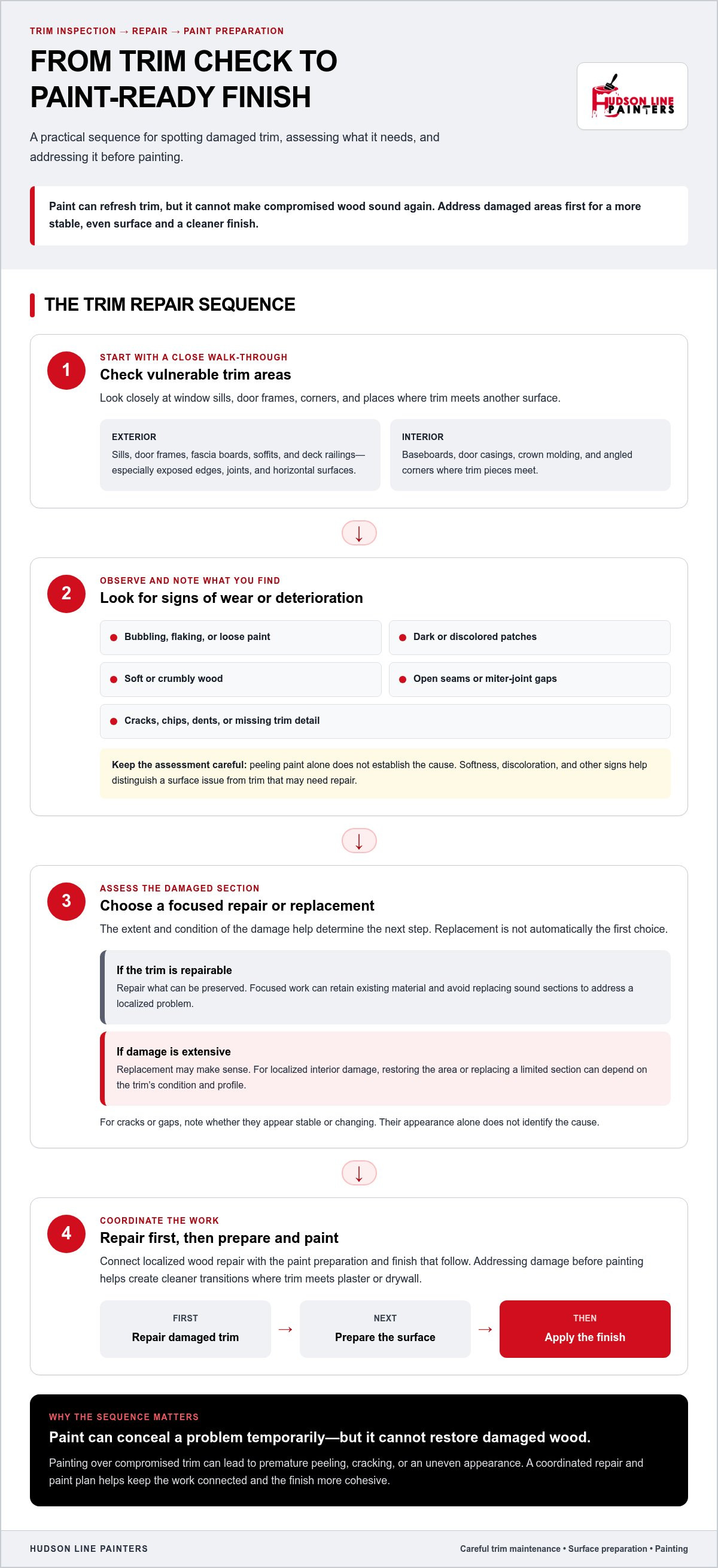
Trim damage doesn’t always show up as a missing piece of wood. Seasonal temperature changes can make wood expand and contract, while wet or humid conditions expose exterior trim to moisture. As paint wears or joints open, water can reach vulnerable edges and contribute to deterioration. During a walk-through, look closely at window sills, door frames, corners, and places where trim meets another surface.
Check for bubbling or flaking paint, dark or discolored patches, soft spots, and wood that feels crumbly or gives under light pressure. These signs can point to moisture damage, although peeling paint alone doesn’t establish the cause. A careful inspection helps distinguish a surface issue from trim that needs repair before it can be prepared and painted.
Exterior Hazards: Rot and UV Damage
Exterior trim takes a direct beating from sun and weather. Fascia boards, soffits, deck railings, window sills, and door frames deserve particular attention because exposed edges and joints can let moisture in as protective coatings break down. Sunlight can fade and weather paint, leaving wood less protected. In humid conditions, damp trim may take longer to dry, so recurring peeling or blistering deserves more than another coat.
Look for loose paint, open seams, discoloration, and soft wood, especially near joints or horizontal surfaces where water can linger. Hudson Line Painters addresses trim as part of exterior preparation, and exterior painting services can bring repair and refinishing together.
Interior Wear: Impact and Settlement
Inside the home, damage is often localized. Vacuum heads and foot traffic can dent or chip baseboards, while pets may scratch or chew door casings, wearing away the profile at corners and lower edges. Small losses of detail can stand out once fresh paint makes nearby trim look crisp. Depending on the condition and profile, repair may involve restoring a damaged area or replacing a limited section while maintaining a consistent appearance.
Older homes, including Bergen County houses and Hudson County brownstones, may also show fine cracks where crown molding meets a wall or ceiling. Seasonal movement and building settlement can contribute to gaps, but their appearance alone doesn’t identify the cause. Note whether a crack is stable or appears to be changing, and include the trim in the repair assessment.
Pay attention to miter joint separation, a gap where two trim pieces meet at an angled corner. As wood moves or a joint loosens, the seam can open. Paint may bridge it temporarily, but a visible split can return or interrupt a clean paint line. In older homes, preserving sound original material can matter as much as achieving a neat finish. The National Park Service’s guide to Repairing Historic Wooden Windows describes approaches to damaged wood that can inform careful maintenance. A focused assessment for light carpentry trim repair NJ homeowners need can help identify which details are repairable and prepare them for refinishing.
Repair vs. Replace: A Homeowner’s Framework for Trim
Choosing between repairing and replacing a trim board starts with its condition, not simply its age or appearance. Check whether the wood is firm, whether damage is localized, and whether the piece remains securely in place. A small damaged area may be repairable. Widespread softness, distortion, or decay can make replacement the more sensible long-term choice.
The “25% rule” is best treated as a rough screening prompt: if about a quarter or more of a board appears soft or rotted, take a closer look at whether replacement makes sense. It isn’t a universal standard or a substitute for assessing the whole piece. Damage may be concentrated in a critical joint, or appear extensive while much of the board remains sound. The source of moisture matters too, since repairing trim without addressing ongoing exposure can lead to recurring problems.
When Repair Is the Superior Choice
Repair can make sense for minor dings, small cracks, loose molding, or a limited damaged section when the surrounding trim remains firm. In older Englewood or Hoboken homes, retaining original profiles may help preserve distinctive character that can be difficult to reproduce. A repair may use suitable wood filler or epoxy, followed by shaping, sanding, and finishing to blend with adjacent surfaces. The goal is a sound, visually consistent result, not simply hiding damage.
When Replacement Is Unavoidable
Consider replacement when dry rot or insect damage has weakened much of a board, or when severe warping prevents it from sitting flush. A new piece can restore a stable base for finishing, but matching older molding takes care. Replacing only one section can leave a profile or detail that looks out of place. Hudson Line Painters handles wood replacement as part of its residential painting process, coordinating trim work with surface preparation and painting.
Material choice matters, too. Wood may be the right fit when preserving original details or matching existing trim is a priority. For some exterior applications, homeowners may consider PVC as a low-maintenance alternative, weighing its suitability for the location and the appearance of nearby materials. It isn’t a universal substitute for historic woodwork.
Compare the work involved, not just the amount of new material. Repair may require careful removal of damaged areas, filling, shaping, and sanding. Replacement can involve removing a longer run, finding a close profile, fitting joints, and refinishing adjoining surfaces. Light carpentry trim repair NJ homeowners choose should account for the board’s condition, the effort needed for a neat match, and the value of preserving sound original trim. That assessment helps avoid replacing more than necessary or investing in a repair that won’t address the underlying damage.
The Hudson Line Process: Professional Trim Restoration and Finishing
A lasting trim repair depends on the work beneath the final coat. Hudson Line Painters approaches light carpentry as part of surface preparation, assessing the damaged area, stabilizing or replacing wood where appropriate, and preparing the surface for paint. That sequence connects the repair and finish rather than relying on paint to disguise an unresolved problem.
First, the trim is inspected for soft or rotted sections, loose joints, and signs of moisture. Moisture is assessed before repair because damp wood can undermine filler, primer, and paint. If the material isn’t dry enough, applying a finish too soon can trap a problem beneath the surface. Rotted material is then removed with care to limit disturbance to nearby trim, plaster, or drywall.
For replacement, matching the existing profile is important, particularly in older homes where molding may have distinctive contours. A close match helps the new section sit naturally beside the original. Careful fitting and sanding can reduce visible transitions before primer and paint bring the surfaces together.
Preparation and Stabilization
Loose trim is secured before filling or finishing. Where appropriate, finish nails can be set below the surface so they don’t interrupt sanding or painting. A stable base helps the repaired area sit flush. Soft but repairable wood may be treated with a suitable hardener before filling, while severely deteriorated sections call for a different solution. A high-quality primer helps seal and prepare raw wood so the finish coat adheres more consistently.
The Sand-Prime-Fill-Sand Cycle
Once the repair is stable, methodical surface preparation builds a smoother finish. Sanding removes rough edges, primer prepares exposed wood, and filler addresses small imperfections or nail depressions. After the filler has set, another sanding pass blends the repair into the surrounding trim. The surface is then ready for finish coats. Rushing any stage can leave ridges, dents, or rough patches visible under paint.
The Final Aesthetic Touch
At the wall-to-trim joint, appropriate caulking can close small gaps and create a crisp visual line. The surrounding wall matters too: uneven plaster or drywall can make neatly repaired trim look unfinished. Coordinating those adjoining surfaces is part of thoughtful preparation, especially where the trim profile meets a textured or repaired wall.
Paint sheen also affects appearance and upkeep. Satin offers a softer look, while semi-gloss has more reflectivity and is often chosen for trim that needs regular cleaning. The right option depends on the room, existing finishes, and desired appearance. Hudson Line Painters brings carpentry and painting together to support a clean, durable result while keeping the home’s existing details in view.
Elevating Your Home’s Value with Expert Trim and Painting Services
Well-kept trim adds definition to a home’s rooms and exterior. For buyers and appraisers, visible condition can shape the overall impression of how a property has been maintained, though trim alone doesn’t determine a home’s value. Peeling paint, gaps, or damaged casing may distract from otherwise attractive features. Addressing these details before listing helps present a more finished, cared-for home.
Exterior trim matters from the curb. Worn fascia, cracked window trim, or a deteriorating entryway can make a property look neglected, even when the rest of the exterior is in good shape. Repairing vulnerable wood and refinishing it helps restore a consistent appearance. It can also address openings where moisture may reach surrounding materials. Prompt maintenance can reduce the chance that a localized issue develops into more extensive damage.
Maximizing ROI for NJ Sellers
Before staging, focus on details buyers see quickly: the front entry, baseboards, door casings, and trim around kitchen cabinets or windows. Loose molding or chipped paint can stand out in listing photos and during a walkthrough. A targeted repair and paint plan can refresh these high-visibility areas without replacing every board. Hudson Line Painters can coordinate trim work with interior painting to help create a cohesive presentation from room to room.
Think of the benefit as thoughtful preparation, not a guaranteed return. Repairing sound trim rather than replacing it wholesale can preserve existing details and avoid unnecessary work, while damaged sections can be addressed before they detract from the finished appearance. A well-presented home gives buyers a clearer view of its existing character and care.
Commitment to Local Craftsmanship
Hudson Line Painters serves homeowners in Hudson County, Union County, and Bergen County, including Hoboken, Edgewater, Fort Lee, Teaneck, Hackensack, Englewood, Cliffside Park, Leonia, Palisades Park, and Ridgefield. A well-organized project treats the home with respect, keeps the work area orderly, and gives preparation careful attention. Clear communication helps homeowners understand how trim repair fits into the painting process, while keeping the details that make each home distinct in view.
For sellers and long-term homeowners alike, light carpentry trim repair NJ can be a practical way to maintain existing woodwork and prepare it for a fresh finish. The right plan depends on the trim’s condition and the appearance you want to preserve. Addressing repairs before painting supports a polished result and helps you make informed choices about what to repair, refinish, or replace.
Discuss your light carpentry and painting project
Start Your Trim Project with a Clear Plan
Start by deciding what you want your home’s trim to do: preserve original character, sharpen a room’s finish, or give the exterior a more cared-for appearance. Note the areas that concern you and how you want them to look after the work. That gives the repair and painting plan a practical starting point.
With light carpentry trim repair NJ homeowners can approach painting as more than a color change. A thoughtful plan considers the condition of the wood, the finish you want, and how the work fits into your home improvement goals. Hudson Line Painters serves local homes across Hudson, Union, and Bergen Counties.
Give your trim the attention it deserves, and take the next step toward a finish that feels right for your home.
Your home’s next refresh can begin with a sound, carefully finished detail.
Frequently Asked Questions
What is considered “light carpentry” for a painting company?
For a painting company, light carpentry means smaller wood repairs that can be coordinated with painting and home maintenance, rather than major structural work. Examples include securing loose trim, repairing a damaged casing, or preparing a localized wood repair for paint. Hudson Line Painters provides light carpentry alongside painting, so related trim work can be planned as part of the project.
Can you match the existing crown molding in my historic NJ home?
Hudson Line Painters approaches molding repairs with attention to the existing profile and surrounding details. Matching involves comparing the molding’s shape, scale, and visible contours, then planning the repair or replacement to sit naturally beside it. Older homes in Hoboken, Englewood, and other North Jersey communities may have distinctive trim, so the specific profile and condition guide the work.
Do I need to hire a separate contractor for wood rot repair before you paint?
For light wood rot repair associated with trim, Hudson Line Painters can coordinate the carpentry with painting, so a separate contractor isn’t automatically needed for that work. The extent of the damage should be identified before finishing begins. Major structural damage falls outside the company’s scope of light carpentry and painting-related home improvement.
How long does a typical trim repair and painting project take?
Project timing depends on how much trim needs attention, whether replacement pieces must be fitted, and how much preparation and painting the surfaces require. A single interior casing repair differs from work spanning several rooms or exterior elevations. Drying time between repair materials, primer, and paint can also affect the schedule. The project plan should reflect the areas and finish work involved rather than assume one timeline fits every home.
What kind of wood or materials do you use for trim replacement?
The right replacement material depends on where the trim is located, the existing profile, and the finish you want. In a historic interior, matching the character of existing woodwork may be a priority. For some exterior applications, homeowners may consider low-maintenance alternatives. The replacement should suit the location and blend with nearby details, rather than applying one material choice to every home.
Will the repaired trim look different from the rest of the room?
The goal is to make the repair blend with the surrounding trim, but the final appearance depends on the condition of the existing finish, the profile, and how much of the area is painted. A freshly painted casing, for example, may look cleaner than adjacent trim with older wear. Coordinating preparation and finish across the connected section can help avoid a noticeable patch or abrupt change in sheen.
Is light carpentry repair included in the initial painting estimate?
Light carpentry is part of Hudson Line Painters’ home improvement and painting work, and the project scope determines which repairs and finish work are included. A clear estimate identifies the areas being repaired and painted so you can see how the work fits together. Repairing one window casing is a different scope from addressing trim throughout multiple rooms or around an entire exterior.
What happens if you find major structural damage during a trim repair?
Major structural renovations are outside Hudson Line Painters’ scope, which focuses on light carpentry and painting-related home improvement. If trim work reveals damage that appears to involve a larger structural issue, that distinction should be made clear before cosmetic repairs proceed in the affected area. This helps ensure that paint or trim work is not treated as a substitute for addressing a more extensive underlying problem.


