

Before pressure washing brick exterior walls, inspect the brick face and mortar joints. Loose, cracked, or worn areas can let water enter and may be vulnerable to forceful cleaning. The right approach starts with the condition of the masonry, not the equipment.
Brick is porous, so an overly aggressive method or unsuitable cleaner can damage its surface or mortar. In New Jersey, damp weather, summer humidity, and freeze-thaw cycles also make timing and drying important parts of the maintenance decision.
This guide explains when pressure washing may be appropriate, what to inspect and prepare beforehand, and when a gentler cleaning method may be a better fit. Hudson Line Painters provides power washing for homes across Northern New Jersey, with the cleaning approach suited to the surface and project.
Key Takeaways
- Assess the brick face and mortar before deciding whether pressure washing brick exterior is suitable.
- Work cautiously: test a discreet area, clean gently, rinse without forcing water into joints, and reassess the masonry.
- Compare pressure washing, lower-pressure rinsing, and manual cleaning to find the gentlest effective approach for the wall.
- Plan around site preparation, the weather forecast, and the cleaning product’s instructions for application and drying.
- Professional power washing can help when a wall is difficult to access, its condition is uncertain, or nearby surfaces need careful handling.
Pressure Washing Brick Exterior: What to Check Before You Start
Pressure washing brick exterior means removing grime from masonry with controlled water pressure and a method suited to the surface. The aim is to clean the brick without forcing water into joints or stripping away a fragile face. A general overview of pressure washing explains how water pressure is used for cleaning, but brick requires more care than simply choosing a machine and starting.
Inspect the masonry before selecting equipment. The condition of the brick and mortar should determine how, or whether, water cleaning proceeds. Surface dirt and organic growth are cleaning concerns; cracked joints, loose pieces, or deteriorated masonry are condition concerns. Cleaning won’t repair those problems, and directing water at vulnerable areas may worsen them or push moisture into openings.
New Jersey homes can have varied masonry, even within the same neighborhood. Age alone doesn’t determine whether a wall is suitable for pressure washing. Brick type, past repairs, exposure, and maintenance history all matter. Don’t assume every older wall is too delicate to clean or that every wall can take the same treatment.
Which brick and mortar conditions deserve extra caution?
Inspect the wall in good light. Look for mortar that is cracked, crumbling, loose, recessed, or visibly deteriorated, as well as chipped or flaking brick faces. These signs can point to weak areas where water may enter. Have damaged joints assessed before water cleaning begins. Note previous coatings or repairs, which may respond differently from surrounding masonry, and any areas that remain damp. Persistent dampness is a reason to pause and understand the condition before adding more water.
What can New Jersey weather mean for exterior brick?
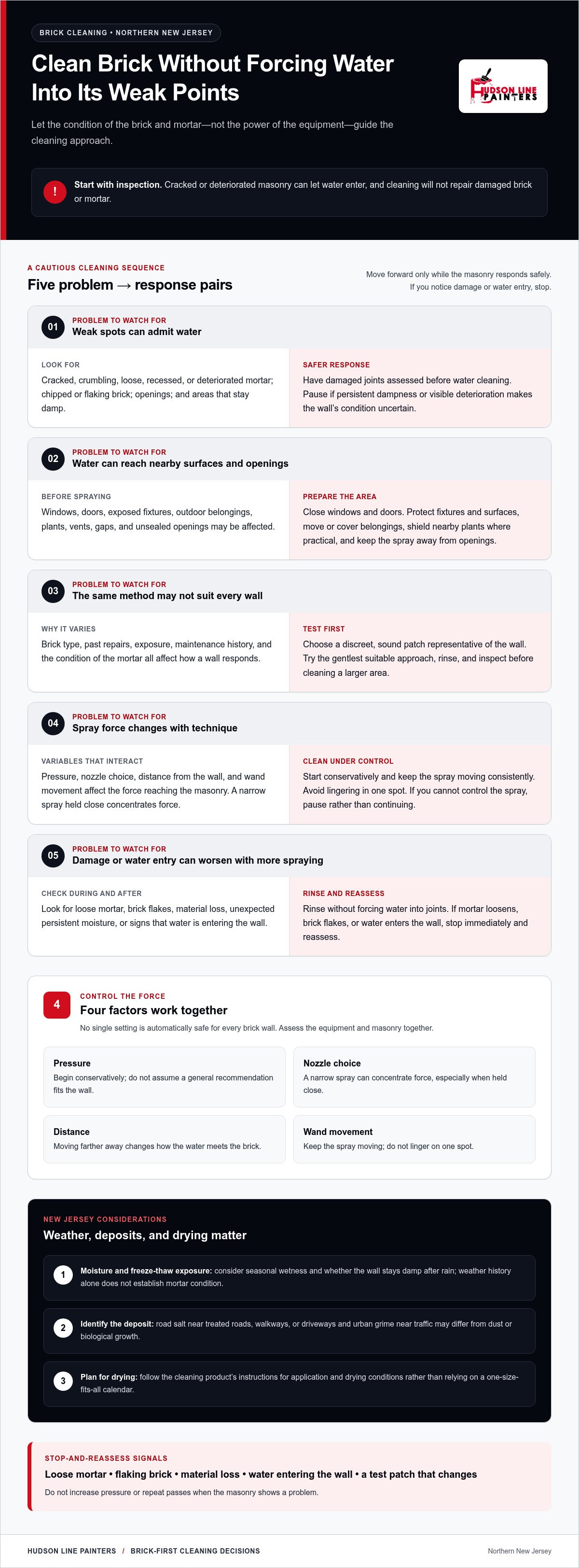
Seasonal moisture and freeze-thaw exposure are factors to consider, not proof of brick damage. A wall exposed to repeated wetting or cold may need closer inspection, but weather history alone can’t tell you whether its mortar is sound. Look for visible changes in the joints and brick face, and consider whether the wall stays damp after rain.
Road salt may affect brick near treated roads, walkways, or driveways. Urban grime may be more noticeable on walls exposed to traffic and dense development. These deposits can look different from ordinary dust or biological growth, so identify what you’re cleaning before choosing a method. Schedule work for weather that allows the surface to dry according to the cleaning product’s directions. Follow the label for application and drying conditions instead of relying on a one-size-fits-all calendar.
Hudson Line Painters provides power washing for exterior surfaces in Northern New Jersey. A close look at the masonry and its surroundings is the practical starting point for deciding how to proceed.
How to Pressure Wash Brick Without Harming the Masonry
A careful process matters more than choosing a powerful machine. When pressure washing brick exterior walls, the pressure, nozzle, distance from the surface, and wand movement all affect the force reaching the masonry. These variables work together, so no single setting is automatically safe for every brick wall. Start conservatively, watch the surface, and be prepared to stop.
Follow a measured sequence:
- Inspect the wall. Look for weak joints, damaged brick, openings, and areas that may let water behind the surface. Don’t spray a defect to see what happens.
- Protect nearby areas. Close windows and doors, protect exposed fixtures and surfaces, and move or cover outdoor items. Shield nearby plants where practical.
- Test a discreet area. Choose a sound, inconspicuous patch that represents the wall. Begin with the gentlest suitable approach, then inspect the brick and mortar.
- Clean in a controlled way. Keep the spray moving with a consistent technique rather than lingering on one spot. Avoid aiming toward vents, gaps, damaged joints, or unsealed openings.
- Rinse and reassess. Rinse without forcing water into the joints, then check the test area and surrounding masonry for changes.
Pressure, nozzle choice, distance, and wand movement can’t be judged separately. A narrow spray held close to the wall concentrates force; changing the angle or moving farther away changes how the water meets the brick. Don’t treat a general pressure recommendation as a substitute for assessing the equipment and wall together. If you can’t control the spray consistently, pause instead of continuing across a larger area.
How should you test a discreet area first?
Choose a hidden but sound section with brick and mortar representative of the rest of the wall. Apply the gentlest suitable cleaning approach, then inspect the patch after rinsing. Look for loose mortar, brick flakes, material loss, or moisture that persists unexpectedly. A small test area helps show how the masonry responds before you clean a larger section. If you see a change, stop and reassess rather than increasing pressure or repeating passes.
How do you protect the home and surrounding area?
Before spraying, close doors and windows and protect fixtures and surfaces that could be affected by water. Move patio items, tools, and other belongings out of the work area. Cover what can’t be moved, and protect nearby plants where practical. Keep the spray away from vents, gaps, unsealed openings, and damaged joints. If water enters the wall, stop rather than adding more rinse water.
Stop immediately if mortar loosens, brick begins to flake, or water appears to enter the wall. Hudson Line Painters provides a professional power washing service for projects where the wall is difficult to manage safely or the cleaning scope is extensive.
Pressure Washing vs. Soft Washing and Manual Brick Cleaning
No single cleaning method suits every brick wall. Pressure washing uses a directed stream of water to remove soil. Soft washing relies more on a suitable cleaning solution and lower-pressure application, followed by rinsing. Manual cleaning gives close control over a small area, but scrubbing can still affect a fragile brick face or weak mortar. Choose based on the masonry’s condition, the type and location of the soil, and the level of control the task requires.
Think of these methods as options, not a ranking from strongest to safest. Light surface dust or a small, localized mark may not need forceful water. A broader area of grime on stable masonry may suit a carefully controlled wash. Organic growth, embedded deposits, and staining can respond differently, so the appearance of a mark alone doesn’t show which method will work or whether a cleaner is compatible with the brick.
- Pressure washing: Can address larger areas, but the result depends on how the water is applied and how the masonry responds.
- Lower-pressure rinsing or soft washing: Reduces reliance on force. Any cleaning solution still needs to be appropriate for the brick and mortar.
- Manual cleaning: Lets you focus on a limited area, though the brush and technique must suit the surface.
When pressure washing brick exterior walls, avoid blanket rules that the method is always damaging or always safe. Even brick that looks sound can have vulnerable joints, while a weathered-looking wall may remain stable. A test area helps show how the wall responds, but it doesn’t replace judgment about the rest of the surface. If cleaning loosens mortar, flakes the brick face, or leaves unexpected persistent dampness, stop and reconsider the approach.
When might pressure washing be a reasonable option?
Sound, stable masonry can be a starting point for considering controlled pressure washing, especially when grime covers a broad area. Match the cleaning intensity to both the material and the soil. Don’t increase force simply because a stain remains. Test first and watch the surface. If the brick or joints react poorly, stop instead of making another pass or turning up the pressure.
When should a gentler cleaning method be considered?
Deteriorated mortar, fragile brick faces, or uncertain past repairs call for extra restraint and assessment. Light or localized soiling may suit a controlled rinse or careful manual cleaning rather than a forceful spray. Soft-washing solutions also require care: use only a product whose instructions support the surface and application. Don’t assume a cleaner is suitable just because it’s intended for exterior use.
The gentlest effective method depends on the wall. Choose based on the specific masonry and cleaning need, then reassess as the work proceeds.
A Brick-Cleaning Preparation Checklist for New Jersey Homeowners
A reliable brick-cleaning plan has clear stages: inspect the wall, prepare the site, test a small area, clean with control, and review the masonry after it dries. For pressure washing brick exterior walls, preparation helps protect the home and nearby surfaces. New Jersey’s changing weather also makes it important to check whether the forecast and drying conditions fit the cleaning product’s directions.
Use this checklist to keep the work organized:
- Inspect and document. Photograph existing cracks, stains, loose mortar, and previous repairs so you can distinguish existing conditions from changes after cleaning.
- Prepare the work area. Clear belongings, cover vulnerable nearby surfaces, and consider where overspray and runoff will go. Keep water and cleaning products away from openings and areas where runoff could affect property.
- Check the method and conditions. Make sure the cleaning approach suits the specific masonry, and follow the selected product’s instructions for weather, application, and drying.
- Test before proceeding. Use a discreet area to see how the brick and mortar respond before cleaning a larger section.
- Clean and review. Work in a controlled manner, then inspect the wall again after it has dried.
Plan for more than the wall itself. Doors, windows, fixtures, plants, walkways, and neighboring surfaces may be exposed to spray or runoff, so account for them before work starts. Hudson Line Painters’ professional power washing service takes the cleaning scope and surrounding surfaces into account.
What should you do before cleaning starts?
Take clear photos of areas with staining, cracks, loose mortar, or uneven repairs. Move outdoor items from the work zone and shield surfaces that could be affected by water or overspray. Review the wall’s condition, the cleaning method, and the weather together. If product instructions call for specific conditions, wait until the forecast supports them rather than starting in unsuitable weather.
What should you inspect after the brick dries?
Once the surface has dried according to the product instructions, compare it with your before-work photos. Look for newly visible cracks, loose or missing mortar, flaking brick, damp patches, or uneven cleaning that may need further assessment. Don’t seal, paint, or undertake repairs until you understand the masonry’s condition. If you’re planning a separate exterior finish project after assessing the brick, consider exterior painting as a distinct home-maintenance step.
When Professional Brick Power Washing Makes Sense in Northern New Jersey
Professional help can be useful when a brick-cleaning project is difficult to assess or manage safely. A large wall, limited access, uncertain mortar condition, or nearby painted trim, windows, and landscaping can complicate the work. These factors don’t automatically mean a wall needs pressure washing, but they do make a measured assessment more useful than choosing equipment by appearance alone.
Hudson Line Painters provides power washing in Northern New Jersey, including Hudson County, Union County, and Bergen County, as well as Hoboken, Edgewater, Fort Lee, Teaneck, Hackensack, Englewood, Cliffside Park, Leonia, Palisades Park, and Ridgefield. For homes in these communities, professional handling can be especially practical when a wall spans several elevations or sits close to surfaces that need protection. The professional power washing service takes the project scope, masonry, and surrounding property into account.
The decision isn’t simply whether to use a pressure washer. With pressure washing brick exterior walls, a professional assessment can help determine whether the masonry appears suitable for water cleaning, whether a gentler method makes more sense, and which areas need extra care. If signs of deterioration make the wall’s condition uncertain, understand the concern before cleaning rather than treating the job as only a surface-stain problem.
What does a careful professional process help manage?
A measured process considers the wall, work area, and cleaning objective. Assessment helps identify visible concerns and access challenges. Surface protection keeps nearby property in view, method selection matches the cleaning approach to the project, and controlled cleaning allows the work to be monitored as it proceeds. These steps don’t promise a particular outcome, but they help reduce uncertainty around delicate masonry and avoid preventable missteps.
How can local homeowners take the next step?
Start with a clear description of the wall: where it is on the home, which areas you want cleaned, any visible damage or previous repairs, and any tight access or nearby finishes. Photos can help show the project’s scope. This gives the conversation a practical starting point, especially if you’re unsure whether the brick needs a full wash or a more limited approach.
Hudson Line Painters offers power washing as part of its home-improvement services for Northern New Jersey homeowners. The cleaning plan depends on the masonry and the work involved, so a project discussion can focus on the wall’s condition and your priorities.
If you’re considering cleaning brick at your Northern New Jersey home, contact Hudson Line Painters to discuss your exterior cleaning project.
Make Your Next Brick-Care Decision With Confidence
Give your home’s brick a clear purpose in your broader exterior maintenance plan. You may want to refresh a prominent entryway, address grime on a side wall, or decide whether cleaning belongs before another improvement. Defining that priority keeps the project focused and makes it easier to discuss what matters most for your home.
For pressure washing brick exterior, a thoughtful plan should respect the masonry as well as the appearance you want to achieve. Hudson Line Painters provides power washing for exterior projects in Northern New Jersey. Discuss your goals and the wall’s condition to plan a practical next step.
Good exterior maintenance starts with informed choices. Assess the masonry before choosing a cleaning method, and make each maintenance decision with your home’s condition in mind.
Frequently Asked Questions
Can you pressure wash painted brick without removing the paint?
Sometimes, but pressure washing can lift paint that’s already loose or poorly bonded. Even paint that looks intact may be vulnerable to a concentrated spray, especially around edges, joints, and repaired areas. Check the coating’s condition and test a hidden spot with a gentle approach before cleaning more widely. If paint softens, flakes, or begins to peel, stop rather than trying to remove remaining marks with stronger pressure.
What PSI is safe for pressure washing brick?
There isn’t a single PSI that’s safe for every brick wall. The Brick Industry Association commonly recommends low-pressure washing in the range of 500 to 1,000 PSI and advises not exceeding 1,500 PSI; some guidance recommends staying at or below 800 PSI. Treat these as reference points, not a guarantee of safety. The nozzle, distance, equipment, and masonry condition all affect the force reaching the surface.
How often should you pressure wash a brick house?
There’s no universal schedule for pressure washing a brick house. Consider cleaning when visible buildup affects the appearance or a specific area needs attention, rather than washing automatically each season. For example, a shaded wall with recurring organic growth may need attention sooner than a sheltered, clean wall. Regular visual checks can help you spot changes early, while unnecessary washing adds moisture and wear without a clear benefit.
Can pressure washing damage brick mortar?
Yes. A forceful or poorly directed spray can loosen or erode mortar, particularly where joints are already weak. Damage may appear as missing grains, newly widened gaps, or mortar washing out during cleaning. If you notice any of these changes, stop. Don’t try to compensate with a different nozzle or closer spray. The joints may need assessment before further cleaning or other exterior work.
What causes white stains on brick after washing?
White deposits can be efflorescence, a surface residue left when moisture moves through masonry and evaporates, carrying soluble salts to the surface. A white mark alone doesn’t identify the cause or confirm damage. Note where it appears and whether it returns after drying. If it keeps reappearing, consider whether moisture is entering or lingering in that part of the wall before attempting another wash.
Is soft washing better than pressure washing for brick?
Not in every situation. Soft washing uses lower-pressure application with a cleaning solution, while pressure washing relies more on the force of the water stream. The suitable method depends on the brick, mortar, and type of buildup. A light surface mark may need little intervention; another stain may call for a compatible cleaner. Follow product directions, and don’t assume a chemical is safe for brick just because it’s made for exterior cleaning.
Can you pressure wash brick in cold weather?
Cold weather can make brick cleaning risky if the wall or rinse water may freeze before the surface dries. Freezing moisture can stress masonry, and low temperatures may also fall outside a cleaning product’s application guidance. In New Jersey, choose a mild-weather window and check both air conditions and the product label. Avoid washing if freezing temperatures are expected before the wall has had time to dry adequately.


