

Could the finish that looks toughest today create more work when it’s time to refresh your deck? That’s worth considering in New Jersey, where moisture, strong sun, and seasonal temperature swings can test an exterior coating. Comparing the staining vs painting a wood deck pros and cons means looking beyond color: the wood’s condition, any existing finish, and the deck’s exposure all matter.
It’s understandable to want a finish that protects the boards without hiding their natural grain or peeling after a few seasons. Stain typically shows more of the wood’s character and can be simpler to renew, while paint creates a more solid, opaque look and may require more involved preparation when it wears. Neither is the automatic winner.
This guide compares appearance, protection, upkeep, and preparation to help you choose a finish suited to your deck and local conditions. You’ll also learn why identifying the current coating and preparing the surface carefully matter before refinishing. Hudson Line Painters provides deck and fence staining, exterior painting, and power washing, giving homeowners a practical way to plan their project.
Key Takeaways
- Use the staining vs painting a wood deck pros and cons comparison to weigh appearance, preparation, upkeep, and how each finish may perform on your deck.
- Check the wood’s condition and identify its existing finish before choosing a new coating; those details shape the preparation needed.
- Consider where the deck gets direct sun, shade, or lingering dampness, along with seasonal exposure, when selecting a finish.
- Start with the deck itself, then weigh the look you want and the upkeep you’re prepared to handle.
- A project-specific review and careful surface preparation help align the finishing approach with the deck’s condition and desired appearance.
Staining vs. Painting a Wood Deck: What Each Finish Does
Neither stain nor paint is best for every wood deck. The right choice depends on the look you want, the boards’ condition, and how the current finish affects preparation. Paint is generally an opaque coating that creates a more uniform appearance. Stain comes in different opacity levels, so it can reveal more or less of the grain.
In short, paint prioritizes an opaque, even color, while stain offers varying degrees of color and grain visibility. Both finishes help shield exposed wood, but neither eliminates weathering. The broader idea of wood preservation includes protecting wood from factors that contribute to deterioration. A deck coating’s results depend on more than its category.
What does deck stain do to wood?
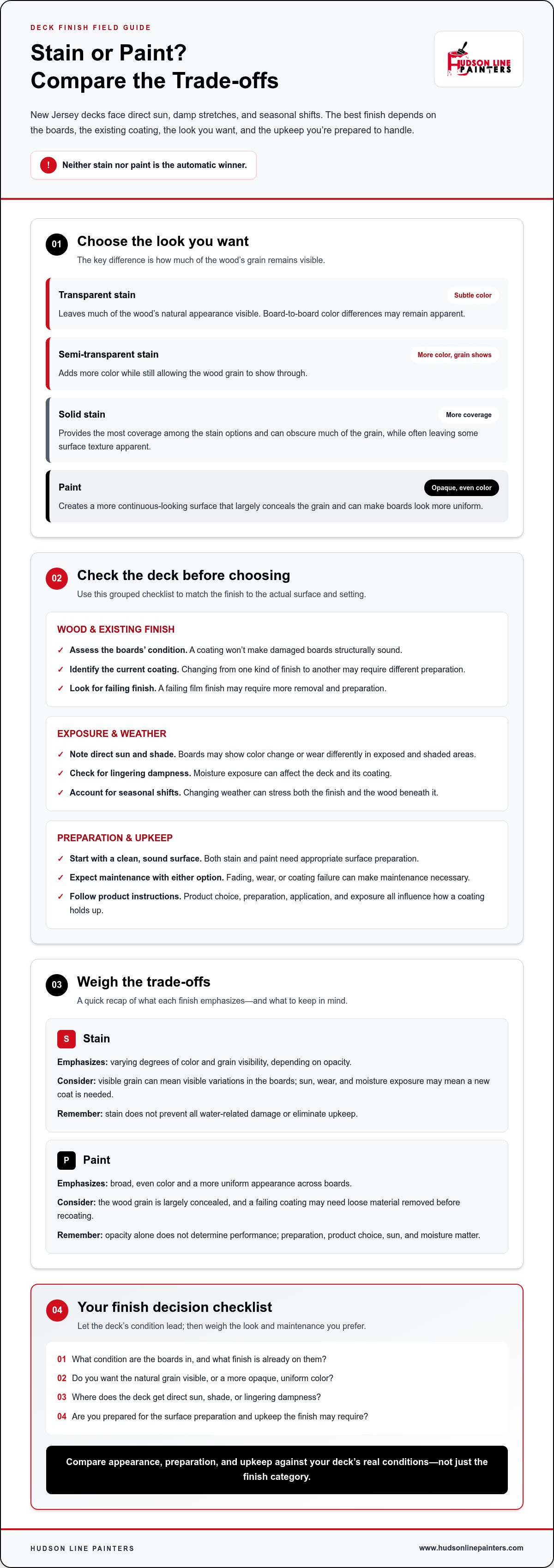
Stain is available in transparent, semi-transparent, and solid options. Transparent stain adds subtle color while leaving much of the wood’s natural appearance visible. Semi-transparent stain adds more color but still shows the grain. Solid stain provides the most coverage and can obscure much of the grain, while often leaving some surface texture apparent.
This range makes stain useful when you want to retain the boards’ character, but the wood’s condition matters. On weathered boards with noticeable color variation, a more transparent finish may leave those differences visible. A more opaque stain can create a more consistent look, though it won’t make damaged boards structurally sound. Stain formulations also differ, so don’t assume every product penetrates deeply or offers the same protection. Check the label for the intended surface and application instructions.
If you like the natural grain and its variations, a transparent or semi-transparent finish may suit your goal. If you prefer stronger color coverage, consider solid stain. Judge the finish against the actual deck, since a sample on a different surface may look different from the final result.
What does deck paint do to wood?
Paint creates a more opaque, continuous-looking surface that largely conceals the grain. It can be a practical choice when you want broad, even color across boards that don’t look uniform. Paint also lets you choose a distinct, solid color rather than emphasizing the wood’s natural tones.
That coverage comes with a trade-off: the wood character beneath the coating is less visible, and the finish itself becomes the prominent surface. Opacity alone doesn’t determine how well paint performs. Surface preparation, the product selected for the deck, and exposure to sun and moisture all influence how the coating holds up. A dirty or incompatible surface can undermine the result, and changing from one kind of finish to another may require different preparation.
So, staining vs painting a wood deck pros and cons isn’t simply a choice between “natural” and “durable.” It’s a decision about the appearance you prefer and the finish that suits the wood and conditions. Follow product-specific instructions, and don’t treat a coating as a substitute for sound boards or careful preparation.
How Paint and Stain Perform on a New Jersey Wood Deck
A deck in northern New Jersey faces changing conditions: direct summer sun, damp stretches, and seasonal shifts that affect the finish and the wood beneath it. Those conditions matter, but they don’t point automatically to paint or stain. Compare how each finish meets your priorities for grain visibility, color coverage, preparation, and future upkeep.
- Grain visibility: Transparent and semi-transparent stains generally leave more grain visible; paint largely conceals it. Solid stain offers more coverage, so “stain” doesn’t always mean a natural-looking result.
- Color coverage: Paint creates a more uniform, opaque appearance. Stain coverage varies by formulation and opacity, and may leave differences in tone or weathering more apparent.
- Preparation: Both finishes need a clean, sound surface. The work depends on the deck’s condition and existing coating. A failing film finish may require more removal and preparation.
- Upkeep: Fading, wear, or coating failure can make maintenance necessary for either option. Product instructions and the deck’s exposure help determine appropriate care.
Sun and moisture affect the deck as well as its coating. Boards exposed to direct sun may show color change or wear differently from boards in a shaded, damp area. Seasonal weather can also stress the finish and substrate. Assess the conditions on your own deck instead of assuming a particular outcome.
Deck stain pros and cons in local conditions
Stain can suit homeowners who want the wood’s character to remain part of the finished look. Transparent and semi-transparent options show more grain, while solid stain delivers stronger color coverage. The trade-off is that visible grain can mean visible variations in the boards, too. Sun exposure may contribute to fading, while wear or moisture exposure can mean a new coat is needed. Stain doesn’t prevent all water-related damage or eliminate upkeep; performance depends on the product, preparation, application, and conditions.
Deck paint pros and cons in local conditions
Paint is worth considering if you prefer broad, even color or want to reduce the visual contrast between boards. Its opaque coverage can make a weathered deck look more uniform, but it also hides the grain. If the coating begins to peel or fail, removing loose material and preparing the surface for recoating can take substantial work. Sun and moisture may contribute to fading or coating problems, though they don’t guarantee a particular failure.
New Jersey exposure alone can’t predict a deck finish’s service life; product choice, surface preparation, workmanship, and ongoing care all play a part. The condition of the existing coating matters just as much as the finish you’re considering. A deck with sound boards and a well-adhered coating presents a different preparation task from one with widespread peeling or uneven wear.
For a decision that accounts for those details, explore Hudson Line Painters’ deck finishing approach, which connects surface preparation with the appearance you want.
Stain vs. Paint: Compare Appearance, Preparation, and Upkeep
A side-by-side comparison can clarify the trade-offs, but it can’t predict exactly how a finish will behave on a particular deck. Board condition, the coating already in place, product selection, and exposure all influence the work and upkeep involved.
Opacity: Transparent and semi-transparent stain show more of the wood; solid stain provides more coverage; paint is generally the most opaque.
Grain visibility: Stain visibility varies by opacity. Paint usually conceals the grain beneath a more uniform surface.
Preparation: Both finishes need a suitable, properly prepared surface. The existing coating, its condition, and the new product affect the work required.
Maintenance: Stain may need refreshing as it fades or wears. Paint may need attention if it chips or peels. Neither has a guaranteed maintenance schedule for every deck.
Recoating: Refreshing stain may be more straightforward in some situations, while failed paint can require substantial removal and preparation. The actual process depends on the deck and coating.
Use these points as general tendencies, not promises. For homeowners weighing the staining vs painting a wood deck pros and cons, the most useful comparison starts with the finish they want and checks whether the current surface can support it.
Which finish shows more wood grain?
Transparent and semi-transparent stains generally reveal more grain and variation in the boards. Solid stain offers stronger, more uniform color while still differing from paint in formulation and appearance. Opaque paint typically hides most grain, creating a continuous-looking surface. If you value visible wood character, compare lower-opacity stain options. If consistent color matters more, compare solid stain and paint samples against the deck. The boards’ existing tone and wear can influence the final look.
How does the existing deck finish affect the choice?
First identify what’s on the boards: are they bare, stained, or painted? If you’re unsure, look for clues such as a visible film, peeling areas, or grain that remains apparent, but remember that appearance alone may not confirm the coating. A new finish’s compatibility and preparation requirements depend on the existing material, its adhesion, and its condition. Don’t assume another coat will bond simply because it covers the surface. Loose or failing finish may need removal; a sound coating still needs preparation suited to the selected product.
This assessment can prevent a mismatch between the look you want and the work the deck needs. For more detail on stain choices and application considerations, consult The Ultimate Guide to Deck & Fence Staining for NJ Homeowners (2026). Hudson Line Painters prepares decks and fences for staining based on the surface, rather than treating every deck as if it starts in the same condition.
How to Choose a Deck Finish for Your Wood and Lifestyle
A useful finish decision starts with the deck, not a paint or stain sample. Work through these steps to connect the boards’ condition, the current coating, the look you want, and the maintenance you’re comfortable planning for. Consider local exposure, too: the same deck may have sunny, shaded, and persistently damp areas.
- Assess the wood’s condition. Look for soft, damaged, or deteriorated boards before choosing a finish. Treat these as a condition issue first; paint and stain are finishes, not repairs. If the boards are sound but weathered or uneven in color, note how visible those differences are and whether your preferred look would preserve or cover them.
- Identify the existing finish. Determine whether the surface is bare wood, stained, or painted, and note any peeling or poor adhesion. A new coating’s compatibility and preparation needs depend on what’s already there and its condition. Don’t assume a fresh coat will bond well without evaluating the surface and following the selected product’s guidance.
- Choose the appearance you want. If visible wood character matters, compare transparent or semi-transparent stain options. If you prefer an opaque, more consistent color, consider paint or a higher-opacity stain. Think about how the finish will look across boards with different tones instead of judging it only by a small sample.
- Consider exposure and upkeep. Note which sections receive direct sun, sit in shade, or stay damp. Seasonal weather affects both the coating and the wood, so assess the whole deck rather than assuming one area represents all of it. Then consider the maintenance you’re prepared to do, including checking for fading, wear, or coating failure and responding according to product guidance.
When is staining a wood deck the better fit?
Stain may fit your priorities if you want to see more of the wood grain and prefer a less opaque appearance. Its different opacity levels offer choices, but the boards’ condition and any previous coating still shape the result and preparation. Inspect the finish over time; sun and moisture can contribute to fading or wear, and stain doesn’t remove the need for maintenance.
When is painting a wood deck the better fit?
Paint may suit you if you want an opaque, consistent color across the deck. It can visually reduce differences between uneven-looking boards, but it won’t correct damaged wood. Existing paint condition matters: a sound, well-adhered coating presents a different preparation task from peeling or failing paint, which may require substantial removal. Don’t use paint to disguise rot, loose boards, or structural damage.
The staining vs painting a wood deck pros and cons decision becomes clearer once the deck’s condition and existing finish guide your appearance and upkeep priorities. Hudson Line Painters’ deck and fence staining work starts with assessing the surface and preparing it for the selected finish.
How Hudson Line Painters Approaches Deck Staining and Painting
A finish decision works best when it starts with the deck itself. Hudson Line Painters considers the wood’s condition, the existing coating, the appearance you want, and the deck’s exposure before planning preparation. This project-specific review connects the choice between stain and paint with the surface that will receive the finish, rather than relying on a one-size-fits-all recommendation.
The process accounts for practical details that affect the result: whether boards are bare or coated, whether the current finish is sound, and whether parts of the deck receive direct sun or remain shaded and damp. Those observations guide finish planning and preparation. Hudson Line Painters provides deck and fence staining, power washing, and light carpentry, with preparation tailored to the surface and selected finish.
Why deck condition and preparation come first
Before finishing, review the surface condition and existing coating. Cleaning and other preparation choices depend on the wood and finish, so power washing is part of the overall surface plan, not an automatic step for every deck. Hudson Line Painters’ power washing service supports this preparation work. The approach should suit the deck and the coating being considered.
Preparation gives the selected finish a more considered starting point. The method should reflect the material and condition of the boards, along with product guidance. If the deck has deteriorated areas, recognize them as a condition concern rather than disguising them with a new coating. Light carpentry can address suitable minor woodwork, while the finish decision remains focused on the surface being treated.
Plan a finish that suits your home and maintenance preferences
Appearance and upkeep go hand in hand. A homeowner who wants visible grain may prefer to explore stain options, while someone seeking broad, even color may favor an opaque finish. The deck’s exposure adds another factor: direct sun, shaded areas, damp spots, and seasonal weather can affect how the surface and finish age. Planning around those differences helps set realistic expectations for inspection and future maintenance without promising a particular service life.
Hudson Line Painters serves homeowners in Hudson County, Union County, and Bergen County, including Hoboken, Edgewater, Fort Lee, Teaneck, Hackensack, Englewood, Cliffside Park, Leonia, Palisades Park, and Ridgefield, New Jersey. For a deck project, discuss the existing surface, preferred appearance, and exposure to focus on a practical finishing plan.
Bring your deck’s condition, current finish, and preferred look into the conversation with Hudson Line Painters.
Make Your Next Deck-Finishing Decision With Confidence
A clear decision starts with knowing what you want the finished deck to look like and how much of its natural character you want to see. Before moving ahead, note the changes you’d like to make to its appearance and maintenance, along with questions about the existing surface. That gives you a useful starting point for a project-specific conversation.
The staining vs painting a wood deck pros and cons comparison can narrow your options, but the final choice should make sense for your particular boards and how you use the space. A careful discussion can help turn your preferences into a practical plan for the deck.
To plan your deck’s finish and preparation, discuss your project with Hudson Line Painters.
Frequently Asked Questions
Is staining or painting a wood deck better in New Jersey?
Neither finish is universally better for New Jersey decks. The staining vs painting a wood deck pros and cons depend on whether the boards are sound, how much grain you want visible, and what coating is already present. A sunny, exposed platform may weather differently from a shaded corner that stays damp; seasonal changes affect both wood and finish. Assess those conditions alongside your upkeep preferences before choosing an option.
Can you paint over a stained wood deck?
Sometimes, but it depends on the stain, the surface condition, and whether a compatible coating can adhere to the boards. A stain that leaves a surface film may present a different challenge from one that leaves the wood more exposed. Cleaning and preparation should suit both the existing finish and the paint selected. Review product instructions and assess adhesion first; don’t assume paint can simply go over any stained deck.
Does deck stain last longer than deck paint?
There’s no reliable universal winner because service life varies with the product, preparation, wood condition, exposure, and maintenance. Wear can also look different: transparent stain may show fading or uneven color, solid stain has more coverage, and paint may show chips or peeling. Rather than relying on one lifespan estimate, compare the product’s care guidance with the deck’s actual sun, shade, and moisture conditions.
What happens if you paint over peeling deck paint?
Painting over loose or failing paint can leave the underlying adhesion problem in place, so the new layer may not resolve the failure. The affected coating generally needs suitable preparation before recoating, and the amount of removal depends on how much paint is loose and the surface condition. Also inspect the boards: peeling is a finish issue, while soft or damaged wood needs separate attention.
Can you stain a deck that has already been painted?
Usually, stain needs a suitable exposed wood surface, so existing paint may need to be removed to achieve the intended result. The preparation depends on how firmly the paint adheres, how much remains, the wood beneath, and the stain’s product requirements. Staining over paint shouldn’t be treated as a reliable shortcut. Assess the coating and surface first, then follow the selected product’s instructions.
Should I choose a transparent, semi-transparent, or solid deck stain?
Choose based first on how much grain you want to see. Transparent stain generally reveals the most wood character, semi-transparent stain adds more color while showing some grain, and solid stain provides more uniform coverage. The best fit also depends on board condition, the existing coating, and product directions. Solid stain and paint can both look opaque, but they’re different finish types and shouldn’t be assumed interchangeable.


