

What if that outdated floral wallpaper is the only thing keeping your fragile, century-old plaster walls from crumbling into a dusty mess? Many homeowners across North Jersey face this exact dilemma when planning a modern refresh. You likely feel torn between the desire for smooth, sophisticated walls and the paralyzing fear of discovering a disaster underneath those paper layers. It's a valid concern; the labor of stripping multiple decades of adhesive can feel overwhelming, especially when you're worried about peeling paint or damaging delicate surfaces.
This guide provides the professional criteria you need to navigate the debate of painting over wallpaper vs removing it, ensuring you achieve a flawless, long-lasting finish that boosts your home's value in the 2026 market. We've developed a disciplined approach to help you decide when to strip and when to seal. You'll discover the technical requirements for a successful transformation, the specific chemistry needed for preservation, and how to ensure your walls remain durable. Whether you're eyeing the deep, earthy neutrals trending this year or preparing for a future sale, we'll help you find the most reliable path to a premium result.
Key Takeaways
- Understand the structural criteria for painting over wallpaper vs removing it to ensure your North Jersey home's fragile plaster remains intact while achieving a modern look.
- Identify the four critical red flags, such as bubbling or peeling seams, that indicate full removal is the only way to guarantee a smooth, long-lasting surface.
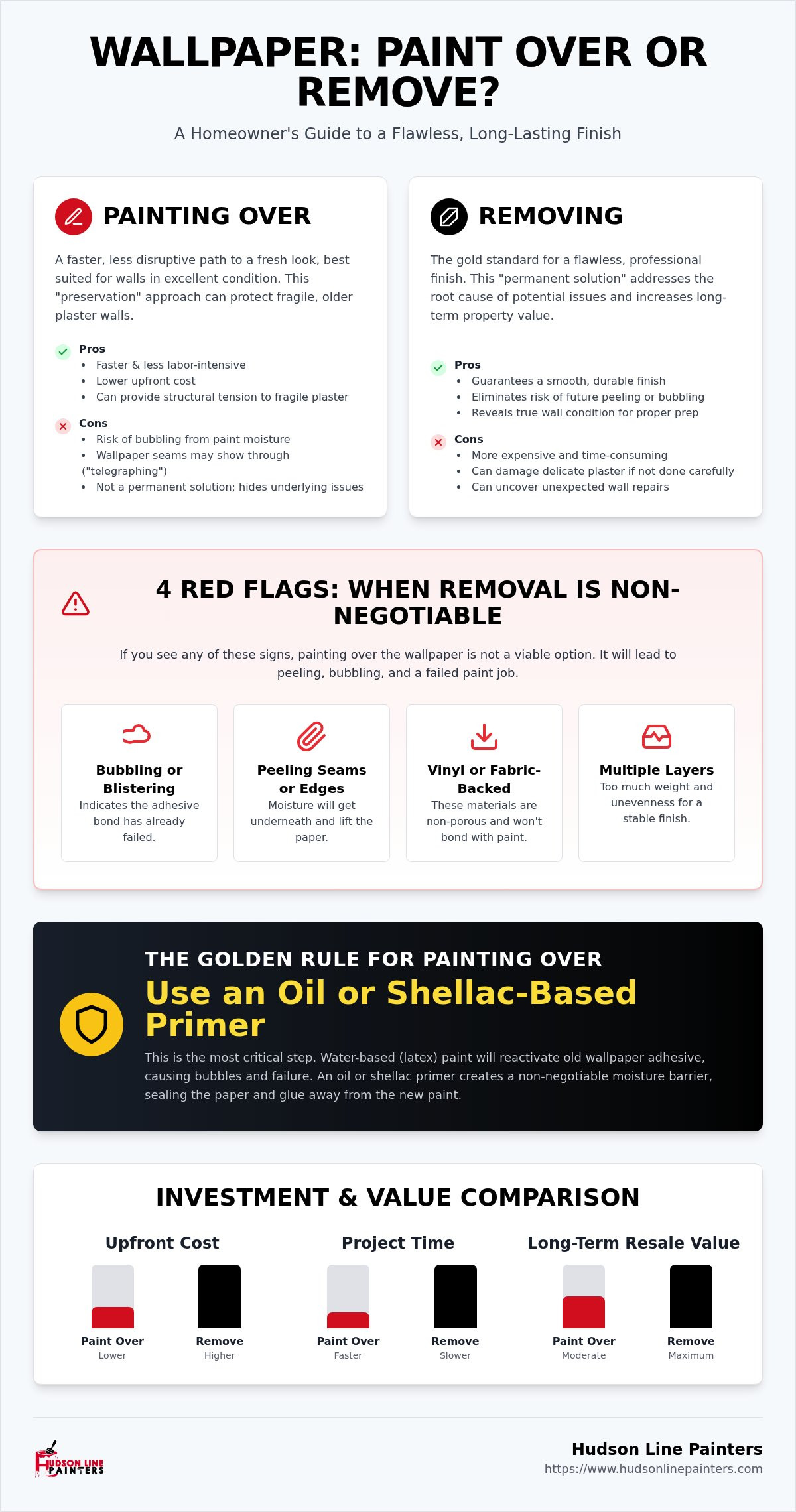
- Learn why using an oil-based or shellac-based primer is the non-negotiable "Golden Rule" for preventing paint moisture from reactivating old wallpaper adhesive.
- Compare the long-term financial benefits of professional stripping against the immediate speed of painting to make a smart investment for your property's future resale value.
- Discover how specialized tools like chemical enzymes and professional steamers can mitigate the risks of damaging your walls during the restoration process.
The Great Wallpaper Debate: Is Painting or Removing Better for Your NJ Home?
The decision between painting over wallpaper vs removing it usually pits two conflicting goals against each other: the desire for an immediate aesthetic upgrade and the need for long-term structural integrity. For a homeowner in North Jersey, this isn't just a matter of style. It's a technical choice that affects the lifespan of your renovation. While painting offers a faster path to a fresh look, removing the paper ensures the paint bonds directly to the wall surface. This prevents "invisible" risks like moisture from the new paint reactivating old adhesive, which leads to bubbling weeks after the job is finished.
Homeowners in Bergen and Hudson counties face unique challenges due to the age of local housing stock. Many residences feature traditional plaster and lath walls rather than modern drywall. These surfaces are often more delicate. If you aren't careful, aggressive stripping can pull away chunks of plaster, leading to expensive repairs. To understand why some papers are more resilient than others, it helps to review the history and types of wallpaper used in older North Jersey properties. Professional consensus generally favors removal because it eliminates the risk of texture telegraphing, where the seams of the paper show through the finish. However, as we head into 2026, high-performance primers have made painting over paper a viable secondary option for specific scenarios.
The "Permanent Solution" Mindset
Stripping wallpaper is a strategic investment in your property's value. It provides a clean, bare surface that allows for a flawless finish. There is a distinct psychological benefit to knowing your walls aren't hiding layers of outdated material. By choosing professional removal, you eliminate the root cause of future peeling. This process reveals the true condition of the substrate, allowing for necessary interior painting prep that ensures the new color remains vibrant for years. It's the disciplined choice for those who prioritize longevity over speed.
The "Preservation" Perspective
In some instances, "hiding" the paper is actually the safer route for your home's structure. If a professional inspection reveals that the underlying plaster is extremely fragile, the wallpaper might actually be providing a small amount of structural tension. Aggressive stripping could cause the wall to crumble. Modern oil-based and shellac-based primers have evolved significantly. These products create a moisture-proof barrier that prevents the water in latex paint from reaching the old glue. This makes the choice of painting over wallpaper vs removing it a strategic one for preserving the integrity of historic NJ interiors without risking a major reconstruction.
When Professional Wallpaper Removal is the Only Right Choice
Sometimes, the technical reality of your walls overrides the desire for a quick fix. While there are specific scenarios When Painting Over Wallpaper is the Better Option, professional removal remains the gold standard for a reason. If your paper shows signs of distress, painting over it is like building a house on a crumbling foundation. The moisture in modern latex paint can act as a solvent. It penetrates the paper and reactivates the old, brittle glue underneath. This often leads to immediate bubbling or, worse, the entire weight of the new paint pulling the paper right off the wall.
We look for four specific red flags before deciding on painting over wallpaper vs removing it. First, any peeling at the seams or edges is a non-starter. Second, if the paper is already bubbling, the bond is gone. Third, multiple layers of paper create too much weight and unevenness. Finally, vinyl or fabric-backed materials simply won't allow paint to bond properly. Choosing a full wallpaper removal ensures your wall texture remains smooth and professional for the long term. It's the only way to guarantee the paint bonds directly to the substrate.
Signs of Adhesive Failure
Testing the bond of your wallpaper is a critical first step. You can perform a "bubble test" by wetting a small, inconspicuous area with a sponge. If the paper starts to lift or swell within minutes, the adhesive is failing. Painting over these unstable sections creates a "scalloped" effect. The paper edges curl under the weight of the wet paint, leaving an amateur finish that no amount of sanding can fix. For homeowners in Bergen and Hudson counties, this is especially common with old wheat paste used on historic plaster walls. We prioritize finding these failures early to prevent a mid-project disaster.
The Problem with Texture and Vinyl
Heavily textured or fabric-backed vinyl papers present a different set of challenges. You cannot sand these seams without shredding the face of the paper, which creates a fuzzy, uneven mess. Even with high-end primers, "seam ghosting" is a frequent issue. This occurs when light hits the wall at an angle, revealing the vertical lines of the wallpaper underneath the paint. To achieve a truly modern, gallery-smooth finish, stripping the material is the only logical path. If you're unsure about the stability of your surfaces, consulting a specialist in professional interior painting can save you from a costly mistake.
Comparing the Costs: Painting Over vs. Full Removal
Choosing between painting over wallpaper vs removing it often comes down to a pragmatic budget calculation. While painting over appears more cost-effective on a surface level, the specialized preparation required can narrow that price gap quickly. High-end oil-based or shellac-based primers are more expensive than standard latex primers. Additionally, the labor involved in skim coating every seam with joint compound to ensure they don't "telegraph" through the finish adds to the total investment. For homeowners, understanding the wallpaper removal cost per room NJ is essential for setting realistic expectations. In markets like Hoboken and Jersey City, where real estate is highly competitive, the ROI on fully stripped walls is often higher because savvy buyers recognize the longevity of a professional, bare-wall finish.
Short-Term Savings vs. Long-Term Value
Painting over wallpaper might save money today, but it can create a red flag during a future home inspection. Inspectors often view painted-over paper as a masking technique for underlying wall damage. In terms of sheer labor hours, stripping typically takes 12 to 20 hours per room, while meticulous prep-painting takes 8 to 12 hours. While the latter is faster, professional interior painting on bare walls ensures the paint bonds permanently. This prevents the cost of a full redo if the paper begins to fail three years down the line.
The Damage Mitigation Factor
The financial risk of removal often lies in what's hidden underneath. In historic Bergen County homes, aggressive stripping can lead to significant drywall and plaster repair if the substrate is compromised. If a professional assessment reveals that your walls are too fragile for steamers or chemical enzymes, leaving the paper intact and sealing it correctly is the most frugal choice. Reliable contractors are cautious with older NJ wall systems to avoid triggering extensive structural restoration costs. We view this as a risk-mitigation strategy that protects both your home and your wallet.
Technical Guide: How to Paint Over Wallpaper Successfully
If you've decided on painting over wallpaper vs removing it because your walls are too fragile for stripping, you must commit to a rigorous technical process. Success depends entirely on the meticulous preparation of the existing surface. You start by cleaning the paper with a TSP substitute or a dedicated de-greaser to remove decades of accumulated household grease, smoke, and dust. This ensures the primer bonds to the paper fibers rather than the contaminants on top of them. After cleaning, you must maintain a strictly dry environment. We often use industrial dehumidifiers to ensure the room's moisture levels remain low during the curing process. Excess humidity can cause the paper to swell and contract, leading to permanent ripples or "alligatoring" in your final paint film.
The Chemistry of Primer
Water-based primers penetrate the paper's surface and reactivate the underlying adhesive, which causes the wallpaper to pull away from the wall in large, unsightly bubbles. An oil-based primer acts as a permanent lock by creating a moisture-proof seal that the adhesive cannot penetrate. For 2026 interior projects, we recommend using high-performance shellac-based sealers or premium oil-based primers like Zinsser Cover Stain to ensure a stable foundation. These specialized products prevent the "wicking" of old dyes, patterns, and glues into your new topcoat. Without this chemical barrier, the moisture in your finish paint will eventually compromise the bond, leading to failure months after the project is completed.
Skim Coating and Sanding
Managing the seams is the difference between a professional result and a "painted-over" look. You should use a wide putty knife to apply a thin layer of professional-grade joint compound over every seam, tear, and damaged area. Feather the edges out at least four to six inches to create a gradual slope that disappears into the surrounding wall. Once the compound is dry and sanded, perform a "light test" by holding a high-lumen flashlight parallel to the wall surface. This reveals any remaining edges, shadows, or imperfections that would be magnified by a fresh coat of paint. This level of technical detail is why plaster wall repair contractors Bergen County are often consulted during this phase. Their expertise in substrate stabilization ensures the surface is gallery-smooth before the final interior painting begins.
Get a Professional Assessment for Your Walls
Choosing Your Path: Professional Restoration in North Jersey
The final choice between painting over wallpaper vs removing it serves as the turning point for your entire renovation. While a DIY approach might seem tempting for a small room with modern, strippable paper, the technical complexity of North Jersey's historic interiors often requires a more disciplined methodology. We utilize industrial-grade steamers that provide precise temperature control to soften adhesive without saturating the underlying plaster. This is a critical distinction, as excessive moisture is the primary cause of substrate failure in older homes. Additionally, we employ specialized chemical enzymes that break down stubborn wheat pastes at a molecular level. This professional equipment minimizes the physical force needed to strip the walls, which is the most effective way to prevent gouging or permanent damage.
A professional finish is defined by what you don't see. Unlike a DIY "cover-up" that often leaves behind visible seam ghosting or irregular textures, our process ensures a gallery-smooth surface that stands up to the closest inspection. Before you begin your project, consider this final checklist for your NJ home:
- Identify if your walls are made of fragile, historic plaster or modern drywall.
- Check for the number of existing paper layers; more than one layer usually demands full removal.
- Test for any current bubbling or peeling at the seams.
- Evaluate your long-term goals, such as maximizing resale value or achieving a specific trending color palette for 2026.
Why Local Expertise Matters
Navigating the diverse housing stock in Hoboken, Edgewater, and Fort Lee requires a deep understanding of local building materials. Whether you're dealing with a century-old brownstone or a modern high-rise condo, the substrate dictates the restoration strategy. We provide the peace of mind that comes with a guaranteed, peel-free finish. Our team handles the intensive labor and the significant mess associated with stripping, allowing you to focus on the aesthetic transformation of your space. We value operational discipline, ensuring your environment remains clean and respected throughout the entire project lifecycle.
Ready for a Transformation?
Your walls are the foundation of your home's interior design. If you're planning a full-home update, our residential painting services are designed to deliver premium, long-lasting results that increase your property's value. We invite you to schedule a professional assessment to determine the safest and most effective path for your specific surfaces. By choosing a partnership with seasoned craftsmen, you ensure your investment adds genuine comfort to your environment.
Contact Hudson Line Painters for a free estimate
Transforming Your North Jersey Home with Confidence
Deciding on painting over wallpaper vs removing it doesn't have to be a source of anxiety. Whether you're preserving historic plaster in a Bergen County brownstone or updating modern drywall in a Jersey City condo, the key is a disciplined approach to preparation. You now understand that while removal offers the cleanest foundation, strategic painting is a viable option when executed with the correct chemical barriers and seam management.
Hudson Line Painters has provided meticulous craftsmanship across Bergen, Hudson, and Union Counties since 2018. We take pride in our technical precision and site etiquette, ensuring a professional cleanup that leaves your home pristine. Our expertise in substrate stabilization means your walls will remain smooth and durable for years to come.
We're ready to help you achieve the flawless, modern finish your home deserves.
Frequently Asked Questions
Can you see the seams if you paint over wallpaper?
Yes, you will almost certainly see the seams if you don't take specific technical steps to hide them. Standard paint is thin and naturally highlights the vertical edges where paper panels meet. To achieve a smooth look, we apply a thin layer of joint compound over the seams and sand them flat. This process ensures the transition is invisible once the topcoat is applied to your North Jersey home.
Will painting over wallpaper make it harder to remove later?
Yes, painting over wallpaper makes future removal much more difficult and expensive. The paint creates an impermeable shell that prevents steam or chemical enzymes from reaching the adhesive underneath. You essentially create a "sandwich" where the glue is locked between the wall and the paint. If you ever decide to strip it later, you'll likely need to score the surface aggressively, which increases the risk of damaging the underlying plaster.
Is it cheaper to paint over wallpaper or remove it?
Painting over wallpaper has lower immediate labor costs, but it often requires more expensive specialized materials. When you consider the long-term value, professional removal is often the smarter financial choice for your property. Painting requires high-end oil-based primers and extensive skim coating to look professional. If the paper fails later, you'll face the cost of a complete redo. We focus on providing the most durable solution for your specific wall condition.
What is the best primer to use when painting over wallpaper?
You must use an oil-based or shellac-based primer to seal the paper panels properly. Standard water-based primers are the primary cause of project failure because the water penetrates the paper and reactivates the old glue. This leads to immediate bubbling and peeling. An oil-based sealer creates a permanent moisture barrier that locks the adhesive in place. It also prevents the wallpaper’s colors or patterns from bleeding through your new interior paint.
How do I know if my wallpaper is too old to paint over?
The condition of the adhesive matters more than the actual age of the paper. You can determine if it's too unstable by performing a moisture test on a small section. If the paper bubbles or the edges lift when dampened, the bond is too weak for painting over wallpaper vs removing it. Brittle, yellowing adhesive is a clear sign that the material has reached the end of its functional life and needs removal.
Can I paint over wallpaper in a bathroom with high humidity?
We strongly advise against painting over wallpaper in bathrooms or high-humidity areas. The constant cycle of steam and moisture will eventually penetrate the paint film and soften the wallpaper paste. This leads to rapid peeling and can even trap moisture against the wall, creating an environment for mold growth. For bathrooms in North Jersey homes, professional stripping followed by a moisture-resistant paint system is the only reliable way to ensure longevity.
How long does professional wallpaper removal take per room?
Professional wallpaper removal typically takes between 12 and 20 hours for a standard-sized room. This timeline depends on the number of layers present and the type of adhesive used by the original installer. We use industrial-grade steamers and enzymatic solutions to move through the process as efficiently as possible. This disciplined approach ensures we remove the material thoroughly while protecting your fragile plaster or drywall from unnecessary physical stress or gouging.
Does painting over wallpaper lower my NJ home’s resale value?
Painting over wallpaper can negatively impact your resale value in competitive North Jersey markets. Home inspectors often flag painted-over paper as a potential cover-up for wall damage or moisture issues. Savvy buyers in Bergen and Hudson counties prefer the clean, gallery-smooth finish of paint applied directly to a bare substrate. Investing in professional removal demonstrates that your home has been meticulously maintained, which often justifies a higher asking price during a future sale.


