

If you live in a classic home in Ridgewood or Englewood, you know that those recurring cracks in your ceiling aren't just a cosmetic nuisance; they're a test of your home's historic integrity. You've likely tried the DIY hardware store patches, only to see the same lines reappear six months later. It's frustrating when you can't find plaster wall repair contractors Bergen County residents can rely on for authentic restoration, especially when some suggest "just drywalling over it." This shortcut strips away the character that makes our local real estate so valuable, leaving you with a generic finish instead of the craftsman quality your home deserves.
We understand the stress of maintaining a heritage property and the desire for a clean, professional job site that respects your living space. This guide will show you how to identify true experts, vet their technical process, and hire a team that restores your walls to a flawless state while protecting your environment from dust and debris. You'll learn the essential steps to achieve smooth surfaces ready for high-end paint, ensuring your home’s structural soul is preserved for years to come.
Key Takeaways
- Learn to distinguish between cosmetic map cracking and structural settlement to prioritize your home's maintenance needs effectively.
- Understand why hiring specialized plaster wall repair contractors Bergen County is essential for maintaining the traditional 3-coat systems found in historic Northern NJ homes.
- Discover the specific credentials to verify, including NJ Home Improvement Contractor registration and proven experience with lath-and-plaster systems.
- Explore a professional 'clean-room' approach to preparation that ensures your living space remains tidy and free of plaster dust throughout the project.
- Identify how a seamless transition from structural stabilization to a designer-quality paint finish preserves your home's unique historic character.
Common Plaster Wall Issues in Historic Bergen County Homes
Bergen County is famous for its pre-WWII architecture. From the stately Victorians in Ridgewood to the colonial revivals in Englewood, these homes share a common structural DNA: Lath and plaster construction. Unlike modern homes built with mass-produced gypsum boards, these historic residences were hand-built using horizontal wood strips nailed to studs, which were then covered by a multi-layered plaster application. This traditional method creates a dense, solid wall that modern drywall simply cannot replicate. However, after nearly a century of service, even the finest craftsmanship begins to show its age.
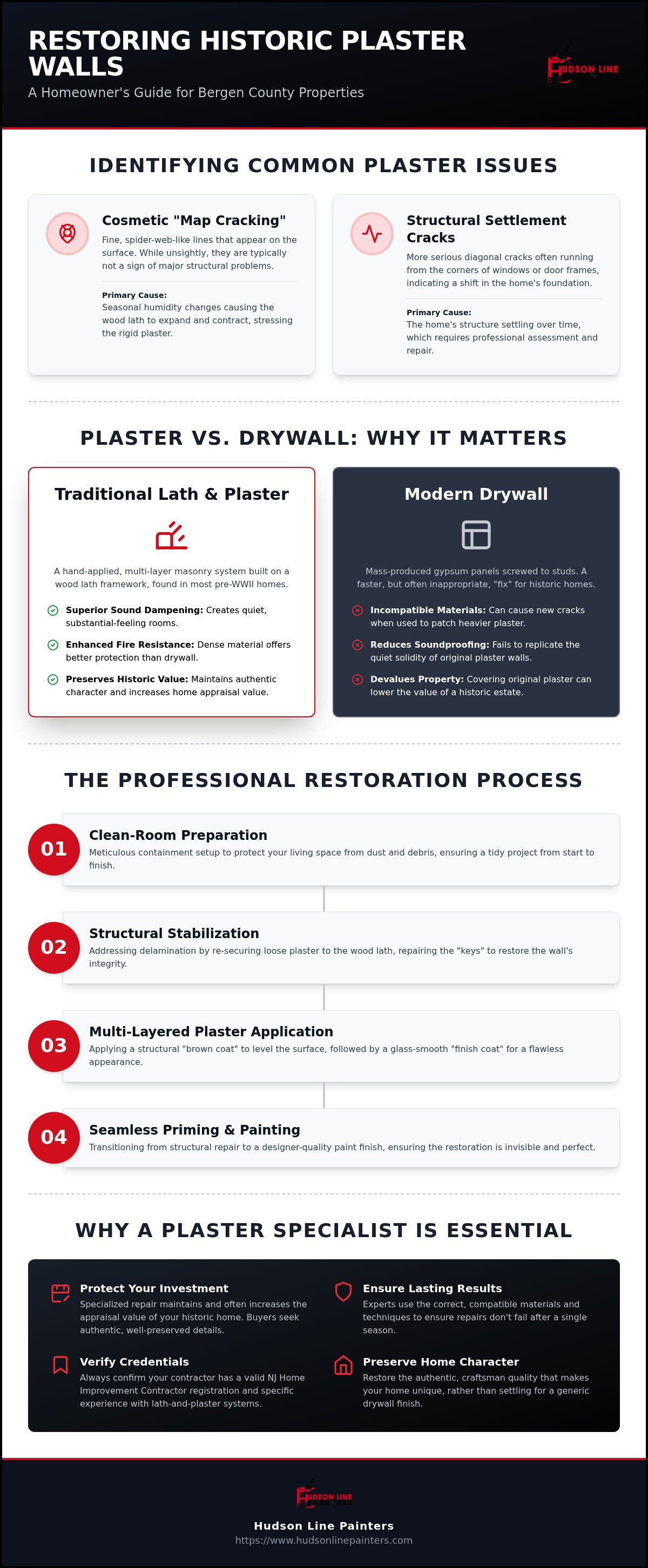
New Jersey’s intense seasonal humidity is often the primary culprit behind wall deterioration. The wood lath behind your walls acts like a sponge, expanding during our muggy summers and contracting during the dry winters when the radiators are clanking. This constant movement eventually stresses the rigid plaster, leading to "map cracking." These fine, spider-web-like lines are often cosmetic, but they require a skilled touch to fix permanently. In contrast, diagonal cracks running from the corners of door frames or windows usually indicate structural settlement. Identifying the difference is the first step for plaster wall repair contractors Bergen County homeowners hire to ensure a lasting restoration rather than a temporary patch.
True plaster repair is a disciplined, multi-layered process. It involves restoring the "brown coat," which provides the structural base, and the "finish coat," which creates that signature glass-smooth surface. Skipping these steps or using incompatible modern materials like lightweight joint compound often leads to the repair failing within a single season.
Identifying Plaster Failure in Your Home
One of the most serious issues is "delamination," where the plaster physically pulls away from the wood lath. You might notice a slight bulge in the wall or a section that feels soft when pressed. This often happens because the "keys"—the plaster that squeezed between the lath strips to lock it in place—have snapped off. You can perform a simple "tap test" by gently knocking on the wall; a hollow, drum-like sound suggests the plaster is no longer attached and could be at risk of a localized collapse. Water damage is another frequent offender in Northern NJ. Leaky cast-iron radiators or aging plumbing hidden in the walls can cause the plaster to crumble, leaving behind unsightly brown stains and a compromised structure.
Historic Value vs. Modern Convenience
Many general contractors will suggest "gutting it" and installing drywall because it's faster for them, but this often devalues a historic NJ estate. Keeping your original plaster preserves the superior sound-dampening qualities that make old homes feel so quiet and substantial. Plaster is also significantly more fire-resistant than standard drywall, providing an extra layer of safety for your family. By choosing specialized plaster wall repair contractors Bergen County residents ensure their home’s appraisal value remains high. Buyers in our local market specifically look for preserved historic details, and a flawless plaster finish is a hallmark of a well-maintained heritage property.
Plaster vs. Drywall: Why Specialized Contractors Matter
Many homeowners assume that a wall is just a wall. However, the technical gap between a modern drywall installation and a traditional three-coat plaster system is vast. Drywall consists of a gypsum core sandwiched between paper sheets, designed for speed and uniformity. In contrast, the plaster found in older Bergen County homes is a hand-applied masonry product. It starts with a scratch coat to create the "keys" behind the lath, followed by a leveling brown coat, and finished with a hard, dense veneer. Choosing plaster wall repair contractors Bergen County specialists ensures your home’s unique construction is respected rather than covered up with incompatible materials.
In high-rise or historic shoreline properties in Edgewater and Fort Lee, the density of these walls provides essential soundproofing and fire resistance. A "drywall guy" might try to fix a sagging plaster ceiling with a single sheet of gypsum board, but this creates a weight imbalance. Plaster is significantly heavier and more rigid. Without specialized knowledge, you risk a patch that pulls away or cracks under its own weight within months. A true craftsman understands how to bridge the gap between these different material densities to create a seamless, lasting bond.
The Dangers of Incorrect Materials
Using standard drywall joint compound on a plaster wall is a recipe for failure. Joint compound is designed to shrink as it dries, which works well for taped seams on flexible drywall. Traditional plaster is stable and rigid. When modern mud is applied to a lime-based plaster surface, the different shrinkage rates cause the patch to pull away, leaving a visible ring around the repair. Additionally, old lime plaster can react with modern materials to create efflorescence. These are white, powdery salt deposits that push through the surface and ruin your paint. Following the guidelines for Repairing Historic Flat Plaster, professionals use specialized bonding agents and high-calcium lime or gypsum plasters to ensure the new material chemically fuses with the old.
When to Repair and When to Replace
How do you know if your walls are too far gone? Total replacement is usually reserved for cases where more than 50% of the plaster has delaminated from the lath or if there is extensive structural rot behind the surface. For most historic homes, a professional restoration is the better financial and environmental choice. Ripping out plaster creates immense amounts of heavy, dusty waste that ends up in local landfills. Repairing and skim coating existing walls is often more cost-effective than a full demolition and rebuild. It preserves the authentic feel of your home while providing a perfectly smooth surface for residential painting services that highlight your home's architecture. This approach maintains the structural soul of the house while delivering a modern, high-end aesthetic.
How to Evaluate Plaster Wall Repair Contractors in Bergen County
Selecting the right professional to handle your home’s interior requires more than a casual search. In Bergen County, where historic estates are the norm, the stakes are high. A poor repair job doesn't just look bad; it can lead to structural failure or a drop in your property value. When evaluating plaster wall repair contractors Bergen County residents should start with the basics of professional credentials. In New Jersey, any contractor performing work over $500 must hold a valid Home Improvement Contractor registration. This ensures they are registered with the state and carry the necessary liability insurance to protect your property during the restoration process.
Beyond the license, look for transparency in their business practices. Hiring a trustworthy contractor involves checking for a physical business address and verifying their standing within the local community. A professional estimate should be detailed and sequential. It must clearly outline the phases of work, including site preparation, the specific repair methodology, and the final painting. If an estimate is vague or only covers the "patching" part of the project, you may end up with a messy job site and walls that aren't actually ready for a high-end finish. At Hudson Line Painters, we prioritize this level of detail to ensure you feel fully informed before a single drop of plaster is mixed.
Key Questions for Your Contractor
Ask specifically about the materials they intend to use. If a contractor suggests using standard drywall joint compound for a deep plaster hole, they are likely taking a shortcut that will crack within a year. A specialist will discuss using traditional plaster or high-strength setting compounds that mimic the density of your original walls. You should also inquire about their dust management strategy. Plaster work is notoriously messy, so a disciplined team should utilize a "clean-room" approach, sealing off the work area with plastic and using HEPA-filtered vacuums to protect your furniture and air quality. Finally, confirm if the finish will be "paint-ready" for high-gloss or designer finishes. A wall that looks smooth in the shade might reveal dozens of imperfections once a premium paint is applied under bright lights.
Local References and Portfolios
Request references from recent projects in towns like Ridgewood, Englewood, or Hackensack. These areas have a high concentration of lath-and-plaster homes, so a contractor with a strong local footprint will be familiar with the common settling patterns of the region. When reviewing a portfolio, look for "invisible" repairs in high-light areas like hallways or rooms with large windows. These are the most difficult surfaces to master. You should also ask to see photos of "mid-process" work. Seeing how a team prepares the lath and stabilizes the substrate is more telling of their skill than a photo of a finished white wall. If you are ready to see this level of craftsmanship in your own home, you can contact our team for a professional evaluation.
The Professional Restoration Process: From Patching to Painting
Restoring a historic wall is a sequential science. Many plaster wall repair contractors Bergen County homeowners encounter will simply fill a crack and sand it down, but this ignores the underlying cause of the failure. At Hudson Line Painters, we follow a disciplined five-step framework that treats your home as a craft project, not just a job site. This methodology ensures that the repair is chemically bonded to the original structure, preventing the "ghosting" or recurring cracks that plague amateur fixes. We don't just patch holes; we restore the structural and aesthetic soul of the room.
- Step 1: Preparation. We establish a "clean-room" environment using plastic screening and floor protection to isolate dust from the rest of your home.
- Step 2: Stabilization. Our team removes crumbling material and secures the underlying wood lath to the studs to provide a rigid foundation.
- Step 3: Reinforcement. We apply a high-strength base coat embedded with structural mesh to bridge moving cracks and distribute stress across the surface.
- Step 4: Skim Coating. We apply multiple thin layers of specialized plaster to create a monolithic, perfectly level surface that feels like glass.
- Step 5: Finishing. After proper curing and priming, we apply designer-quality paint to make the repair completely invisible to the eye.
The Art of Skim Coating
Skim coating is the transformative bridge between structural repair and aesthetic beauty. This process involves applying a thin layer of plaster over the entire wall surface to hide imperfections, old textures, or the "mapping" of previous repairs. It's the essential foundation for high-end interior painting results. Without a monolithic skim coat, even the most expensive paint will highlight the uneven nature of an old wall. For a deeper look at this technique, read our guide on Expert Drywall and Plaster Repair: The NJ Homeowner’s Guide to Seamless Walls.
Dust Management and Site Etiquette
Plaster work is inherently messy, but your home shouldn't be. We address homeowner anxiety by utilizing HEPA-filtered dust extraction and rigorous plastic screening. This disciplined approach keeps fine particles from migrating into your HVAC system or adjacent rooms. Our team prioritizes daily cleanup, ensuring that tools are organized and floors are swept before we leave each afternoon. By protecting your furniture and flooring throughout the "wet" phase of the project, we transform a potentially stressful renovation into a predictable, professional experience. This meticulous care is why we're the preferred plaster wall repair contractors Bergen County families trust with their historic interiors.
Request a professional plaster restoration estimate
Why Hudson Line Painters is Bergen County's Plaster Specialist
Choosing the right professional for your home is about more than just finding a technician; it's about partnering with a craftsman who values your property's history as much as you do. Hudson Line Painters has built a reputation as the premier choice among plaster wall repair contractors Bergen County homeowners rely on for high-stakes restoration. Our deep roots in the community mean we understand the specific architectural challenges of Northern NJ, from settling issues in century-old manors to the unique humidity-driven expansion of local timber frames. We don't just see a crack in a wall; we see an opportunity to restore a piece of local history.
Our "Full Cycle" advantage provides a seamless transition that most competitors simply can't match. While many crews only offer the structural patch, we deliver a designer-quality paint finish as part of a single, coordinated project. This eliminates the stress of hiring multiple vendors and ensures that the final aesthetic result meets the highest professional standards. We serve our neighbors from Hackensack to Ridgewood and beyond, providing transparent pricing and detailed project timelines that respect your time and your budget. You’ll never have to guess when we’ll arrive or when your home will be back to its pristine state.
A Craft-First Approach to Repairs
We view every plaster repair as a restoration project rather than a quick fix. This disciplined mindset allows us to address the root cause of wall failure, ensuring longevity and value. Often, a wall restoration requires more than just plaster; it might need a complete trim and wall overhaul. By combining light carpentry with our specialized repair services, we can replace damaged baseboards or crown molding that has been compromised by wall movement. For more information on how we achieve these flawless results, explore our guide on Drywall Patching and Painting Services: The Guide to Seamless Wall Restoration.
Ready to Restore Your Walls?
Our consultation process is designed for your convenience. We provide clear, itemized estimates that break down every phase of the restoration, from initial site protection to the final coat of premium paint. We coordinate closely with your schedule to minimize disruption to your daily life, maintaining a quiet and organized presence in your home. Our goal is to provide peace of mind through technical precision and operational excellence. If you're tired of temporary fixes and ready for a permanent, beautiful solution, we're here to help.
Contact Hudson Line Painters for a Professional Plaster Repair Estimate
Restore the Historic Beauty of Your Northern NJ Home
Your historic home is a valuable asset that deserves more than a quick patch. By choosing specialized restoration over modern drywall shortcuts, you preserve the sound-dampening qualities and structural soul of your property. We've explored how identifying the root cause of cracks and using compatible materials prevents the cycle of recurring damage. Since 2018, Hudson Line Painters has served Bergen, Hudson, and Union Counties with a commitment to these traditional standards.
Finding the right plaster wall repair contractors Bergen County offers involves vetting for meticulous dust-control protocols and a full-service approach that includes premium interior painting. Our team prioritizes your peace of mind by maintaining a clean job site and delivering a monolithic, glass-smooth finish ready for the most demanding designer paints. You don't have to settle for messy, visible patches when a professional craftsman's touch is within reach.
We look forward to helping you protect your investment and enjoy the flawless walls your home was meant to have.
Frequently Asked Questions
How much does plaster wall repair cost in Bergen County?
Project costs vary based on the extent of damage and the age of the structure. While national averages suggest minor repairs fall between $376 and $1,171, local Bergen County projects often require specialized labor at rates between $55 and $120 per hour. Factors like ceiling height and the number of coats required will influence the final estimate. We provide detailed, itemized quotes to ensure you understand exactly how your restoration budget is being utilized.
Can you patch plaster with drywall mud?
You shouldn't use standard drywall mud for significant plaster repairs because it has a different shrinkage rate. Plaster is rigid and dense, whereas drywall joint compound is designed to be flexible and shrinks as it dries. This mismatch often leads to the patch pulling away or cracking again within a single season. Professionals use setting-type compounds or traditional lime plaster to ensure a permanent chemical bond with the original wall.
Is it better to repair old plaster or replace it with drywall?
It's almost always better to repair historic plaster to preserve your home’s soundproofing and fire resistance. Replacement is only necessary if more than 50% of the wall has delaminated from the lath. Repairing existing walls also reduces environmental waste and maintains the authentic character that defines the Bergen County real estate market. Keeping the original material ensures your home retains its historic appraisal value and structural soul.
How long does a professional plaster repair project take?
A standard professional plaster repair project typically takes between three to five days depending on the curing time required between coats. Minor cracks may be resolved faster, but deep structural repairs or full-room skim coating require time for the moisture to evaporate completely. This disciplined timeline ensures the surface is stable and chemically ready before we apply the final designer paint finish.
How do I find a contractor who specializes in historic plaster?
Look for plaster wall repair contractors Bergen County residents trust by verifying their NJ Home Improvement Contractor registration and reviewing portfolios of historic work. Ask specifically about their experience with 1920s-era wood lath systems. A true specialist will explain the multi-coat restoration process rather than suggesting a quick drywall patch as a universal solution for every problem.
Will plaster repair create a huge mess in my house?
Plaster work doesn't have to be messy if your contractor follows a disciplined "clean-room" protocol. We utilize plastic screening to seal off work areas and HEPA-filtered vacuums to capture fine dust at the source. Daily cleanup is a hallmark of a professional crew; we ensure your living environment remains healthy and tidy throughout the duration of the project.
Can you fix large cracks in a plaster ceiling safely?
Yes, large ceiling cracks can be fixed safely by re-securing the plaster to the joists using specialized washers and screws. This stabilization prevents further sagging or potential collapse of the heavy material. Once the substrate is secure, we apply a fiberglass mesh and a high-strength base coat to bridge the gap, creating a monolithic surface that moves as a single unit without future cracking.
Do I need to move all my furniture for a plaster repair job?
You don't necessarily need to move every piece of furniture, but we recommend clearing a six-foot perimeter around the work area. Large items can often be clustered in the center of the room and protected under heavy-duty plastic sheeting. Our team handles the protection of your floors to ensure every square inch of your interior is shielded from the "wet" phase of the repair process.


