

You might think a full renovation is the only way to modernize your kitchen, but the smartest financial choice is actually focusing on a single anchor point. Painting your kitchen island a different color is the most effective way to create a high-end, two-tone look without the stress of a total tear-out. It transforms the room into a designer focal point while keeping your overall investment manageable.
Many homeowners in Bergen and Hudson Counties worry that a bold shade will clash with their existing cabinets or start chipping within months because of daily wear. It's a valid concern, especially when you're dealing with the technical prep needed for factory-finished wood. This guide will show you how to achieve a professional finish that stands up to the demands of a busy household. We'll explore the trending 2026 palettes for Northern NJ homes, the meticulous preparation process required for longevity, and how to decide if this project is a DIY task or a job for a seasoned specialist.
Key Takeaways
- Modernize your home by leveraging the aesthetic power of a two-tone kitchen, creating a sophisticated focal point in open-concept living spaces.
- Master the 60-30-10 rule for color distribution to ensure your new island shade coordinates perfectly with existing white, grey, or wood cabinets.
- Understand the technical steps for painting kitchen island a different color, focusing on the meticulous prep work that prevents peeling and chipping.
- Learn how to prevent common failures like tannin bleed in oak or cherry wood by using industry-specific primers instead of standard retail paints.
- Evaluate the financial and aesthetic benefits of professional cabinet refinishing compared to the time-intensive and often less durable DIY approach.
The Aesthetic Power of a Contrasting Kitchen Island
The 'two-tone' kitchen has evolved from a fleeting design trend into a foundational element of modern interior architecture. By 2026, the all-white kitchen has largely been replaced by spaces that prioritize visual depth and architectural interest. Painting your kitchen island a different color serves as the primary tool for achieving this balance. This design choice designates the island as the room's anchor, providing a sense of permanence and intentionality that single-color cabinetry often lacks.
In many open-concept New Jersey homes, the kitchen is no longer a separate room; it's a central hub that flows into dining and living areas. A contrasting island acts as a visual bridge, connecting the kitchen's utility with the living room's comfort. Darker tones like charcoal, navy, or deep forest green are particularly popular because they ground the space. These saturated colors provide a psychological sense of stability, making the kitchen feel more established and high-end without requiring a structural overhaul.
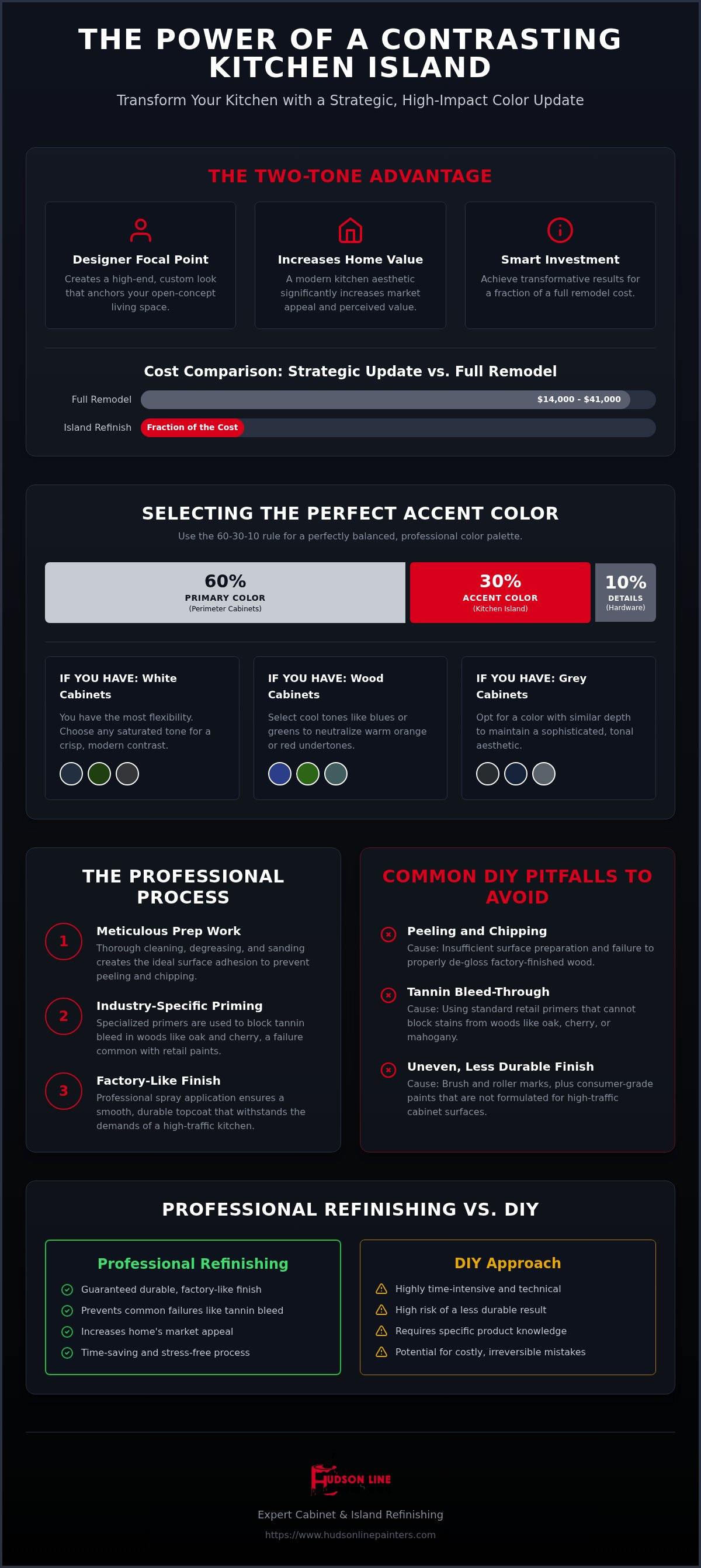
Choosing to refinish rather than replace is a smart financial move for any homeowner. While a full kitchen remodel in 2026 can easily cost between $14,000 and $41,000, a professional island refresh offers a similar aesthetic impact for a fraction of that investment. This approach preserves your existing layout while delivering a factory-like finish that significantly increases your home's market appeal. It is a strategic update that yields immediate visual results and long-term value.
Why Two-Tone Kitchens are Trending in New Jersey
Homeowners in Bergen, Hudson, and Union Counties are increasingly moving away from sterile, monochromatic palettes in favor of 'classic-meets-modern' aesthetics. This shift reflects a desire for kitchens that feel warm and lived-in yet sophisticated. The island provides the perfect canvas for this expression. It allows you to experiment with bold colors without overwhelming the entire room, ensuring your kitchen remains timeless rather than dated. This contrast creates a custom, designer look that feels uniquely tailored to your home's specific character.
Evaluating Your Current Kitchen Layout for Contrast
Evaluating your current layout is essential before painting your kitchen island a different color, as the success of the project hinges on how the new shade interacts with your existing perimeter. A successful contrast depends on several factors:
- Island Proportion: The island should be substantial enough to carry a darker or bolder shade without looking like an isolated block in the middle of the floor.
- Material Harmony: Your new island color must complement the undertones of your countertops and flooring, especially under the natural light common to NJ homes.
- Visual Flow: The color should coordinate with your residential painting services throughout the rest of the main floor to ensure a cohesive transition between rooms.
Selecting the Perfect Accent Color for Your Island
Choosing a shade for your island is more than an aesthetic whim. It's a strategic decision that affects your property's resale value and daily atmosphere. Professionals often rely on the 60-30-10 rule to ensure a balanced kitchen color distribution. In this framework, 60% of the room is dominated by your primary cabinet color, 30% is occupied by your accent island, and the remaining 10% is reserved for hardware and decor. This ratio prevents the room from feeling disjointed while allowing the island to stand out as a deliberate design choice.
When painting kitchen island a different color, you must first account for your perimeter cabinets. If you have white cabinets, you have the most flexibility; almost any saturated tone will provide a crisp contrast. For wood-toned cabinets, you need to identify the wood's inherent temperature. Warm oak or cherry pairs beautifully with cool blues or greens, which neutralize the orange or red undertones. If your perimeter is grey, look for a color with similar depth to maintain a sophisticated, tonal look. If you're feeling overwhelmed by the sheer number of swatches, our team often assists clients during the kitchen cabinet refinishing consultation to ensure the final result matches their vision.
Don't ignore your countertops and flooring during this process. Most granite and quartz surfaces contain small flecks of secondary colors. Pulling one of these subtle shades for your island creates an immediate sense of cohesion. Lighting also plays a critical role. Northern NJ homes experience significant seasonal light shifts. A color that looks vibrant in a July sunset might look muddy during a gray February morning in Union County. Always evaluate your choices under both natural light and your specific kitchen LED or incandescent fixtures.
Top Kitchen Island Color Trends for 2026
In 2026, we're seeing a distinct shift toward colors that feel grounded and permanent. Deep Navy and Charcoal remain the timeless choices for Bergen County estates, providing a high-contrast, authoritative look against white marble. Sage and Forest Green are bringing organic warmth to Hoboken brownstones, where homeowners want to bring a touch of nature indoors. We're also seeing the rise of terracotta and warm ochre, which provide an earthy, Mediterranean feel that pairs exceptionally well with natural wood accents.
Testing Samples the Professional Way
The most common mistake is painting a small swatch directly onto the island. This doesn't give you a true sense of the color's impact and can create texture issues later. Instead, use large-scale foam boards painted with two coats of your chosen shade. Move these boards around the island throughout the day to see how the color shifts from morning to evening. For more inspiration on how these shades perform in real-world settings, refer to our 2026 cabinet color trends guide, which breaks down the most successful palettes for the current NJ market.
The Professional Step-by-Step Refinishing Process
Achieving a factory-like finish when painting kitchen island a different color requires more than just a steady hand. In the professional world, preparation accounts for 80% of the final result's durability. If the foundation is flawed, even the most expensive topcoat will eventually peel or chip. The process begins with the complete removal of all hardware, including hinges, handles, and bumpers. We use a meticulous labeling system to ensure every screw and door returns to its exact original position, preventing the alignment issues that often plague DIY projects.
The chemistry of your paint choice is just as critical as the application itself. While standard latex wall paint is flexible, it lacks the hardness required for high-traffic furniture. We utilize professional-grade Urethane Alkyd Enamels. These coatings provide the leveling and durability of traditional oil-based paints but with the low-VOC benefits of water-based systems. It's also vital to understand the difference between 'dry to touch' and 'ready for use.' In the humid climate of Northern New Jersey, a finish might feel dry in two hours, but it can take up to 30 days to fully cure to its maximum hardness. We advise homeowners to treat their newly finished island with extreme care during this critical window.
Phase 1: Deep Cleaning and Surface Prep
Kitchen islands are magnets for grease, steam, and skin oils. Standard soap won't suffice for a professional bond. We use TSP (Trisodium Phosphate) or industrial-strength degreasers to strip away every trace of wax and contaminants. Once clean, we employ a two-stage scuff-sanding technique. We start with 120-grit sandpaper to break the existing factory seal and follow up with 220-grit to create a smooth, 'toothy' surface for the primer to grab. The final secret is the use of high-quality tack cloths to remove microscopic dust particles that a vacuum might miss.
Phase 2: Priming and Bonding
The primer acts as the glue between the wood and your new color. If your island is made of oak or cherry, we use shellac-based primers to prevent tannin bleed, which can cause yellow spotting in lighter paint colors. For other substrates, a high-build oil-based primer is often the superior choice for leveling out grain. Before moving to the topcoat, we perform a 'scratch test' on a discreet area. This involves using a fingernail or a specialized tool to ensure the primer has successfully bonded to the wood. If you're unsure about the technical requirements of your specific wood species, our cabinet painting services provide the expertise needed to ensure a permanent bond.
Avoiding Common Pitfalls in High-Traffic Painting
Kitchen islands are the most high-traffic surfaces in your home. They endure kicks from barstools, spills from meal prep, and constant contact with hands. When painting kitchen island a different color, many homeowners overlook the technical challenges unique to this central piece. One of the most frustrating issues is 'tannin bleed.' In wood species like oak or cherry, the natural oils can seep through the paint, creating unsightly yellow or brown stains. This usually happens when a standard water-based primer is used instead of the specialized shellac-based barriers required for these woods.
Another frequent mistake is using standard wall paint for cabinetry. While it may look acceptable initially, wall paint is designed for vertical surfaces that aren't frequently touched. On a kitchen island, it will likely begin to peel or soften within six months. You need a coating engineered for furniture-grade durability. Additionally, the environmental conditions in Northern NJ play a massive role. You shouldn't attempt this project on a day with 90% humidity. Excessive moisture in the air prevents the paint from bonding and can lead to a sticky, 'tacky' finish that never fully cures. For woods with open pores, like oak, we also recommend a professional grain-filling step. This ensures a mirror-smooth, factory-like appearance rather than a bumpy, textured look.
Durability vs. Aesthetics: Choosing the Right Sheen
Sheen selection is a balance between style and scrubbability. Satin and Semi-Gloss are the industry standards for islands because they offer enough 'slip' to resist stains and oils. While Matte finishes are popular for walls, they're a poor choice for kitchen cabinetry. Matte surfaces are porous and trap oils from fingertips, making them nearly impossible to clean without leaving permanent marks. To maintain your finish, avoid harsh chemical cleaners. A simple mixture of mild dish soap and warm water applied with a soft microfiber cloth is all you need to keep the surface pristine.
When DIY Goes Wrong: Fixing Drips and Brush Marks
If you encounter drips or visible brush marks during your project, don't try to paint over them. Professional results often require wet-sanding between coats using 400-grit or higher sandpaper to level the surface. You must also watch out for 'blocking,' which occurs when the doors stick to the frame because they were reinstalled before the paint fully hardened. Small silicone bumpers are a simple but essential tool to prevent this. If your island base has sustained structural damage or deep gouges from years of use, you might need drywall and plaster repair techniques to patch the substrate before the first coat of primer even touches the wood.
Professional Refinishing vs. DIY: Making the Right Choice
Deciding between a DIY approach and hiring a specialist is often the most difficult part of the project. While the initial cost of materials for a DIY job might seem attractive, the hidden costs in time and quality are substantial. Painting your kitchen island a different color yourself typically requires 30 to 50 hours of labor. This often stretches across three or more weekends, leaving your kitchen in a state of disarray for weeks. In contrast, a professional team can complete the entire transformation in about three days, minimizing the impact on your daily life and restoring your home's functionality quickly.
The technical gap between a home project and a professional service is also significant. Most homeowners rely on brushes or rollers, which inevitably leave textures, lap marks, or tiny imperfections. Professionals utilize HVLP (High Volume Low Pressure) spray systems. This specialized equipment atomizes the paint to create a mirror-smooth, factory-grade finish that simply isn't achievable with retail tools. Beyond the aesthetic result, a professional job provides a level of accountability and long-term durability that a weekend project cannot match. When you factor in the cost of high-end primers, specialized topcoats, and the risk of a failed finish, the value of local expertise becomes clear.
The Hudson Line Painters Difference
We've developed a proprietary refinishing process specifically for the unique home styles found in Hudson and Bergen County. We understand that your home isn't just a job site; it's your living space. Our team follows strict operational discipline, which includes:
- Dust Containment: Advanced masking and ventilation protocols to keep the rest of your home clean.
- Technical Precision: Meticulous surface preparation that goes far beyond simple cleaning.
- Engineered Finishes: Using coatings designed to withstand the humidity and temperature shifts typical of Northern NJ.
This disciplined approach ensures that painting kitchen island a different color results in a surface that handles daily use without the chipping or peeling often seen in DIY efforts. We take pride in delivering a result that looks like it came straight from the manufacturer's floor.
Next Steps for Your Kitchen Transformation
Ready to move forward with your design vision? The first step is getting an accurate estimate tailored to your specific layout, island size, and wood type. Before our professional crew arrives, we recommend clearing your countertops and removing any fragile items from the immediate area. This preparation allows our craftsmen to focus entirely on the technical execution of your island's new finish. For a detailed assessment of your space and a clear roadmap for your project, visit our contact page to schedule a free local consultation.
Transforming Your Kitchen with Designer Contrast
Painting your kitchen island a different color is a strategic investment that redefines the heart of your home. By following the 60-30-10 rule and prioritizing technical preparation like tannin blocking and precision sanding, you ensure a result that is both beautiful and resilient. Whether you choose a timeless navy or a modern forest green, the key to longevity lies in the chemistry of the coating and the precision of the application.
Since 2018, our team has helped homeowners across Bergen, Hudson, and Union Counties achieve factory-grade results that stand up to daily life. We include an expert color consultation to take the guesswork out of your design process. Our use of specialized HVLP spray finishes guarantees a level of smoothness and durability that standard retail tools can't replicate.
Your kitchen deserves a focal point that reflects your style and withstands the test of time. Take the first step toward a sophisticated, two-tone space that adds genuine value to your home.
Frequently Asked Questions
Is it a good idea to paint my kitchen island a different color than the cabinets?
Yes, painting your kitchen island a different color is a highly effective design strategy in 2026. This "two-tone" approach creates a sophisticated focal point that adds architectural depth to open-concept layouts. It allows you to experiment with bolder, saturated shades while keeping your perimeter cabinets neutral, ensuring the room feels balanced and intentional rather than overwhelming.
What is the most durable paint for a high-traffic kitchen island?
Urethane Alkyd Enamels are the industry standard for high-traffic islands because they offer the extreme hardness of oil-based paints with the low-odor benefits of water-based systems. Unlike standard latex, these enamels are specifically engineered to resist the oils, grease, and physical impacts common in busy NJ kitchens. This provides a factory-like finish that won't soften or peel over time.
Do I need to sand my island before painting it?
Yes, meticulous scuff-sanding is a mandatory step to ensure the new coating successfully bonds to the substrate. You don't need to strip the wood to the bare grain, but you must break the existing factory seal with 120-grit and 220-grit sandpaper. This creates a "toothy" surface that allows the primer to adhere properly, preventing the paint from chipping during daily use.
How much does it cost to have a professional paint a kitchen island in NJ?
Professional refinishing costs are influenced by the island's dimensions, the condition of the existing wood, and the number of integrated drawers or doors. Labor typically accounts for the largest portion of the investment because of the extensive preparation and specialized equipment required. For a precise estimate that reflects your home's specific needs in Bergen or Hudson County, we recommend a professional site evaluation.
Can I paint a laminate or thermofoil kitchen island?
Yes, you can successfully paint laminate or thermofoil islands if you use a high-adhesion bonding primer designed for non-porous surfaces. These slick materials require a primer specifically engineered to "bite" into the surface. Without this specialized foundation, the paint will likely slide or peel. Once the correct primer is cured, the island can be finished with a durable, furniture-grade topcoat.
How long does the paint on a kitchen island take to fully cure?
Most professional-grade coatings are dry to the touch within a few hours, but full chemical curing takes approximately 30 days. During this window, the paint is still hardening to its maximum durability level. We recommend treating the surface with extra care, avoiding harsh chemical cleaners, and preventing heavy impacts to ensure the finish remains pristine and resistant to future damage.
What are the best colors for a kitchen island in 2026?
Deep navy and charcoal remain timeless choices for NJ estates, but 2026 is seeing a distinct shift toward organic warmth. Sage green, forest green, and earthy terracotta are emerging as top trends for the coming year. These colors ground the kitchen and create a seamless transition to living areas, especially when paired with natural stone countertops or brass hardware accents.
Should the island match the lower cabinets or be completely unique?
While some homeowners prefer the island to match the lower cabinets for a grounded look, making the island completely unique is the preferred choice for maximum designer impact. A unique color designates the island as a standalone furniture piece rather than just more cabinetry. This contrast defines the kitchen's center and allows you to introduce a secondary color that coordinates with your broader home decor.


