

Imagine spending your Saturday morning with a scraper in hand, expecting a satisfying "peel and reveal" of your living room walls, only to watch a chunk of historical plaster come crashing down with the paper. It's a common story for homeowners who underestimate the dangers of DIY wallpaper removal. What starts as a simple aesthetic update can quickly spiral into a structural and financial crisis. While social media makes it look like a therapeutic weekend task, the reality often involves hidden layers of stubborn adhesive, fragile drywall, or even legacy asbestos that hasn't been disturbed in decades.
We understand the desire to refresh your space without the wait, but the frustration of gouged walls and ineffective chemical strippers is rarely worth the perceived savings. You're likely looking for a smooth, damage-free surface ready for paint, not a series of expensive repairs. In this guide, you'll discover the hidden health, structural, and financial risks of DIY wallpaper removal and learn exactly how to protect your home’s value. We'll walk you through the technical complexities of different wall types, the latest EPA safety standards regarding lead and asbestos, and the professional methods used to ensure your walls are perfectly prepped for a flawless result.
Key Takeaways
- Identify the hidden environmental hazards, such as lead-based paint and legacy asbestos, that are frequently disturbed during the scraping process.
- Understand the technical dangers of DIY wallpaper removal, specifically how to avoid high-temperature steam scalds and electrical hazards near wall outlets.
- Learn how to prevent permanent structural damage like drywall "fuzzing" and plaster destruction that leads to expensive restoration work.
- Compare the hidden costs of DIY tool rentals and chemical strippers against the long-term financial value of a professional finish.
- Discover how a systematic, craftsman-led removal process creates the ideal foundation for a flawless and durable interior painting result.
The Myth of the "Simple" Weekend Wallpaper Project
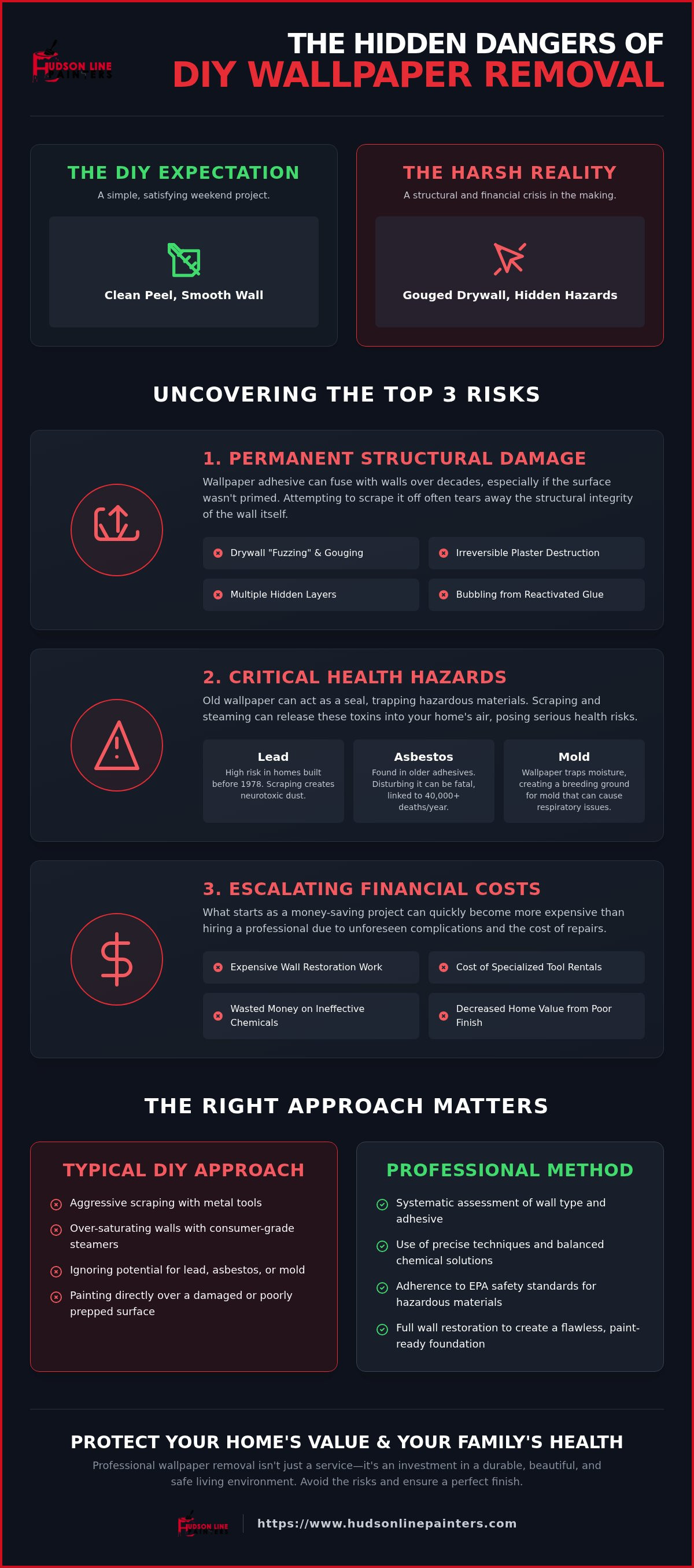
Many homeowners start their renovation projects with the belief that wallpaper removal is a beginner friendly task. Retailers often reinforce this idea, suggesting that a simple spray bottle of water and a metal scraper are the only tools required. This is a dangerous misconception. The primary dangers of DIY wallpaper removal stem from the fact that wallpaper doesn't behave like a sticker; it functions as a chemical bond. In historical homes across Northern New Jersey, this bond has often cured for decades, turning a supposed "peel and reveal" into a high stakes surgical procedure on your walls.
In the past, many installers skipped the crucial step of priming the drywall or plaster before hanging the paper. This means the adhesive has likely fused with the wall's paper facing or the porous surface of the plaster. When you pull the wallpaper, you aren't just removing the decorative layer. You're often tearing away the structural surface of the wall itself. This "NJ Time Warp" is especially prevalent in older neighborhoods like Jersey City and Hoboken, where it's common to find four or more layers of history hidden behind a single modern pattern. Each layer represents a different era of adhesive technology, making a uniform removal strategy impossible for an amateur.
The Reality of Multiple Layers and "Hidden Surprises"
Finding a layer of 1990s vinyl over 1950s paper, which sits atop an original 1920s floral pattern, is a logistical nightmare. Each layer likely used a different adhesive. Removing vinyl requires scoring and heavy steam, while older paper may dissolve with simple enzymes. If you apply the wrong method, you risk over-saturating the wall, leading to mold or permanent structural softening. Some homeowners try to skip the struggle by "just painting over it," but this is a recipe for disaster. The moisture in new interior painting products often reactivates old glue, causing the hidden layers to bubble, peel, and ruin your expensive new finish.
Why Adhesives Evolve into Cement Over Time
Old fashioned wheat pastes and modern synthetic glues age differently. Over time, these substances can calcify, becoming nearly as hard as the plaster they're stuck to. In areas like Union County, the high humidity levels recorded in 2026 can reactivate these dormant adhesives, creating a gummy, unmanageable mess that clogs tools and smears across the wall. Using a consumer grade Wallpaper steamer without professional training often results in uneven heating. This can cause the glue to bond even tighter in some spots while scalded water damages the wall in others. Without the right chemical balance, you're more likely to gouge your walls than clean them.
Beyond the frustration of torn drywall, the dangers of DIY wallpaper removal extend into the very air you breathe. Many homeowners view wallpaper as a simple decorative skin. In reality, it often acts as a seal that preserves hazardous materials from previous generations. When you start scraping or steaming, you aren't just removing paper. You're potentially releasing lead dust, asbestos fibers, and dormant mold spores into your living environment.Lead and Asbestos: The NJ Historical Home Risk
Homes in Bergen County built before 1978 carry a high probability of containing lead-based paint beneath the wallpaper. Federal law mandates strict disclosures for these properties because lead dust is a neurotoxin. Scraping away stubborn paper often pulls up the top layer of paint, creating microscopic dust that is difficult to contain. As of January 12, 2026, the EPA has implemented even stricter dust-lead action levels to protect families from these hazards during home renovations.
Asbestos is another significant concern that many DIY guides ignore. While some believe asbestos is only found in pipe insulation, it was frequently used in wallpaper backing and adhesive mastic before the 1980s. The EPA's March 2024 ban on chrysotile asbestos addresses new uses, but "legacy asbestos" remains a threat in older NJ homes. Disturbing these materials can be fatal; more than 40,000 Americans die annually from asbestos-related diseases. If you encounter a gray or black adhesive that looks like tar, stop immediately. Professional testing is the only way to ensure your safety before proceeding with residential painting and restoration.
The "Mold Trap" and Respiratory Safety
Wallpaper often serves as a non-porous vapor barrier. This traps moisture against the wall, creating a perfect breeding ground for mold and mildew. You might notice a faint, musty smell when you enter the room. Once you apply a steamer, you aren't just loosening glue. You are aerosolizing those mold spores, allowing them to bypass standard dust masks and enter your lungs. This can lead to immediate respiratory issues for your family.
Industrial stripping agents present their own risks. Many "fast acting" solvents contain high levels of Volatile Organic Compounds (VOCs) that can cause dizziness or respiratory distress in unventilated spaces. Professional crews utilize high-grade PPE and bio-enzymatic cleaners that are more effective and significantly safer for your home environment. If you're concerned about the history of your walls, reaching out for a professional assessment can provide the peace of mind you need.
Structural Damage: Drywall Gouging and Plaster Destruction
The physical dangers of DIY wallpaper removal often manifest as permanent scars on your home’s interior. While a professional understands the delicate balance of moisture and pressure, many homeowners inadvertently destroy their walls in an attempt to save time. This destruction typically falls into two categories: the tearing of modern drywall and the catastrophic failure of historical plaster. These mistakes don't just look bad; they compromise the foundation of your future paint job and significantly decrease your property's value.
When you over-saturate unprimed drywall, the water penetrates the protective paper facing. This leads to a condition known as "fuzzing." The paper fibers separate and create a rough, hairy texture that is impossible to paint over. Any attempt to sand these fibers only makes the problem worse, leading to a cycle of damage that requires expert drywall and plaster repair to fix. Additionally, a single slip with a rigid metal scraper can create deep gouges. These scars require hours of skim coating and sanding to disappear, often costing more in labor than the original removal would have.
The Fragility of Historical Plaster
In the brownstones of Hoboken or the Victorian homes of Bergen County, walls are often constructed of lath and plaster. These systems rely on "keys," which are the sections of plaster that squeeze between wooden slats to hold the wall in place. The aggressive vibration and heavy pressure of DIY scraping can easily break these brittle keys. Once the keys are gone, the plaster becomes "sagging" or completely detached from the lath. You may also experience delamination, where the smooth finish coat separates from the rough base coat. Repairing these structural failures is a specialized craft. It's a meticulous process that is significantly more complex and expensive than a simple drywall patch.
Over-Saturation and Structural Weakening
The "Sponge Effect" is a common pitfall for the inexperienced. Homeowners often use excessive steam or soaking water to combat stubborn adhesive. On unsealed drywall, this moisture seeps into the gypsum core, weakening the entire panel. If water reaches the wall cavity, it can lead to long term wood rot or hidden mold growth behind the surface. Professional grade tools allow for targeted moisture control. This ensures the adhesive dissolves effectively without the wall absorbing the stripping chemicals or compromising its structural integrity.
While previous sections focused on the hidden environmental and structural risks, the dangers of DIY wallpaper removal also include immediate threats to your physical safety. Home improvement is often portrayed as a harmless weekend activity, but professional grade removal involves high temperatures, caustic chemicals, and precarious heights. Without the proper equipment and safety protocols, a simple room refresh can result in a trip to the emergency room or a call to the fire department. Professional steamers are designed to boil water to create a consistent flow of pressurized steam. A slight slip or a loose hose connection can result in severe second degree scalds in seconds. Furthermore, many homeowners rely on industrial strength stripping agents to dissolve stubborn adhesives. These solutions can be highly caustic, causing painful skin irritation or chemical burns if they splash into your eyes. We prioritize your safety by utilizing bio-enzymatic cleaners and controlled steam applications that mitigate these hazards.Water and Electricity: A Lethal Mix
A common mistake in DIY guides is the suggestion to simply cover electrical outlets with painter's tape. This provides a false sense of security. Steam is a gas; it easily bypasses tape and enters the electrical box, where it condenses back into liquid water. This creates a direct path for short circuits or electrical fires. To truly protect your home, the room must be de-energized at the circuit breaker. This requires working with specialized, battery-powered lighting to maintain visibility. We ensure every outlet and switch is properly managed before a single drop of water touches the wall.
The Physical Toll of DIY Removal
The research is clear: DIY wallpaper removal can take 4 to 8 hours per room, depending on the number of layers. This is an exhausting physical endurance test. Spending hours on a ladder with your arms extended overhead leads to significant fatigue and repetitive strain injuries. Most accidents happen during the final hours of a project when exhaustion sets in. You might lose your balance on a ladder or slip on the "stripper sludge" that inevitably coats the floor. During the intense 2026 heatwaves in Northern New Jersey, performing this level of manual labor in a poorly ventilated attic or upstairs bedroom can quickly lead to heat exhaustion or dehydration.
Request a professional wallpaper removal assessment
Why Professional Removal is a Financial Investment
When homeowners calculate the cost of a renovation, they often look at the price of a DIY kit versus a professional quote. This perspective ignores the "True Cost" equation. While a basic scoring tool and a bottle of solution might only cost between $45 and $90 at a local hardware store, the dangers of DIY wallpaper removal include the high probability of accidental damage. If you inadvertently tear the wall’s paper facing or gouge the underlying plaster, you aren't just losing time. You are creating a need for extensive repairs that can quickly eclipse your initial savings. For a detailed breakdown of what to expect in our region, consult our Wallpaper Removal Cost Per Room in NJ guide.
Professional craftsmen utilize industrial grade equipment that simply isn't available in retail DIY kits. We use high capacity steamers that provide consistent, controlled heat and bio-enzymatic solutions that break down adhesives at a molecular level without damaging the wall surface. This precision ensures that we avoid the "Sponge Effect" mentioned earlier, where walls absorb excess moisture and chemicals. Additionally, our professional insurance provides a layer of security for your home’s equity. If an amateur project goes wrong, the financial burden of fixing the structural mess falls entirely on you. With a professional team, you receive a guarantee of technical precision and a damage-free result.
From Removal to Painting: The Seamless Transition
Removing the paper is only the first stage of a successful transformation. One of the most overlooked dangers of DIY wallpaper removal is the residue of microscopic adhesive left behind. If you apply new paint over these dormant chemicals, the finish will eventually crack, peel, or bubble. We focus on neutralizing the wall surface and performing the necessary skim coating walls after wallpaper removal to ensure a level, factory-smooth foundation. Understanding how to prepare walls for painting after wallpaper removal is what separates a temporary fix from a long-term investment in your home's aesthetic.
Protecting Your NJ Property Value
In the competitive Northern New Jersey real estate market, the quality of your interior finishes directly impacts your property appraisal. Botched DIY jobs with visible gouges or uneven textures signal to buyers that the home hasn't been meticulously maintained. By investing in professional removal, you ensure a "clean slate" for your next interior painting project. This disciplined approach preserves the historical integrity of your walls and adds genuine value to your space. You deserve a home that reflects high standards of craftsmanship and care.
Contact Hudson Line Painters for a professional assessment
Secure Your Home’s Value with Professional Restoration
Your home's walls are more than just a surface for decor; they are a vital part of your property's structural and financial integrity. We've explored how the dangers of DIY wallpaper removal range from hidden environmental hazards like legacy asbestos to the catastrophic failure of historical plaster keys. Attempting this project without specialized tools often results in expensive repairs that far outweigh any initial savings. It's a high stakes gamble that can compromise both your family's health and your home's equity.
As fully insured and licensed NJ contractors, we bring years of experience to every project. We are specialists in plaster wall restoration, ensuring that historical surfaces are preserved rather than destroyed. Our team proudly serves homeowners across Hudson, Bergen, and Union Counties, providing the technical precision needed for a flawless, paint-ready finish. We take pride in transforming stressful maintenance tasks into seamless, professional results.
You don't have to face the stress of an unpredictable renovation alone. Let us handle the heavy lifting so you can enjoy the peace of mind that comes with a perfectly prepped, damage-free home ready for its next chapter.
Frequently Asked Questions
Is it dangerous to remove old wallpaper myself?
Yes, it is often more hazardous than it appears on the surface. The dangers of DIY wallpaper removal include exposure to lead dust and legacy asbestos, especially in Northern New Jersey homes built before 1978. Beyond environmental toxins, you face physical risks like high-temperature steam scalds and electrical short circuits. Professionals use specialized equipment and personal protective gear to mitigate these risks, ensuring your family remains safe throughout the restoration process.
Can wallpaper removal cause mold issues?
Wallpaper removal doesn't create mold, but the process often reveals and aerosolizes it. Wallpaper acts as a non-porous vapor barrier, trapping moisture and creating a breeding ground for spores against the wall. Using a steamer can aerosolize these dormant spores, which leads to immediate respiratory distress if you don't have professional-grade ventilation. If you notice a musty smell or black spots as you peel, stop immediately to avoid spreading contamination.
How do I know if my old wallpaper has lead paint or asbestos?
You cannot identify these hazards by sight alone, as they are often microscopic or hidden in the adhesive. If your home was built before 1978, federal law indicates a high probability of lead-based paint beneath the paper layers. Asbestos was also commonly used in wallpaper backings and adhesives until the early 1980s. The only certain way to identify these materials is through professional testing before you disturb the surface.
What happens if I gouge my drywall while removing wallpaper?
Gouging creates deep physical scars that will show through even the most expensive new paint. If you tear the protective paper facing of the drywall, the gypsum core becomes exposed and "fuzzes" when any moisture is applied. This requires a professional to perform meticulous skim coating and sanding to restore a level surface. Skipping these repairs results in an uneven finish that significantly lowers your home's aesthetic appeal and appraised value.
Is it worth hiring a professional for wallpaper removal in NJ?
Hiring a professional is a smart financial choice that protects your home's equity and your personal time. In Northern New Jersey, historical homes often have multiple layers of paper and fragile plaster that amateurs easily destroy. A professional team brings specialized insurance, industrial-grade tools, and the expertise to handle "hidden surprises" efficiently. This saves you from a project that could otherwise take weeks of frustrating manual labor.
Can I just paint over old wallpaper instead of removing it?
Painting over wallpaper is a temporary fix that usually results in a costly failure. The moisture in new interior paint often reactivates the old adhesive, causing the paper to bubble, peel, or sag shortly after the job is finished. It also leaves visible seams and textures that ruin the professional look of your room. Removing the paper properly is the only way to ensure a durable, smooth foundation for your walls.
What are the risks of using a wallpaper steamer?
Steamers reach extremely high temperatures and can cause severe second-degree scalds if the hose leaks or the plate slips. There is also a significant risk of electrical fire when using steam near outlets. Steam is a gas that can penetrate outlet covers and condense into liquid water inside the wall boxes, leading to immediate short circuits. Professionals de-energize the room and use targeted moisture control to prevent these technical accidents.
Why is wallpaper removal so much harder in older homes?
Older homes in areas like Jersey City or Hoboken often feature historical plaster and unprimed walls that bond permanently with adhesives. In the past, installers frequently applied paper directly to porous surfaces, making it nearly impossible to remove without breaking the brittle plaster keys. You may also find four or more layers of history hidden behind a single modern pattern. Each layer requires a different chemical approach to remove safely without causing structural damage.


