
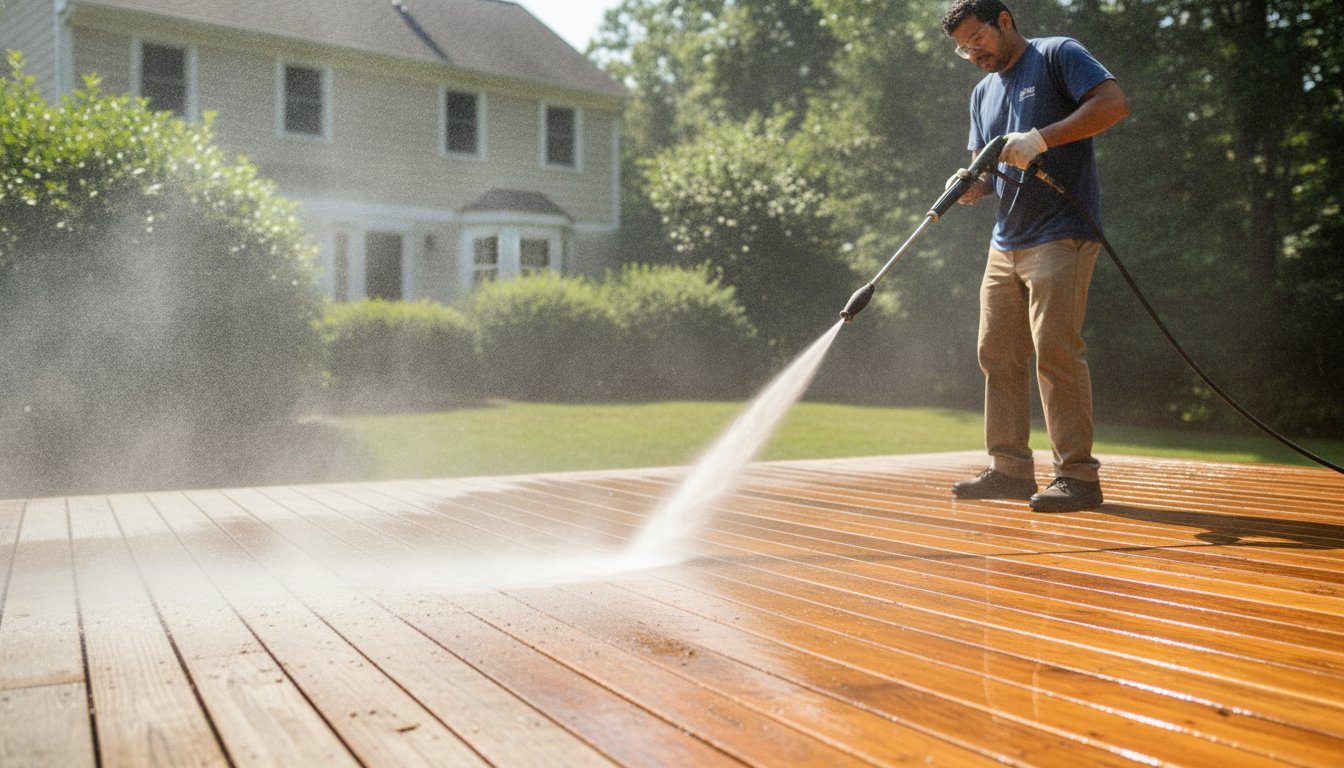
The highest pressure setting on your machine is often the fastest way to ruin a perfectly good outdoor space. While it's tempting to blast away years of grime, power washing a deck before staining is a precision mechanical process rather than a test of brute force. You've likely seen the results of a rushed job: "fuzzy" wood fibers, permanent gouges, or stain that begins to peel before the first New Jersey winter even arrives. It's frustrating to invest your weekend into a project only to have it fail because the wood wasn't prepped with the right technical care.
We believe your deck should be a source of pride, not a recurring chore. This guide shares the professional secrets to cleaning your wood safely, ensuring the pores are open and ready to accept a high quality finish. You'll learn how to navigate the specific challenges of our humid local climate, including the exact drying times required before you pick up a brush. We are going to walk you through a systematic framework that results in a flawless finish designed to last for three years or more, protecting your investment and your home's curb appeal.
Key Takeaways
- Understand how precision cleaning opens wood pores to ensure your stain penetrates deeply for a finish that lasts for years.
- Learn the technical difference between water volume and pressure to prevent the common "fuzzy wood" damage caused by consumer-grade washers.
- Discover why power washing a deck before staining is a non-negotiable step for removing old contaminants and ensuring perfect adhesion.
- Master the critical 48-hour drying rule and learn how the specific humidity of the New York metropolitan area dictates your project timeline.
- Identify the professional techniques used to avoid unsightly wand marks and achieve a smooth, furniture-grade result on your outdoor surfaces.
Why Power Washing a Deck Before Staining is Non-Negotiable
Many homeowners view a quick rinse as a sufficient preparation step, but professional power washing a deck before staining is actually a mechanical preparation step that ensures long-term chemical adhesion. There is a fundamental difference between simply cleaning and stripping. Cleaning removes surface pollutants like pollen, dirt, and bird droppings. Stripping, however, involves the removal of old, failing film-forming finishes that would otherwise block your new stain from reaching the wood grain. Without this distinction, your new investment is destined to fail before the season ends.
The true value of a professional wash lies in the "pore opening" effect. Wood is a porous, vascular material designed to transport moisture. Over time, these pores become clogged with environmental pollutants and microscopic debris. When we apply water at the correct volume and pressure, we clear this vascular structure. This allows the new stain to dive deep into the timber rather than just drying on the surface. We also focus on neutralizing degraded lignin. Lignin is the natural organic polymer that binds wood fibers together. When sunlight breaks it down, it leaves behind dead wood cells that prevent a strong bond. If you don't wash these away, your stain attaches to dead fibers that will soon flake off, taking your expensive finish with it.
Removing Mill Scale and Graying Fibers
New lumber presents its own unique set of challenges, specifically mill scale. This occurs during the manufacturing process when high speed planers crush the wood's surface fibers, creating a glazed, impenetrable barrier. If you don't remove this scale, the stain will simply bead up and roll off. On older decks, the primary enemy is UV damage. Constant sun exposure kills the top layer of wood cells, resulting in a gray, weathered appearance. Our process focuses on stripping away this dead layer to expose fresh, "hungry" wood cells. This technical approach aligns with established wood finishing techniques that emphasize surface porosity over cosmetic appearance.
The Consequences of Skipping the Wash
Skipping a thorough wash is the most common cause of DIY staining failures. When stain is applied to dirty or weathered wood, it sits on top of the debris, leading to rapid peeling and flaking. Perhaps more dangerous is the "rot sandwich" effect. Trapping mold and mildew spores under a fresh coat of stain creates a dark, moist environment where fungi can thrive. This leads to internal wood rot that can compromise the structural integrity of your deck. To ensure your outdoor space remains safe and beautiful, it's vital to follow the maintenance cycles outlined in our Ultimate Guide to Deck & Fence Staining for NJ Homeowners (2026).
The Technical Science of Pressure: Avoiding Wood Damage
Brute force is the enemy of a beautiful finish. When power washing a deck before staining, many homeowners mistakenly prioritize high pressure (PSI) over water volume (GPM). Gallons Per Minute (GPM) is the true measure of cleaning efficiency because it carries away debris without the need for aggressive, wood-scarring force. High PSI acts like a knife; if it's too concentrated, it slices through the wood's lignin and creates the "furring" trap. This results in a fuzzy, splintered texture that traps stain unevenly and feels uncomfortable underfoot. Following a structured approach to pressure washing a deck ensures you don't cross the line from cleaning to destroying.
Precision requires the right equipment and technique. We utilize 25-degree or 40-degree fan tips to distribute pressure across a wider surface area, which is the "Goldilocks" zone for delicate wood boards. A 0-degree red tip should never touch a deck. To avoid unsightly lap marks or stop-start scars, we employ a "wet-edge" technique. This involves sweeping the wand in long, continuous motions that follow the length of the board, never stopping in the middle of a pass. If the technical nuances of pressure feel overwhelming, our team provides meticulous deck and fence staining services that prioritize wood health over speed.
Pressure Settings for Different Wood Species
Every wood species has a different tolerance level. For softwoods like pressure-treated pine or cedar, we keep settings strictly between 500 and 800 PSI to prevent deep gouging. Hardwoods like Ipe or mahogany are much denser and can handle slightly higher pressure, but they require a tighter technique because any mistakes are difficult to sand out. Composite decks are a different category entirely; power washing a deck before staining isn't the goal here since the material is non-porous. In these cases, the wash is purely for surface decontamination rather than pore preparation.
Chemical Pre-Treatments and Brighteners
We believe that chemicals should do 70% of the work so the pressure doesn't have to. We avoid harsh chlorine bleach, which can wash out the wood's natural color and damage your landscaping. Instead, we use sodium percarbonate based cleaners to lift dirt and organic growth safely. The final, essential step is applying an oxalic acid brightener. This resets the wood's pH balance after the alkaline cleaning phase, opening the grain further and restoring the natural "new wood" look. This chemical precision ensures the surface is chemically neutral and ready for maximum stain absorption.
Timing and the NJ Climate: When to Apply the Stain
Patience is the final ingredient in a successful restoration. After power washing a deck before staining, the wood must return to a specific moisture equilibrium. In the New York metropolitan area, the 48-hour rule is the absolute minimum wait time we recommend. While the surface might look dry after a breezy afternoon, the deep internal fibers of the wood often remain saturated. Applying stain too early traps that moisture inside, leading to a cloudy finish or immediate peeling as the water tries to evaporate through the new coating. We've seen many DIY projects fail simply because the homeowner rushed to beat a Monday morning return to work.
Local geography plays a massive role in your project timeline. A deck tucked into the permanent shade of a Jersey City brownstone will often take twice as long to dry as a suburban deck in open sunlight. In Hudson County, the proximity to the river can increase ambient humidity, extending drying times significantly beyond the standard window. We don't leave these variables to chance. The only professional way to guarantee the wood is ready for stain is by using a digital moisture meter. We look for a moisture content of 12% to 15% or lower before we ever open a can of stain to ensure the product bonds at a molecular level.
NJ Weather Patterns and Project Scheduling
Managing a project in New Jersey requires finding the perfect "Two-Day Window" in our notoriously unpredictable spring rain schedule. You need one clear day for the wash and at least two dry, low-humidity days following the application. Finding that gap is essential when power washing a deck before staining to avoid trapping New Jersey's persistent moisture. However, heat is just as dangerous as rain. Staining on a 90-degree day in Union County causes the product to flash-dry on the surface before it can penetrate the grain, resulting in lap marks and a blotchy appearance. For our clients in coastal Bergen County, salt air adds another layer of complexity; salt deposits must be neutralized during the wash phase to ensure the stain bonds correctly to the wood cells.
Testing for Dryness Without a Meter
If you don't have access to a professional meter, the "Water Drop Test" is a reliable secondary check for surface readiness. Place a few drops of water on several areas of the deck, including the most shaded corners. If the water beads up, the wood is either still too wet or a previous sealer is still present. If it soaks in within seconds, the pores are likely open and hungry for product. Keep in mind that "dry to the touch" is a dangerous myth for thick deck joists and railings. These denser components hold water much longer than thin floorboards. For a deeper dive into managing your property's exterior, consult The Homeowner’s Guide to Professional Power Washing in New Jersey (2026) for localized maintenance advice.

Professional Workflow vs. DIY Pitfalls
The difference between a DIY project and a professional restoration often comes down to the machinery in the driveway. Most homeowners rely on small electric consumer washers that prioritize high pressure over water volume. These units are prone to pressure fluctuations that result in uneven cleaning and "pulsing" marks. In contrast, we utilize professional gas-powered units that deliver a consistent, high-volume stream. This equipment allows us to clean efficiently without the aggressive force that causes irreversible wood damage. When power washing a deck before staining, the goal is a uniform surface, not a collection of light and dark patches.
Skill is the second half of the equation. A novice often leaves behind "wand marks" or stop-start scars that only become visible after the stain is applied. These marks are essentially permanent without deep, aggressive sanding. A craftsman understands the rhythmic movement required to maintain a consistent distance and speed across every board. Beyond the wash, we include a precision sanding phase to address raised grain, a step most DIYers skip. This ensures that when we are power washing a deck before staining, the final surface is as smooth as interior furniture. Hiring a local NJ contractor provides peace of mind through liability insurance and professional accountability, protecting you from the high-risk nature of wood restoration.
The Cost of a Mistake
Fixing a failed DIY attempt is a labor-intensive and expensive process. If a board is gouged or splintered by too much pressure, the cost of sanding out those mistakes or replacing the lumber entirely often exceeds the price of the initial service. Professional power washing is an investment in your property's longevity rather than just a cosmetic fix. It protects your property value by ensuring the wood remains structurally sound and aesthetically pleasing for years. A "cheap" project quickly turns into a significant carpentry bill if the wood's integrity is compromised by improper technique.
The Professional Checklist
Our workflow includes a rigorous site preparation protocol that protects your home's exterior. We don't just focus on the wood; we also tarp and wet down nearby siding and landscaping to prevent chemical damage. We wash every board from end to end to maintain consistent coverage, avoiding the "spot-cleaning" look that plagues many DIY projects. Finally, we perform a post-wash inspection to check for raised grain or missed contaminants before the first drop of stain touches the surface. If you're ready to trade the stress of a weekend project for a guaranteed transformation, you can schedule a professional deck staining consultation with our team today.
Professional Deck Restoration with Hudson Line Painters
Choosing a contractor for your outdoor project shouldn't feel like a gamble. At Hudson Line Painters, we've developed a proprietary "NJ-Weatherproof" process specifically engineered to handle the unique environmental stressors of the Hudson and Union County climate. We understand that power washing a deck before staining isn't just about removing dirt; it's about preparing the surface to withstand the intense humidity and seasonal temperature swings common in our region. Our approach shifts the focus from simple maintenance to high-end restoration, ensuring your outdoor space remains a beautiful extension of your home for years to come. For readers in the Southeast, The Awesome Painting Services offers a similar level of professional expertise for residential and commercial painting needs in the Orlando area.
We hold our work to meticulous craftsman standards, treating every individual deck board with the same technical care we would apply to a piece of fine furniture. This level of precision is why we offer a seamless full-service integration, moving from the initial decontamination phase directly into expert deck & fence staining. By managing the entire project lifecycle, we eliminate the communication gaps and technical errors that often occur when hiring separate companies for cleaning and finishing. Our local reputation is built on site etiquette and professional results, providing you with the peace of mind that your property is in disciplined hands.
The Hudson Line Difference
Our methodology is rooted in technical discipline when power washing a deck before staining. We prioritize high water volume (GPM) over aggressive pressure (PSI) to preserve the structural integrity of your wood fibers while achieving a deeper clean. This proprietary chemical-mechanical balance allows us to lift stubborn organic growth and old finishes without resorting to the destructive force that causes wood to splinter. We maintain a strong local presence throughout Hudson, Union, and Bergen Counties, which means we're never far away when you need a reliable partner for your home's exterior care. Our team arrives on time, works systematically, and leaves your site cleaner than we found it.
Start Your Deck Transformation Today
Your home's curb appeal is a significant investment, and we're here to help you protect it. We provide precise, transparent estimates that reflect the actual scope of your restoration project, so there are never any surprises on the final bill. For homeowners looking to revitalize their entire property, we offer the benefit of bundling power washing with our comprehensive exterior painting service. This holistic approach ensures a cohesive, premium look for your home's facade and outdoor living areas. If you're ready to experience a safe and guaranteed transformation, Book your consultation with Hudson Line Painters and let us restore the natural beauty of your deck.
Restore Your Outdoor Living Space Today
A beautiful deck is the foundation of your summer memories, but its longevity depends entirely on the technical precision of your preparation. By mastering the balance between water volume and pressure, you ensure that power washing a deck before staining creates a perfectly receptive surface rather than a damaged one. Respecting the 48-hour drying rule and accounting for New Jersey’s specific humidity levels are the final steps in avoiding a peeling or blotchy finish. These meticulous details separate a temporary fix from a professional restoration that adds genuine value and comfort to your home.
Since 2018, Hudson Line Painters has served homeowners across Hudson, Union, and Bergen Counties with a commitment to disciplined craftsmanship and site etiquette. As specialized wood restoration experts, we take the stress out of property maintenance by providing a safe, guaranteed transformation for your outdoor surfaces. Don't settle for "fuzzy" wood or a DIY failure when you can have a deck that looks brand new. Request Your Free Deck Restoration Estimate and let us handle the technical details while you enjoy the results. Your ideal outdoor retreat is just one consultation away.
Frequently Asked Questions
Can I stain my deck the same day I power wash it?
No, you should never stain a deck on the same day it has been washed. Wood is a highly porous material that acts like a sponge; even if the surface looks dry to the eye, the internal fibers remain saturated with water. If you apply stain over damp wood, the moisture becomes trapped, which prevents the product from bonding and leads to immediate peeling or a cloudy, unattractive finish. In our local climate, we recommend waiting at least 48 hours for the wood to reach a safe moisture equilibrium.
What happens if it rains after I power wash my deck but before I stain it?
Rain resets your drying clock completely. If a storm hits after your cleaning phase, the wood absorbs fresh moisture, and you must wait for it to dry out again before proceeding. This typically adds another 24 to 48 hours to your project timeline, depending on the intensity of the rain and the amount of direct sunlight your deck receives. We always monitor local forecasts to find a clear window where the wood can remain dry from the first wash through the final curing of the stain.
Is 3000 PSI too much for a wood deck?
Yes, 3000 PSI is generally far too aggressive for residential wood surfaces and can cause permanent structural damage. High pressure at that level often slices through the wood's natural binders, leading to deep gouges, splintering, and a ruined aesthetic. When power washing a deck before staining, we prioritize water volume over sheer force. For most softwoods like cedar or pressure-treated pine, we keep our equipment settings between 500 and 800 PSI to ensure a deep clean without compromising the integrity of the boards.
Do I need to sand my deck after power washing?
Sanding is often a necessary step because the cleaning process can "raise the grain" of the wood. This creates a "fuzzy" or splintered texture that is uncomfortable to walk on and prevents the stain from laying flat. Once the wood is completely dry, a light sanding removes these loose fibers and opens the pores further. This extra effort results in a furniture-grade finish that feels smooth underfoot and allows the stain to penetrate more deeply for a longer-lasting result.
Can I just use a deck brightener instead of power washing?
A brightener is an essential chemical step, but it is not a substitute for a mechanical wash. Brighteners are designed to reset the wood's pH balance and lighten the color, but they cannot remove deep-seated dirt, mold spores, or old, failing finishes. Power washing a deck before staining is the only way to achieve true decontamination. We use a proprietary balance of both methods; the wash handles the heavy lifting of cleaning, while the brightener prepares the wood chemically for the new coating.
How much does it cost to have a professional power wash and stain a deck in NJ?
The cost of professional restoration in New Jersey depends on several variables, including the total square footage, the complexity of the railings, and the current condition of the wood. Decks with multiple levels or those requiring extensive stripping of old solid stains will naturally require more labor. While industry averages provide a baseline, our regional labor and material costs in Hudson and Union counties are unique. We recommend requesting a custom estimate to get an accurate price tailored to your property's specific needs.
Will power washing remove old solid stain?
Power washing alone will only remove loose or flaking pieces of a solid stain. If the old finish is still well-bonded to the wood, attempting to blast it off with high pressure will likely destroy the wood fibers before the stain ever budges. Removing a solid finish requires a combination of professional-grade chemical strippers and specialized sanding techniques. Our team evaluates the existing coating during our initial consultation to determine the most effective and safest removal method for your specific deck.
What is the best time of year in New Jersey to power wash and stain a deck?
Late spring and early fall provide the most reliable windows for deck restoration in our area. These seasons offer the moderate temperatures and lower humidity levels required for the wood to dry properly and the stain to cure effectively. We generally avoid the peak of summer when high heat can cause the stain to dry too quickly on the surface. We also steer clear of early spring when heavy pollen counts can settle into your fresh wet finish, or late autumn when falling leaves can stick to the boards.


