

Imagine spending your Saturday morning in a Hudson County brownstone, steamer in hand, only to realize that after three hours you've cleared just six inches of wall. It's a frustrating scenario many New Jersey homeowners face when a simple refresh turns into a technical nightmare. You might feel a persistent tug of anxiety as you notice the drywall gouging or find a mysterious, sticky residue that simply won't budge. We understand that your home is your greatest investment, and seeing its surfaces deteriorate under a scraper is incredibly stressful. Recognizing the signs you need professional wallpaper removal early can be the difference between a smooth transition to paint and a multi-day DIY disaster that requires extensive wall repairs.
We agree that while modern "peel and stick" tutorials make the process look easy, the reality of New Jersey's historic housing stock is often much more complex. This guide promises to help you identify the critical red flags that require expert intervention to save both your walls and your sanity. You'll discover how to spot hidden water damage, handle stubborn layers of vintage adhesive, and ensure your plaster remains intact. We will preview the technical indicators that suggest your project has moved beyond a weekend task, ensuring you achieve a clean, paint-ready finish without the risk of structural damage.
Key Takeaways
- Identify the unique challenges of New Jersey's historic housing stock, from stubborn adhesives to delicate plaster.
- Learn the specific signs you need professional wallpaper removal, such as the "postage stamp" effect or discovering multiple layers of bonded paper.
- Understand the critical differences between treating modern drywall and historic plaster to avoid permanent surface damage.
- Discover how industrial-grade tools and specialized surfactants achieve a "paint-ready" finish that DIY methods often miss.
- Master the essential post-removal steps, including surface neutralization and proper drying times, to ensure your new paint job lasts.
Signs You Need Professional Wallpaper Removal in NJ Homes
Professional wallpaper removal is a meticulous, systematic extraction of wall coverings and adhesives designed to protect the integrity of the underlying substrate. In New Jersey, homes ranging from historic Hoboken brownstones to modern Summit estates present a diverse array of wall challenges. Many homeowners assume they can simply peel back a corner and pull, but this is the most dangerous approach for your property's value. Forceful pulling often tears the delicate brown paper layer of drywall or causes historic plaster to crumble, leading to costly repairs. Our goal is a comprehensive paint-ready wall restoration, which ensures every trace of residue is neutralized before we begin interior painting.
The Complexity of North Jersey’s Historic Wall Coverings
Homes in Bergen and Hudson County frequently contain what we call wallpaper archeology, where multiple generations of paper have been layered over one another. This creates a thick, rigid shell that resists standard steamers and home-grade solutions. Understanding Wallpaper Types is vital for a successful project, as the adhesives used have evolved from simple wheat pastes to complex, moisture-resistant synthetics. New Jersey’s seasonal humidity also plays a role; moisture in the air can cause older glues to reactivate and then re-harden, creating a bond that's often stronger than the wall itself. These conditions are primary signs you need professional wallpaper removal to avoid permanent surface scarring.
Why Modern Peel-and-Stick Isn’t the Real Challenge
It's important to differentiate between modern, DIY-friendly temporary papers and the permanent installations of previous decades. Modern peel-and-stick products are designed for easy transitions, but traditional papers were built for longevity. One of the most significant signs you need professional wallpaper removal is finding paper installed before 2010, as these older adhesives often require specialized chemical surfactants to break their molecular bonds. If you attempt a surface-only removal, you risk leaving behind an invisible film of glue. This residue is a silent project-killer; it prevents paint from adhering properly and eventually causes unsightly bubbling. A professional assessment ensures that the wall health is prioritized, moving your project from a basic stripping task to a high-end restoration.
5 Red Flags That Your Project Requires an Expert
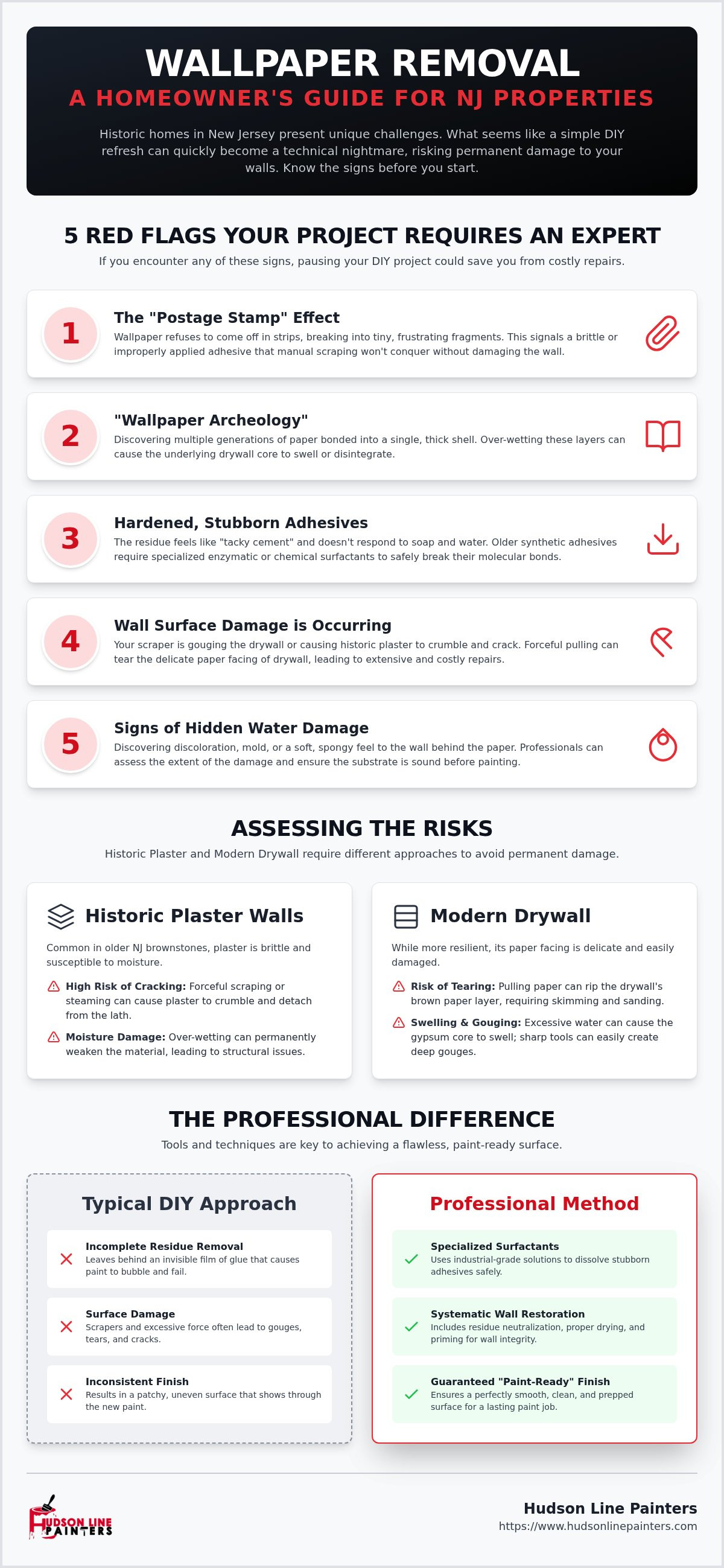
Every DIY project has a point of no return. Many New Jersey homeowners start with high hopes but quickly hit a wall when the paper refuses to cooperate. One of the clearest signs you need professional wallpaper removal is the "postage stamp" effect. This occurs when the paper won't release in long, satisfying strips. Instead, it breaks into tiny, frustrating fragments that require hours of tedious scraping for just a few square inches of progress. It's a signal that the adhesive bond has become brittle or was improperly applied, making manual removal nearly impossible without specialized equipment.
In many older properties across Hudson and Bergen Counties, you aren't just fighting one layer of decor. You might find three or four generations of patterns bonded into a single, thick shell. This "wallpaper archeology" is common in homes from the "disco era" of the 1970s, where new paper was often applied directly over the old. If you keep scraping at these multi-generational layers, you risk significant risks of DIY wallpaper removal, including deep gouges in your drywall or the cracking of historic plaster. Recognizing this early saves you from a massive repair bill later.
Identifying Multiple Layers and Hardened Adhesives
Perform a "corner test" by picking an inconspicuous area near the baseboard. Use a small putty knife to see if you can separate the layers. If you find multiple patterns underneath, you're dealing with a complex bond that requires more than just a spray bottle. DIYers often make the mistake of "over-wetting" these stubborn layers. This excessive moisture can soak through to the drywall core, causing it to swell or disintegrate entirely. While soap and water work for modern papers, older adhesives require commercial-grade enzymatic breakers to dissolve the chemical bonds safely. When the residue feels like "tacky cement" despite your best efforts, it's one of the primary signs you need professional wallpaper removal to ensure a smooth, paint-ready surface.
Detecting Moisture and Mold Behind the Paper
Visible bubbling or dark discoloration often hints at underlying moisture or plumbing leaks that have been hidden for years. Wallpaper acts as a vapor barrier, trapping New Jersey's high summer humidity against the substrate. If you peel back a layer and notice a sharp, musty smell, you've likely uncovered mold growth. This is a critical red flag that requires immediate attention. Professional intervention is necessary here to ensure proper containment. We prioritize meticulous site etiquette and dust management to ensure spores don't spread through your living space during the removal process, keeping your home environment safe and healthy.
Assessing the Risks: Plaster Walls vs. Modern Drywall
Plaster and drywall require fundamentally different removal strategies. If you use a scoring tool or excessive water without knowing your wall type, you risk structural damage that's difficult to reverse. One of the primary signs you need professional wallpaper removal is the presence of historic plaster, which is common in older Jersey City and Hoboken residences. Unlike modern drywall, plaster is a rigid, multi-layered material applied over wooden lath. Applying too much pressure with a scraper can break the "keys," which are the bits of plaster that squeeze between the lath to hold the wall in place. Once these keys break, the wall can become sagging and unstable.
To identify your wall type before you begin, perform a simple "knock test" or look behind a light switch cover. A solid, dull thud usually indicates plaster, while a hollow sound suggests modern drywall. Identifying this distinction is vital because the tools that work for one can be destructive to the other. For example, generic scoring tools often permanently damage the gypsum core of drywall or the delicate finish coat of plaster. We prioritize a diagnostic approach to ensure the removal method matches the substrate's specific needs.
The Fragility of Historic Plaster in Bergen and Hudson Counties
Homes built before 1950 generally feature plaster walls that demand a specialized low-moisture approach. If the finish coat becomes saturated during removal, it can lead to delamination, where the smooth outer surface separates from the base coat. We often see DIY attempts where the homeowner unknowingly used too much steam, causing the plaster to lose its structural bond. To restore these surfaces to a paint-ready state, we provide expert drywall and plaster repair. This ensures your historic home's character remains intact while the walls are perfectly smoothed for a fresh coat of paint.
Preventing Gouges and Surface Tears in Modern Drywall
Modern drywall consists of a gypsum core sandwiched between layers of heavy paper. The most common DIY disaster is tearing the "brown paper" layer just beneath the wallpaper. Once this layer is breached, the drywall becomes "fuzzy," and traditional spackle won't adhere properly without a specialized sealer. Professional steamers are significantly safer than chemical soaks because they provide controlled heat to liquefy glue without saturating the gypsum core. The technical cost of skim-coating and repairing a gouged room often far exceeds the cost of hiring a professional for the initial removal, making expert intervention a smarter financial choice for your home.
What Professionals Do Differently: Tools and Techniques
While many homeowners start with a spray bottle and a plastic scraper, professional results depend on industrial equipment and technical precision. One of the most common signs you need professional wallpaper removal is when standard home-center solutions fail to penetrate the paper's surface. We don't rely on "spray and pray" methods. Instead, we use high-capacity steamers that provide consistent, controlled heat. This process liquefies the adhesive without soaking the substrate, protecting your walls from the moisture damage discussed in previous sections. Our tools allow us to work efficiently while maintaining the structural integrity of your home's surfaces.
Commercial Steaming and Enzymatic Stripping
The science of professional removal centers on releasing the chemical bond rather than forcing the paper off the wall. We utilize specialized surfactants and commercial-grade enzymes that specifically target the molecular structure of 40-year-old wheat pastes and modern synthetic glues. These breakers eat through the residue safely, allowing the paper to release in larger, cleaner sections. We avoid aggressive scoring tools whenever possible. While some big-box store guides suggest heavy scoring, we know this often leads to permanent scarring of the drywall or plaster. Our meticulous approach ensures that the wall remains smooth and intact for the next phase of your renovation.
Skim Coating: The Bridge to a Perfect Paint Job
Stripped walls rarely look perfect immediately after the paper is gone. They often appear rough, pitted, or uneven due to years of being hidden behind a decorative layer. This is where the professional secret of skim coating comes into play. We apply a thin, uniform layer of joint compound across the entire surface to achieve a Level 5 finish. This step is essential for any high-end interior painting project. Without it, the new paint will highlight every minor imperfection left behind by the old adhesive. Recognizing the signs you need professional wallpaper removal early allows us to properly sequence this skim coating process, ensuring a seamless transition to your new color palette.
Site etiquette is another area where professional NJ contractors differ. We implement strict dust containment and floor protection protocols to ensure your home remains clean throughout the process. We treat your space with the respect a trusted neighbor would, using heavy-duty drop cloths and vacuum-assisted sanding to manage debris. This operational discipline ensures that the transformation of your room is a positive, stress-free experience from the first strip of paper to the final coat of paint.
Preparing for the Reveal: From Removal to Fresh Paint
Once the physical paper is gone, many homeowners are tempted to pick up a paintbrush immediately. This is a critical mistake that leads to peeling and uneven textures. One of the subtle signs you need professional wallpaper removal is the presence of invisible adhesive polymers that standard water alone cannot dissolve. We enforce a strict 24-hour drying rule before any further work begins on the substrate. This waiting period allows the moisture from our industrial steamers to evaporate completely from the drywall or plaster, preventing future mold growth and ensuring the wall is stable enough for sanding and priming.
Rushing this phase is the primary cause of "paint failure" in renovated rooms. If the wall isn't properly neutralized, the remaining glue will react with the moisture in the paint, causing it to crack or flake off within months. Our process ensures that every microscopic remnant of paste is removed, leaving behind a surface that is chemically and physically ready for its new finish. We prioritize this meticulous preparation to give you the peace of mind that your investment will last for years.
Why Removal Is Only Half the Battle
Neutralizing the wall involves more than just a quick wipe-down. We use specialized solutions to strip away the "invisible" chemicals left behind by decades-old adhesives. Following neutralization, we perform a final sanding to create a smooth, mechanical profile that allows the new paint to bond securely. For walls that have been covered for a long time, we always recommend an oil-based primer. This specific type of primer acts as a permanent sealer, locking in any deep-seated residue and preventing it from bleeding through your final color. This technical precision is one of the key reasons why the signs you need professional wallpaper removal often point toward a full-service restoration rather than a simple DIY strip.
Getting a Professional Estimate in North Jersey
Understanding the financial aspect is just as important as the technical execution of the craft. When you review a wallpaper removal cost per room NJ estimate, ensure it includes the restoration of the wall surface, not just the stripping of the paper. We provide transparent, comprehensive quotes across the entire Hudson and Union County area. Our estimates cover the full project lifecycle, from site protection and dust management to the final "paint-ready" reveal. This approach eliminates the "hidden costs" of wall repair that often surprise homeowners who try to handle the project themselves.
Ready to transform your space? Contact Hudson Line Painters for a consultation.
Revitalize Your Home With Expert Wall Restoration
Transforming your living space starts with a perfectly smooth foundation. We've explored how identifying the early signs you need professional wallpaper removal can save your walls from the structural damage often caused by aggressive DIY scraping. Whether you're dealing with historic plaster in a Jersey City brownstone or multi-layered paper in a Summit estate, our team brings the technical precision required for a flawless reveal. We understand the unique architectural needs of our local community.
Since 2018, we've served homeowners across Hudson, Bergen, and Union Counties with 5-star rated craftsmanship. We prioritize your home's long-term health. We don't just take the paper off; we specialize in the meticulous restoration of both historic plaster and modern drywall. By integrating industrial steaming with expert skim coating, we ensure your walls are durable and ready for a stunning new coat of paint. Our process guarantees a stress-free transformation that adds genuine value to your property.
Get Your Free Wallpaper Removal and Painting Estimate Today
Let's work together to turn your vision into a beautiful, lasting reality for your home.
Frequently Asked Questions
How much does professional wallpaper removal cost in NJ?
Professional pricing depends on several variables such as the number of paper layers, the type of adhesive used, and the condition of the underlying substrate. Every room in a North Jersey home presents unique challenges, especially in historic properties. We recommend an in-person assessment to provide a transparent estimate that covers both the extraction and the necessary wall restoration. This ensures your project moves forward with clear expectations and a guaranteed high-end result.
Can I just paint over my old wallpaper instead of removing it?
Painting over wallpaper is generally not recommended because the moisture in the paint can reactivate old adhesives, causing the paper to bubble or peel. This shortcut also leaves behind unsightly seams and textures that detract from your home's aesthetic value. Recognizing the signs you need professional wallpaper removal early helps you avoid the long-term cost of correcting a failed paint job that was applied over unstable, aging paper.
How long does it take a professional to remove wallpaper from a standard room?
A standard room typically takes between one and three days to complete, depending on the complexity of the project. This timeline includes the careful extraction of the paper, the neutralization of adhesive residue, and the essential 24-hour drying period. We don't rush the process because proper moisture management is critical for wall health. Our goal is to deliver a perfectly smooth, paint-ready surface without compromising the integrity of your drywall or plaster.
Will professional removal damage my historic plaster walls?
Our team uses specialized low-moisture techniques and controlled heat to ensure your historic plaster remains intact. We understand that older homes in Hudson and Bergen Counties feature delicate lath and plaster systems that can't handle aggressive scraping or excessive water. By using industrial-grade steamers and enzymatic breakers, we release the adhesive bond without putting undue pressure on the wall's structural "keys," preserving your home's historic character and value.
Do you provide skim coating services after the wallpaper is gone?
Yes, we provide comprehensive skim coating as a standard part of our wall restoration process. Stripped walls often have minor pits, gouges, or uneven textures that need to be smoothed before painting. We apply a thin layer of joint compound to achieve a Level 5 finish, ensuring your walls look brand new. This integrated approach combines removal with our expert drywall and plaster repair services for a seamless, high-end transformation.
What happens if you find mold behind the wallpaper?
If we discover mold during the removal process, we immediately pause work to inform the homeowner and implement containment protocols. Wallpaper often acts as a vapor barrier that traps New Jersey's summer humidity against the wall, creating an environment where mold can thrive. We prioritize site etiquette and safety, ensuring that any discovered issues are handled with professional care to prevent the spread of spores throughout your living environment.
Is it worth hiring a pro for just one accent wall?
Hiring a professional for an accent wall is a smart investment to prevent damage to the underlying substrate. Even a small area can present one of the signs you need professional wallpaper removal, such as stubborn adhesive that threatens to tear the drywall's paper layer. We bring the same level of technical precision and site protection to single-wall projects as we do to full-home renovations, ensuring a flawless foundation for your new paint.
What areas of New Jersey do you serve for wallpaper removal?
We proudly serve residential and commercial clients throughout Hudson, Union, and Bergen Counties. Our local service area includes Hoboken, Edgewater, Fort Lee, Teaneck, and Hackensack. We also provide expert wall restoration in Englewood, Cliffside Park, Leonia, and Palisades Park. Whether you live in a Jersey City brownstone or a Ridgefield estate, our team is your trusted neighbor for meticulous craftsmanship and reliable home improvement services across the Garden State.


