

Imagine relaxing in your Summit home when you notice a new, jagged crack tracing its way across your dining room ceiling. It's an unsettling sight that immediately sparks fears of a costly, messy collapse. Most homeowners in North Jersey cherish the historic character of their properties, but they dread the thought of plaster dust coating their furniture or hiring a contractor who treats an antique lath system like modern drywall. We understand that your home is your greatest investment, and seeing it show signs of age can be genuinely stressful.
The good news is that you don't have to settle for a failing ceiling or a chaotic renovation. This guide provides the peace of mind you need by detailing how specialized ceiling plaster repair NJ techniques can restore your home's original charm while keeping the process remarkably clean. We'll show you how to identify structural warning signs before they become emergencies and explain the meticulous craftsmanship required for a seamless finish. From stabilization to the final coat of paint, you'll learn how to achieve a smooth, crack-free result that withstands New Jersey's seasonal shifts and preserves your home's value for the long term.
Key Takeaways
- Recognize why traditional lath-and-plaster systems in North Jersey homes offer superior soundproofing and character compared to modern alternatives.
- Identify various types of ceiling damage, from common stress cracks to the brown rings indicative of plumbing leaks or seasonal shifts.
- Master the professional techniques for ceiling plaster repair NJ that use specialized adhesive washers to secure sagging areas without creating excessive dust.
- Learn why specific priming strategies are essential for ensuring fresh plaster finishes blend perfectly with your existing decor.
- Understand the financial and aesthetic benefits of hiring a specialist who manages the entire lifecycle from structural stabilization to the final coat of paint.
Why Plaster Ceilings in NJ Homes Require Specialized Care
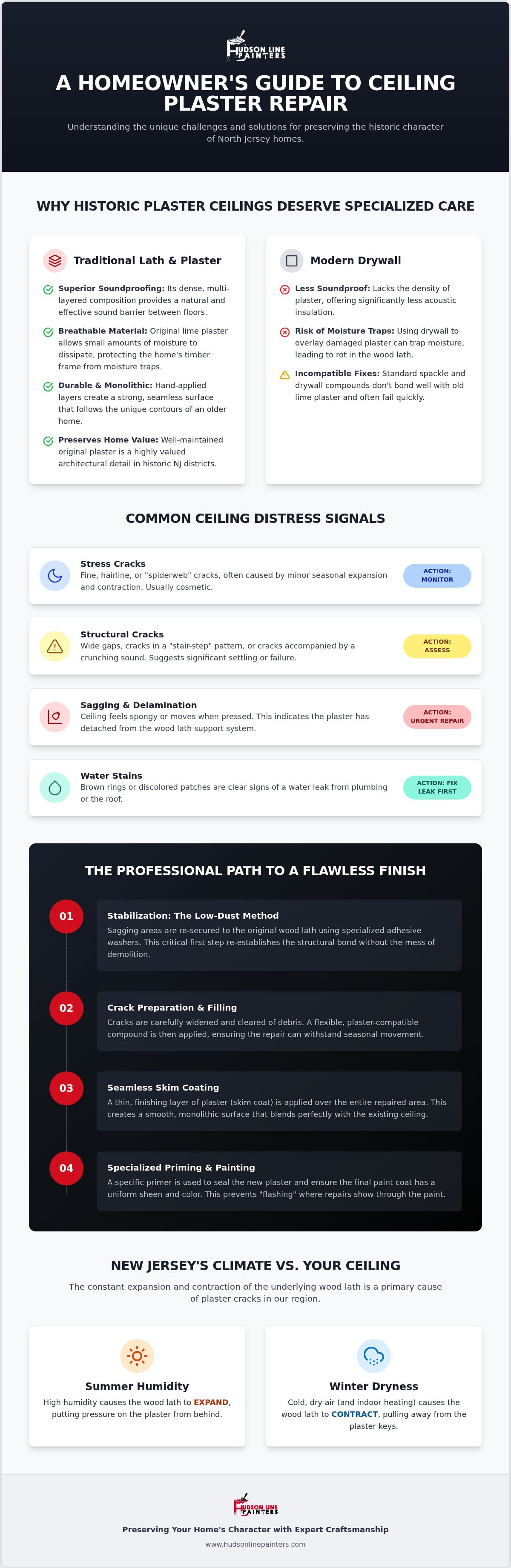
Pre-war homes across North Jersey possess a structural soul that modern construction rarely replicates. In high-end residential areas like Summit and Hoboken, the integrity of your home often rests on the condition of its original ceilings. Traditional Lath and plaster construction was the gold standard until the mid-1940s. This system involves horizontal wood lath strips nailed to the joists, which are then coated with multiple layers of lime or gypsum-based plaster. While durable, these systems require a specific approach to maintenance that goes beyond basic handyman skills.
Professional ceiling plaster repair NJ is about more than just aesthetics; it's about preserving the acoustic and thermal properties of your home. Plaster is significantly denser than drywall, providing a natural sound barrier between floors that modern materials can't match. However, many homeowners make the mistake of using standard hardware store spackle for "quick fixes." These rigid compounds don't bond well with old lime plaster and often pop out or crack again within months. Proper repair requires understanding how these historic materials interact with their environment.
Plaster vs. Drywall: Understanding the Difference
The structural composition of plaster involves a scratch coat, a brown coat, and a fine finish coat. This layering creates a monolithic surface that is incredibly strong. Unlike drywall, which is a flat board, plaster is hand-applied and follows the unique contours of an older home. We often see homeowners attempt to cover damaged areas with drywall overlays. This is a risky move in older NJ homes because it can create moisture traps between the layers. Original lime plaster is "breathable," allowing small amounts of moisture to dissipate naturally, which is vital for the health of your home's timber frame.
The Impact of New Jersey’s Climate on Plaster
New Jersey's weather is notoriously hard on historic interiors. In Hudson and Bergen counties, summer humidity levels cause the underlying wood lath to expand. When the dry, cold air of winter arrives, the wood contracts. This constant movement is why you might see cracks appear or widen in late winter. Historic heating systems, such as steam radiators common in Summit, further dry out the plaster bonds. Specialized ceiling plaster repair NJ accounts for these seasonal shifts by using materials that maintain a degree of flexibility while restoring the structural keys that hold the plaster to the lath.
Preserving these ceilings isn't just about tradition. It's a smart financial move. NJ buyers in historic districts value original architectural details. A smooth, well-maintained plaster ceiling suggests a home that has been meticulously cared for, directly impacting your property's resale value. When you're ready to refresh these historic surfaces, our interior painting services ensure the final finish is as durable as the repair itself.
Identifying Ceiling Damage: Cracks, Sagging, and Water Stains
Spotting a new blemish on your ceiling often triggers immediate concern about structural integrity. In North Jersey's historic homes, identifying the specific nature of the damage is the first step toward a permanent solution. While some issues are merely cosmetic, others indicate that the plaster has detached from its wooden support. To check this, you can perform a simple "Push Test." Gently press upward on the area surrounding a crack; if the plaster feels spongy or moves independently of the ceiling, the mechanical bonds have likely failed. Organizations like the International Masonry Institute provide technical guidelines for Plaster Restoration, emphasizing that identifying the root cause of this movement is essential for a lasting fix.
Stress Cracks vs. Structural Failure
Not every crack requires a full-scale intervention. Hairline "spiderweb" cracks are common in Summit and Hoboken homes, often appearing as the result of minor seasonal shifts. You should monitor these, but they rarely signal danger. However, wide gaps or "stair-step" cracks that mimic a staircase pattern suggest significant settling. If you hear a crunching sound or notice hollow spots when tapping the surface, it means the "keys"—the plaster that squeezed through the lath to lock it in place—have broken. This level of delamination requires professional ceiling plaster repair NJ to stabilize the surface before it becomes a safety hazard.
Water Damage Assessment in NJ Properties
Water is the primary enemy of historic plaster. In older Hudson County apartment buildings and Bergen County estates, the "brown ring" is a telltale sign of a past or active leak. These stains are caused by tannins in the wood lath leaching into the plaster as it gets wet. Common culprits in our area include leaking steam radiators, failing roof flashing, or bathroom overflows from the floor above. Simply painting over these spots is a temporary fix that will eventually peel. It is vital to learn how to fix water stains on ceiling before painting to ensure the new finish adheres properly to the substrate.
NJ homeowners should never ignore signs of an imminent collapse. If you see a visible bulge in the ceiling, or if large flakes of plaster begin to fall, the weight of the material is likely too much for the remaining lath bonds to hold. This is a critical situation that demands immediate attention to prevent property damage or injury. If you're concerned about the stability of your historic ceilings, reach out for a professional assessment to determine the best path forward for restoration.
The Professional Plaster Repair Process: From Stabilization to Skim Coating
Executing a successful ceiling plaster repair NJ requires a disciplined, multi-step approach that prioritizes both structural integrity and site etiquette. We begin every project by securing the work area with heavy-duty plastic sheeting and floor protection. Plaster work is notoriously dusty; however, our systematic containment process ensures that fine particles don't migrate to the rest of your home. Once the environment is protected, we can focus on the technical restoration of the ceiling substrate.
Stabilizing the Foundation: Plaster Washers and Screws
In many North Jersey homes, the plaster has simply pulled away from the wood lath due to gravity and age. Instead of a costly and messy demolition, we utilize a stabilization method involving specialized adhesive washers. These stainless steel discs are screwed through the plaster and into the lath, gently pulling the sagging material back into its original position. This technique is a hallmark of experienced plaster wall repair contractors in Bergen County who value preservation over replacement. It creates a rock-solid foundation without the need for major structural renovations.
After stabilization, we remove any remaining loose debris and clean the lath "keys" to ensure a strong mechanical bond. We then apply high-quality bonding agents to the old surfaces. This is a critical step; without a proper bridge between the old and new materials, the repair will eventually fail. For those interested in the technical standards of this craft, the U.S. National Park Service provides an excellent framework for Repairing Historic Flat Plaster, which informs much of our methodology. We then build up the surface using multiple layers of specialized plaster compounds, allowing each to cure properly.
The Art of the Skim Coat
The final phase of ceiling plaster repair NJ is the skim coat. This is where the skill of the craftsman truly shines. We apply a thin, glass-smooth layer of finishing compound over the entire repaired area, feathering the edges so the patch becomes completely invisible to the naked eye. To prevent future movement, we often integrate fiberglass mesh tape in high-stress areas where cracks are likely to return. Our goal is always a Level 5 finish; a surface so perfectly level that it looks original to the home. This meticulous attention to detail ensures that your ceiling isn't just fixed, but fully restored to its historic elegance.
Bridging the Gap: From Structural Repair to Premium Painting
Many contractors view structural work and aesthetic finishing as two separate worlds. This often results in a repair that is technically strong but visually jarring. At Hudson Line Painters, we treat ceiling plaster repair NJ as a single, cohesive craft. Once the skim coat is dry, the "Painter’s Eye" takes over the process. We use high-angle lighting, often called raking light, to inspect the surface for the tiniest undulations. This technique reveals imperfections that are invisible in standard room lighting but would become glaringly obvious once the final coat of paint is applied. By identifying these spots early, we can fine-sand the surface to a museum-quality finish.
Priming Fresh Plaster for Longevity
New plaster is highly alkaline. This high pH level can chemically react with certain paints, leading to premature peeling or "burning" of the finish. We carefully manage the surface chemistry before applying any color. While latex primers are common in modern construction, we often utilize specialized alkyd-based sealants for historic restorations. These sealants provide a superior moisture barrier and prevent "flashing." Flashing occurs when the repaired spots absorb paint differently than the surrounding original plaster, creating uneven patches of sheen. By utilizing our specialized interior painting services, you ensure that the transition between old and new surfaces is chemically stable and visually undetectable.
Color and Sheen Selection for Repaired Ceilings
Choosing the right finish is critical for historic NJ homes. In the tall-ceiling brownstones of Hoboken or the grand estates of Summit, light hits the ceiling at varied angles throughout the day. We typically recommend flat or ultra-matte finishes for these spaces. These sheens absorb light rather than reflecting it, which helps mask the natural, historic character and minor waves found in older plaster. While many people default to a standard, stark "Ceiling White," we often suggest slightly warmer off-whites. These tones better complement the aged woodwork and architectural details common in North Jersey properties, ensuring your ceiling plaster repair NJ project feels integrated with the home's original soul.
Schedule a professional consultation for your ceiling restoration
Selecting a Ceiling Plaster Repair Specialist in Northern NJ
Finding the right partner for ceiling plaster repair NJ is about more than just finding the lowest bid. It's about selecting a craftsman who respects the delicate nature of historic North Jersey homes. When you hire a contractor who specializes in both structural repair and premium painting, you eliminate the communication gap between different trades. This integrated approach ensures that the person patching your ceiling is acutely aware of how that patch will look under a final coat of paint. It saves you time, reduces the risk of rework, and ultimately protects your investment in your home's character.
What to Look for in a Local Estimate
A professional estimate should be transparent and comprehensive. Look for a clear breakdown between structural stabilization, such as the use of adhesive washers, and cosmetic patching. It is also vital to verify their specific experience with drywall and plaster repair in similar historic properties. Before signing any contract, ensure you ask these critical questions:
- Do you use fiberglass mesh to reinforce high-stress areas and prevent future cracking?
- What is your specific plan for dust containment to protect my home’s interior?
- Are you fully insured to perform work in the state of New Jersey?
- Does the quote explicitly include site protection and professional cleanup?
The Hudson Line Process: Clean, Reliable, Professional
We take immense pride in our operational discipline and site etiquette. Our process is designed to provide total peace of mind for homeowners across Hudson, Bergen, and Union Counties. We follow a logical, sequential workflow that ensures a predictable experience from the initial consultation to the final brushstroke. We don't just fix a crack; we manage a transformation. Whether you live in a Hoboken brownstone or a Summit estate, our commitment to cleanliness means you won't be left with a layer of white dust on your belongings. Our transparent pricing and meticulous care are the signatures of a brand that views ceiling plaster repair NJ as a craft that adds genuine value to your space.
Contact us today for a professional ceiling assessment
Revitalize Your Home’s Historic Elegance
Restoring the intricate beauty of a historic property requires a blend of technical precision and artistic care. You've learned how to distinguish minor cosmetic cracks from critical structural delamination, and why modern quick-fixes often fail where traditional stabilization techniques succeed. By choosing a comprehensive approach that integrates structural repair with premium finishing, you ensure that your ceilings remain a durable, beautiful asset for years to come.
Since 2018, we've focused on providing 5-star rated craftsmanship to homeowners across Hudson, Bergen, and Union Counties. We specialize in historic home interior restoration, offering a clean and systematic process that respects your living environment. Professional ceiling plaster repair NJ is a smart investment in your home's structural longevity and overall resale value. Our team is dedicated to delivering results that blend perfectly with your home's original architecture while providing the durability needed to withstand New Jersey's seasonal shifts.
Request Your Free NJ Ceiling Repair & Painting Estimate
We look forward to helping you preserve the unique character and charm of your North Jersey home with meticulous care and expert craftsmanship.
Frequently Asked Questions
How much does ceiling plaster repair cost in New Jersey?
Cost depends on the specific scope of damage, the height of your ceilings, and the stabilization methods required for a lasting fix. A small stress crack requires less intensive labor than re-securing a large sagging section with specialized adhesive washers. We provide detailed, on-site assessments to evaluate the health of your lath-and-plaster system. This allows us to offer a transparent estimate tailored to the unique architectural needs of your North Jersey home.
Can I repair a sagging plaster ceiling myself?
Repairing a sagging ceiling is a complex structural task that carries significant safety risks for a homeowner. While you might patch a minor hairline crack, a sagging surface indicates that the plaster has detached from the underlying wood lath. Attempting to fix this without professional-grade tools like plaster washers can lead to a sudden, dangerous collapse. Our experts safely stabilize the ceiling and mechanically bond it back to the joists to ensure long-term durability.
Is plaster repair messier than drywall repair?
Plaster restoration can be messier than modern drywall work because it involves removing loose material and fine-sanding historic compounds. However, our ceiling plaster repair NJ process prioritizes a meticulous containment strategy to protect your living space. We use heavy-duty plastic barriers and floor protection to ensure dust doesn't migrate to other rooms. This disciplined approach provides a much cleaner experience than many homeowners expect, allowing us to restore your ceiling without disrupting your entire home.
How long does it take for new plaster to dry before I can paint it?
Drying times vary based on the thickness of the plaster layers and the specific humidity levels in your home. While a thin skim coat might dry within 24 hours, a deeper structural repair often takes several days to cure completely. It's vital to wait until the material is fully set before we begin the priming and painting process. This patience prevents moisture from being trapped, which could lead to paint peeling or uneven finishes later.
Should I replace my plaster ceiling with drywall if it has cracks?
Replacing plaster with drywall is often unnecessary and can diminish your home's historic value and natural soundproofing. Most cracks are easily repairable through stabilization and expert skim coating. Drywall is a thinner, less dense material that lacks the character and "breathability" of original lime plaster. Repairing your existing ceiling is frequently a more cost-effective way to maintain the structural integrity and aesthetic soul of a pre-war property in Bergen or Hudson County.
What causes plaster ceilings to crack in older NJ homes?
Cracks are typically caused by New Jersey’s seasonal humidity shifts and the natural settling of older structures. The wood lath behind your ceiling expands in the summer and contracts in the winter, putting constant stress on the rigid plaster. Vibrations from heavy traffic or the slow degradation of the plaster "keys" over many decades also contribute to the damage. Identifying these environmental factors helps us apply a repair solution that accounts for future home movement.
Do you provide plaster repair services in Jersey City and Hoboken?
Yes, we provide specialized ceiling plaster repair NJ services throughout Jersey City, Hoboken, and the surrounding North Jersey neighborhoods. Since 2018, our team has focused on the unique restoration needs of historic brownstones and estates in Hudson, Bergen, and Union Counties. We are intimately familiar with the local architecture and the specific challenges presented by the traditional lath-and-plaster systems found in these iconic communities, ensuring a result that looks original to the home.
Is it possible to match the texture of my existing plaster ceiling?
Matching existing textures is a hallmark of our craftsmanship. Whether your ceiling has a glass-smooth finish or a specific historic swirl, our team uses specialized tools to mimic the original application perfectly. We carefully feather the edges of the repair into the surrounding area to ensure a seamless transition. Once we apply a final coat of matte or flat paint, the repaired section becomes indistinguishable from the rest of your historic ceiling.


