

That unsightly, flaking deck stain isn't just a cosmetic eyesore; it is often the result of a "film failure" caused by over-application or choosing the wrong product for our volatile New Jersey weather. When your deck begins to peel, it stops protecting the wood and starts trapping moisture, which leads to the very wood rot you were trying to prevent. It's incredibly frustrating to see your hard work track into the house as messy flakes, especially if you've already spent significant time and money on previous coatings that simply didn't last.
If you are tired of the cycle of annual scraping, you need to know how to fix a peeling deck stain the right way. This guide provides a professional, step-by-step framework to strip away failed layers, perform essential light carpentry, and apply a high-quality finish that won't trap moisture. We will explore why professional power washing is your most critical preparation tool and how to choose breathable products that stand up to local humidity. By following this disciplined restoration process, you will achieve a smooth, uniform surface and a maintenance schedule that ensures your deck remains a beautiful, lasting extension of your home.
Key Takeaways
- Identify why film-forming products like solid stains act as "plastic wrap," trapping moisture and causing the inevitable flaking that ruins your deck’s appearance.
- Master the exact restoration steps for how to fix a peeling deck stain, including the use of pH-balanced chemical strippers to create a clean, uniform wood surface.
- Learn how to perform the "water drop test" to check wood porosity and why penetrating oils are the best choice for long-term durability in the New Jersey climate.
- Discover how to implement a "Clean and Bright" maintenance schedule that prevents total finish failure and protects your investment for years to come.
- Recognize the signs of wood rot that require light carpentry and understand why professional-grade equipment is necessary for a truly smooth, long-lasting result.
Why Deck Stain Peels: Identifying the Root Causes
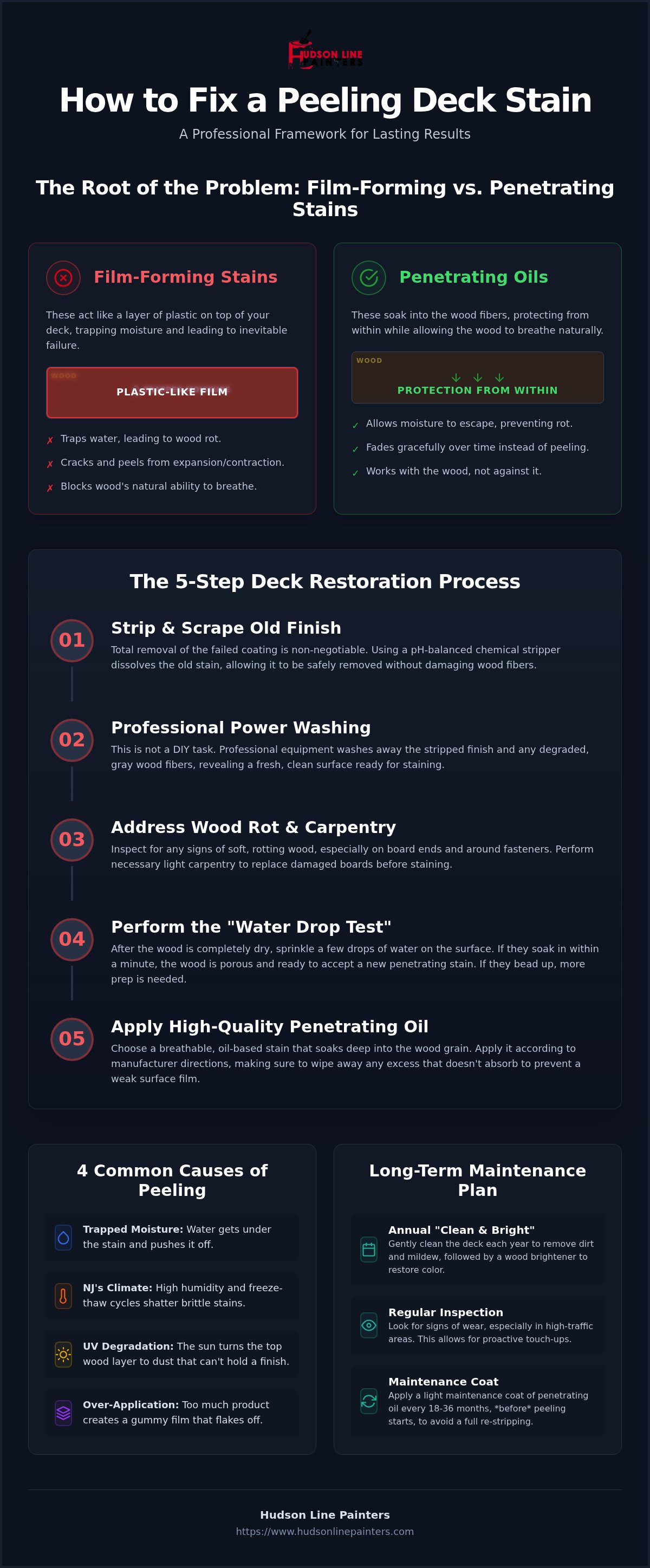
Peeling isn't a sign that your stain has simply "worn out"; it is a symptom of a total bond failure between the coating and the wood fibers. Most homeowners assume that a thicker, more opaque finish provides better protection, but this "film-forming" approach often creates a trap. Solid stains and deck paints act much like a plastic wrap over the wood. While they look great initially, they lack the flexibility to move with the timber as it reacts to environmental changes. Once a small crack forms, moisture enters the wood but cannot escape, leading to the unsightly flaking that ruins your outdoor space.
The primary driver behind this failure is moisture content. When water becomes trapped beneath a non-breathable finish, it creates a physical force that pushes the stain away from the surface. This is why you'll often see peeling occurring most aggressively near the ends of boards or around fastener holes where water entry is easiest. If you're looking for how to fix a peeling deck stain, you must first accept that the current finish has failed because it stopped the wood from performing its natural respiratory functions.
Film-Forming vs. Penetrating Stains
Film-forming stains are designed to sit on top of the wood grain to provide a uniform, paint-like color. These products are prone to failure because they rely on surface adhesion rather than deep integration. In contrast, penetrating oils soak directly into the wood cells to provide protection from the inside out. A foundational part of understanding wood preservation is recognizing that wood is a porous, organic material that requires a finish that can breathe. Hydrostatic pressure is the scientific term for the force exerted by trapped water vapor as it tries to escape the wood, which inevitably shatters brittle surface films.
The Impact of New Jersey’s Climate
Our local weather patterns are particularly brutal on exterior wood finishes. In coastal or riverside areas like Hoboken and Jersey City, intense summer humidity keeps wood moisture levels high, preventing many stains from ever fully curing. This moisture remains locked in the grain, waiting to cause trouble. Meanwhile, in Bergen County, the frequent freeze-thaw cycles during winter cause the wood to expand and contract with significant force. This constant movement shatters the bond of rigid, low-quality stains.
Many North Jersey homes also struggle with the "North Jersey Moisture Trap." This occurs on decks that are heavily shaded by trees or positioned close to the ground with poor ventilation. These decks never fully dry out, creating a permanent state of dampness that ensures a film-forming stain will peel within twelve to eighteen months. Understanding these regional stressors is the first step in learning how to fix a peeling deck stain permanently.
Finally, we cannot overlook the roles of UV degradation and over-application. The sun’s rays break down the lignin that holds wood fibers together, essentially turning the top layer of your deck into a fine dust that no stain can stick to. Furthermore, applying too much product is a common mistake; if the wood cannot absorb the excess stain, that material remains on the surface as a gummy, weak film that is destined to flake off under foot traffic.
How to Fix a Peeling Deck Stain: The Restoration Process
Attempting to apply a fresh coat of stain over a failing finish is a guaranteed recipe for a blotchy, uneven result. The new stain simply cannot bond to the wood fibers if a layer of old, flaking material stands in the way. To truly understand how to fix a peeling deck stain, you must commit to total removal. This isn't just about aesthetics; it's about resetting the wood's surface so the new coating can penetrate and protect as intended. Skipping the stripping phase is the most common reason why decks fail again within a single season.
Stripping and Scraping the Old Finish
In New Jersey, we frequently encounter thick, oil-based solid stains or old latex paints that have reached their limit. Choosing the right chemical stripper depends on the existing coating. Caustic strippers are highly effective for most oil-based products but require careful neutralizing to avoid damaging the wood's cellular structure. Solvent-based strippers work faster on stubborn latex but are more volatile and require strict safety protocols. We always recommend covering your foundation plantings, such as hostas or boxwoods, with plastic sheeting before you begin. When you scrape, use a pull-scraper with a sharp blade, but keep the pressure light. Gouging soft pressure-treated pine is a common DIY mistake that leaves permanent scars in the wood grain.
Sanding and Neutralizing the Wood
Once the bulk of the old finish is gone, mechanical agitation is necessary to open the wood pores and remove "dead" wood fibers. We find that 60-80 grit sandpaper is the "sweet spot" for deck restoration. Using a finer grit can actually burnish or polish the wood, which closes the pores and prevents the new stain from soaking in. After sanding, you must apply a wood brightener. This step is critical because it neutralizes the high pH left behind by chemical strippers, effectively opening the wood's cells for maximum adhesion. This chemical balance is a vital step in learning how to fix a peeling deck stain for the long term.
While many homeowners reach for a rental pressure washer, excessive force can easily shred wood fibers and cause fuzzing that ruins the final look. Utilizing professional power washing services ensures that the cleaning phase removes debris without compromising the structural integrity of the boards. If you're unsure whether your deck boards are healthy enough for restoration, consulting with a meticulous team like Hudson Line Painters can save you from wasting money on a surface that actually needs light carpentry or board replacement.
By the time you finish this phase, the wood should look clean, bright, and slightly "thirsty." This state of readiness is what allows the new stain to dive deep into the grain rather than sitting on the surface. Proper preparation takes time, but it is the only way to break the cycle of peeling and ensure your deck survives the next North Jersey winter.
Selecting the Best Stain to Prevent Future Peeling
Selecting the right product is the final piece of the puzzle when learning how to fix a peeling deck stain. If you choose another film-forming product, you are simply restarting the countdown to the next failure. Before purchasing any finish, you must perform the "water drop test" to verify wood porosity. Sprinkle water on several areas of the dry, prepared wood. If the water soaks in within seconds, the wood is porous and ready. If it beads up, the pores are still closed, and any finish you apply will sit on the surface and eventually flake away.
Solid Stains vs. Semi-Transparent Oils
Solid stains are essentially floor paint; they hide the wood grain but are highly prone to high-traffic failure. While they offer a longer 3-5 year aesthetic life, they are the primary culprit behind the peeling cycle. Semi-transparent penetrating oils soak into the fibers and never peel; they simply fade over a 1-2 year cycle. This makes future maintenance as simple as a light cleaning and a fresh coat. However, for older decks with heavy grain imperfections or mismatched replacement boards, a solid stain might be the only practical way to achieve a uniform look.
Long-Lasting Products for NJ Weather
New Jersey's intense summer sun requires stains with high-transparency transoxide pigments. These finely ground minerals block UV rays without clouding the wood's natural beauty. For the best results, we utilize a "wet-on-wet" application technique. This involves applying a second coat while the first is still damp, ensuring the wood saturates completely before the finish begins to dry. Choosing professional deck staining ensures this saturation is uniform across the entire surface, preventing the lap marks and over-application that lead to premature failure.
Color choice and base material also impact longevity. Darker stains absorb significantly more heat, which can accelerate the breakdown of wood fibers in direct sunlight. While modern water-based stains have improved in quality, traditional oil-based penetrating stains remain the gold standard for North Jersey homeowners. They provide superior moisture displacement and are much easier to refresh. By choosing a breathable, penetrating product, you effectively end the cycle of peeling and move toward a manageable maintenance routine that protects your investment.
How to Prevent Deck Stain from Peeling: Maintenance Strategies
Prevention is always more cost-effective than a total restoration. Once you have learned how to fix a peeling deck stain, your goal shifts to ensuring you never have to perform that heavy labor again. A disciplined maintenance schedule keeps the wood pores open and the protective oils saturated, preventing the film failure that leads to flaking. By addressing small issues annually, you avoid the expensive cycle of chemical stripping and heavy sanding, keeping your outdoor space ready for use throughout the season.
Drainage and ventilation are the two most overlooked factors in deck longevity. If water pools under your deck or near the foundation, the rising vapor will constantly attack the underside of your boards. This bottom-up moisture creates a high-pressure environment that pushes finishes off the surface from the inside out. Similarly, while deck skirting can look aesthetically pleasing, it often chokes off essential ventilation. Without consistent airflow, the wood stays damp, creating a breeding ground for rot and ensuring even the best penetrating oil will eventually struggle to stay bonded.
Annual Power Washing and Cleaning
Maintenance cleaning is fundamentally different from stripping. Your goal is to remove surface contaminants like the heavy spring pollen and persistent mold common in Bergen County backyards, rather than removing the finish itself. Leaving organic matter on the wood allows it to hold moisture against the grain, which eventually breaks down the stain's bond. For most softwoods like cedar or pressure-treated pine, maintaining a pressure between 1,200 and 1,500 PSI is the ideal range for washing wood without fuzzing the grain.
Request a professional maintenance wash
Optimal Staining Conditions
The 48-hour rule is a non-negotiable standard for professional-grade results. Wood must be bone-dry, meaning no rain or heavy dew for at least two full days prior to application. Applying stain in the direct New Jersey July sun is a recipe for disaster because the intense heat causes the stain to flash-dry on the surface before it can penetrate the fibers. You should also monitor humidity levels; high moisture in the air can prevent oils from curing properly, leaving your deck vulnerable to the next sudden afternoon thunderstorm. Following these environmental guidelines is just as important as knowing how to fix a peeling deck stain that has already failed.
Timing your re-coat is equally vital. You should refresh a penetrating finish as soon as the wood begins to look dry or water stops beading, rather than waiting for the finish to flake or turn grey. A simple maintenance coat every eighteen to twenty-four months is much easier than a full-scale restoration and ensures your deck remains a beautiful, durable extension of your home.
When to Call Professional Deck Painters in NJ
While the steps for how to fix a peeling deck stain are straightforward, the execution requires a level of technical precision that often exceeds the capabilities of consumer-grade tools. A successful restoration is a race against the elements, requiring perfect timing and specialized machinery. If your deck has suffered from years of neglect or multiple layers of failed solid stain, the labor involved can quickly turn a two-day project into a month-long ordeal. Professional intervention ensures that the wood isn't just aesthetically pleasing but structurally sound and prepared for the long term.
Recognizing Wood Rot and Structural Damage
Before you begin any restoration, you must determine if the wood is healthy enough to hold a finish. We recommend the "Screwdriver Test": take a flat-head screwdriver and press it into various spots on the joists, fascia, and deck boards. If the metal sinks in easily or the wood feels spongy, you're dealing with rot that a simple restain can't solve. In these cases, cosmetic fixes are dangerous and wasteful. Utilizing integrated carpentry repairs for wood rot allows you to replace compromised boards and reinforce the structure before the staining process begins.
The equipment gap is another significant hurdle for many homeowners. Consumer-grade orbital sanders and electric pressure washers often lack the power to remove stubborn films without damaging the wood fibers. Professionals use high-volume, low-pressure equipment and industrial sanders that create a perfectly level surface. This precision prevents the lap marks and uneven absorption that plague many home-improvement projects. When you calculate the cost of tool rentals, premium materials, and the value of a forty-hour weekend, the professional alternative often emerges as the smarter financial choice.
The Advantage of Hudson Line Painters
At Hudson Line Painters, we treat every deck restoration as a meticulous craft. Our proprietary procedural framework ensures that no step, from pH balancing to moisture testing, is overlooked. We bring deep local expertise to the unique deck environments of Hoboken and Edgewater, where salt air and high-rise shading create specific challenges for wood preservation. By focusing on technical precision and site etiquette, we provide a safe, guaranteed transformation that adds genuine value to your property.
Contact us for a professional deck evaluation
Choosing to partner with a specialist means you're investing in a result that survives the next five New Jersey winters. We take pride in our operational discipline, ensuring your landscape is protected and your home's exterior is treated with the utmost respect. If you're ready to stop worrying about how to fix a peeling deck stain and start enjoying a beautiful, maintenance-ready outdoor space, a professional consultation is the most reliable first step.
Restore Your Outdoor Space for the Long Term
Breaking the cycle of annual peeling requires a shift from superficial fixes to a disciplined restoration process. By addressing the root causes of film failure and learning how to fix a peeling deck stain through total removal, you ensure your new finish can penetrate and protect the wood fibers. Choosing breathable, penetrating oils over restrictive solid stains is the most effective way to handle the volatile New Jersey climate. This professional approach stops the flaking, prevents wood rot, and creates a manageable maintenance routine that preserves your investment for years to come.
If the task of stripping, sanding, and neutralizing feels overwhelming, partnering with specialized experts provides the peace of mind you deserve. As a local NJ family-owned business with an A+ rating for exterior craftsmanship, we're proud to deliver technical precision and a beautiful, lasting result. Our specialized deck and fence staining experts handle the heavy lifting so you don't have to spend your weekends scraping wood.
Your deck is an essential extension of your home. With the right care and a meticulous approach, it will remain a source of comfort and value for many seasons to come.
Frequently Asked Questions
Can I just sand the peeling parts and stain over them?
No, you cannot simply spot-sand and restain without creating a blotchy, uneven appearance. The old finish has already failed its bond, and applying new product over failing sections will lead to the new layer peeling away with the old one. To properly understand how to fix a peeling deck stain, you must strip the entire surface to bare wood. This ensures a uniform look and allows the new coating to penetrate deeply and bond correctly.
Is it better to power wash or sand a peeling deck?
A combination of chemical stripping, light power washing, and sanding is the most effective approach for restoration. Power washing alone can shred wood fibers if the pressure is too high, while sanding alone is incredibly labor-intensive and often misses recessed grain. We recommend using a pH-balanced stripper first, followed by a low-pressure rinse to remove the bulk of the finish. Finish with 60-80 grit sanding to open the wood pores and create a smooth, receptive surface.
How long should I wait for a new deck to dry before staining it?
You should wait at least 48 hours after cleaning or rainfall before applying any stain. Wood is highly porous and traps moisture deep within its fibers. If you apply a finish before the moisture content drops sufficiently, that trapped water will eventually push the stain off the surface as it evaporates. In the humid New Jersey climate, giving the wood ample time to reach a bone-dry state is essential for a long-lasting, professional bond.
What is the best deck stain for high-traffic areas in New Jersey?
Penetrating semi-transparent oil stains are the superior choice for high-traffic decks in our region. Unlike solid stains that sit on top like a film, penetrating oils soak directly into the wood cells. This prevents the peeling and flaking often caused by heavy foot traffic and patio furniture. These products are designed to fade gradually over time, making future maintenance cycles much simpler than the labor-intensive process required for how to fix a peeling deck stain.
Why did my deck stain peel after only one year?
Early peeling is almost always caused by poor surface preparation or over-application of the product. If the wood was damp, dirty, or previously treated with a non-breathable film, the new stain cannot bond. Additionally, applying too much product creates a thick layer that becomes brittle and cracks under the sun's UV rays. In North Jersey, high humidity and freeze-thaw cycles accelerate this failure if the product wasn't applied to a perfectly clean, dry, and porous surface.
Can I use solid stain over a semi-transparent stain?
Yes, you can apply a solid stain over a semi-transparent one, provided the surface is clean and the old oil has sufficiently weathered. Solid stains are more opaque and act like a floor paint, making them useful for hiding grain imperfections or mismatched boards. However, you must never do the reverse; a semi-transparent stain will not bond to a solid finish. Always perform a water-drop test to ensure the surface is receptive before you begin application.
How much does it cost to professionally fix a peeling deck in NJ?
The cost of professional deck restoration depends on the deck's total square footage, the number of existing stain layers, and the wood's current condition. Projects that require extensive chemical stripping and light carpentry repairs for wood rot will naturally require more labor than a simple refresh. While DIY materials might seem cheaper, professional results provide significantly better longevity and value. You should contact a local specialist for a detailed evaluation of your specific deck environment and needs.
What is the best time of year to fix a peeling deck in the Northeast?
Late spring and early fall are the ideal windows for deck restoration in the Northeast. You need consistent temperatures between 50 and 80 degrees Fahrenheit and low humidity for the stain to cure properly. Avoid the intense heat of mid-July, as direct sunlight causes the finish to dry too quickly on the surface before it can penetrate. Monitoring the local forecast for a clear three-day window ensures the wood remains dry throughout the entire application process.


