

Imagine opening three different folders and seeing a three thousand dollar price gap for the exact same living room. It's a common scenario for homeowners in Hudson and Bergen Counties, and it usually triggers a wave of anxiety about being overcharged or stuck with a finish that peels within a year. Understanding exactly what to look for in a painting estimate is the only way to bridge the gap between a low-ball bid and a high-quality, lasting investment in your property.
We know that staring at technical terms like substrate prep or skim coating feels more like a test than a home improvement project. You deserve a beautiful finish without the stress of decoding industry jargon. This 2026 guide promises to give you the tools to evaluate craftsmanship and ensure your money is well spent on long-term durability rather than a quick fix. We will provide a clear checklist to compare bids apples-to-apples while highlighting the specific New Jersey HIC registration and insurance requirements you must verify to protect your home. By the end, you'll have the confidence to choose a partner who treats your space with the meticulous care it deserves.
Key Takeaways
- Learn to distinguish between a casual "ballpark" figure and a binding Scope of Work that protects your home and your investment.
- Discover why detailed surface preparation and meticulous drywall repair are the most critical line items for a finish that lasts in New Jersey's climate.
- Understand the difference between premium residential paint and contractor-grade materials to ensure you're paying for true long-term durability.
- Identify what to look for in a painting estimate to verify a contractor's NJ HIC registration and insurance, shielding yourself from legal liability.
- Recognize the red flags of vague "lump sum" pricing versus the transparency of a clear, sequential project timeline from start to finish.
Understanding the Components of a Professional Painting Estimate
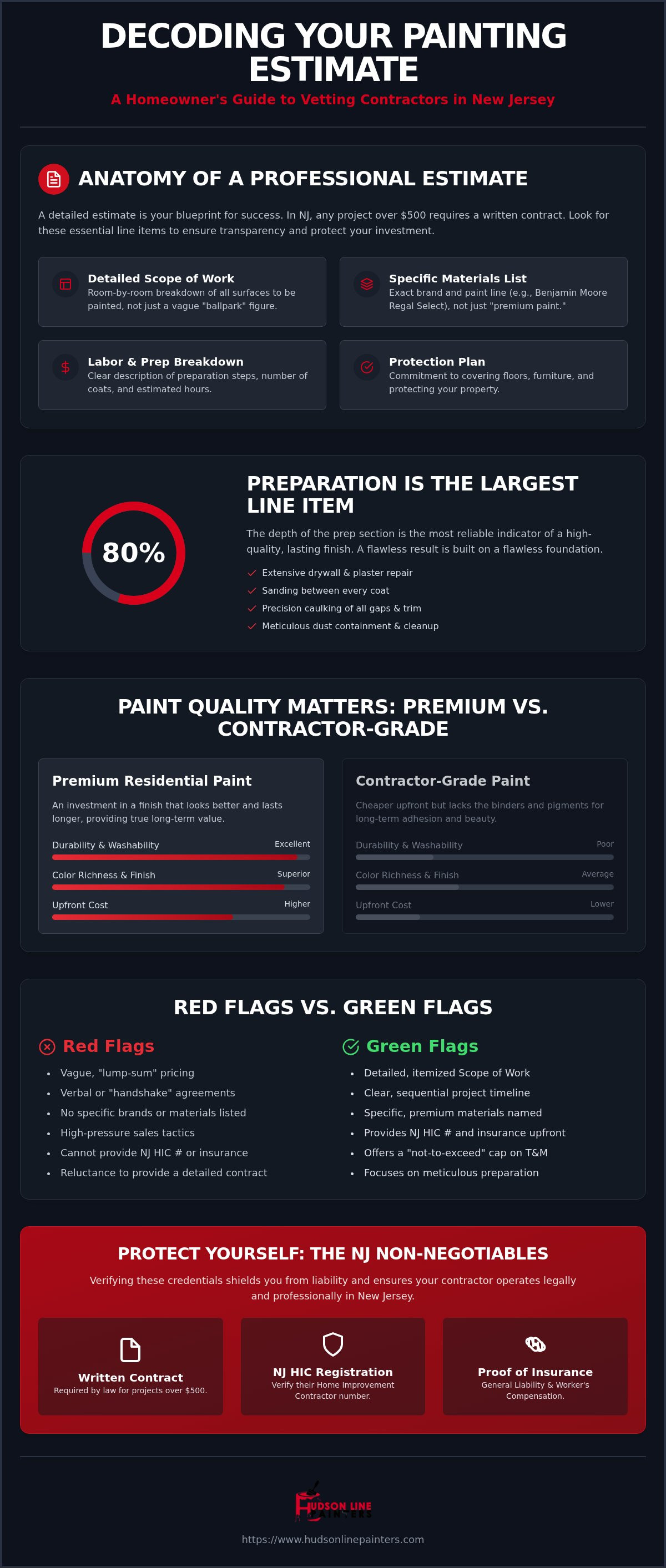
A professional estimate serves as the blueprint for your home's transformation. It shouldn't be a verbal "handshake" deal or a scribbled number on a business card. In New Jersey, any home improvement project exceeding $500 requires a written contract by law. This document protects your investment and ensures both parties are on the same page before a single drop of paint touches your walls. When considering what to look for in a painting estimate, the level of detail is your first clue to the contractor's professionalism.
There's a massive difference between a "ballpark figure" and a comprehensive Scope of Work. A ballpark is often an educated guess based on floor square footage, which doesn't account for ceiling height, trim complexity, or wall condition. A true Scope of Work defines exactly what will happen in each room. It lists which surfaces are being painted and which are being protected. This transparency eliminates the "hidden costs" that often plague low-budget projects. A detailed consultation is the only way to build an accurate 2026 pricing model that reflects the unique needs of your space.
Fixed Price vs. Time and Materials
Most residential interior projects should be quoted at a fixed price. This gives you peace of mind because the cost won't fluctuate if the job takes longer than expected. However, "Time and Materials" (T&M) estimates are sometimes necessary for unpredictable tasks. If a contractor discovers hidden rot during light carpentry or complex plaster issues, T&M allows for flexibility. The risk with open-ended estimates is that they can quickly exceed your budget. Always ask for a "not-to-exceed" cap on any T&M line items to keep your finances predictable.
The Essential Line Items Checklist
A meticulous estimate breaks down labor and materials into distinct categories. Labor costs should reflect the number of craftsmen on-site and the estimated hours required for the project. Since professional painters are responsible for all preparation, this line item should be the most detailed. It should cover everything from masking floors to sanding surfaces and filling nail holes. Preparation is the foundation of a beautiful result.
Material specificity is equally important. Your estimate should name the exact brand and paint line, such as Benjamin Moore Regal Select or Sherwin Williams Emerald. Contractor-grade paint is cheaper but lacks the durability of premium residential lines. When reviewing our interior painting services, you'll see how we list every material and step in the process. This level of clarity ensures you aren't just paying for color; you're paying for a disciplined, high-end result that adds genuine value to your home.
Evaluating the Scope of Work: Why Prep is the Largest Line Item
Preparation is the silent hero of every high-end paint job. In Northern New Jersey, our shifting seasons and high humidity levels mean that paint adhesion is never guaranteed without rigorous surface work. When you're determining what to look for in a painting estimate, the depth of the preparation section is the most reliable indicator of quality. A professional bid should account for extensive drywall and plaster repair, especially in historical homes where settling has caused structural spidering or deep cracks.
The requirements change significantly depending on the surface. For kitchen cabinet refinishing, the preparation involves degreasing, chemical cleaning, and specialized mechanical sanding that standard walls simply don't require. A disciplined contractor also prioritizes the protection of your assets. Your estimate should explicitly mention covering furniture with clean plastic, shielding floors with heavy-duty drop cloths, and protecting your landscaping during exterior projects. This meticulous approach ensures the only thing we leave behind is a flawless finish.
Interior Prep: From Dust Containment to Skim Coating
Inside the home, the details matter. Look for specific line items regarding sanding between coats, caulking gaps in baseboards, and filling every nail hole with precision. If your walls are currently covered in dated patterns, wallpaper removal requires its own dedicated line item. This process often reveals hidden wall damage that needs professional remediation before any primer is applied. Dust management is another priority for active NJ households. We utilize localized containment and high-efficiency vacuums to keep your living space breathable and tidy throughout the transformation. It's always a smart move to verify that your prospective painting contractor is licensed and committed to these clean-site standards.
Exterior Prep: Power Washing and Wood Rot
For the outside of your property, the sequence of operations is vital for longevity. Professional power washing must precede any exterior painting bid to remove salt, mildew, and pollutants that prevent paint from bonding. The estimate should also address light carpentry. If a painter finds rotted trim or damaged siding, they should have a clear process for replacing those elements rather than just painting over the problem. Identifying these potential issues early prevents "hidden" costs from surfacing mid-project. Our comprehensive exterior painting services are designed to withstand the local climate by combining technical precision with high-grade materials. If you're ready to see how our meticulous prep process can transform your home, you can explore our full range of services today.
Technical Specifications: Paint Quality and Application Methods
The specific materials listed in your bid determine how your home looks next month and how it holds up in five years. When evaluating what to look for in a painting estimate, pay close attention to the specific "line" of paint mentioned. Many contractors use vague terms like "premium paint," but there's a massive performance gap between contractor-grade products and high-end residential lines. Contractor-grade paint is often thinner and less durable; it's designed for quick turnarounds in rental units rather than the longevity expected in a private home. A professional bid should explicitly name products like Benjamin Moore Aura or Sherwin Williams Emerald to guarantee a rich, washable finish.
Application methods are another critical technical detail. While "one-coat coverage" is a popular marketing term, it rarely provides the depth of color or the protective film thickness required for professional durability. A disciplined estimate will always specify two coats of finish paint. The method of application should also match the surface. We typically use a "brush and roll" technique for standard interior walls to achieve a classic texture. However, for kitchen cabinet refinishing, a specialized HVLP spray system is necessary to create a factory-smooth finish that won't show brush marks or drips.
Primers shouldn't be treated as an afterthought. A generic primer won't solve specific problems like smoke damage or persistent ceiling spots. If your home has suffered from previous leaks, ensure the estimate includes a high-quality stain-blocking primer designed for fixing water stains. This technical step prevents tannins and minerals from bleeding through your new topcoat, ensuring the blemish doesn't reappear after the paint dries.
Decoding Paint Grades and Sheens
Your estimate should provide a room-by-room breakdown of sheens. High-traffic areas in Bergen County homes, such as hallways and mudrooms, often require an eggshell or satin finish for easier cleaning. In contrast, bedrooms might benefit from a sophisticated matte look. Cabinetry requires even more specialized coatings. These aren't standard wall paints; they're high-solids urethanes or enamels designed to withstand the daily friction of opening doors and drawers. While these specialized coatings increase the material cost, they're a smart financial choice compared to the price of total cabinet replacement.
Warranties and Touch-Up Policies
A reliable contractor stands behind their craftsmanship with a clear labor warranty. This isn't the same as the manufacturer's warranty on the paint can. A labor warranty covers issues like peeling or bubbling caused by improper preparation. The estimate should also define the final walk-through process. This is your opportunity to inspect the work under different lighting conditions before final payment. To protect yourself from common industry pitfalls, it's wise to review the Signs of a Home Improvement Scam provided by the FTC. Finally, look for a policy regarding leftover paint. A professional team will label and leave behind small quantities of each color for future touch-ups, ensuring your home stays pristine long after the project concludes.
Verification of Credentials: Licensing and Local NJ Reputation
In New Jersey, professional standing isn't just a matter of pride; it's a legal requirement. Any contractor performing residential work must be registered as a Home Improvement Contractor (HIC) with the Division of Consumer Affairs. For projects in Hoboken or Hackensack, this registration is non-negotiable. When you're assessing what to look for in a painting estimate, the presence of a valid HIC number is your first shield against liability. A written contract is required for any project over $500, and it must clearly display this registration number to be legally compliant.
Beyond registration, insurance coverage separates legitimate craftsmen from "trunk slammers." A registered NJ HIC must carry at least $500,000 in commercial general liability insurance. However, general liability only covers damage to your property. You also need to confirm they carry workers' compensation. Without it, you could be held liable if a painter is injured on your property. Unusually low bids often correlate with a lack of these coverages. A contractor who skips insurance premiums can offer a lower price, but they're effectively transferring that financial risk onto your shoulders.
Historical homes in our area present unique structural challenges that modern subdivisions don't face. If you live in an older property, look for a Bergen County plaster repair expert who understands the nuances of lath and plaster. Standard drywall techniques won't suffice for these surfaces; they require a craftsman who knows how to stabilize aging substrates before applying a single drop of paint.
The Legal Paperwork Every Bid Should Include
Don't just take a contractor's word for it. Request a Certificate of Insurance (COI) sent directly from their insurance agent to your email. This ensures you aren't looking at an expired or altered document. You should also verify the HIC number on the New Jersey Division of Consumer Affairs website. At Hudson Line Painters, we prioritize transparency in our licensing. We believe that providing our credentials upfront is the only way to offer the peace of mind you deserve during a home transformation.
Social Proof and Local References
A portfolio should reflect the specific architecture of Northern NJ. Look for projects that match your home's style, whether it's the vertical challenges of Hoboken brownstones or the expansive trim work of Englewood estates. Recent references for similar scopes of work, like kitchen cabinet refinishing, are essential. Finally, consider site etiquette as a core virtue. A professional team respects your environment by maintaining a clean workspace and adhering to a disciplined schedule. This level of operational discipline is a hallmark of a craftsman who values your home as much as you do.
Verify our credentials and request your detailed estimate
Navigating the Final Selection: Red Flags vs. Green Flags
Deciding between multiple bids is the final hurdle in your home improvement journey. When you're finalizing what to look for in a painting estimate, the presence of a detailed, itemized breakdown is a non-negotiable green flag. A suspicious red flag is the "lump sum" quote that offers a single price without explaining the labor or material costs. This lack of transparency often hides a skipped preparation process or the use of inferior products. A professional contractor provides a sequential timeline that moves logically from the initial consultation to the final inspection, ensuring you know exactly what to expect at every stage.
The mid-range bid is often the most reliable choice for a high-end result. While the highest bid might include unnecessary overhead, the lowest bid usually signals a compromise in quality. If the project's scope expands mid-stream, a disciplined contractor handles this through a formal change order. This document outlines the additional work and its cost before the task begins, preventing any surprises when the final invoice arrives. It's a hallmark of a transparent partnership that values clear communication as much as technical precision.
The Danger of the Lowest Bid
Choosing the cheapest option often leads to a cycle of expensive repairs. Low-cost contractors frequently hide costs by skipping the essential primer coat or opting for low-grade paint that loses its luster in months. For homeowners considering a kitchen update, choosing kitchen cabinet refinishing over total replacement is a smart financial choice. However, the savings are only realized if the craftsman uses specialized coatings that stand the test of time. A "cheap" cabinet job that peels in two years is a financial burden, not a bargain. Quality craftsmanship is an investment in your property's long-term value.
Ready to Transform Your Home?
Hudson Line Painters brings a disciplined, systematic approach to every bid we provide. Our meticulous estimation process is rooted in local expertise across Hudson, Union, and Bergen Counties. We understand the specific environmental challenges of Northern New Jersey, from coastal humidity to the unique needs of historical architecture. We don't just provide a price; we offer a roadmap for a durable, beautiful transformation. Our goal is to provide peace of mind through technical precision and professional site etiquette. When you review our bid, you'll see every step of our proprietary procedural framework clearly defined.
Contact Hudson Line Painters for a transparent, detailed estimate
Take the Next Step Toward a Flawless Finish
Choosing the right contractor is about more than just finding a competitive price; it's about investing in the longevity and aesthetic value of your property. By now, you understand what to look for in a painting estimate to ensure you're paying for meticulous preparation and high-grade materials rather than a quick fix. A professional bid acts as a contract of transparency, protecting you with proper NJ HIC licensing and comprehensive insurance coverage.
Since 2018, Hudson Line Painters has provided Northern NJ homeowners with a disciplined, craftsman-led approach. Whether you're interested in specialized kitchen cabinet refinishing or a complete interior overhaul, our team prioritizes the technical precision required for a durable result. We treat your space with the respect it deserves, following a systematic lifecycle from the initial consultation through to the final walk-through.
You've done the research and have the checklist ready. We look forward to helping you transform your home with the care and quality it deserves.
Frequently Asked Questions
Why do painting estimates vary so much between contractors?
Estimates vary primarily because of the difference in labor hours dedicated to surface preparation and the quality of the paint products used. A low bid often indicates that the contractor intends to skip essential sanding or priming steps. When evaluating what to look for in a painting estimate, remember that professional overhead, such as workers' compensation and liability insurance, also influences the price. These protections ensure you aren't held responsible for on-site accidents.
Is a verbal estimate legally binding in New Jersey?
No, a verbal estimate is not legally binding in New Jersey for projects exceeding $500. State law requires a written contract that includes the contractor's HIC registration number, total price, and a clear payment schedule. This legal framework protects homeowners from predatory practices and ensures transparency. You should always insist on a signed document before work begins to ensure both parties understand the scope and expectations of the transformation.
Should paint materials be included in the total estimate price?
Yes, a professional painting estimate should always include the cost of all materials and paint. The bid must specify the exact brand and product line to ensure you're getting the durability you paid for. If a contractor asks you to buy the paint yourself, it's often a sign they lack professional accounts or are trying to avoid liability for material performance. Transparent pricing ensures there are no surprises when the final invoice arrives.
How much of a deposit is standard for a painting project in NJ?
In New Jersey, a standard deposit typically ranges from 10% to 33% of the total project cost. You should be cautious of any contractor who asks for more than half the total price before a single drop of paint touches the wall. Large upfront payments are a significant red flag in the industry. A reasonable deposit allows the contractor to secure materials and schedule labor while keeping the financial risk balanced for the homeowner.
What is the difference between a quote and an estimate?
A quote is a fixed price that shouldn't change, while an estimate is a preliminary guess based on initial observations. For most residential interior and exterior projects, you should look for a fixed-price quote rather than an open-ended estimate. This clarity helps you stay within your budget. Understanding this distinction is a vital part of what to look for in a painting estimate when you're comparing multiple bids for your Northern NJ home improvement project.
How long should a professional painting estimate be valid for?
Most professional painting estimates are valid for 30 to 60 days from the date they're issued. This timeframe exists because the costs of premium paints and fuel can fluctuate throughout the year. If you wait too long to sign the contract, the contractor may need to reassess their pricing to reflect current market rates. Always check the expiration date on your bid to ensure the pricing remains locked in for your scheduled start date.
Does the estimate include the cost of moving furniture?
The cost of moving heavy furniture is usually included as a specific line item in the scope of work. Most professional teams will handle large items like sofas and dining tables, while homeowners are responsible for moving smaller breakables and clearing out closets. Your contract should explicitly state who is responsible for protecting and moving these assets. This prevents confusion on the first day of the project and ensures your belongings are handled with care.
What happens if the painter finds wood rot that wasn’t in the estimate?
If a painter discovers hidden wood rot, they should pause the work and issue a formal change order. Since we specialize in light carpentry, we can often address these repairs as part of our comprehensive prep process. This document describes the issue and lists the additional labor and materials required. You should never be pressured into a verbal agreement. A professional will document the damage and provide a transparent price before proceeding.


